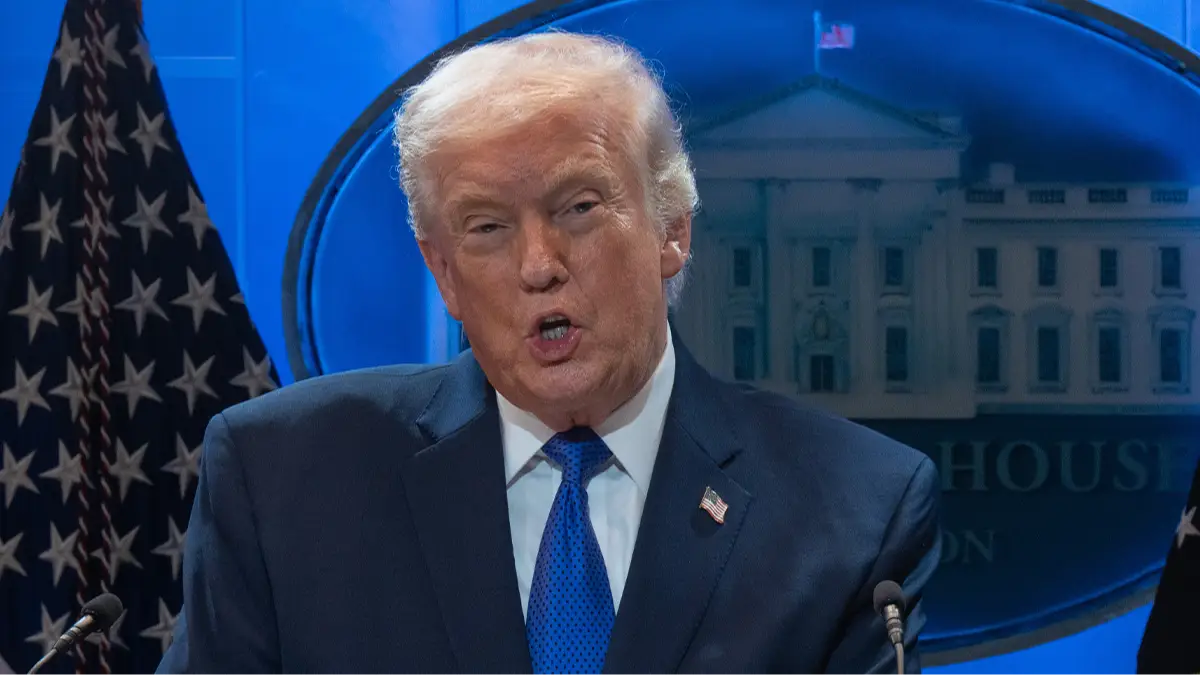
Trump announces huge new global tariff after Supreme Court ruled against them

The Supreme Court sent President Trump into a full meltdown yesterday, slamming the justices as an 'embarrassment' after striking down a much-derided core pillar of his economic plan.
This is because the sweeping tariffs that Trump levied against allies and enemies alike since 'Liberation Day', shortly after taking office, were all struck down on Friday in a landmark decision that saw the conservative-heavy court go against the president in a 6-3 ruling.
"They're just being fools and lapdogs for the RINOs and the radical left Democrats," the president said in a furious press conderence, where he claimed without evidence that the highest court in the land had been 'swayed by foreign interests.'
That even included calling two of his own Supreme Court appointees, Neil Gorsuch and Amy Coney Barrett, 'an embarrassment to their families, to one another,' for taking the rare step of going against his will. Then Trump revealed how he was going to ignore the ruling entirely.
Advert
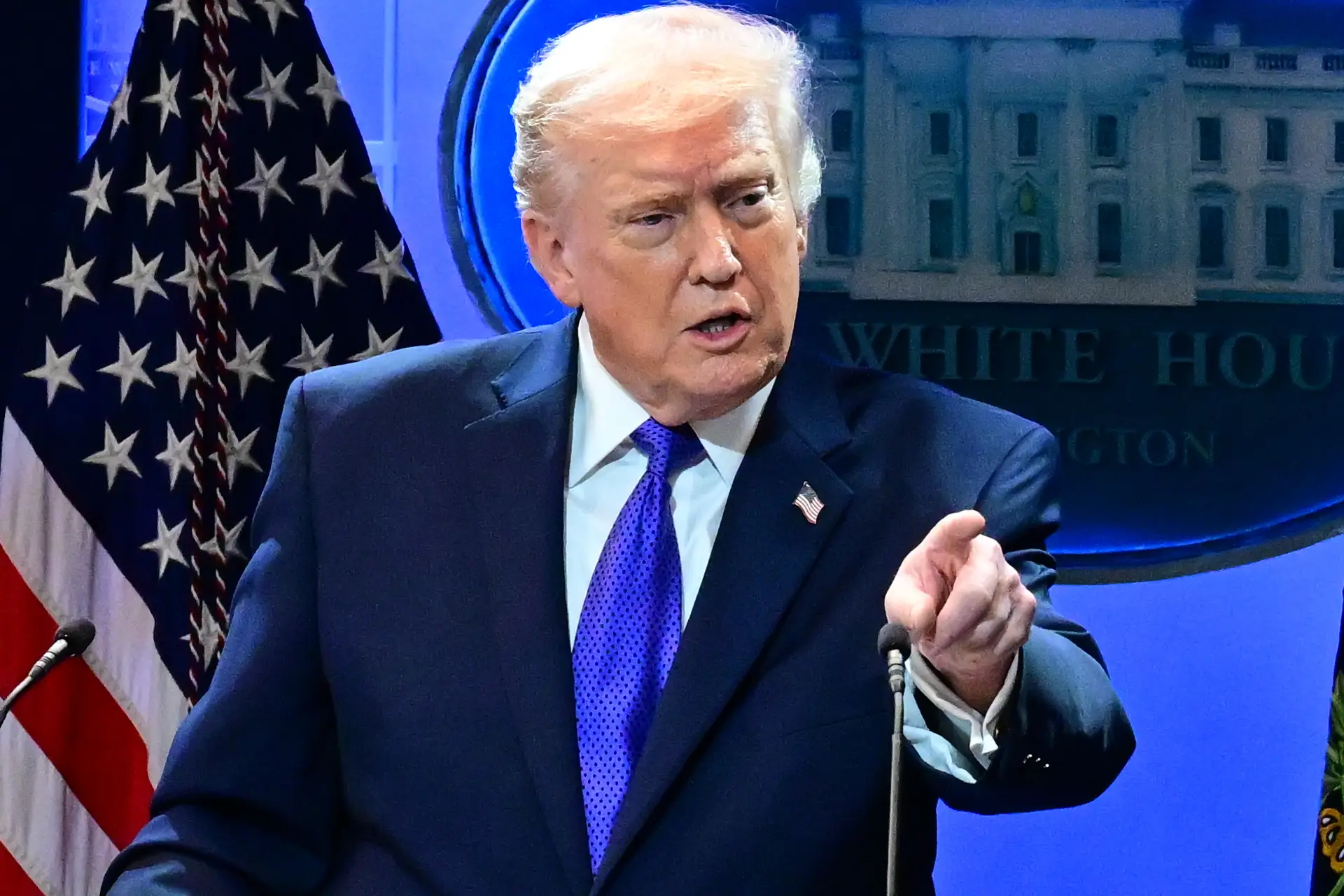
“I’m ashamed of certain members of the court. Absolutely ashamed for not having the courage to do what’s right for our country,” he said.
The crux of the argument made against Trump's unilateral imposition of tariffs is that any charge on imported goods is well-established as a tax, and it is Congress not the president who is granted taxation powers by the Constitution.
Now, the courts will be locked in a months-long, if not years-long, battle by business and American citizens to have their tariff bills imposed since the start of 2025 refunded entirely, as a result of the Supreme Court's ruling.
But, this is not the end for the key Trump economic policy. Relying on a separate legal loophole, President Trump revealed at his fiery press conference that he will now be imposing a worldwide tariff of 10 percent on all goods being brought into the country.
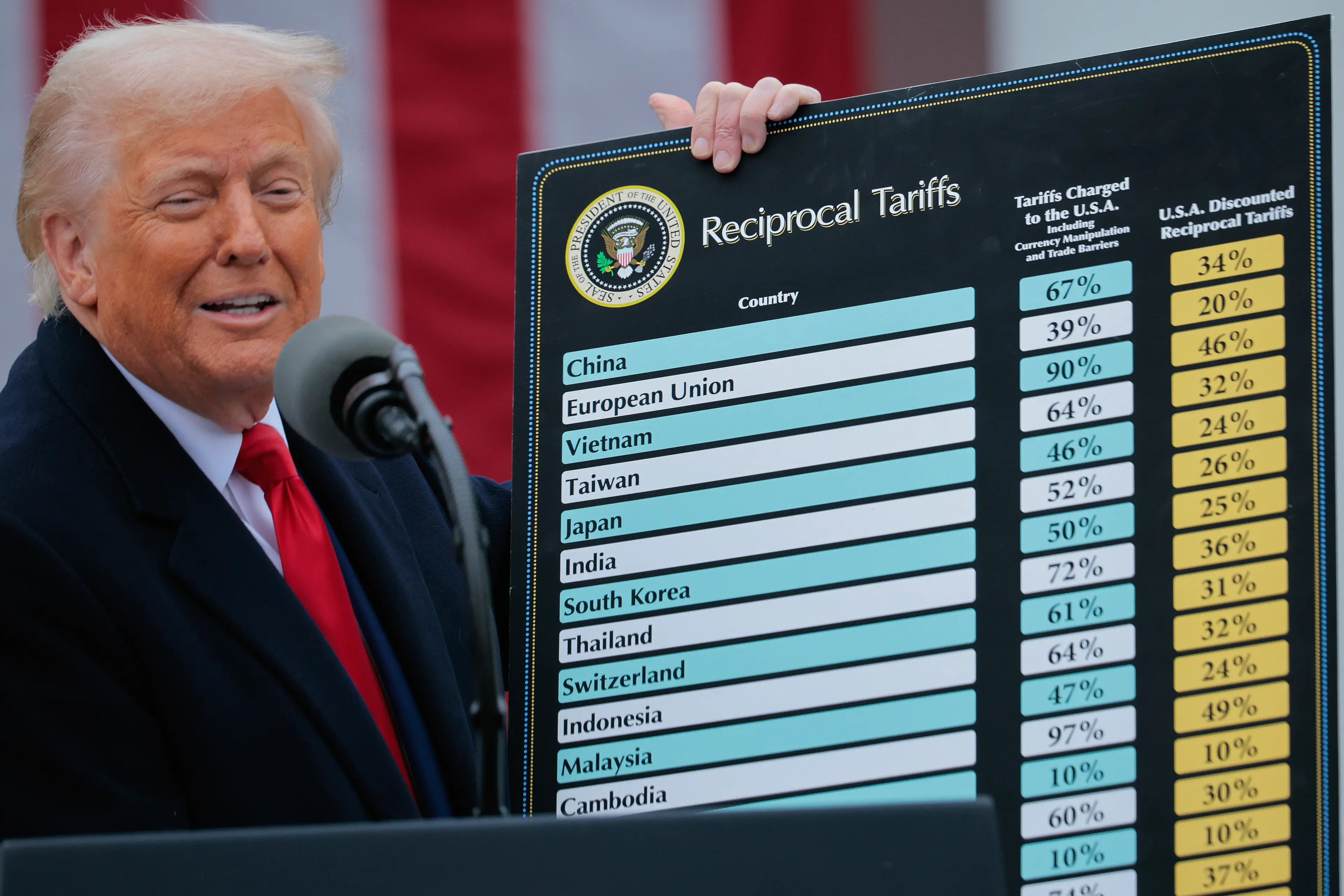
"We have alternatives - great alternatives and we'll be a lot stronger for it," he said bullishly, before revealing that the White House would be relying on a never-used law known as Section 122 of the 1974 Trade Act to reimpose some form of tariff on imports.
This allegedly grants the president the power to impose tariffs of up to 15 percent on any country at will for 150 days, at which point he would need Congress to approve his tax on global trade.
But this new tariff level, which ignores every international trade deal signed to lower the taxes being placed on allies like the UK, which bargained a lower rate on its automotive sector.
However, this agreement was abandoned when he revealed the new 10 percent tax, which will take effect from February 24.
While many Americans affected by the tariffs will be relieved at this legal reversal, former State department official and director at the Council on Foreign Relations, Edward Fishman, told the New York Times that the change's main impact was on Trump's favorite tool for imposing his will on foreign countries.
He said: "Even if he can gradually reinstate the existing tariffs over time under different authorities, he will no longer be able to credibly threaten tariffs to advance foreign policy objectives. That will be a massive change in how Trump conducts foreign policy.”
Topics: Donald Trump, Tariffs, Court
 William Morgan