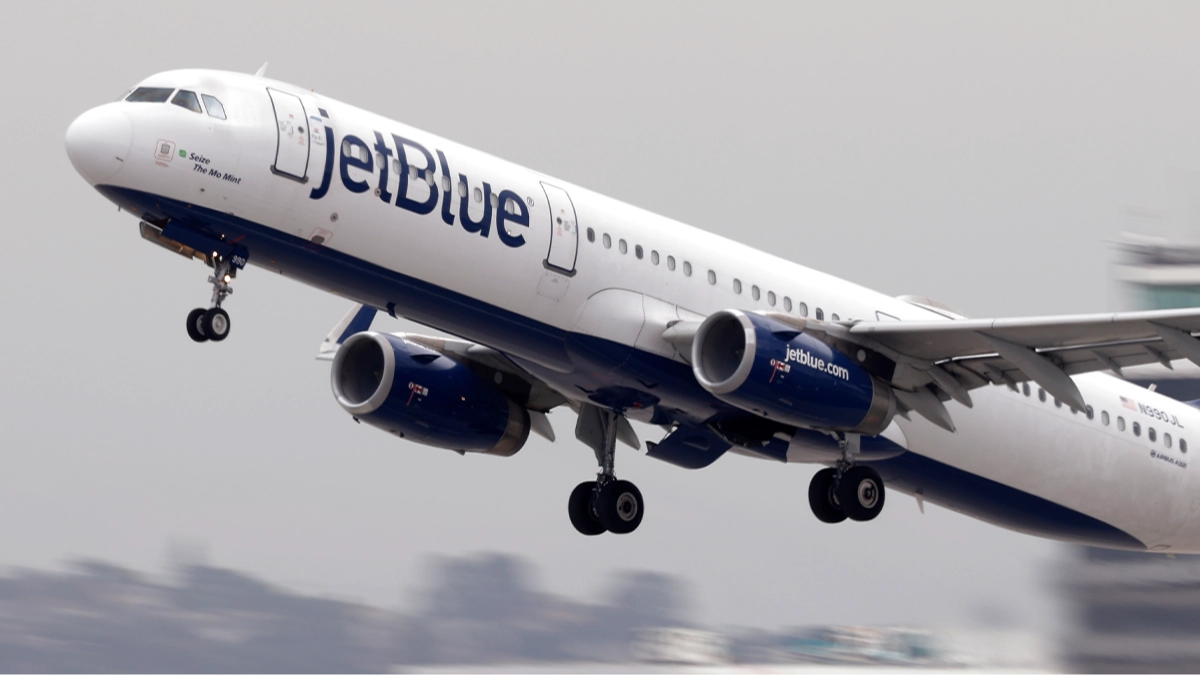
Space experts give terrifying theory to why plane suddenly plummeted over 100 feet leaving 15 hospitalized

The cause of a passenger aircraft malfunction that caused a domestic flight to suddenly plummet through the air has been uncovered by investigators, sparking a truly mind-boggling theory from space experts.
The October 30, the JetBlue Airbus A320 flight from Cancun to Newark Liberty International Airport was forced into an emergency landing in Florida after the malfunction struck, causing the plane to nosedive over 100ft through the air before the crew managed to regain control.
A shocking post-flight investigation into the incident found that the A320's ELAC (Elevator & Aileron Computer), which controls the plane's pitch and roll, had stopped working properly after being struck by what Airbus called 'intense solar radiation'.
This radiation corrupted data in the ELAC's memory, sending the flight into an abrupt nosedive that left at least 15 of the flight's passengers injured. However, space experts have weighed in, saying that solar radiation levels were normal that day and the source of the damage came from much, much, further away - across the cosmos.
Advert
Space weather expert Clive Dyer, from the University of Surrey in the UK, has been studying how events in the universe can impact an aircraft's delicate instruments for decades.
He told space.com that the jet's onboard computer may have been hit by an intense high-energy beam of cosmic radiation that had traveled for millions of years before striking the JetBlue aircraft mid-flight.
Dyer explained that these rays 'can interact with modern microelectronics and change the state of a circuit.'
He explained how this cosmic ray affected the binary inside the component, saying: "They can cause a simple bit flip, like a 0 to 1 or 1 to 0. They can mess up information and make things go wrong.
"But they can cause hardware failures too, when they induce a current in an electronic device and burn it out."
Astonishingly, these cosmic rays likely originated millions of light years away, following the collapse of a large star into a supernova explosion.
These supercharged protons travel through the universe at almost the speed of light (99.99999999999999999997%) and are constantly smashing into the Earth's atmosphere.
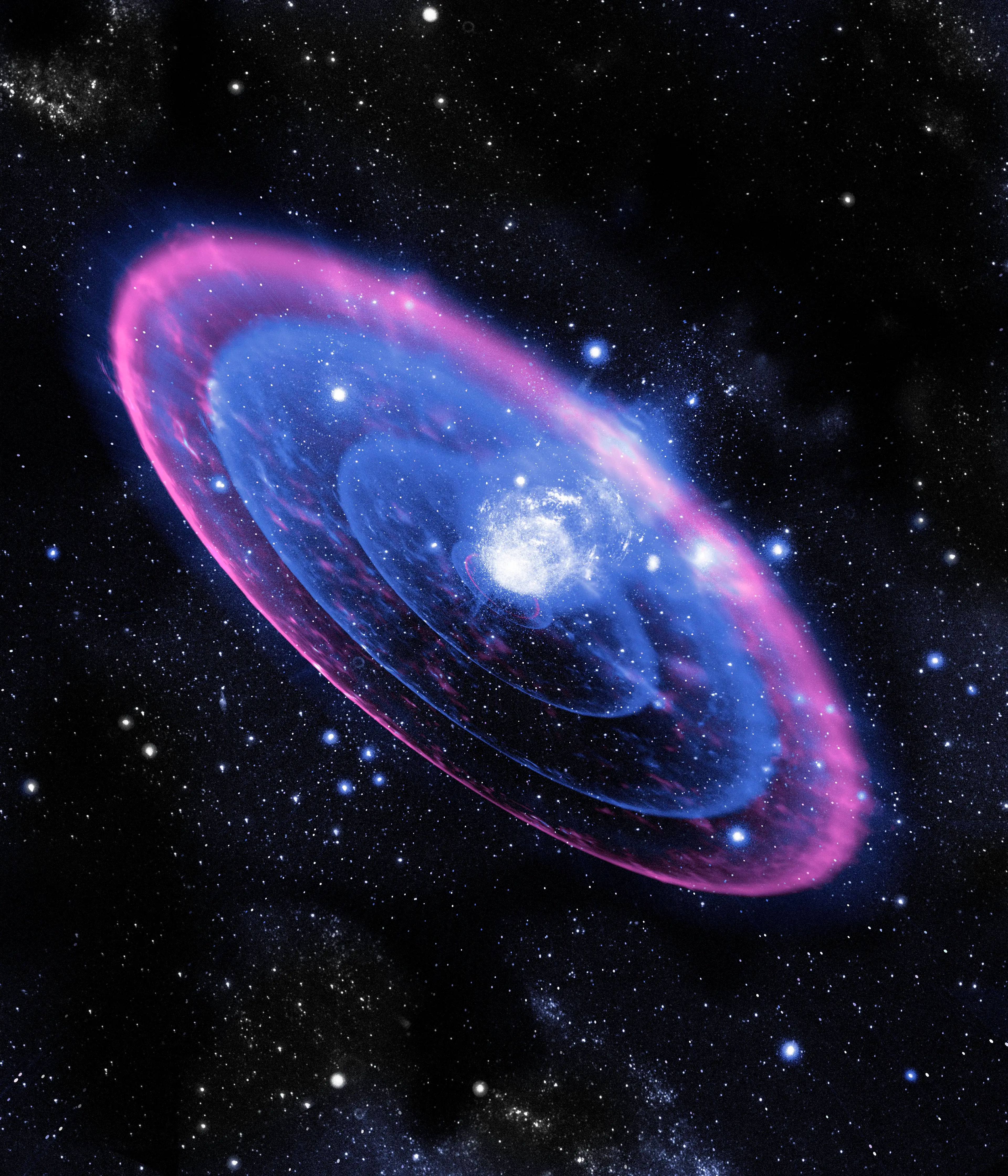
When they reach our planet, they collide with particles in the air and split them into smaller subatomic particles, like muons.
These then rain down on the planet, potentially causing minor disruptions to electronics in their path.
Similarly, during moments of solar flare-ups, intense radiation from the sun can cause even more subatomic muons to drop through the atmosphere, also threatening aircraft electronics.
"You can get huge increases [in particle radiation] from the sun," Dyer said. "A thousand times higher than cosmic rays, and then many aircraft could be bothered by it."
With this radiation flooding our atmosphere on a regular basis, space expert Dyer believes that aircraft and avionics manufacturers should take action to prevent dangerous incidents, like the October 30 JetBlue flight.
He said: "It's down to manufacturers to produce hardy electronics, especially in safety critical units.
"A slight problem is that over 20 years, they've become complacent, because there have not been any [significant solar weather] events."
 William Morgan