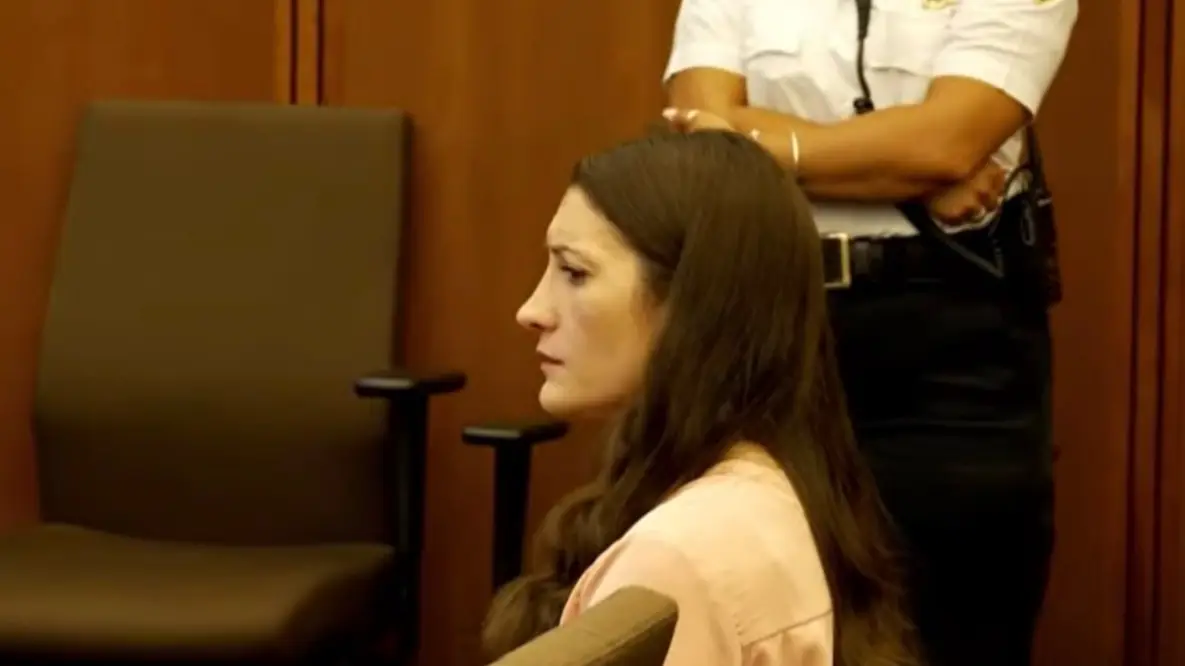
Reason why the 911 call and autopsy photos in the Lindsay Clancy murder trial won’t be released to the public

As the high-profile murder trial of Lindsay Clancy gets underway in Plymouth Superior Court, court observers and media outlets have noticed a key restriction: the dramatic 911 audio recording and sensitive autopsy photographs will not be broadcast or released to the public.
The decision follows a key pre-trial motion filed by Patrick Clancy—the ex-husband of Lindsay Clancy and father of the three young victims: 5-year-old Cora, 3-year-old Dawson, and 8-month-old Callan.
Ahead of opening statements, Patrick’s legal team asked the court to limit public dissemination of the most traumatizing evidence in the case. Overseeing the trial, Plymouth Superior Court Judge William Sullivan granted the motion.
Here is a breakdown of why this evidence is being kept out of the public eye and how the ruling impacts the trial proceedings.
The Legal Reason: 'Substantial Likelihood of Harm'
In his written order, Judge Sullivan strictly prohibited members of the press from recording, displaying, reproducing, or distributing the 911 call or any autopsy images.
Advert
The legal standard for restricting open-court access to evidence balances public interest against potential trauma and harm.
In his ruling, Judge Sullivan concluded that broadcasting such agonizing material across television and online media 'will create a substantial likelihood of harm [to Patrick Clancy]'.
Patrick, who has since remarried, was the first person to enter the family’s Duxbury home on January 24, 2023, discovering his children and calling emergency services after his ex-wife attempted suicide
Because releasing raw audio of a father's distress and explicit images of deceased children poses severe psychological harm, courts often exercise discretion to shield surviving victims from public exploitation.
Will the jury still see and hear the evidence?
Yes. The judge's ruling applies specifically to media broadcast and public release, not to the judicial process inside the courtroom.
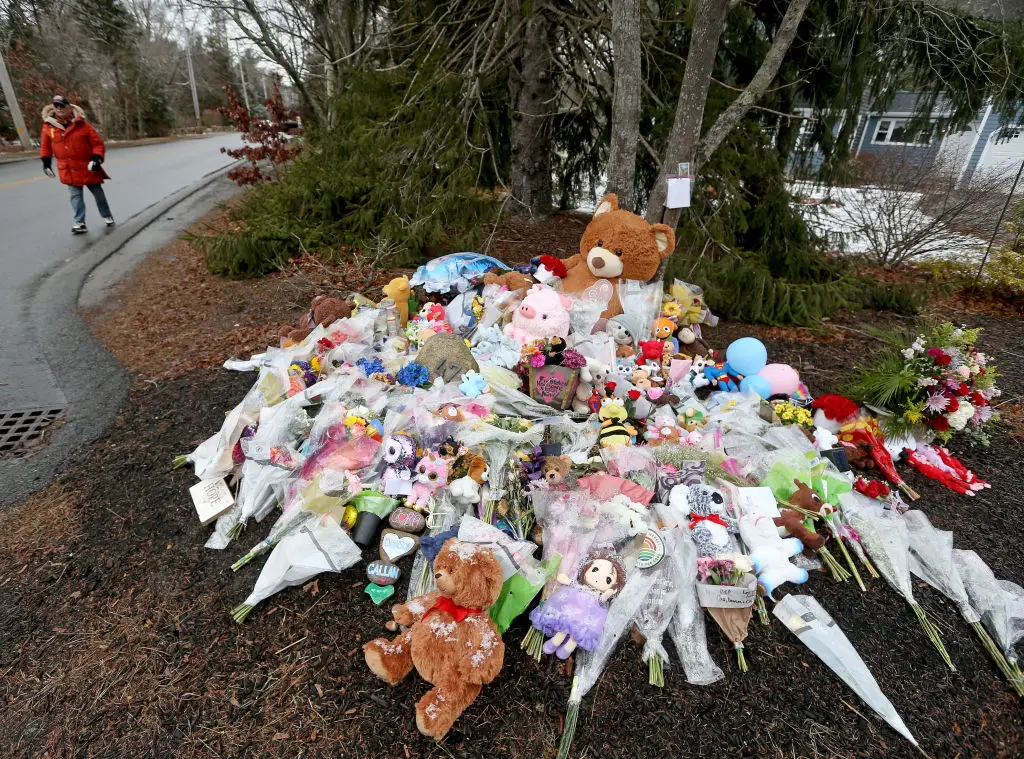
During trial proceedings, the 12 jurors and six alternates will listen to the 911 call and examine the autopsy photos as part of the formal evidence presented by prosecutors.
“The jury still gets to hear the evidence, see the evidence,” legal analyst Jennifer Roman explained to news outlets. “Touch and feel those photos when they go back to deliberate. It’s going to be treated like any other pieces of evidence at the trial.”
Balancing First Amendment access with victim rights
While Massachusetts courts operate under a strong presumption of open public records and trial transparency, judges maintain broad authority to seal or redact specific pieces of evidence when public exposure would inflict unnecessary harm on victims or compromise a fair trial.
By allowing jurors to review the material in full while forbidding news agencies from streaming or publishing the media, the court aims to preserve trial integrity while protecting a grieving family from secondary trauma.
Patrick Clancy takes to the stand as a witness
Since the trial began, Patrick has taken to the stand as the prosecution's first witness, with him emotionally recalling his children's final few hours and how he had no reason to suspect Lindsay would do anything to hurt them.
"She was playing with the kids, and she seemed in a good mood," he said, adding: "She was having one of her best days."
Timeline of Lindsay Clancy case
May 2022
Lindsay gives birth to her third child, Callan.
She’s open about her postpartum struggles with her other two kids on social media. Six weeks after Callan’s birth, she posts that she’s feeling ‘dialed in’ while focusing on exercise, nutrition, and mindset, and ‘it has made all the difference’.
September 2022
As the end of her maternity leave nears, Lindsay, who works as a labor and delivery nurse at Massachusetts General Hospital, starts to experience anxiety about returning to work.
She visits two different psychiatrists and receives a diagnosis of generalized anxiety disorder.
Lindsay is prescribed several different psychiatric medications.
October 2022
According to court docs, she writes in a note on her phone: “I think I sort of resent my other children because they prevent me from treating Cal like my first baby. And I know that’s not fair to them. I know that. I was feeling so depressed last evening when Cora and Dawson came home from school, I know it runs off on them, so we had a pretty rough evening, I want to feel love and connection with all my kids.”
December 2022
Lindsay undergoes an evaluation at the Women and Infants Hospital Center for Women’s Behavioral Health. She is not diagnosed with postpartum depression, prosecutors say.
Lindsay’s husband Patrick tells police she is having suicidal thoughts and thoughts of harming their children, according to his testimony in court.
1-5 January, 2023
Lindsay admits herself to McLean Hospital for psychiatric treatment. She is discharged after five days as clinicians do not believe she poses an imminent danger to herself or others, prosecutors say.
22 January, 2023
Lindsay, Patrick, Cora and Dawson have dinner at family friend Kyle Carney’s home. Kyle later tells police that Lindsay ‘seemed fairly normal’.
23 January, 2023
According to prosecutors, Lindsay pens a note on her phone which says she has ‘a touch of postpartum anxiety’ about going back to work.
24 January, 2023
Prosecutors allege the following took place this day:
Morning: Lindsay takes Cora to a scheduled pediatrician appointment. After returning home, they play in the snow with Dawson. She sends photos of the kids to Patrick and her mom.
4:02pm: Lindsay searches for ‘kids Miralax’ (a laxative) on her phone, and 11 minutes later looks up ‘take out 3v’, referring to restaurant ThreeV in Plymouth. She uses Apple Maps to calculate how long it would take to drive from the family’s home to ThreeV.
4:47pm: Lindsay rings a CVS in Kingston to ask if they have any Miralax in stock. A manager tells her they don’t, but they do have similar medications.
The manager later tells authorities that she did not slur her words or sound impaired during the call.
4:35pm: Lindsay texts Patrick, who is working from home: “Any chance you want to do takeout from 3V … I didn’t cook anything … It’s been a long day.”
Patrick says yes, and Lindsay asks him to ‘check the menu when you can’.
5:10pm: Lindsay calls ThreeV to place the order.
5:15pm: Lindsay allegedly texts Patrick: “Pedialax liquid stool softener.” He then leaves to pick up the medication.
5:33pm: When Patrick arrives at CVS, he rings Lindsay, but she doesn’t pick up. She rings back one minute later and confirms the medication.
5:54pm: Patrick gets to ThreeV, pays for the food and leaves.
6:09pm: Patrick returns home. “The first thing he noticed was the silence,” prosecutors say. “He did not see or hear the defendant or the children.”
Patrick calls for his wife but gets no response. He discovers their second-floor bedroom is locked. Patrick eventually manages to get in the room but sees blood on the floor and an open window. He runs outside and finds Lindsay lying on the ground, according to prosecutors.
6:11pm: Prosecutors say that Patrick rings 911 and Lindsay is saying: “I tried to kill myself and jumped out the window.”
He is then said to ask Lindsay: “Where are the kids?” She responds: “In the basement.”
While on the call, Patrick goes down to the basement and is heard ‘screaming in agony’,
Cora and Callan are discovered on the floor of the den. Dawson is found in his dad’s home office.
When officers arrive at the scene, Patrick alleges: “She killed the kids.”
Lindsay is taken to hospital, where she is treated for injuries that leave her paralysed below the waist. The three children are also rushed to hospital.
7:28pm: Cora and Dawson are pronounced dead. Callan is medically flown to another children’s hospital.
25 January, 2023
Police issue Lindsay an arrest warrant, charging her with two counts of murder, three counts of strangulation or suffocation, and three counts of assault and battery with a dangerous weapon.
27 January, 2023
Callan is pronounced dead at 11.18am.
According to Assistant District Attorney Jennifer Sprague, Lindsay later wakes up and uses a whiteboard to ask: “Do I need an attorney?”
6 February, 2023
While in the presence of a psychologist hired by her lawyer, Lindsay calls Patrick and tells him she had a ‘moment of psychosis’ and heard ‘a man’s voice telling her to kill the kids and kill herself’ after he left on January 24.
7 February, 2023
On the day of her arraignment, Lindsay’s attorney says that she’s still suicidal. She pleads not guilty to three counts of murder.
October 2024
Patrick asks the public to forgive Lindsay, telling The New Yorker: “I wasn’t married to a monster - I was married to someone who got sick.”
January 2026
Lindsay and Patrick file a civil lawsuit, accusing medical providers of not properly diagnosing, treating and monitoring her for a ‘severe postpartum psychiatric condition’.
9 July, 2026
The Plymouth County District Attorney's Office says the three counts of strangulation would be subsumed into the murder charges.
27 July, 2026
Lindsay’s murder trial begins.
Topics: Crime, Massachusetts, US News, Lindsay Clancy
 Phoebe Tonks