unilad homepage
unilad homepage
  • News
    • UK News
    • US News
    • World News
    • Crime
    • Health
    • Money
    • Sport
    • Travel
  • Music
  • Technology
  • Film and TV
    • News
    • DC Comics
    • Disney
    • Marvel
    • Netflix
  • Celebrity
  • Politics
  • Advertise
  • Terms
  • Privacy & Cookies
  • LADbible Group
  • LADbible
  • SPORTbible
  • GAMINGbible
  • Tyla
  • UNILAD Tech
  • FOODbible
  • License Our Content
  • About Us & Contact
  • Jobs
  • Latest
  • Archive
  • Topics A-Z
  • Authors
Facebook
Instagram
X
Threads
TikTok
YouTube
Submit Your Content
How one man ‘caused’ a $1,000,000,000,000 US stock market crash from the comfort of his bedroom
Home>News>UK News
Published 14:32 27 Aug 2024 GMT+1

How one man ‘caused’ a $1,000,000,000,000 US stock market crash from the comfort of his bedroom

Navinder Sarao became known as 'The Hound of Hounslow' after his technique for gaming the US stock market was exposed

Kit Roberts

Kit Roberts

google discoverFollow us on Google Discover
Featured Image Credit: John Phillips/Getty Images / Carl Court/Getty Images

Topics: News, US News, UK News, Money, Crime

Kit Roberts
Kit Roberts

Kit joined UNILAD in 2023 as a community journalist. They have previously worked for StokeonTrentLive, the Daily Mirror, and the Daily Star.

Advert

Advert

Advert

One man's activities in his parents' home contributed to a short but sharp crash of $1 trillion on the US stock market.

You've probably heard of The Wolf of Wall Street, but have you heard of The Hound of Hounslow?
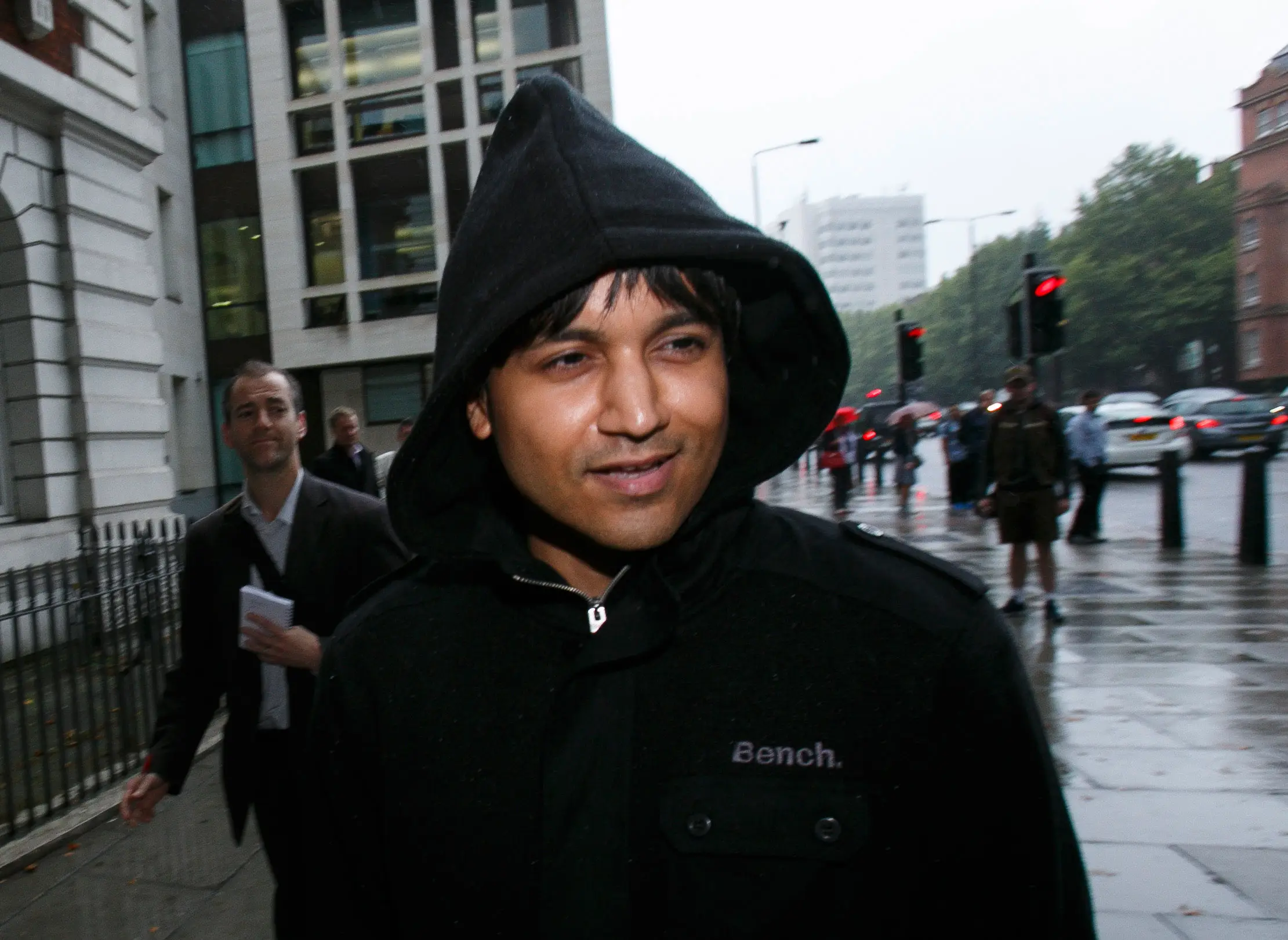
Navinder Singh Sarao, aka 'The Hound of Hounslow'. (John Phillips/Getty Images)

This was moniker given to Navinder Singh Sarao, who is thought to have made $40 million from his parents' London home using a technique to game the market.

Advert

However, this technique may have had some big repercussions, and Sarao was eventually tracked down and arrested after his activities were linked to a brief but sharp crash in 2010.

The crash lasted for less than an hour before the markets recovered, but saw some $1 trillion lost from the markets in a blood-pressure-escalating 35 minutes.

Sarao had taught himself to trade on the stock markets, and his activities were part of what caused panic on the markets in 2010's so-called 'flash crash'.

The trader, now 45, was held in Wandsworth Prison in the UK for four months after his arrest before he was extradited to the US.

But what on Earth did he do that may have been a factor in such a huge, if brief, panic in the markets?
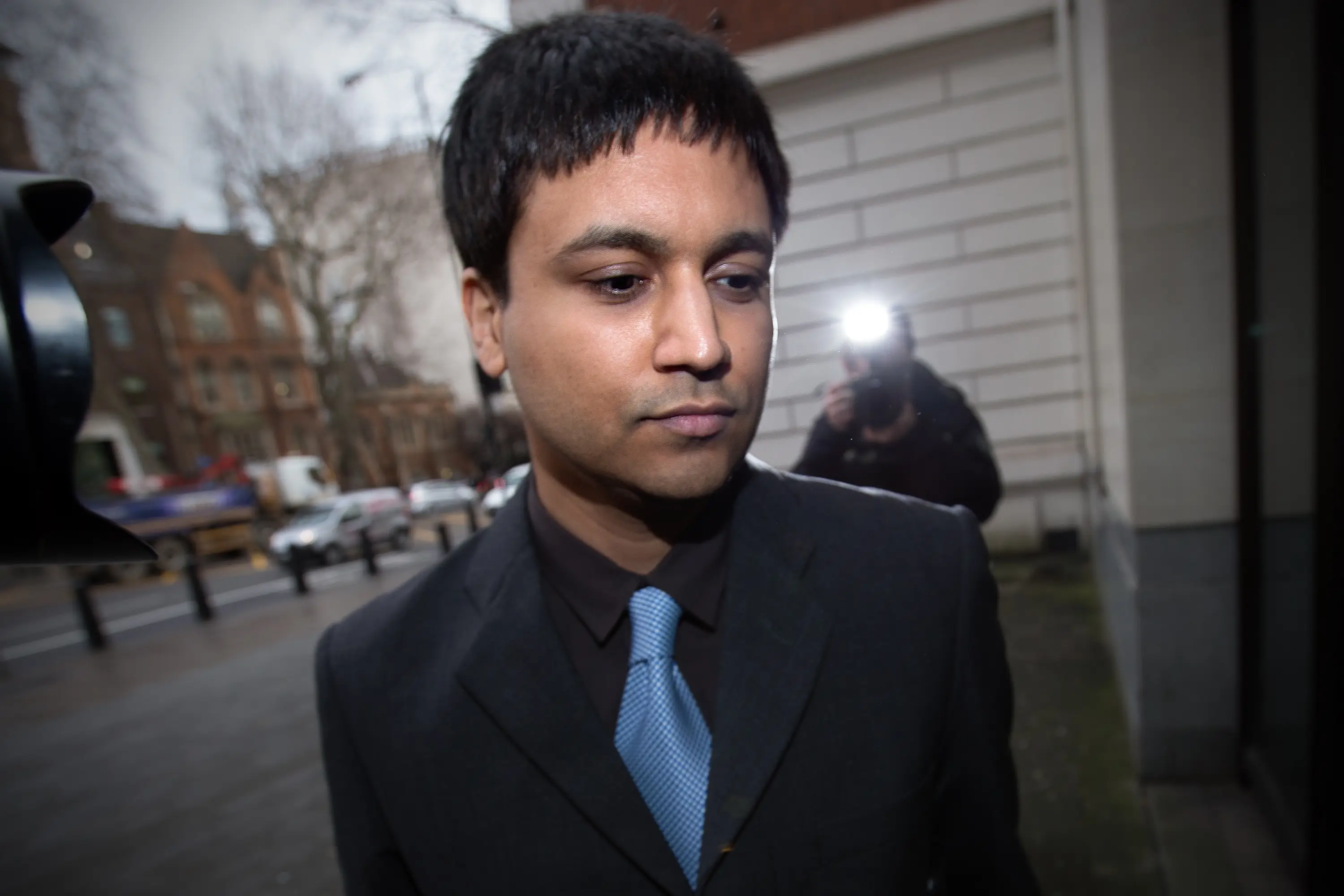
Sarao had used a technique called 'spoofing'. (Carl Court/Getty Images)

Sarao used a technique called 'spoofing', which took advantage of the software used by high frequency traders.

These are traders which are often computers running algorithms that make trades extremely quickly to try and be the first to cash in on market changes.

But because these high frequency traders reacted to market fluctuations very quickly, Sarao noticed that they reacted predictably.

It was almost as though they were a flock of sheep which could be 'herded' by a hound, as they would all move in the same direction.

Sarao took advantage of this by placing thousands of orders on the market, increasing demand in one direction, which is what 'spoofing' refers to.

He would then quickly cancel or change the orders after the high frequency traders reacted.

Sarao carried out the trades at his parents' house in Hounslow. (Carl Court/Getty Images)

This meant he could make the buy or sell orders at a profit by 'herding' the market in a particular direction.

In 2016 Sarao agreed to pay $12.8 million to the US government, which was how much prosecutors had said he had earned.

Despite his practices being a factor in the flash crash, prosecutors also didn't pursue any jail time for him.

They took account of Sarao's autism and the fact he had already served time in jail while on remand in the UK.

Defence attorneys said that he had viewed his activities as being 'like winning a video game', and he didn't spend the money on any luxuries, losing a lot of it to fraudsters.

Sarao had also used his expertise to actively help the government crack down on financial crime in the years following his arrest.

Choose your content:

an hour ago
2 hours ago
10 hours ago
11 hours ago
  • YouTube/Death Penalty Action
    an hour ago

    Former death row executioner recalls moment he quit with PTSD after watching 15-minute botched killing

    Ron McAndrew watched on in horror as a death row inmate 'burned to death'

    News
  • GiveALittle
    2 hours ago

    Teen facing years in Thai prison after committing '$100 crime' at airport speaks out on 'terrifying' situation

    Loukas Rainger has opened up on his 'nightmare' experience which involved sharing a cell with 19 other men

    News
  • Chip Somodevilla/Getty Images
    10 hours ago

    Some online shoppers can now get refunds on last year’s surprise tariff charges — here’s how

    Following a Supreme Court ruling striking down certain federal import tariffs, UPS and FedEx are issuing refunds for import fees

    News
  • Tom Williams/CQ-Roll Call, Inc via Getty Images
    11 hours ago

    AOC mocks Donald Trump’s claims that ‘communism’ is taking over America: ‘We can’t even raise the minimum wage’

    Alexandria Ocasio-Cortez has laughed off Trump’s warnings about communism, pointing out that the US can't even raise its $7.25 minimum wage

    News
  • Andrew Tate and brother arrested in US as charges revealed
  • US Secretary of State Marco Rubio speaks out after Tate brothers' arrest as he makes position clear
  • How to check if you're owed $51 from Amazon Prime settlement as deadline approaches
  • I'm a Death Row psychologist and was left terrified after one inmate revealed his plot to me