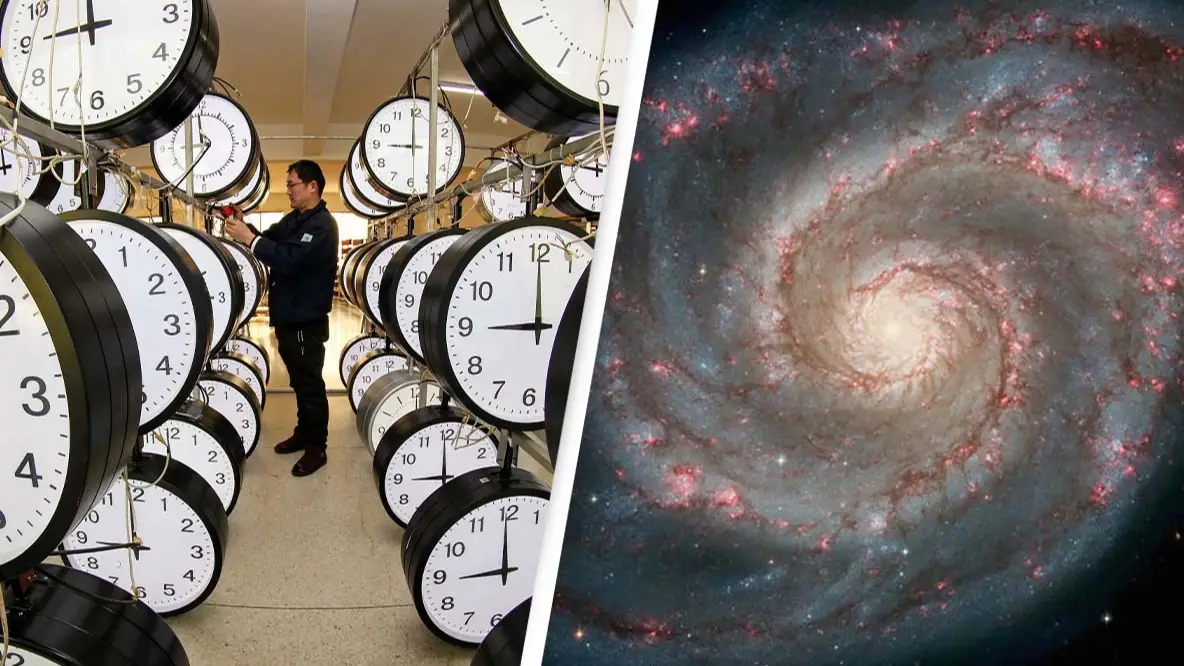
Time is rapidly speeding up as the universe gets older, scientists confirm

With advancements in technology over the years, scientists have been able to uncover many new findings that wouldn't have been possible in the past.
While many are worried about the rise in AI, other parts of technology have allowed science geeks to learn more about the universe we live in.
Now, scientists have uncovered that the universe went in 'extreme slow motion' at its very beginning and has been dramatically speeding up ever since.
Funnily enough, this exact theory was predicted by Albert Einstein himself back in 1915.
Advert
In short, the general relatively theory suggests that we should be able to see the distant universe, despite it being much older than it is today.
But while seeing this, it should be a lot slower, according to Einstein - though this theory has been disputed in the past.

In a 2019 study looking into the general theory of relativity, Andrea Ghez, UCLA professor of physics and astronomy, said: "Einstein’s right, at least for now."
Though, she did add: "We can absolutely rule out Newton’s law of gravity. Our observations are consistent with Einstein’s general theory of relativity. However, his theory is definitely showing vulnerability.
"It cannot fully explain gravity inside a black hole, and at some point we will need to move beyond Einstein’s theory to a more comprehensive theory of gravity that explains what a black hole is."
Until now, scientists have been unable to confirm Einstein's theory for sure, as they have not been able to look that far into the universe.
But they have now used luminous quasar 'clocks' to measure time from when the universe was a lot older than it is today.
Geraint Lewis from the University of Sydney, and lead author on the new study, said: "Looking back to a time when the universe was just over a billion years old, we see time appearing to flow five times slower.
"If you were there, in this infant universe, one second would seem like one second – but from our position, more than 12 billion years into the future, that early time appears to drag."
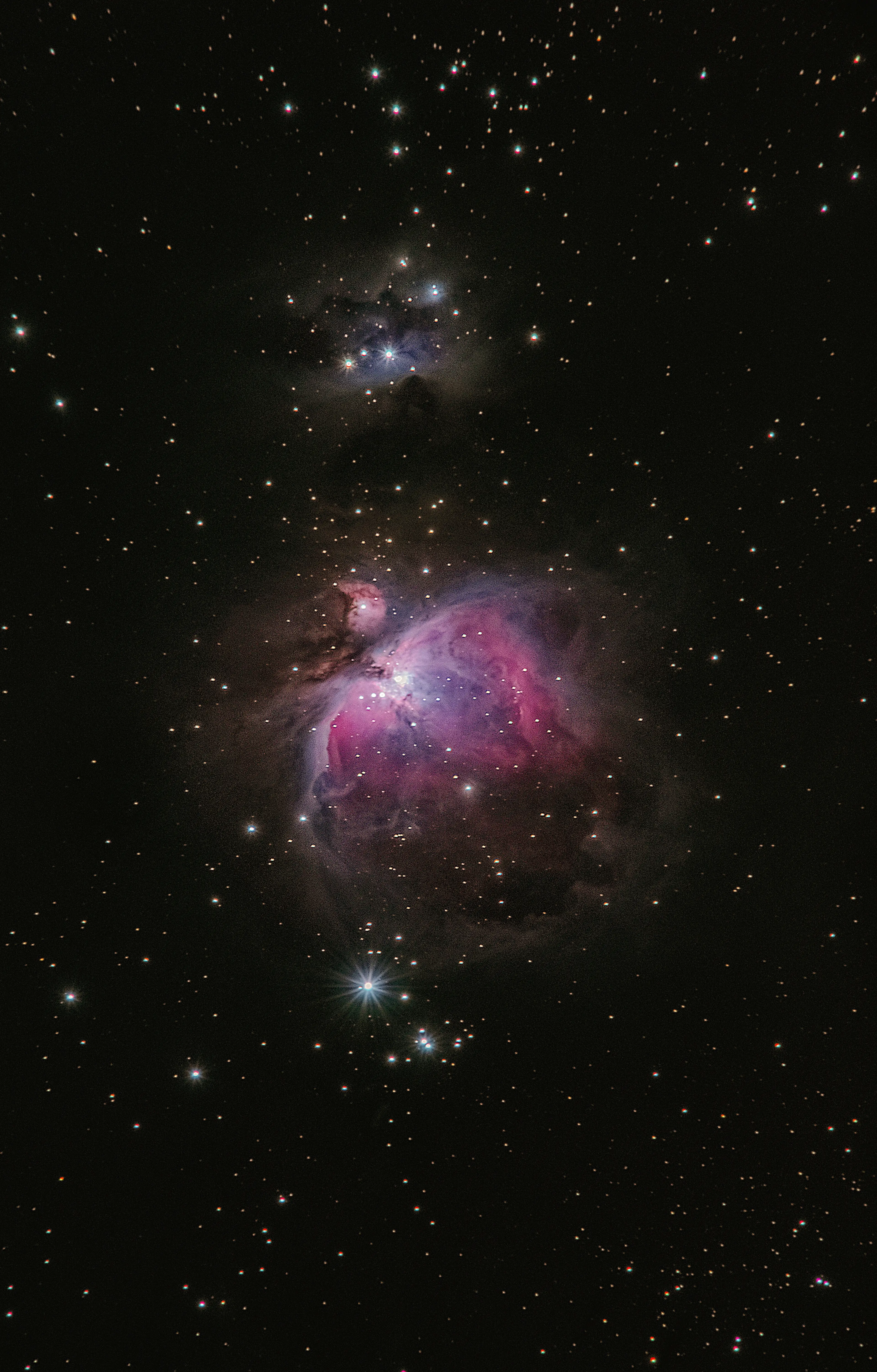
Alongside other researchers, Professor Lewis gathered data from 200 quasars - active supermassive black holes that sit in the middle of early galaxies.
And thanks to this, scientists were able to look back to when the universe was just a tenth of its age at just a billion years old, and confirm that time speeds up as the universe gets older.
"Thanks to Einstein, we know that time and space are intertwined and, since the dawn of time in the singularity of the Big Bang, the universe has been expanding," Professor Lewis added.
"This expansion of space means that our observations of the early universe should appear to be much slower than time flows today."
The full research is part of the 'Detection of the cosmological time dilation of high-redshift quasars' study, which has been published in Nature Astronomy.
 Callum Jones