unilad homepage
unilad homepage
    • News
      • UK News
      • US News
      • World News
      • Crime
      • Health
      • Money
      • Sport
      • Travel
    • Music
    • Technology
    • Film and TV
      • News
      • DC Comics
      • Disney
      • Marvel
      • Netflix
    • Celebrity
    • Politics
    • Advertise
    • Terms
    • Privacy & Cookies
    • LADbible Group
    • LADbible
    • SPORTbible
    • GAMINGbible
    • Tyla
    • UNILAD Tech
    • FOODbible
    • License Our Content
    • About Us & Contact
    • Jobs
    • Latest
    • Archive
    • Topics A-Z
    • Authors
    Facebook
    Instagram
    X
    Threads
    TikTok
    YouTube
    Submit Your Content
    Glacier the size of Florida is 'hanging on by its fingernails'
    Home>News
    Published 10:54 6 Sep 2022 GMT+1

    Glacier the size of Florida is 'hanging on by its fingernails'

    The Thwaites Glacier in West Antarctica is causing major concern amongst scientists

    Anish Vij

    Anish Vij

    google discoverFollow us on Google Discover
    Featured Image Credit: Alexandra Mazur/University of Gothenburg/NASA/ZUMA Press Wire Service/Shutterstock

    Topics: Climate Change, Antarctica

    Anish Vij
    Anish Vij

    Anish is a Journalist at LADbible Group and is a GG2 Young Journalist of the Year 2024 finalist. He has a Master's degree in Multimedia Journalism and a Bachelor's degree in International Business Management. Apart from that, his life revolves around the ‘Four F’s’ - family, friends, football and food. Email: [email protected]

    X

    @Anish_Vij

    Advert

    Advert

    Advert

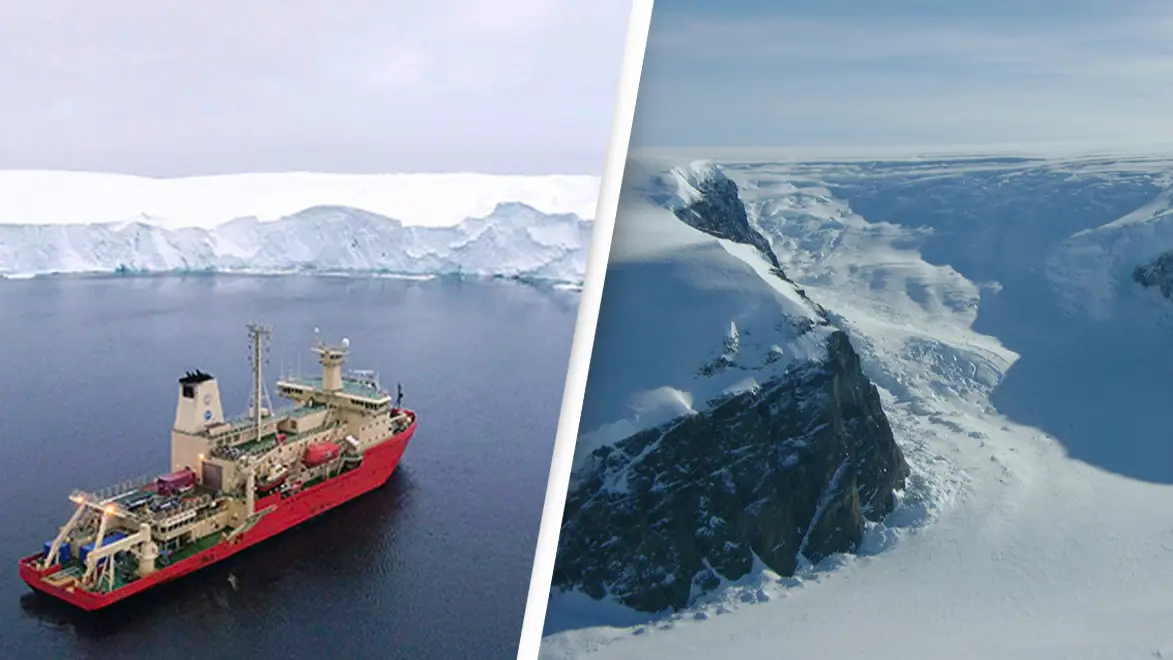
    Scientists have issued a stark warning as a glacier the size of Florida is 'hanging on by its fingernails'.

    The Thwaites Glacier in West Antarctica is causing major concern as it appears to already be in a phase of fast retreat, according to a new study.

    Dubbed as the 'Doomsday glacier', it has always been used as a rough ball park in predicting the global rise in sea level.

    If the glacier was to totally melt, the sea level could rise from three to a whopping ten feet.

    Advert

    In order to gather sufficient evidence, a group of scientists from the United States, United Kingdom, and Sweden, launched a state-of-the-art orange robotic vehicle loaded with imaging sensors called ‘Rán’ from the R/V Nathaniel B. Palmer during an expedition in 2019.

    The team went on a 20-hour mission, which basically mapped an area of the seabed in front of the glacier about the size of Houston.

    This allowed scientists to access the glacier front for the first time in history.

    A more recent study - titled 'Rapid retreat of Thwaites Glacier in the pre-satellite era' - was led by marine geophysicist Alastair Graham at the University of South Florida’s College of Marine Science (USF CMS).
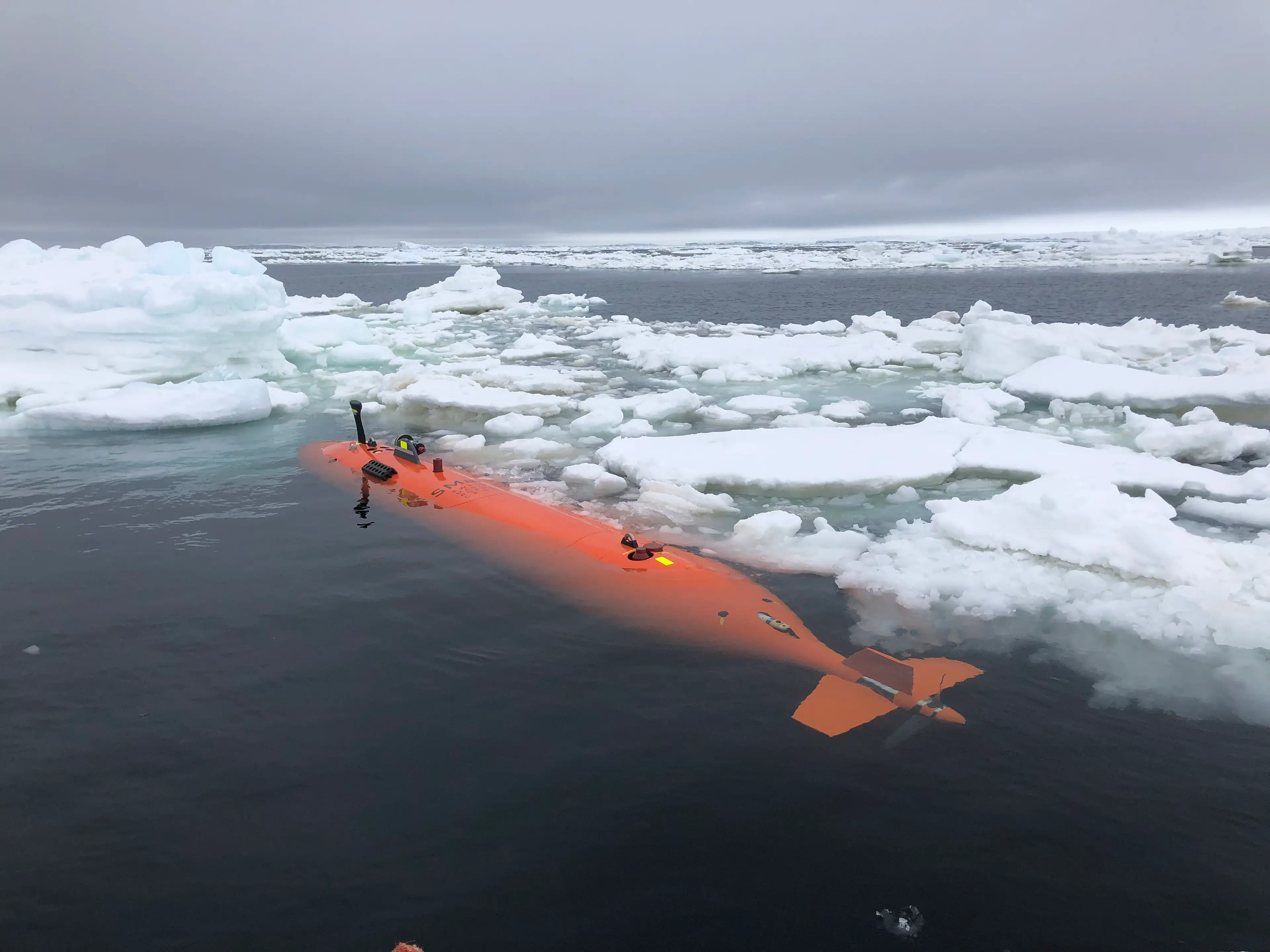
    Anna Wåhlin/University of Gothenburg

    It has now been found that at some point in the last 200 years, over a duration of less than six months, the front of glacier lost contact with a seabed ridge and retreated at a rate of more than 2.1 kilometres per year (1.3 miles per year), which happened to be twice the rate documented using satellites between 2011 and 2019. 

    “Our results suggest that pulses of very rapid retreat have occurred at Thwaites Glacier in the last two centuries, and possibly as recently as the mid-20th Century,” said Graham.

    “Thwaites is really holding on today by its fingernails, and we should expect to see big changes over small timescales in the future – even from one year to the next – once the glacier retreats beyond a shallow ridge in its bed,” said marine geophysicist and study co-author, Robert Larter, from the British Antarctic Survey. 

    "It was truly a once in a lifetime mission,” said Graham.
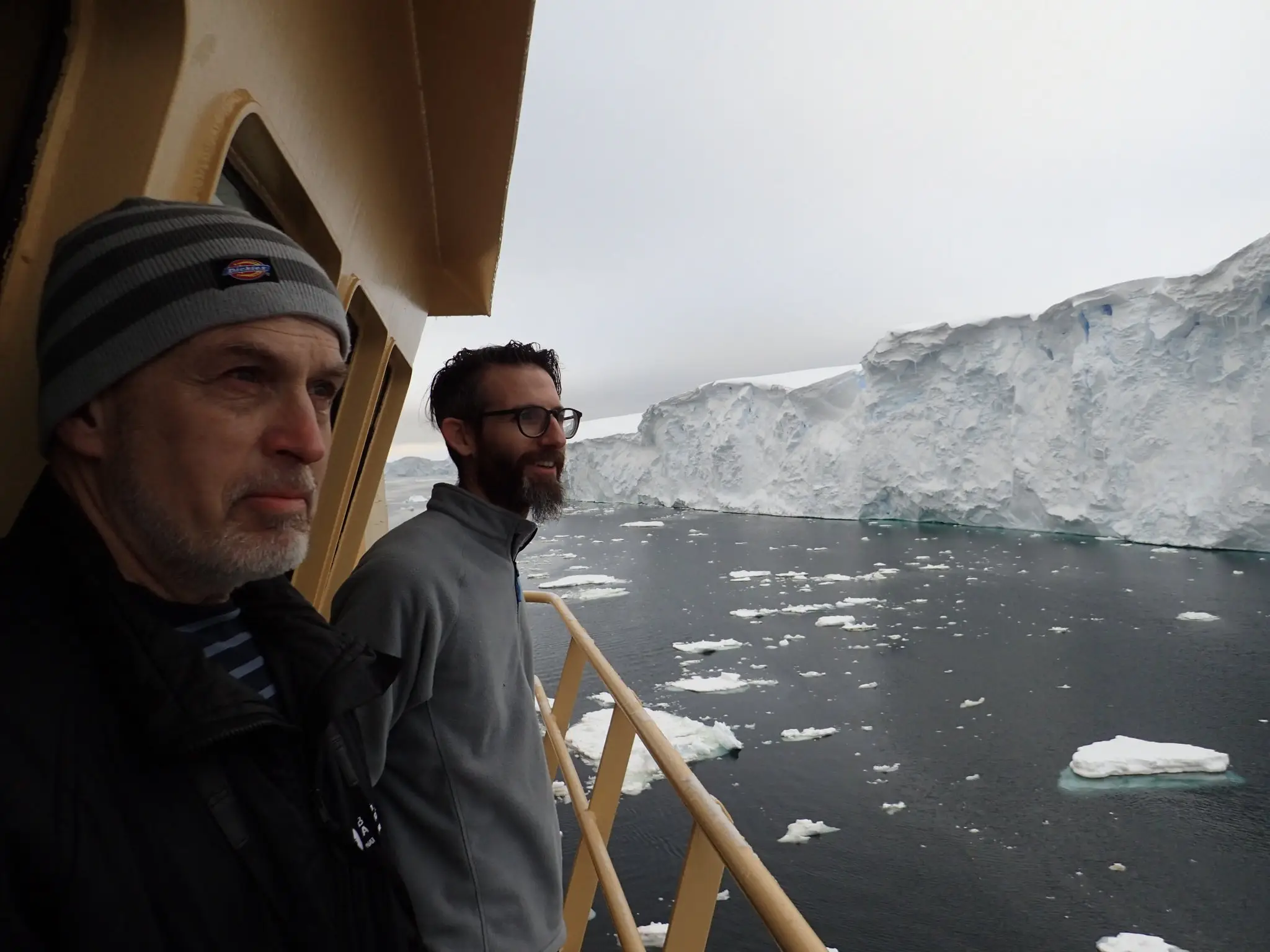
    Scientists Alastair Graham (right) and Robert Larter (left).
    Frank Nitsche

    Anna Wåhlin, a physical oceanographer from the University of Gothenburg who deployed Rán at Thwaites, said: “This was a pioneering study of the ocean floor, made possible by recent technological advancements in autonomous ocean mapping and a bold decision by the Wallenberg foundation to invest into this research infrastructure.

    “The images Ran collected give us vital insights into the processes happening at the critical junction between the glacier and the ocean today."

    “This study is part of a cross-disciplinary collective effort to understand the Thwaites Glacier system better and just because it’s out of sight, we can’t have Thwaites out of mind," said Tom Frazer, dean of the USF CMS.

    “This study is an important step forward in providing essential information to inform global planning efforts.”

    If you have a story you want to tell, send it to UNILAD via [email protected]  

    Choose your content:

    6 hours ago
    7 hours ago
    8 hours ago
    • Getty Stock
      6 hours ago

      What your answer to 'the Red or blue Button' dilemma means, according to science

      The red button or blue button debate has split social media in half, but a game theory expert has broken down what it actually means

      News
    • TLC
      7 hours ago

      The horrific crimes 90 Day Fiancé Geoffrey Paschel went to prison for explained

      Geoffrey Paschel appeared on our TV screens not long before being imprisoned for 18 years over a brutal attack on his ex

      News
    • Getty Stock
      8 hours ago

      The simple way swingers spot each other on a ‘spicy’ cruise explained

      There's a simple way to tell if passengers are up for 'play'...

      News
    • Getty Stock Image
      8 hours ago

      The six stages of a relationship explained and what to expect

      Knowing if your relationship is on the right track isn't easy, but there are six stages that all couples can expect to go through

      News
    • Concerning new climate alert issued as UN stresses Earth 'is being pushed beyond its limits'
    • Shocking before and after photos show entire village buried after devastating glacier collapse
    • Concerning reason why turbulence on planes is getting worse
    • Chilling footage from space shows massive size of typhoon posing 'extremely dangerous threat' to US islands