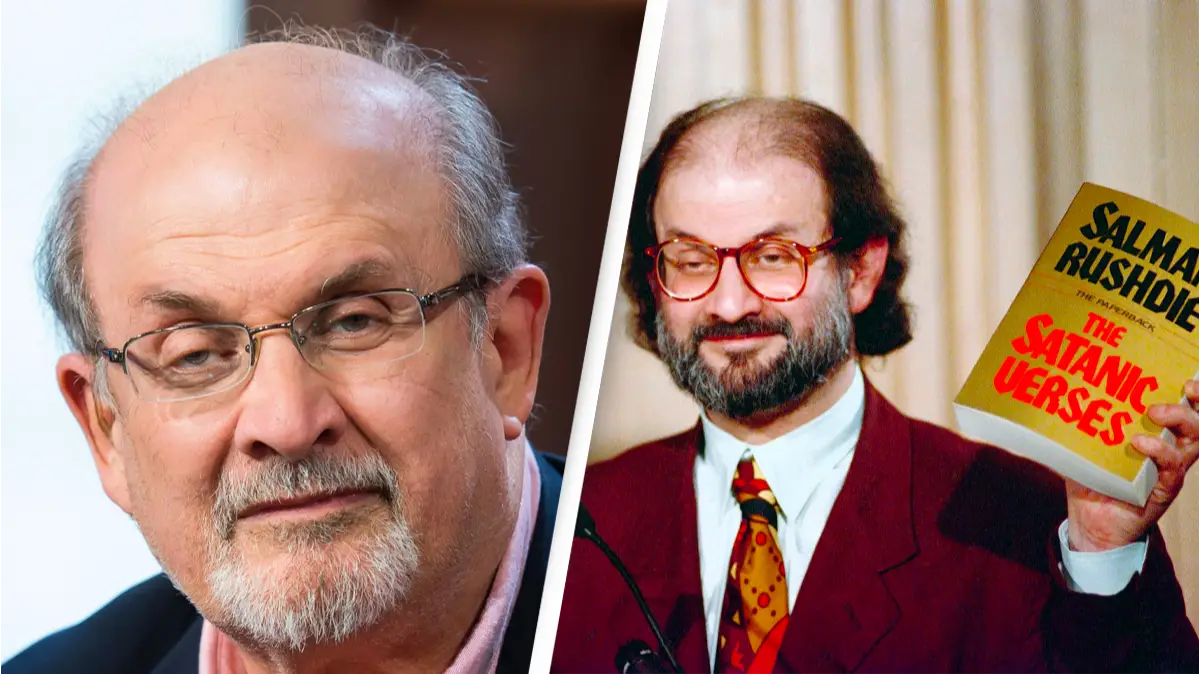
The Salman Rushdie book which is still so controversial

On Friday morning, one of the world's most controversial authors, Salman Rushdie, was rushed to hospital after being stabbed in the neck in New York.
The Indian-born British writer had spent decades in hiding, fearful that an attack of this nature would eventually happen. But why is the writer's work so controversial - and so polarising?
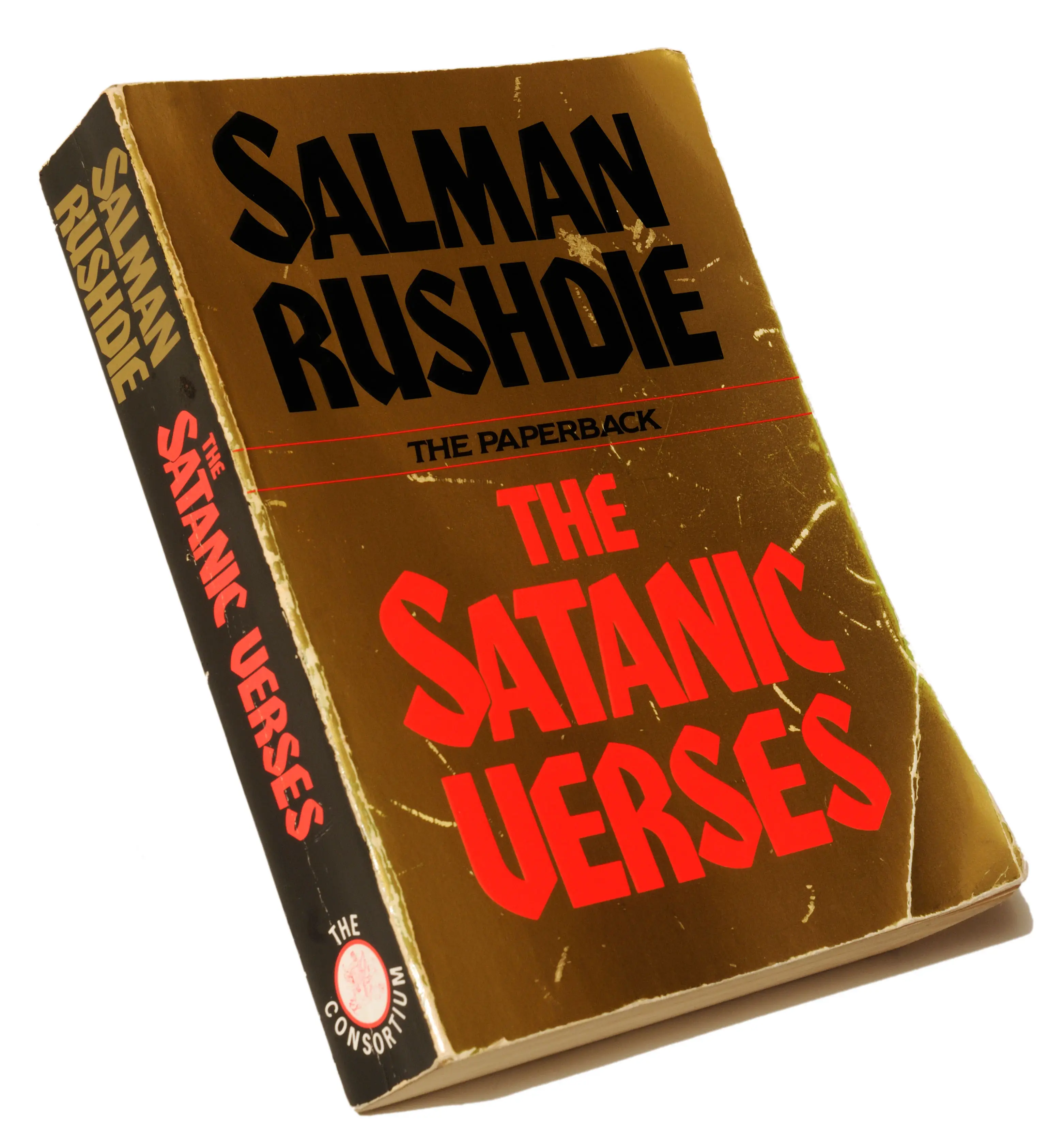
It all stems back to his seminal novel The Satanic Verses. Released in 1988, it was regarded as so offensive to Muslims that it was banned in India, and it even led Ayatollah Khomeini, then Iran's supreme leader, to issue a fatwa against Rushdie - ordering Muslims to kill the author.
The novel is a very clear challenge to Islam, attacking the most sacred Muslim beliefs through a series of dream sequences.
Advert
As The Independent describes, the book sometimes seems to "mock some of [Islam's] most sensitive tenets".
One fundamental Muslim belief is that the Prophet Muhammad was visited by the angel Jibreel, who recited the word of god to him over a 22-year period.
The sacred words told to Muhammad would be repeated by him to his followers, and eventually written down to create The Quran.
In Rushdie's novel, he includes a character that is modelled on the Prophet Muhammad, which in and of itself is considered blasphemous.
In fact, the novel's version of the Prophet is called Mahound, which, according to religious thought expert Myriam Renaud (writing in The Independent), was a name "used by Christians in the Middle Ages" to describe the Islamic Prophet - many of whom regarded him as a devil.
Rushdie uses the Mahound character to cast doubt on the divinity of the Quran, even asserting that the Prophet was sexist at one point.
The publication of The Satanic Verses triggered numerous societal debates in the West over how - and in what form - religious texts could be challenged.
Rushdie himself still argues that religion - including Islam - should be challenged.
“Why can’t we debate Islam?” Rushdie said in a 2015 interview with The Guardian.
“It is possible to respect individuals, to protect them from intolerance, while being sceptical about their ideas, even criticising them ferociously.”
Conversely, this view is a clear affront to many Muslims around the world, who believe the Quran is the literal word of God.
Some authors, such as Kenan Malik, claim that The Satanic Verses couldn't even be published today, due to a change in attitude towards blasphemy.
"It wouldn't even be written today, let alone published... they [Rushdie’s critics] lost the battle but they won the war," Malik stated on Newsnight.
Rushdie's life changed forever after the publication of the book, which was actually his fourth novel.
He spent much of the 1990s living in hiding after the Iranian-led fatwa, and only started to re-emerge into public life in the 21st century.
His fears were justified at the time, as Hitoshi Igarashi, who translated his book into Japanese, was murdered in 1991.
On August 12, Rushdie himself was stabbed as he was about to give a lecture at the Chautauqua Institution in New York. Currently on a ventilator in hospital, the attack shows how the threat to his life never went away - over three decades after the publication of The Satanic Verses.
Whatever your view may be on the novel, it certainly changed the world as we know it.
Fundamentally, it made societies all around the world question the extent to which religious texts could be challenged - a debate which still rages to this very day.
If you have a story you want to tell, send it to UNILAD via [email protected]
Topics: UK News, World News, Books
 Tom Fenton