• News
  • Film and TV
  • Music
  • Tech
  • Features
  • Celebrity
  • Politics
  • Weird
  • Community
  • Advertise
  • Terms
  • Privacy & Cookies
  • LADbible Group
  • LADbible
  • SPORTbible
  • GAMINGbible
  • Tyla
  • UNILAD Tech
  • FOODbible
  • License Our Content
  • About Us & Contact
  • Jobs
  • Latest
  • Topics A-Z
  • Authors
Facebook
Instagram
X
Threads
TikTok
YouTube
Submit Your Content
Grim photo showed the reality of child labor and was key to it being banned in US

Home> News

Published 18:19 22 May 2023 GMT+1

Grim photo showed the reality of child labor and was key to it being banned in US

Lewis Hine played a vital part in the fight against child labor

Emily Brown

Emily Brown

google discoverFollow us on Google Discover

A photographer managed to capture the harsh reality of life before child labor laws and proved to be a key player in getting the work banned.

Far from picking up a paper route in your early teens, child labor in the US used to see kids taking part in jobs detrimental to their health and safety.

It wasn't until 1938 that the Fair Labor Standards Act, the most sweeping federal law around employing children, came about, but recently some states have taken steps to reverse some of these rulings.
Some states have been rolling back on child labor laws.
Twitter/@RBReich

Advert

In March, a bill reintroduced in the US House and Senate sought to allow 16 and 17-year-olds to work in the logging industry, taking part in certain mechanised operations under parental supervision.

And the news has sparked backlash, with many Americans now reflecting on the history of child labor laws and sharing the image, which showed life before it was banned.

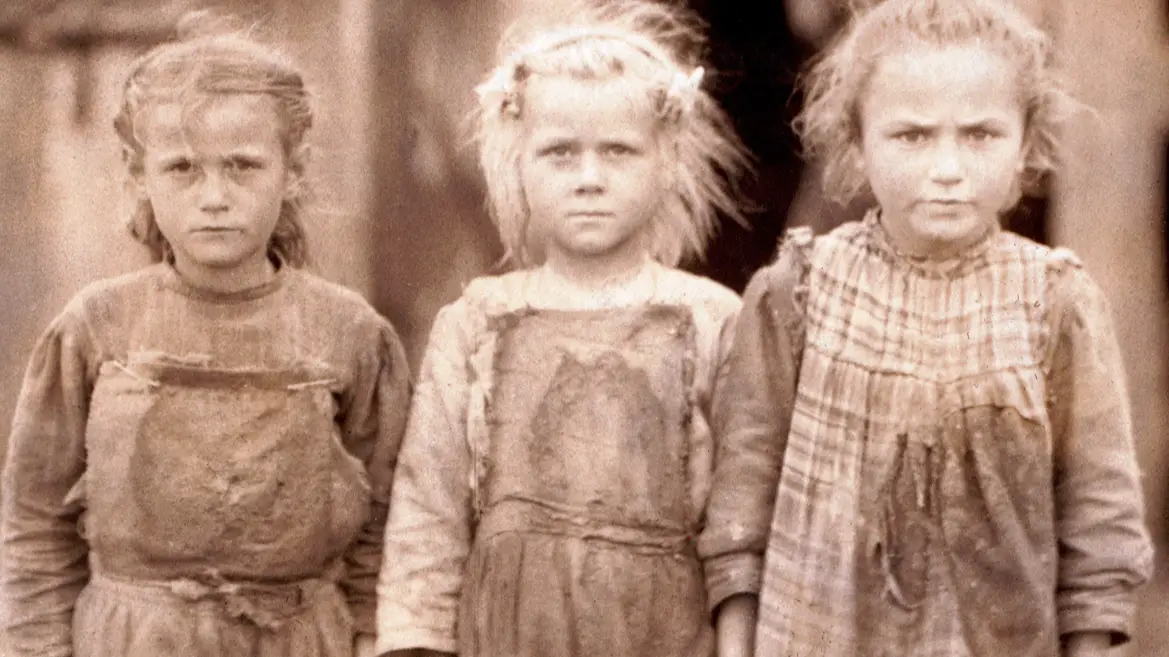
Captured by photographer Lewis Hine, the image shows three young girls covered in dirt as they worked at the Maggioni Canning Company, which provides wild-harvested bushels and oysters.

Americans have been reflecting on the history of child labor laws.
Twitter/@truth_ac

Josie, 6, Bertha, 6, and Sophie, 10, all worked at the company at Port Royal, South Carolina.

Hine captured the photo while working as an an investigative photographer for the National Child Labor Committee (NCLC).

The images documented the working and living conditions of children between 1908 and 1924.

According to the Library of Congress, Hine went undercover to snap the photos, pretending to be a 'Bible salesman, postcard salesman, and industrial photographer making a record of factory machinery' to gain access to the scenes unfolding inside the businesses.

If he couldn't get inside, then he'd simply wait outside for the children to finish their shifts.
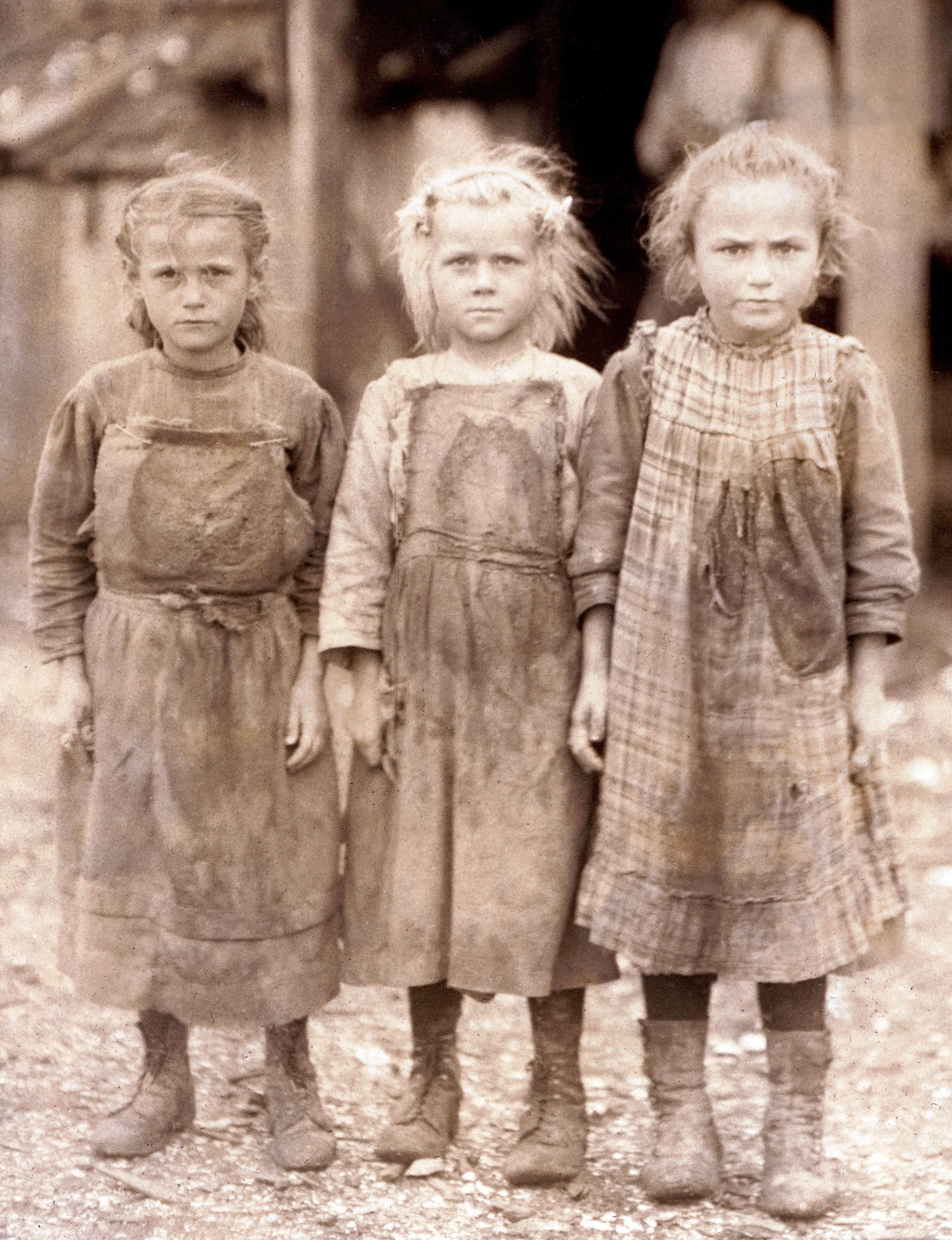
Lewis Hine documented child labor before it was banned.
Science History Images / Alamy Stock Photo

The US government archives explain how companies liked to hire children because they could pay them lower wages, and their small hands made them good at handling small parts and tools.

However, the work interfered with the children's health, including causing stunted growth and conditions such as tuberculosis and bronchitis for those who worked in coal mines or cotton mills.

They also faced more accidents due to the long hours and hard work, which caused physical and mental fatigue.

Speaking in 1908, Hine said: "There is work that profits children, and there is work that brings profit only to employers. The object of employing children is not to train them, but to get high profits from their work."

After Hine's pictures were made public, they soon attracted national attention and helped in the passing of child labor laws.

The National Child Labor Committee distributed the photographs as part of its publicity and educational efforts, and by 1920, the number of child laborers was cut to nearly half of what it had been a decade earlier.

The Fair Labor Standards Act of 1938 restricts working hours for children under the age of 16, and lists hazardous occupations too dangerous for young workers to perform.

Featured Image Credit: Science History Images / Alamy Stock Photo

Topics: US News, Life

Emily Brown
Emily Brown

Emily Brown is UNILAD Editorial Lead at LADbible Group. She first began delivering news when she was just 11 years old - with a paper route - before graduating with a BA Hons in English Language in the Media from Lancaster University. Emily joined UNILAD in 2018 to cover breaking news, trending stories and longer form features. She went on to become Community Desk Lead, commissioning and writing human interest stories from across the globe, before moving to the role of Editorial Lead. Emily now works alongside the UNILAD Editor to ensure the page delivers accurate, interesting and high quality content.

Advert

Advert

Advert

Choose your content:

2 hours ago
3 hours ago
  • Getty Stock Images
    2 hours ago

    Expert reveals how watching porn can make it difficult to orgasm for both men and women

    Halle Berry recently shared her thoughts on the adult industry and people's sex lives

    News
  • Gilbert Flores/Getty
    2 hours ago

    Hilary Duff finally breaks silence on Ashley Tisdale drama after she called out ‘toxic’ mom group

    Duff spoke out about the explosive essay that Tisdale published

    Celebrity
  • Jeremy London, MD/YouTube
    3 hours ago

    Cardiac surgeon who suffered heart attack in his 50s explains key changes he made for his health

    Dr. Jeremy London was out in the woods with his son when he suffered a heart attack

    News
  • Matt Winkelmeyer/Getty Images for Critics Choice Association
    3 hours ago

    Christina Applegate explains surprising reason she has named body part after Meghan Markle following MS diagnosis

    The actress has been extremely open about her ongoing battle with MS

    Celebrity
  • World's worst shark attack locations revealed and US hotspot tops list
  • Major update after ‘disgusting’ live TV footage showed grown man doing controversial act to child during US Open
  • Stephen King speaks out after being named most banned author in US
  • Soldier explains ‘steak and lobster’ theory as US troops’ latest meal sparks WW3 fears