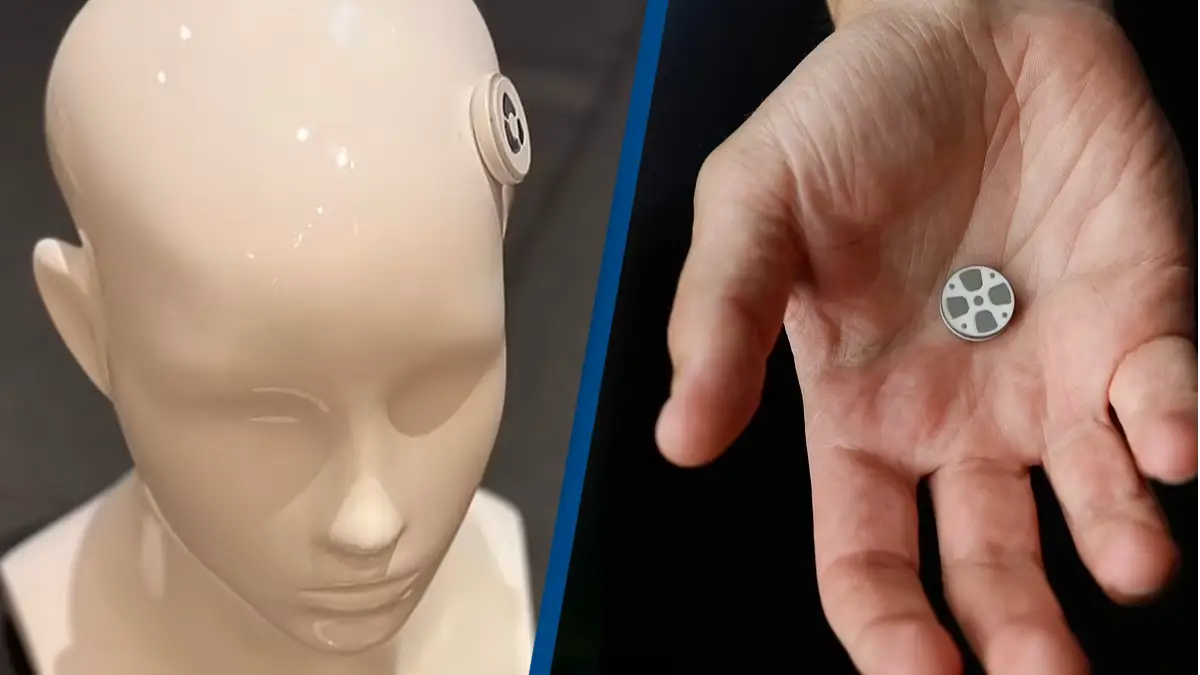
World's first brain implant to treat depression to start second human trial

Scientists recently implanted electrodes into the skull of a patient in order to treat their depression, with the hope that their condition might be eased by short and small electric pulses into the brain, and now they’re awaiting the start of a second trial.
This technology was actually unveiled back in September, when doctors in St Louis shaved off some bits of the patient’s skull in order to install electrodes into it.
The surgery was performed by start-up Inner Cosmos, just one of several companies working on technology that can be implanted into the brains of patients.
Of course, the most high-profile of those companies is Neuralink, owned by Elon Musk.
Advert
That business has been the subject of some recent controversy, but also claims to have trained monkeys to play video games with their mind.
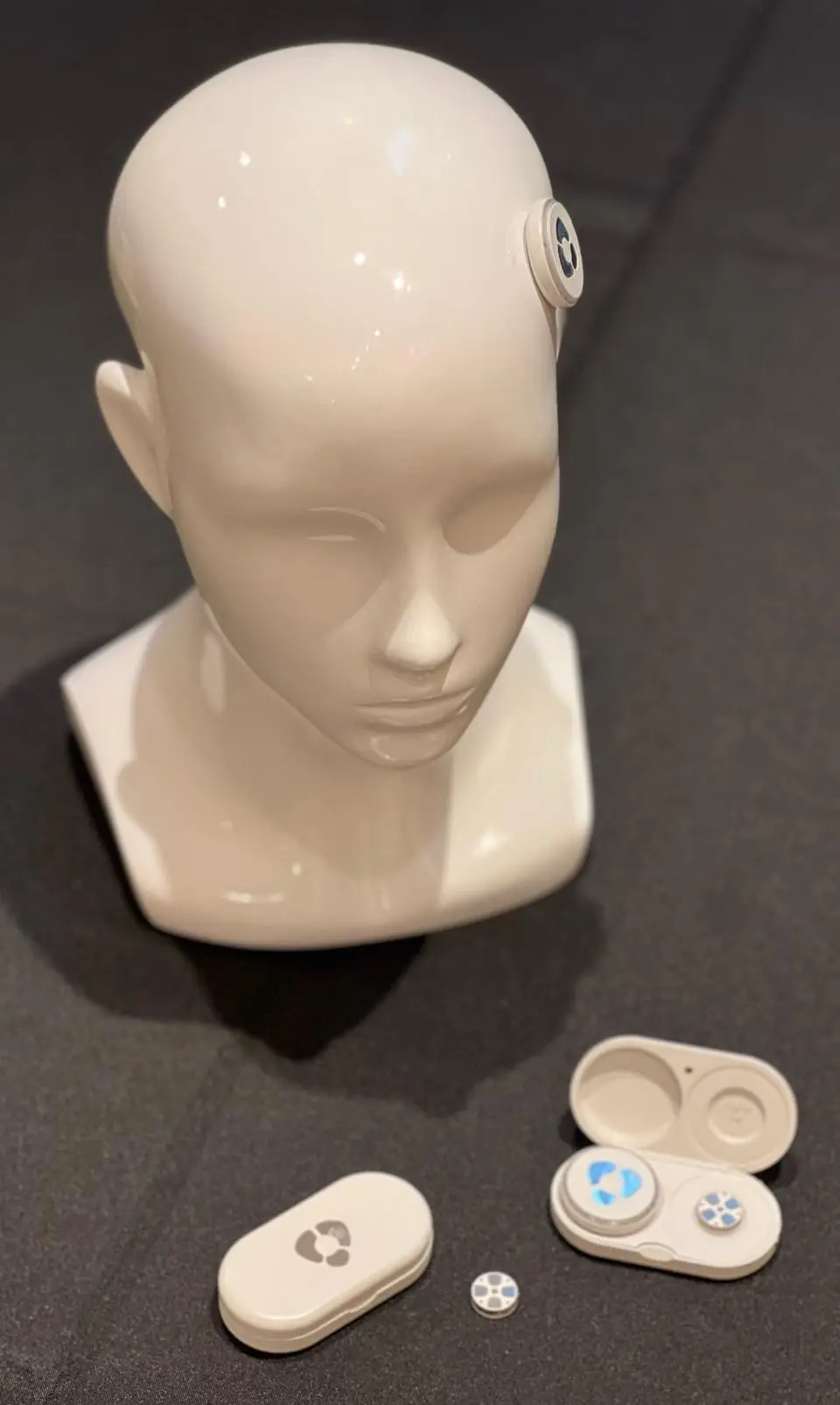
This trial was the first of its kind to use implants directly into the skull to treat depression, and could herald in a new age of science treating mental health issues with hardware rather than more traditional methods such as psychiatry and psychology.
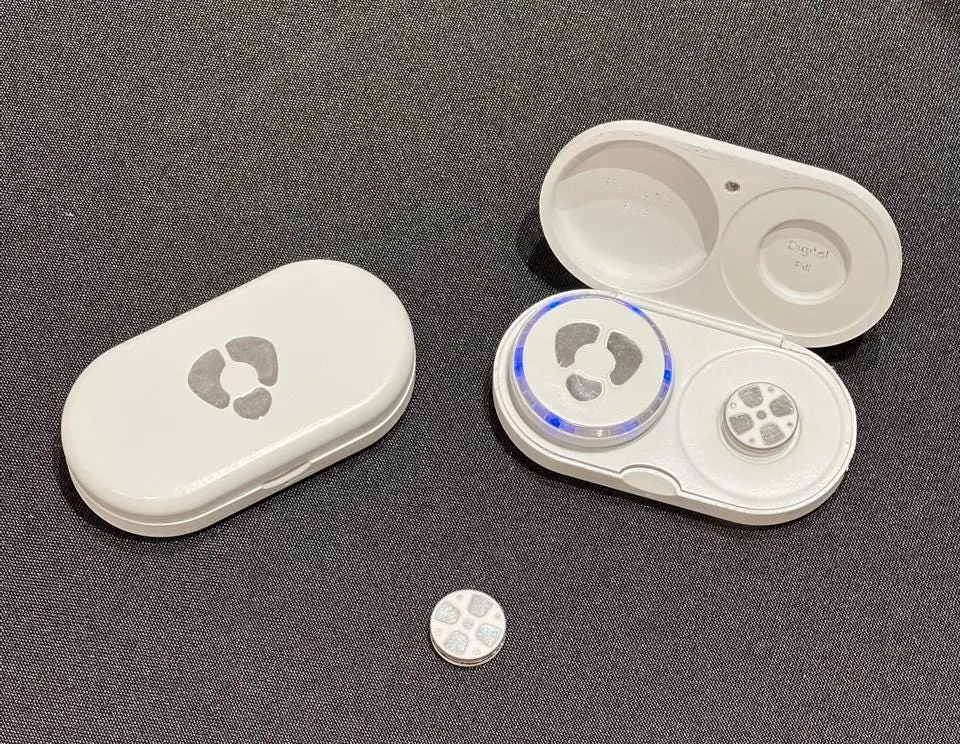
The Inner Cosmos hardware is about the size of a penny and works by sending a pulse through the patient’s left dorsolateral prefrontal cortex, measuring neuronal activity to determine the correct amount of stimulation as it goes.
That happens for about 15 minutes once every day.
This first trial is expected to last for around a year, with the potential for a few more patients to be involved.
Then, another trial is set to begin next month, according to MailOnline.
There is some debate about which part of the brain is best to stimulate in order to achieve the desired results, but this Inner Cosmos technique targets an area that is also targeted by another method called transcranial magnetic stimulation.
It’s still very early days, but it’s interesting stuff, you’d have to admit.
The idea is that the surgery needs to be as non-invasive as possible in order to achieve the best level of take-up, and – in fact – some companies are working on completely surgery-free methods, such as an electrode helmet.
This first device is a bit larger than Inner Cosmos intends its final product to be in time, but it’s only the first one.
The idea isn’t exactly a new one, given that similar techniques have been used for years to treat epilepsy and Parkinson’s, but treating depression in this way is a pretty fresh idea.
Inner Cosmos CEO Meron Gribetz said: “Our mission is to create a world that restores humanity's cognitive power by rebalancing the human mind,
“The world is in a state of severe disorder, leading to a disordered cognition
“The effects are being felt by millions, leading to surging levels of depression.
“We believe our approach can allay the lives of those suffering from depression, and eventually scale to other cognitive disorders.”
We’ll have to see how things develop from here, but it’s definitely a fascinating start.
Topics: Science, Health, Mental Health, Technology, Weird
 Tom Wood