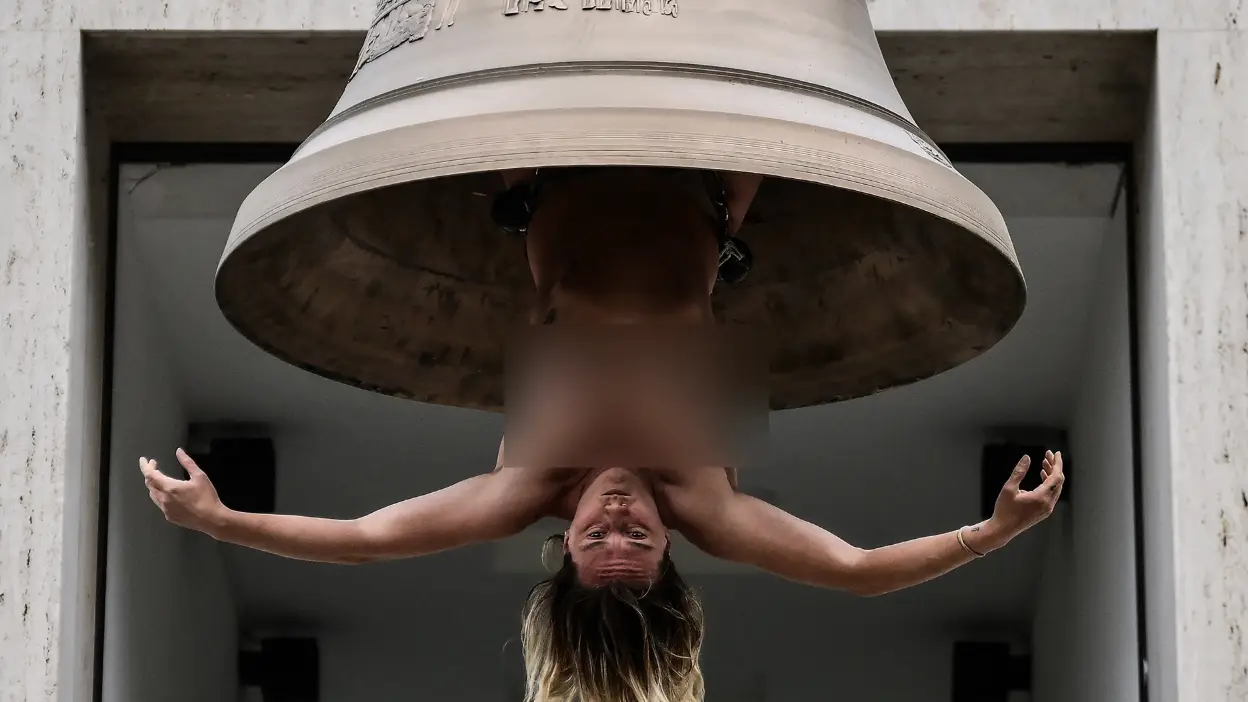
Florentina Holzinger swings naked inside bell to protest key global issue at Venice Biennale 2026

An artist that's known for using shock factors in her work has created a stir with her latest exhibition.
Austrian choreographer, director and performance artist Florentina Holzinger's latest work has become biggest talker of this year’s Biennale, which opens up to the public on Saturday (May 9).
This particular exhibition at the Austrian pavilion is called 'Seaworld Venice', and when we break down the elements of the artwork, you'll understand why.
One part of the exhibition has naked women submerged in a huge water tank (wearing scuba mouthpieces, of course).
Advert
But it's not just water that they are in, the women are – technically – swimming in people's pee. There are two portable toilets either side of the tank and when people use these toilets to urinate, their pee is filtered before going on to top up the glass chamber’s water level, The New York Times explains.
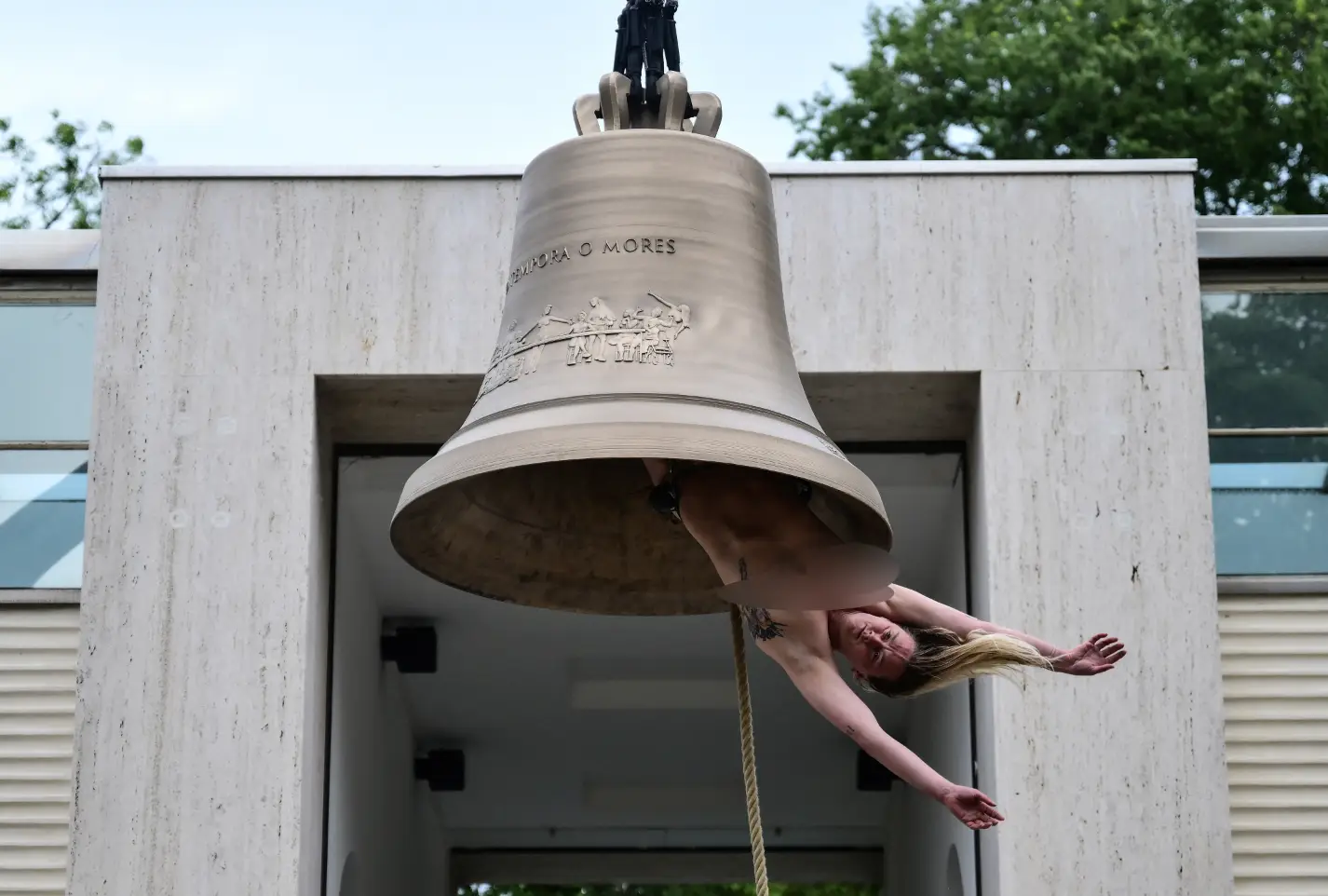
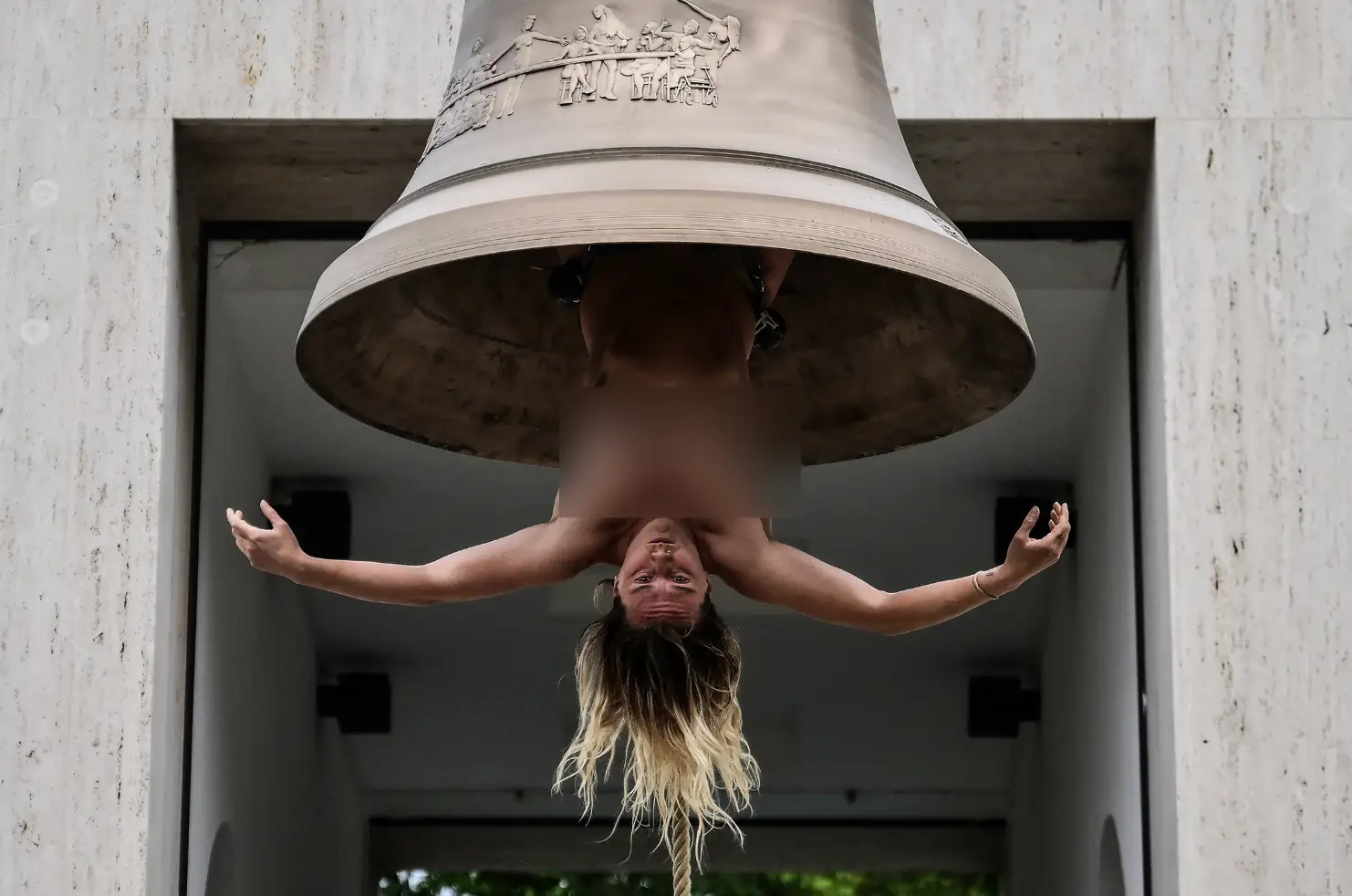
Then there's a part of the exhibition that involves Holzinger hanging upside down naked inside a large bronze bell. She then bangs herself against to make the bell as a human clapper to make it ring out for everybody to hear.
In another room there's a naked woman riding around in circles on a jet ski, quite literally making waves.
The main point of it all? To address the threats that Venice is facing as a result of climate change and rising sea levels. In a worst case scenario, the Italian city could be partially – or even fully – submerged as soon as 2100.
It also wants to raise awareness about water waste issues the world is facing, for example how some wastewater are being discharged into rivers and into the ocean.
The Art Newspaper said that the controversial artwork 'functions as an underwater theme park, sewage treatment plant and sacred building, imagining Venice as a flooded metropolis, the water level so high that dry land disappears and sewage seeps into daily life'.
Discussing the theme further, the artwork's curator, Nora-Swantje Almes, told the news outlet: "We think about Venice as a city that is particularly threatened by the climate crisis and flooding.
"At the same time that we’re critical of it, we’re also part of it. We are complicit, as are the visitors to the Biennale."
Apparently the ministry was very much onboard with Almes and Holzinger's outlandish exhibition.
"The reaction we got from the ministry was a very positive one," Almes said. "Very encouraging, very supportive. It might be partly because Florentina's work is also internationally recognised."
Topics: Art, Climate Change
 Niamh Shackleton