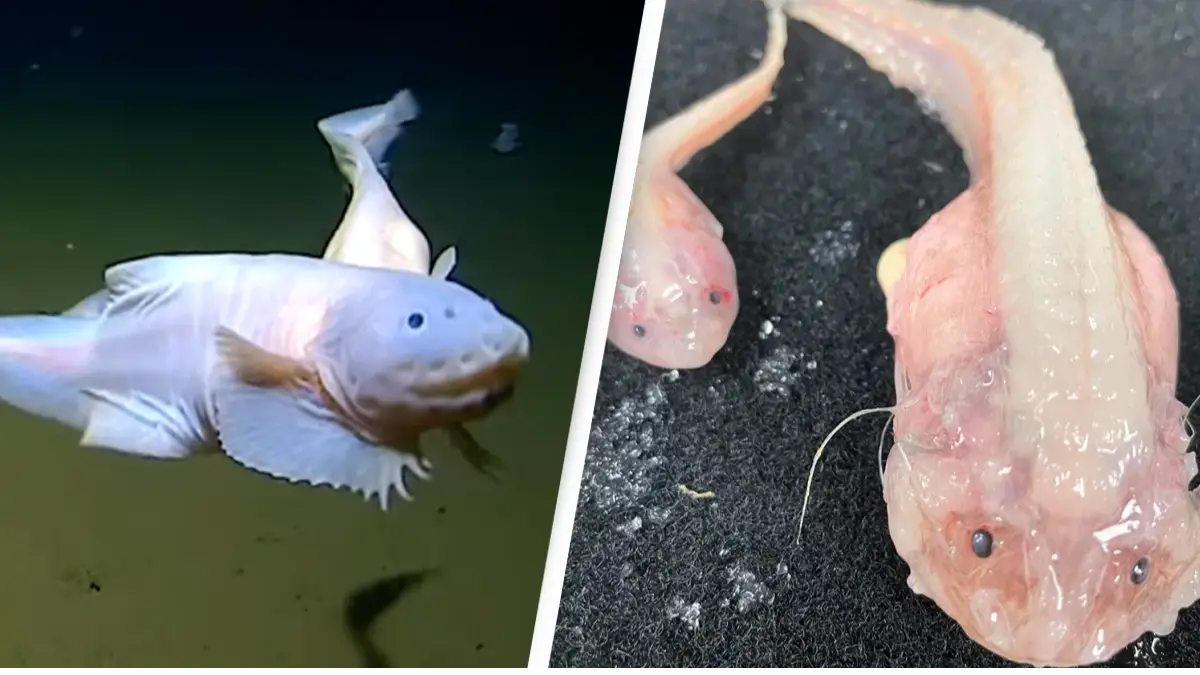
Scientists discover deepest-ever fish at 8,300 meters

Scientists have captured footage of the deepest fish ever filmed on the seabed off the coast of Japan.
You can watch the breathtaking footage below:
Advert
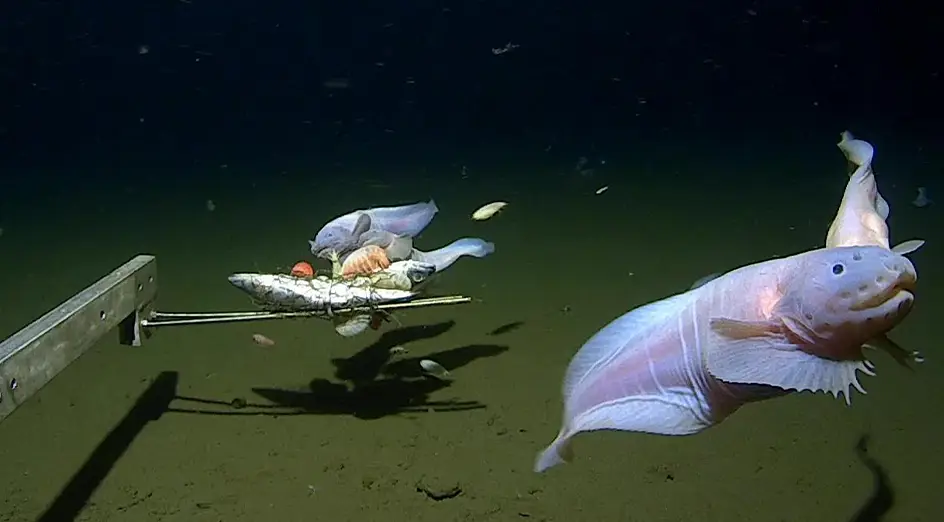
The young snailfish - an unknown species of the genus Pseudoliparis - was ready for its close up in the abyss of the northern Pacific Ocean, cruising at a depth of 8,336 meters (over 27,000 feet) just above the seabed.
Scientists from University of Western Australia and Tokyo University of Marine Science and Technology released footage of the snailfish on Monday (3 April) that was filmed last September by sea robots in the ocean's deep trenches.
Not satisfied with setting only one record, along with filming the deepest fish, the scientists physically caught two other specimens - of the species Pseudoliparis belyaevi - at 8,022 meters, setting another record for the deepest ever catch.
Before the new record was set, the deepest snailfish ever spotted was at 7,703 meters (25,272 feet) in 2008, with scientists previously unable to collect fish from any depth greater than 8k meters.
Marine biologist Alan Jamieson, founder of the Minderoo-UWA Deep Sea Research Centre who headed up the expedition, said: “What is significant is that it shows how far a particular type of fish will descend in the ocean."
The filming in the trenches off Japan is part of a 10-year study into the deepest fish populations in the world.
While most snailfish live in shallow water, others survive at some of the 'greatest depths ever recorded', Jamieson explained.
The scientists used three 'landers' - automatic sea robots fitted with high-resolution cameras - during the two-month survey last year.
The bots were dropped into the Japan, Izu-Ogasawara and Ryukyu trenches at varying depths.
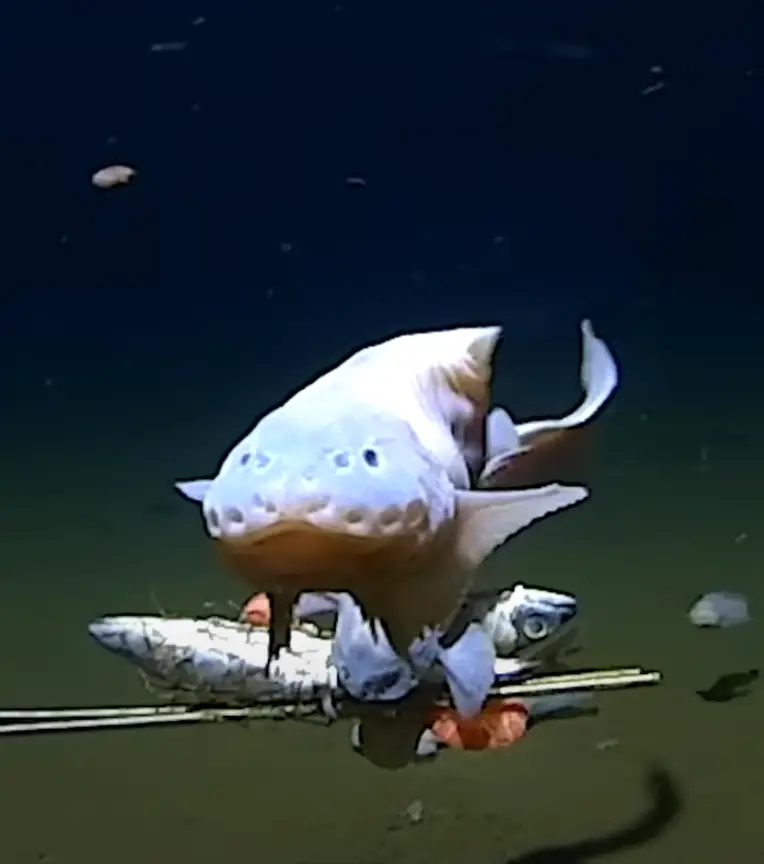
It was in the footage from the Izu-Ogasawara trench that the deepest snailfish was seen hovering serenely alongside crustaceans on the seabed.
Jamieson classified the fish as a youngster, explaining that the juveniles often stay as deep as possible to avoid being eaten by bigger predators in shallower water.
Another fascinating clip shot between 7,500 and 8,200 meters below sea level in the same trench showed a shoal of fish and crustaceans quite literally taking the bait and chowing down on food tied to the undersea robot.
Images of the two captured snailfish provide a rare glimpse of how the unique features of the deep-sea species help it survive in the extreme and often harsh environment.
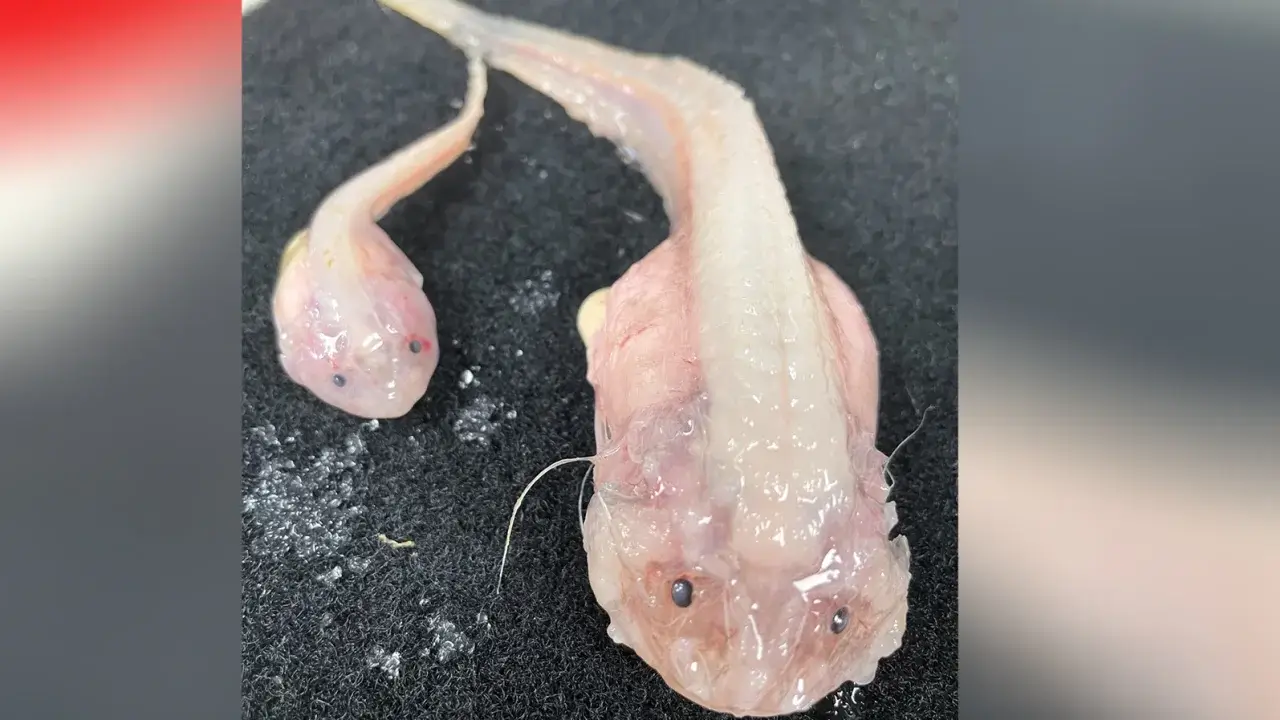
With tiny eyes and translucent body, they also have no swim bladder, which helps other fish float, because this helps their in their deep-sea environment, Jamieson told CNN.
The professor explained that the warm southern current of the Pacific Ocean encourages lots of activity and pushes sea creatures to go deeper, providing a good source of food for bottom-feeding marine life.
While scientists hope to do more research into the depths and the creatures living there, it's expensive work, Jamieson explained.
In fact, each bot costs $200k to assemble and operate.
“The challenges are that technology has been expensive and scientists don’t have a lot of money,” he lamented.
Topics: News, Science, Animals, Environment
 Amelia Jones