Scientists discover three new 'ancient shark' species in the southern US

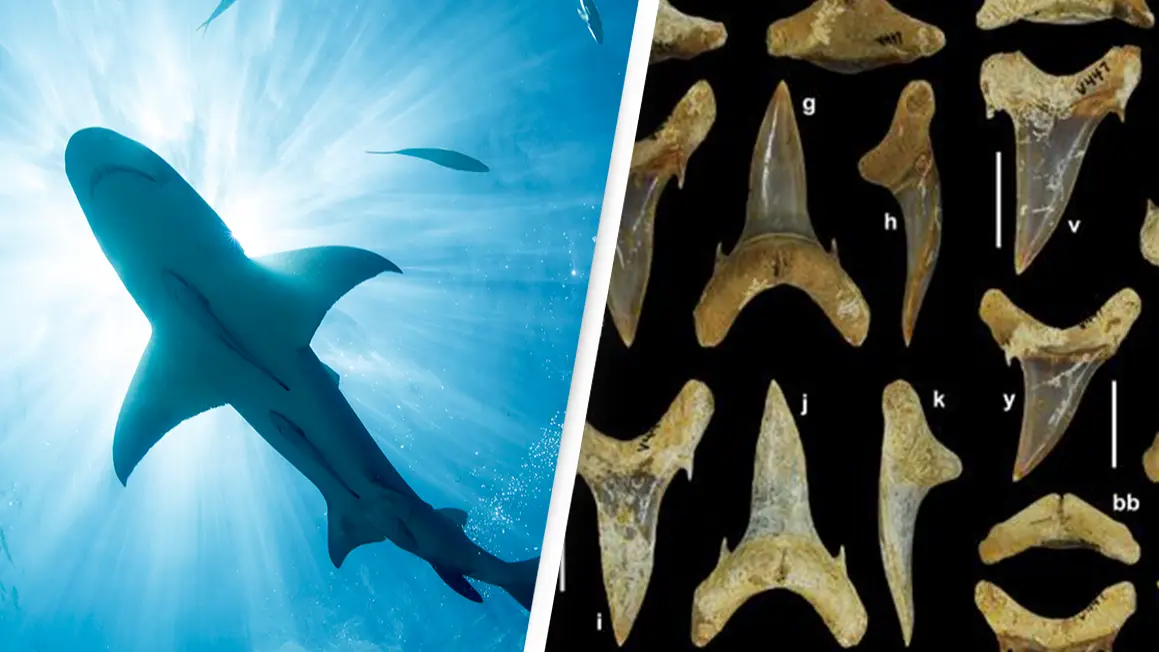
Palaeontologists have revealed they've identified three new ancient shark species after finding fossils in Kentucky and Alabama.
There are already plenty of sharks to be worrying about already, however, apparently there are three other ancient species of shark which used to roam the south American waters - let's just say when you see them you're going to feel very glad they're not around anymore to swim in the sea with you any longer.
Advert
The Paleontological Resources Inventory (PRI) has been collecting fossils from Mammoth Cave in Kentucky and northern Alabama since 2019 and has made two groups of particularly exciting finds.
The first group of fossils are juvenile and adult teeth which were found within the St. Louis and Ste. Genevieve Formations of Mammoth Cave and the Bangor Formation in Alabama.
And the second group of fossils includes a partial set of jaws and gills found at Mammoth Cave, alongside some teeth from the St. Louis, Ste. Geneveive, and Haney Formations at Mammoth Cave and the Hartselle and Bangor Formations of Alabama too.
And a news release - shared by the National Park Service on 1 February, 2024 - has revealed the team has since identified the fossils as being from two new species of ancient sharks.

Troglocladodus trimblei
The first new species of ancient shark has been called the Troglocladodus trimblei.
The National Park Service details: "The genus name means the 'Cave Cladodus' or 'Cave Branching Tooth'.
"It was named in honor of park superintendent Barclay Trimble who found the very first specimen, a single tooth, on an early PRI trip in 2019.
"The Troglocladodus is estimated to have reached about 10-12 feet in length or about the size of an oceanic white tip shark."
Glikmanius careforum
The second group of fossils has been identified as belonging to a new species of the Glikmanius shark.
The discovery is even more exciting as its altered scientists prediction for when the extinct genus of prehistoric shark was around - the origins now estimated as being 50 million years earlier than first predicted.
"The species was named in honor of the Cave Research Foundation (CRF) who not only support research at Mammoth Cave, but whose members also discovered the Glikmanius jaws," the National Park adds.
The shark is estimated as having been around 10-12 feet in length - 'or about the size of a Lemon Shark' - and the fossil discovered of part of its jaw suggests it had a 'short head with a powerful bite for hunting smaller sharks, bony fish, and squid-like orthocones'.
Palaeohypotodus bizzocoi
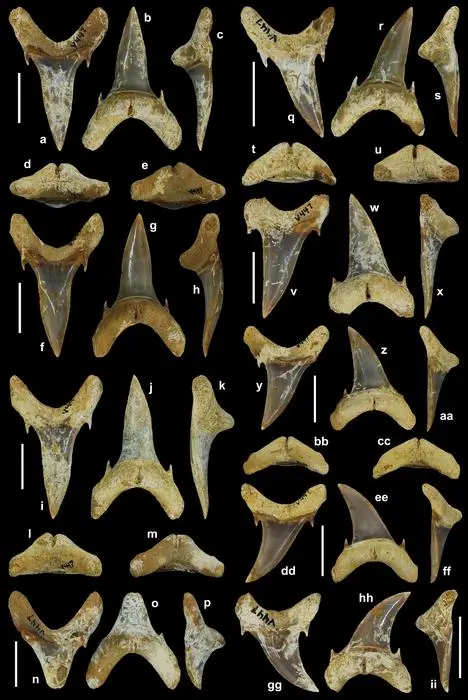
The third and final new species of ancient shark was discovered by a team led by Director of Collections at McWane Science Center, Jun Ebersole.
It's a new species of the Palaeohypotodus and was named Palaeohypotodus bizzocoi after the late Dr Bruce Bizzoco - an archaeologist and volunteer at McWane Science Center.
Ebersole made the discovery after he came across 'a small box of shark teeth that were collected over 100 years ago in Wilcox County' while looking through 'the historical fossil collections at the Geological Survey in Alabama' he said, as per Eurek Alert.
Surprised he didn't recognize the shark teeth, he realized they must be from a new species of ancient shark, the team later identifying them as being from 'approximately 65-million-years-ago' and the time period 'from just after the death of the dinosaurs where over 75 percent of life on Earth went extinct'.
Fellow team member and Paleontologist and Fossil Collections Curator at the Geological Survey of Alabama in Tuscaloosa T. Lynn Harrell resolved: "Shark discoveries like this one give us tremendous insights into how ocean life recovers after major extinction events and also allows us to potentially forecast how global events, like climate change, affect marine life today."
 Poppy Bilderbeck