Creepy recording of orcas imitating human speech leaves people amazed but extremely terrified

You may well have wondered what a whale's attempt at imitating a human actually sounds like, you may not.
But for those curious, scientists did provide the answers.
However, to give you a bit of a warning, some of the sounds may just well give you nightmare.
Advert
So, how did experts gather such recordings?
Well, scientists looked into orcas' ability to mimic human speech. And it's safe to say from their findings, killer whales are able to mimic us humans pretty well.
Josep Call, a co-author of the study published in 2018, explained the researchers wanted to see 'how flexible a killer whale can be' when it comes to copying sounds they're not used to.
"We thought what would be really convincing is to present them with something that is not in their repertoire - and in this case ‘hello’ [is] not what a killer whale would say," Call said, per The Guardian.
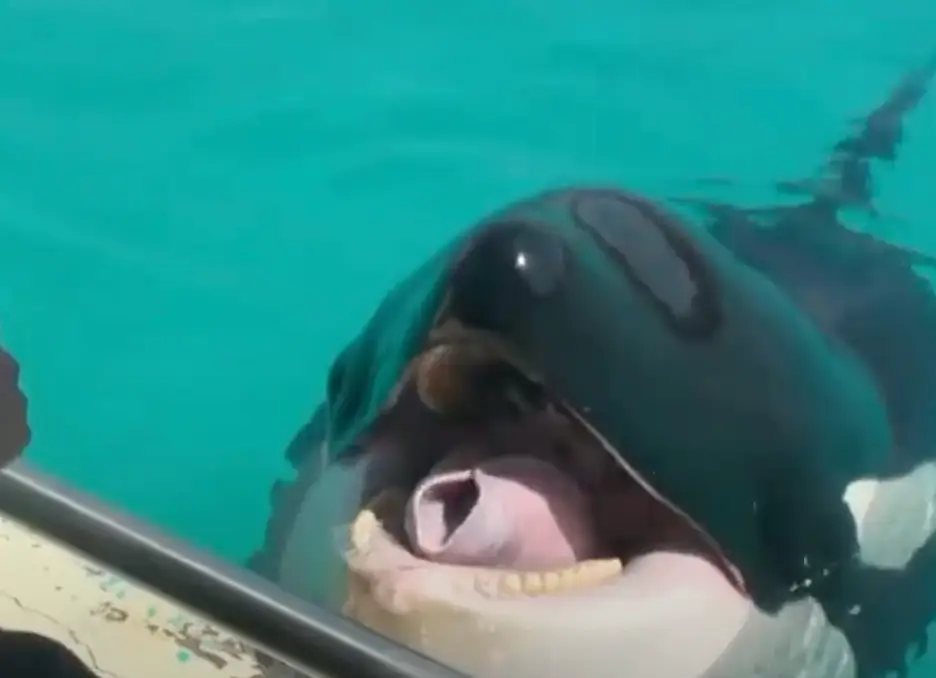
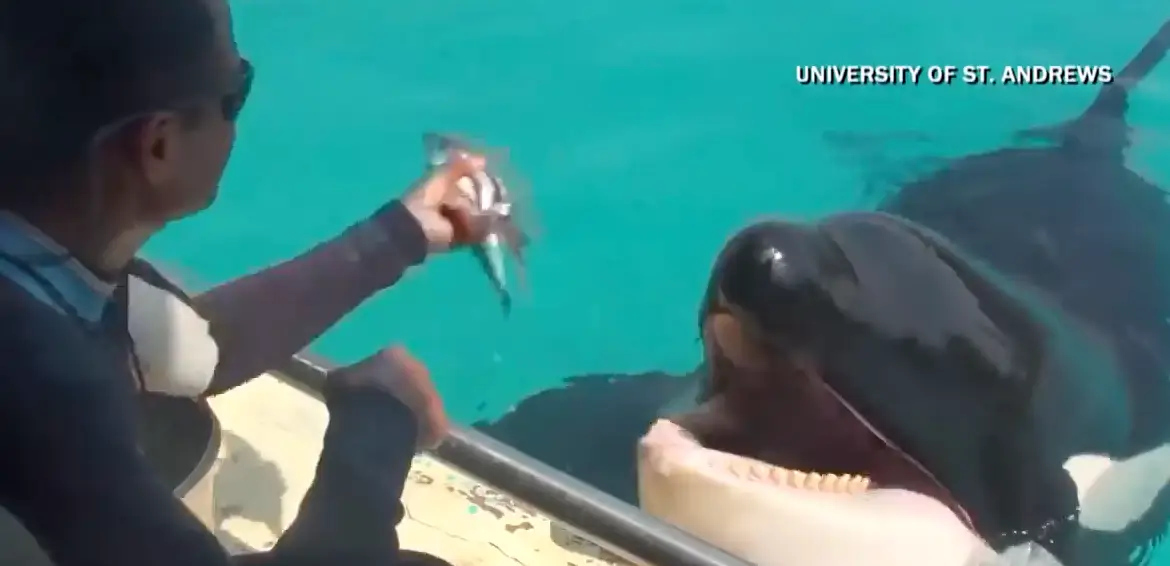
The team carried out the research by first training a 14-year-old orca named Wikie to copy three familiar orca sounds made by her three-year old calf, then exposing her to five orca sounds she had never heard before.
Finally, Wikie heard a human make three orca sounds, then six human sounds including the words 'hello', 'Amy', 'ah ha', 'one, two' and 'bye bye'.
After listening to Wikie's responses, the team found that the orca was able to quickly copy the sounds, including nailing two of the human utterances on the first attempt.
Recordings of Wikie capture her attempts to mimic the human speaking to her, and while admittedly some of the attempts sound like they've come from a terrifying goblin, others are eerily accurate.
Listeners have been left unnerved by the recordings, with one viewer commenting: "The hello sounded demonic."
Another joked: "OK, that second hello was a little demonic. Was that really an orca, or the Devil speaking through a ghost box LOL The funniest and scariest thing EVER! That’s my day, can’t stop laughing my head off lol."
But as demonic as the recordings might sound, other viewers have pointed out just how amazing it is to hear the whale mimic humans.
"This makes me tear up, the fact that we live in a such a beautiful world filled with wonderful creatures," one person wrote.
While only one human sound given to Wikie - 'hello' - was correctly produced more than 50 percent of the time on subsequent trials, the findings offered the first evidence that orcas may be learning sounds by vocal imitation.
"This is something that could be the basis of the dialects we observe in the wild - it is plausible,” Call said.
Wikie's responses are made even more impressive by the fact her vocal apparatus is so different to humans'.
Call said: "Even though the morphology [of orcas] is so different, they can still produce a sound that comes close to what another species, in this case us, can produce."
That being said, Call added: "We have no evidence that they understand what their ‘hello’ stands for."
Though the research with Wikie has offered some initial insight, Call noted that more trials would need to be carried out with wild orcas to learn more about how they learn sounds.
 Emily Brown