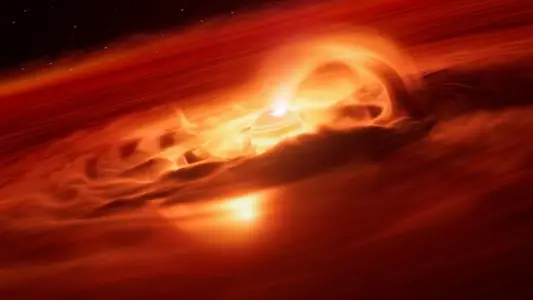
Scientists baffled by rapidly expanding 'rogue' planet devouring everything within reach

Scientists have been left perplexed by a rapidly expanding 'rogue' planet that has reached a record-breaking 'growth spurt'.
While experts know an awful lot about our solar system, astronomers are continuing to learn more about all things space and planets that live far, far away.
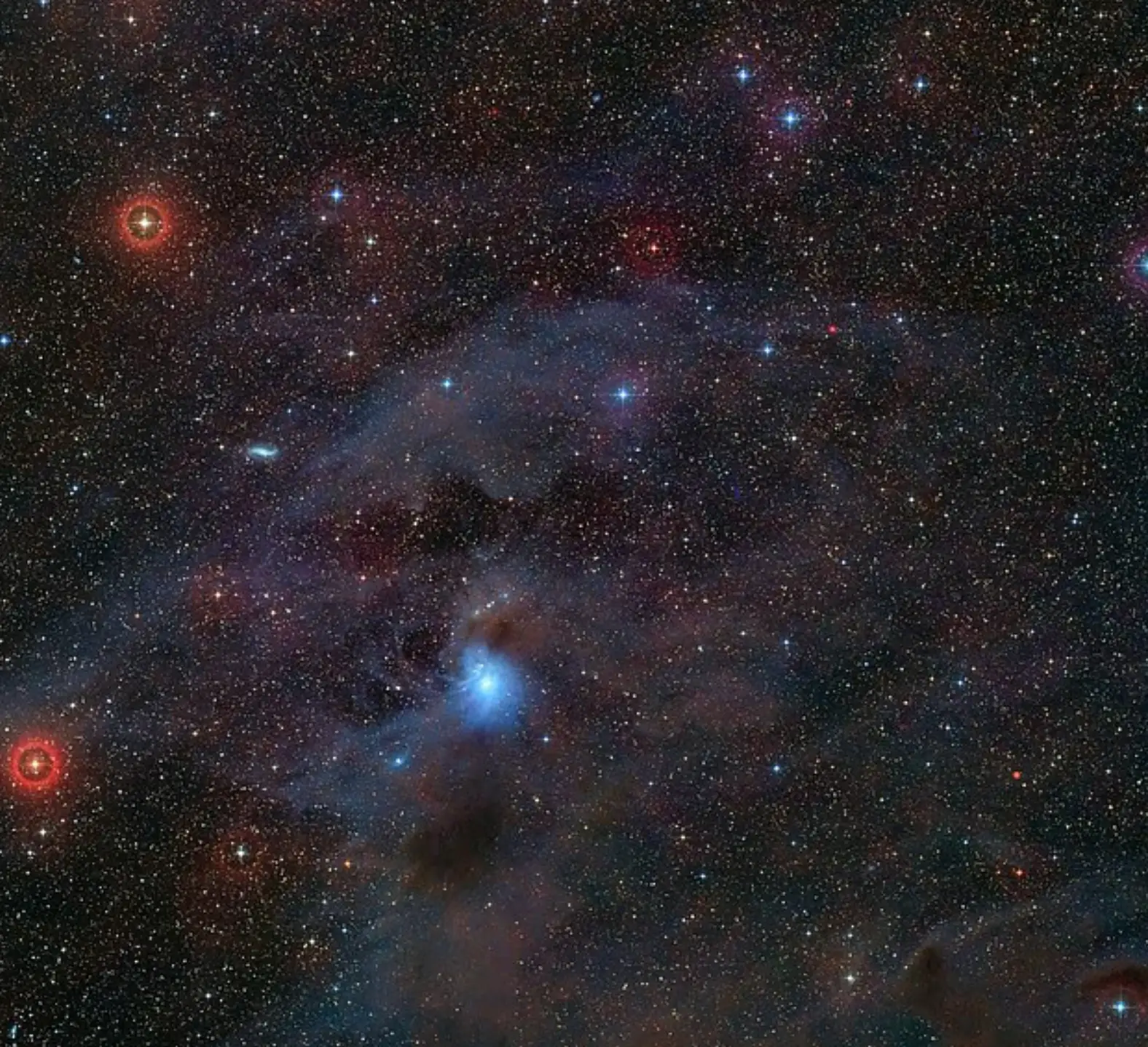
And recently, scientists have been examining a planet some 620 lightyears from Earth in the constellation Chamaeleon using the European Southern Observatory’s Very Large Telescope in Chile, which has baffled all of them.
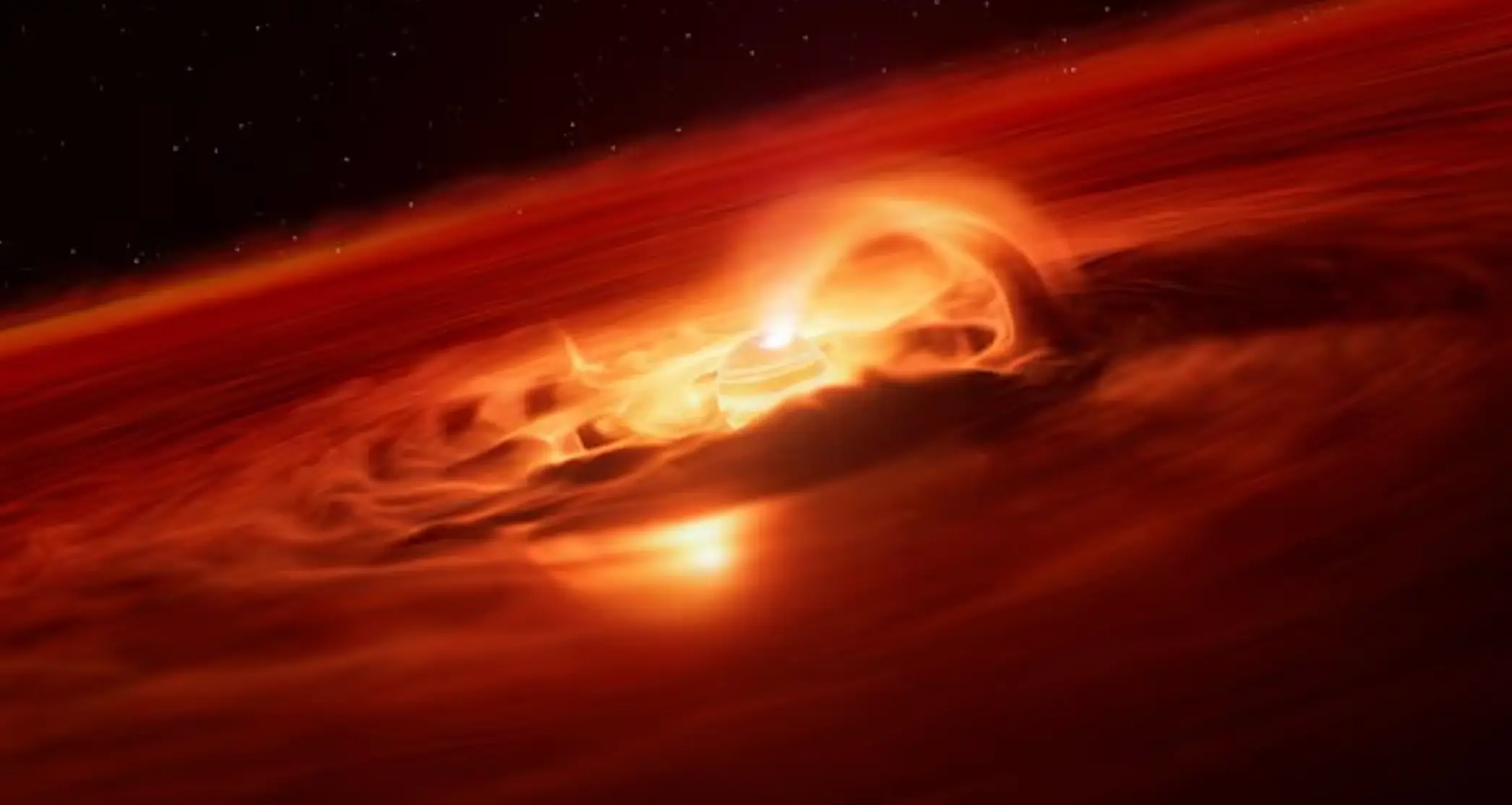
Known as Cha 1107-7626, the planet does not orbit a star, but has intrigued experts considering it eats up a whopping six billion tonnes of gas and dust every second.
Advert
A new study by European scientists published in The Astrophysical Journal Letters detailed the planet is about five to 10 times Jupiter’s mass, and is growing at an increasingly rapid rate.
The planet is said to be growing eight times faster than what has been observed just a few months back, with scientists saying it is the fastest planet spurt every observed to date.
Víctor Almendros-Abad, an astronomer at the Astronomical Observatory of Palermo and lead author on the study, said: "People may think of planets as quiet and stable worlds, but with this discovery we see that planetary-mass objects freely floating in space can be exciting places."
While scientists now have an idea on the size of the 'rogue' planet, there are still a lot of unanswered questions.
Aleks Scholz, an astronomer at the University of St Andrews in the UK and co-author of the study, said: "The origin of rogue planets remains an open question: are they the lowest-mass objects formed like stars, or giant planets ejected from their birth systems?"
Cha 1107-7626 is said to be growing in similar ways to that of a young star as they similarly devour everything within reach. On top of that, young stars also have sudden growth spurts.
Like stars, a magnetic field - which in this case is unusually strong for the planet's mass - has helped it devour material around it.
Its hunger also appears to have changed its chemical composition. Originally researchers detected water vapor, but after its growth spurt they couldn't see any. Again, this is behavior more typical of stars.
Fellow co-author Belinda Damian added: "This discovery blurs the line between stars and planets and gives us a sneak peek into the earliest formation periods of rogue planets."
Dr Scholz spoke to the Daily Mail shortly after the study was published, and provided more context to the findings.
"This rogue planet is pretty much finished with its growth," the expert said. "The really strong growth spurts would have happened earlier, while the object was still enshrouded in dust and gas, invisible to us."
Dr Scholz added: "When we can observe them, they are already close to the finished products. The really exciting early evolution happens when they are embedded in a thick cloud."
 Callum Jones