• News
  • Film and TV
  • Music
  • Tech
  • Features
  • Celebrity
  • Politics
  • Weird
  • Community
  • Advertise
  • Terms
  • Privacy & Cookies
  • LADbible Group
  • LADbible
  • SPORTbible
  • GAMINGbible
  • Tyla
  • UNILAD Tech
  • FOODbible
  • License Our Content
  • About Us & Contact
  • Jobs
  • Latest
  • Topics A-Z
  • Authors
Facebook
Instagram
X
Threads
TikTok
YouTube
Submit Your Content
NASA reveals what it would do if the world was about to end

Home> Technology> Space

Published 12:38 20 Feb 2024 GMT

NASA reveals what it would do if the world was about to end

NASA thankfully has a plan to deal with impending doom

Emily Brown

Emily Brown

google discoverFollow us on Google Discover

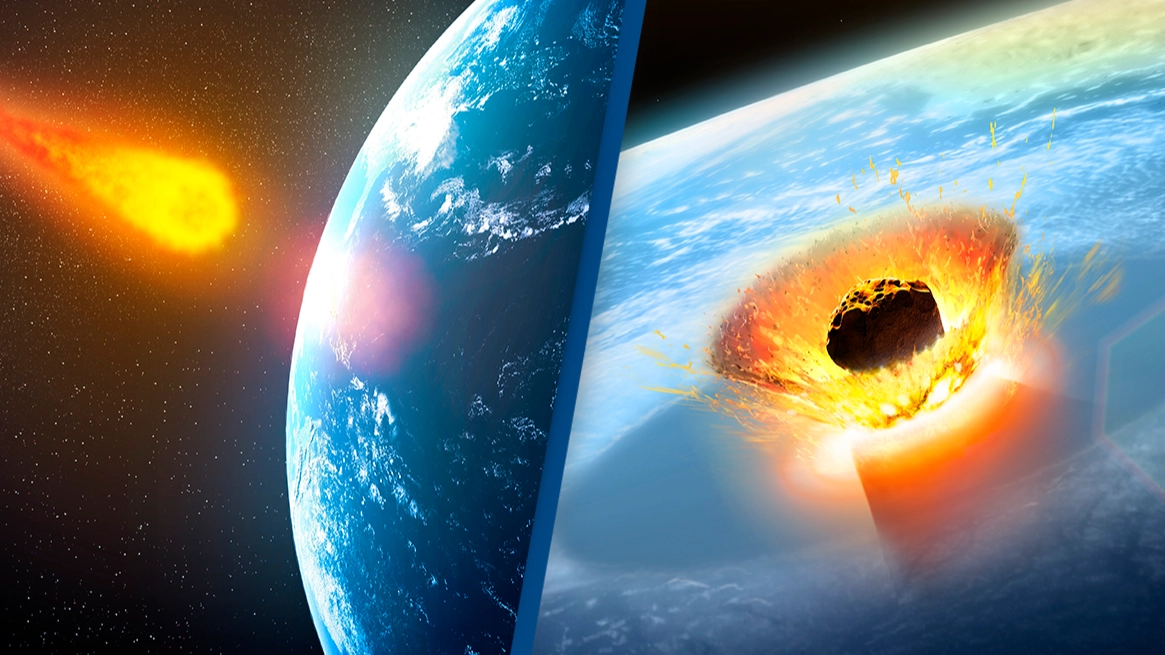
Hopefully none of us will live long enough to see the world end, but NASA has shared its plans for if that situation ever presents itself in the form of an asteroid hurtling towards us.

And if it's any reassurance, it's not just 'close your eyes and pray'.

There are countless movies about what the end of the world might look like, and even more depictions about how humans would react.

Advert

While we do fight back in some stories, in others - like Don't Look Up - most of us apparently just choose denial and wait for the end to come.

But let's move away from fictional depictions - what would happen in real life?

According to planetary defense expert Dr. Kelly Fast, NASA's plan for the end of the world starts with trying to stop it altogether.

NASA’s Planetary Defense Coordination Office watches the skies, trying to 'find asteroids before they find us', Dr. Fast said.

"An asteroid impact is the only natural disaster that could be prevented," she explained.
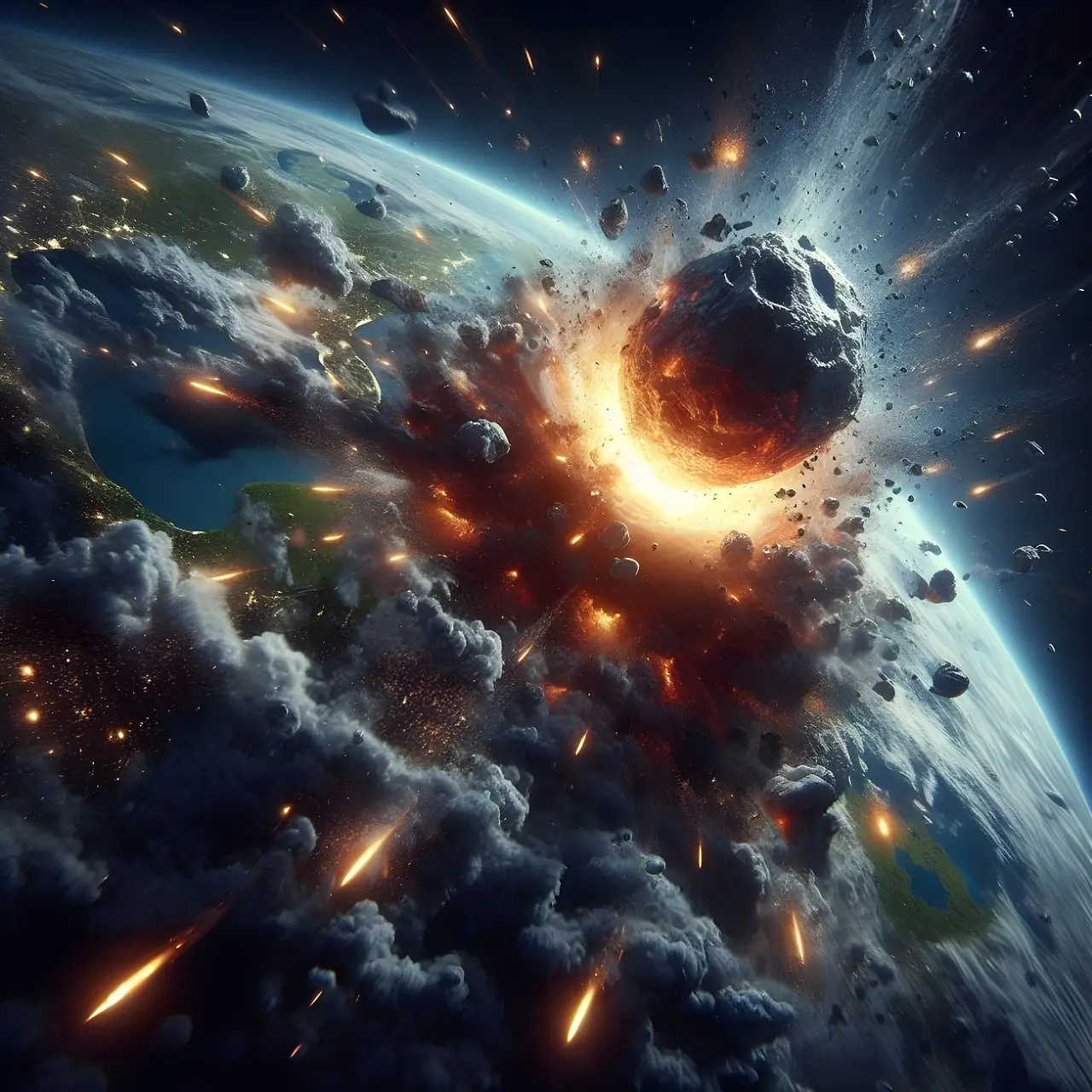
NASA is constantly looking for potentially hazardous objects.
Pixabay

By calculating orbits way into the future, NASA is able to decide whether a deflection mission might be possible to prevent a collision with Earth.

The agency's Double Asteroid Redirection Test (DART) can serve as a possible method of asteroid deflection, and should help us 'better prepare should an asteroid ever be discovered as a threat to Earth'.

In 2021, NASA successfully trialled DART as it crashed an unmanned spacecraft into a small asteroid with the goal of deflecting it away from earth.

However, if NASA isn't able to save the day by blasting the asteroid away from us, it does also have a plan for how to warn us about an impending strike.

The warning would come with the help of a global coalition of astronomers called the International Asteroid Warning Network (IAWN), who would start by verifying their findings and assessing the danger.
We definitely don't want an asteroid hitting us.
Pixabay

Once everyone's in agreement that Earth should brace for impact - assuming there are no Don't Look Up-style holdolds - NASA would send out an alert to the White House, after which the government would release a statement to the public.

Lindley Johnson, Lead Program Executive for the Planetary Defense Coordination Office, told Business Insider: “I don’t have a red phone on my desk or anything. But we do have formal procedures by which notification of a serious impact would be provided.”

If the threat is international, IAWN would notify the United Nations Office of Outer Space Affairs.

It would only be too late to save the Earth if NASA spotted an impact only a few months before it was due to strike. At that point, it really would be close your eyes and pray.

However, as long as NASA stays aware of the objects hurtling around space well in advance, we should be able to avoid the need for public alerts.

Featured Image Credit: Science Photo Library - ANDRZEJ WOJCICKI/Getty / MARK GARLICK/SCIENCE PHOTO LIBRARY/Getty

Topics: NASA, Science, Space, World News

Emily Brown
Emily Brown

Emily Brown is UNILAD Editorial Lead at LADbible Group. She first began delivering news when she was just 11 years old - with a paper route - before graduating with a BA Hons in English Language in the Media from Lancaster University. Emily joined UNILAD in 2018 to cover breaking news, trending stories and longer form features. She went on to become Community Desk Lead, commissioning and writing human interest stories from across the globe, before moving to the role of Editorial Lead. Emily now works alongside the UNILAD Editor to ensure the page delivers accurate, interesting and high quality content.

Advert

Advert

Advert

Choose your content:

8 hours ago
a day ago
2 days ago
  • Getty Stock Images
    8 hours ago

    Reason why you're receiving so many scam calls and how you can spot them

    The FTC has detailed some of the red flags to be aware of

    Technology
  • Getty Stock Images
    a day ago

    All the Apple products that are now obsolete meaning owners are no longer eligible for support

    You're likely still holding onto a few...

    Technology
  • Miguel J. Rodriguez Carrillo / AFP via Getty Images
    2 days ago

    Jeff Bezos recalls wild first question Amazon investors asked him that would never happen today

    Bezos has described the investor meetings as the 'hardest of his life'

    Technology
  • NASA
    2 days ago

    Earth's 'space battery' that stops the Sun from destroying the planet as we know it

    Scientists studying NASA mission data made an interesting discovery earlier this year

    Technology
  • NASA reveals exactly when ‘city-killer’ asteroid YR4 will make closest pass by the Moon
  • NASA's rarely seen moon walk footage has people questioning if any of it was real
  • NASA scientist reveals bizarre reason aliens have stopped trying to contact humans and it might offend you
  • NASA reveals 'preparation' for next Starliner launch leaving critics concerned more astronauts could end up stranded