unilad homepage
  • News
    • UK News
    • US News
    • World News
    • Crime
    • Health
    • Money
    • Sport
    • Travel
  • Film and TV
    • Netflix
  • Music
  • Tech
  • Features
  • Celebrity
  • Politics
  • Advertise
  • Terms
  • Privacy & Cookies
  • LADbible Group
  • LADbible
  • SPORTbible
  • GAMINGbible
  • Tyla
  • UNILAD Tech
  • FOODbible
  • License Our Content
  • About Us & Contact
  • Jobs
  • Latest
  • Archive
  • Topics A-Z
  • Authors
Facebook
Instagram
X
Threads
TikTok
YouTube
Submit Your Content
First spacecraft to land on Mars captured chilling 'human face' people think is proof of other lifeforms

Home> Technology> Space

Published 18:00 28 Oct 2024 GMT

First spacecraft to land on Mars captured chilling 'human face' people think is proof of other lifeforms

Viking I took the picture of the surface of Mars, later released by NASA

Ellie Kemp

Ellie Kemp

google discoverFollow us on Google Discover
Featured Image Credit: NASA/CORBIS/Corbis via Getty Images

Topics: NASA, Space, Mars, Weird

Ellie Kemp
Ellie Kemp

Ellie joined UNILAD in 2024, specialising in SEO and trending content. She moved from Reach PLC where she worked as a senior journalist at the UK’s largest regional news title, the Manchester Evening News. She also covered TV and entertainment for national brands including the Mirror, Star and Express. In her spare time, Ellie enjoys watching true crime documentaries and curating the perfect Spotify playlist.

X

@EllieKempOnline

Advert

Advert

Advert

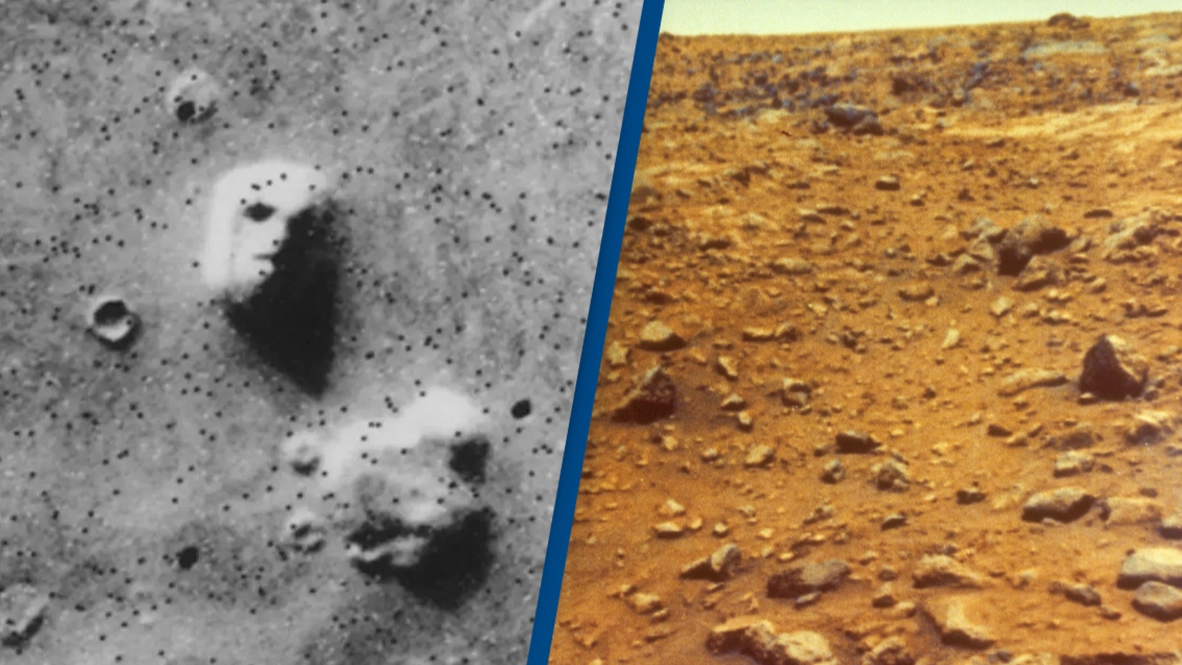
The first spacecraft to land on Mars captured a chilling photo which some believe is proof that life really existed on the Red Planet.

The thought of lifeforms on another planet is, quite frankly, terrifying.

Back in 1976, NASA's Viking 1 spacecraft was taking photos of Mars to find a possible landing site for sister ship Viking 2.

The Viking 1 lander took the first-ever photograph from the surface of Mars on July 20 of that same year.

Advert

Five days later, it captured the 'Face of Mars' which NASA describes as a 'shadowy likeness of a human face'.

Take a look for yourself below.
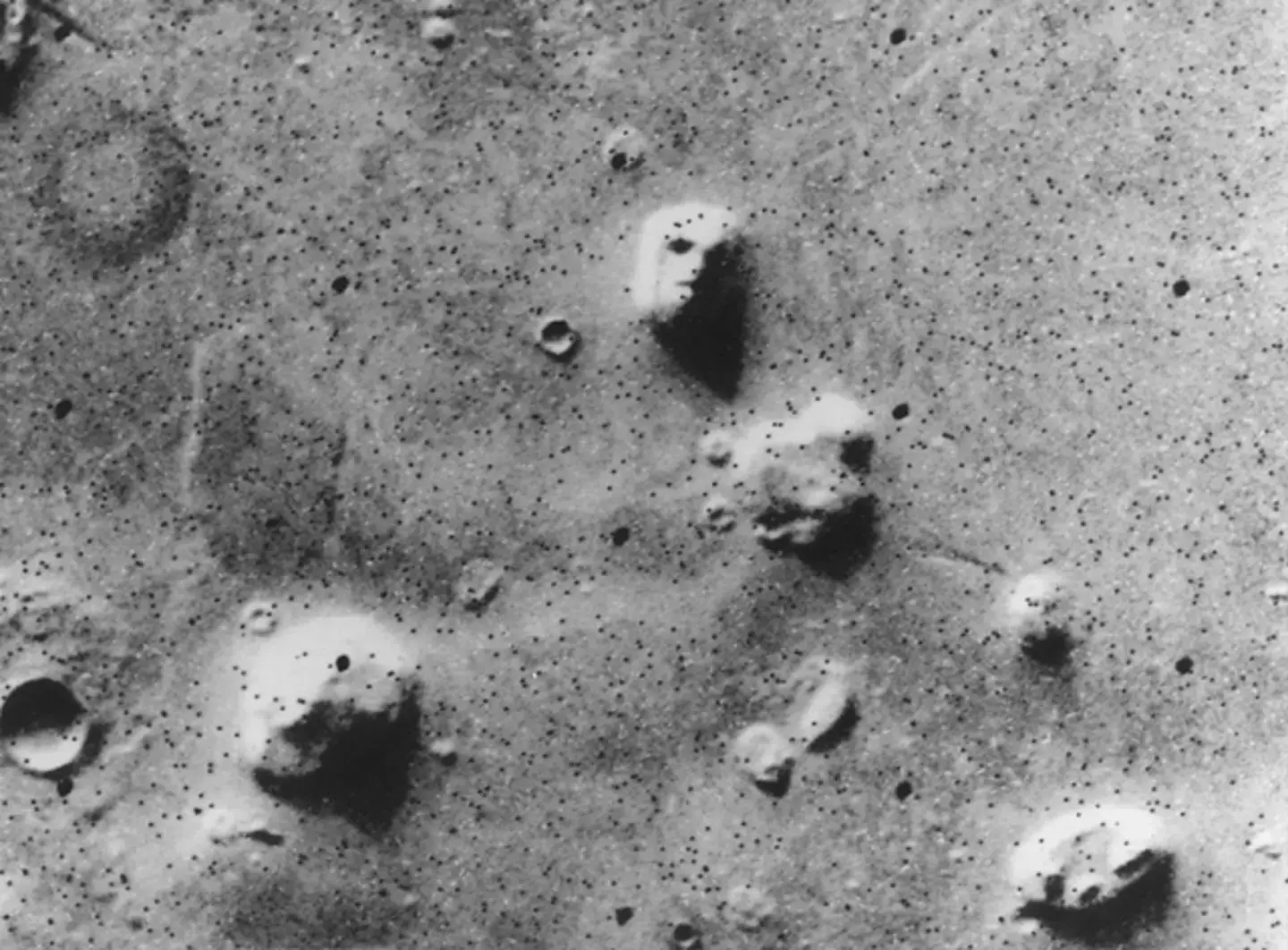
The 'Face of Mars' captured by Viking 1 in July 1976 (NASA)

Pretty creepy, isn't it?

The 'enormous head' was almost two miles from end to end and seemed to be staring back at the cameras from a region of the Red Planet called Cydonia, NASA's website explains.

Shadows in the photo over the huge rock formation gave the illusion of an eye, nose and mouth. Space fans were in awe when the photo was released days later.

NASA had hoped that the picture would be 'a good way to engage the public and attract attention to Mars'.

The company explained: "Some people think the Face is bona fide evidence of life on Mars - evidence that NASA would rather hide, say conspiracy theorists. Meanwhile, defenders of the NASA budget wish there was an ancient civilization on Mars."
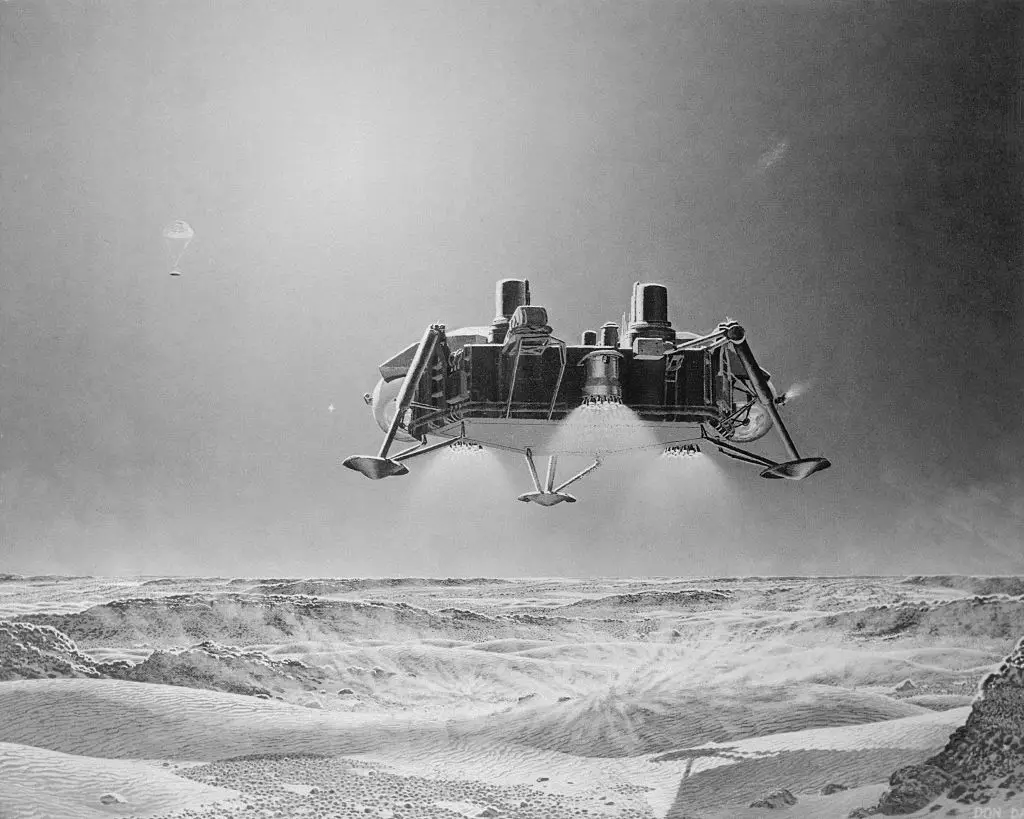
Viking I captured the first photos of the surface of Mars in 1976 (Bettmann/Getty Images)

Like most things in life, the reality behind the face is somewhat disappointing.

NASA's website explains: "The speckled appearance of the image is due to missing data, called bit errors, caused by problems in transmission of the photographic data from Mars to Earth. Bit errors comprise part of one of the 'eyes' and 'nostrils' on the eroded rock that resembles a human face near the center of the image."

The rocky formation itself is the Martian equivalent of a butte or a mesa - common landforms around the West of America.

Some years later, on April 5, 1998, Mars Global Surveyor flew over Cydonia for the first time and snapped another photo in the same area as the Face.

And on April 8, 2001, the Mars Global Surveyor returned for a second look. Using 'absolute maximum resolution,' the camera captured an even sharper view of the butte.
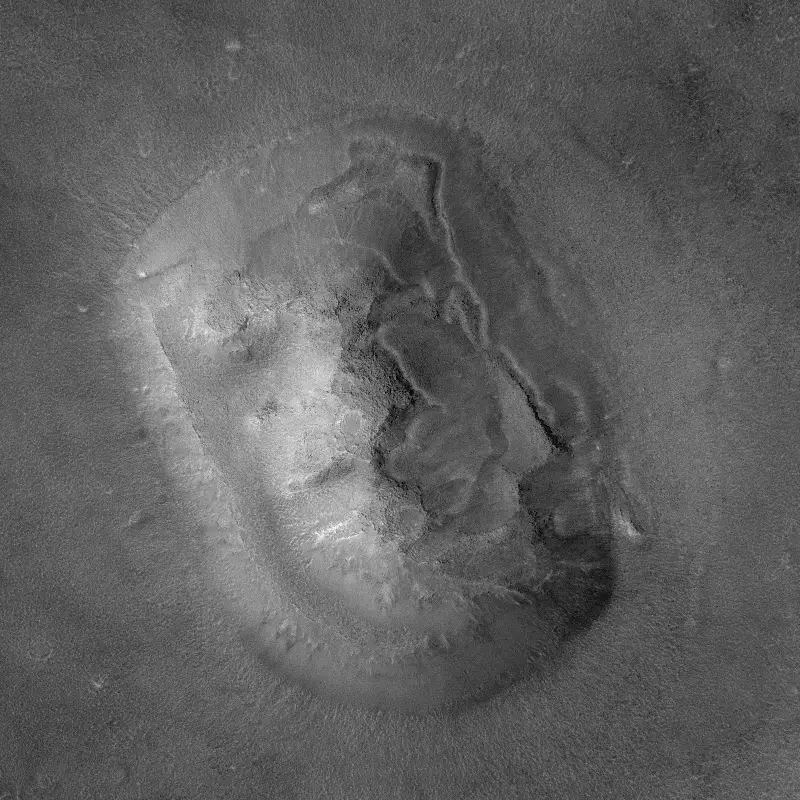
The Cydonia photo taken in 2001 (NASA)

Each pixel in the 2001 image spans 1.56 meters, compared to 43 meters per pixel in the best 1976 Viking photo.

Unfortunately, there was not a face in sight - as you can see in the photo above.

While there might not be a giant rocky face staring at us down from Mars, who's to say other lifeforms aren't watching over us right now? We might find out one day!

Choose your content:

3 days ago
4 days ago
  • Photo by NASA via Getty Images
    3 days ago

    Scientists are tracking astronaut health on Artemis II which could unlock insights

    Reid Wiseman, Victor Glover, Christina Koch, and Jeremy Hansen departed for space on April 1 on board the Orion craft

    Technology
  • Getty Stock
    3 days ago

    Neurosurgeon issues warning for wireless earbuds with huge risk most people don't realize

    He says using Bluetooth headphones is the 'stupidest thing you'll ever do'

    Technology
  • Brent Lewin/Bloomberg via Getty Images
    4 days ago

    Experts issue warning to all iPhone users over Apple Pay scam that is draining bank accounts

    Reportedly one woman was nearly scammed out of $15,000

    Technology
  • (Photo by Miguel J. Rodriguez CARRILLO / AFP via Getty Images)
    4 days ago

    Artemis II astronauts prepare for most dangerous phase of mission yet as NASA warns there is 'no plan B'

    It's the first astronaut mission to the Moon since 1972.

    Technology
  • NASA make shocking discovery after finding mysterious skull-shaped feature on Mars
  • NASA reveals truth behind 'stunning' Mars images showing night sky 250 million miles from Earth
  • Astonishing new picture taken on Mars leaves people shocked as they all point out surprising detail
  • 24-year-old who wanted to be first person on Mars breaks down 4 major problems with getting there