unilad homepage
unilad homepage
  • News
    • UK News
    • US News
    • World News
    • Crime
    • Health
    • Money
    • Sport
    • Travel
  • Music
  • Technology
  • Film and TV
    • News
    • DC Comics
    • Disney
    • Marvel
    • Netflix
  • Celebrity
  • Politics
  • Advertise
  • Terms
  • Privacy & Cookies
  • LADbible Group
  • LADbible
  • SPORTbible
  • GAMINGbible
  • Tyla
  • UNILAD Tech
  • FOODbible
  • License Our Content
  • About Us & Contact
  • Jobs
  • Latest
  • Archive
  • Topics A-Z
  • Authors
Facebook
Instagram
X
Threads
TikTok
YouTube
Submit Your Content
One food astronauts are 'forbidden' from eating in space as flammable farts could cause an explosion
Home>Technology>Space
Published 18:27 9 Dec 2024 GMT

One food astronauts are 'forbidden' from eating in space as flammable farts could cause an explosion

Taking 'silent but deadly' to a different dimension

Liv Bridge

Liv Bridge

google discoverFollow us on Google Discover
Featured Image Credit: Space Frontiers/Getty/Getty Stock Image

Topics: Space, Christmas, NASA, Science, Health, Food and Drink

Liv Bridge
Liv Bridge

Liv Bridge is a digital journalist who joined the UNILAD team in 2024 after almost three years reporting local news for a Newsquest UK paper, The Oldham Times. She's passionate about health, housing, food and music, especially Oasis...

X

@livbridge

Advert

Advert

Advert

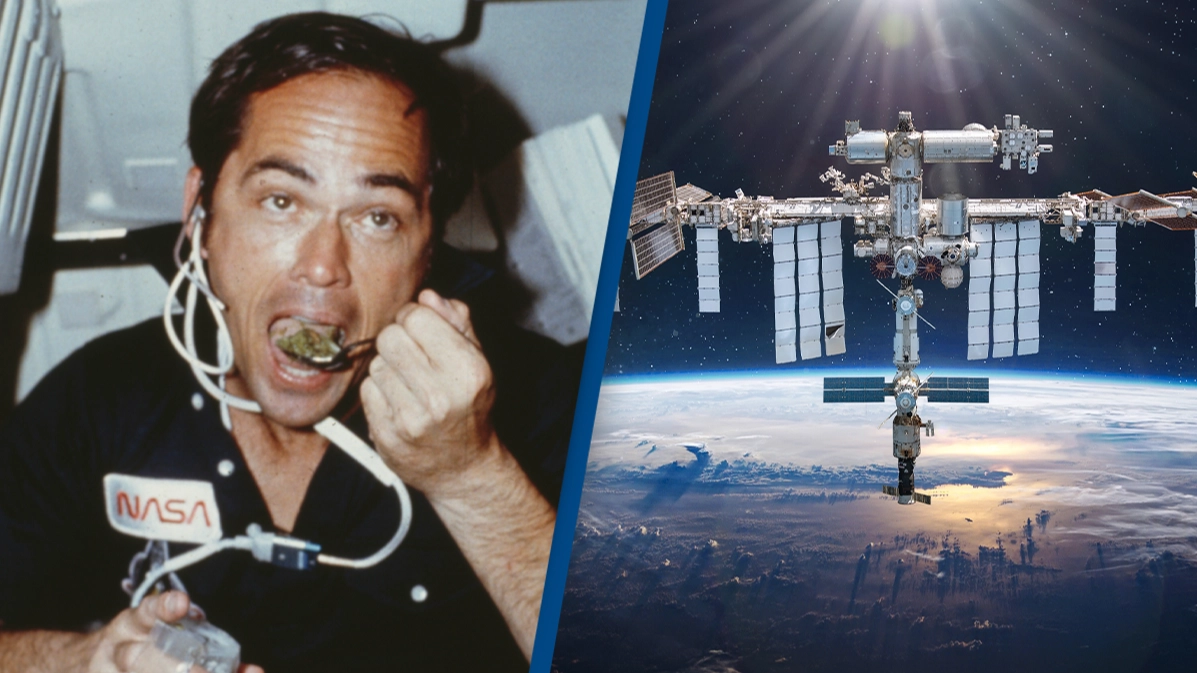
Taking a risk tucking into your festive feast around the dinner table is one thing, but letting rip out in space could actually turn deadly.

Astronauts aboard the International Space Station could be missing out on some Christmas staples while in orbit this year, as some vegetables threaten to pose a 'big bang' and jeopardise the mission.

Space chiefs fear some foods could trigger an outburst of flatulence, which is a real risk to those locked inside an air-tight capsule some 250 miles above Earth.
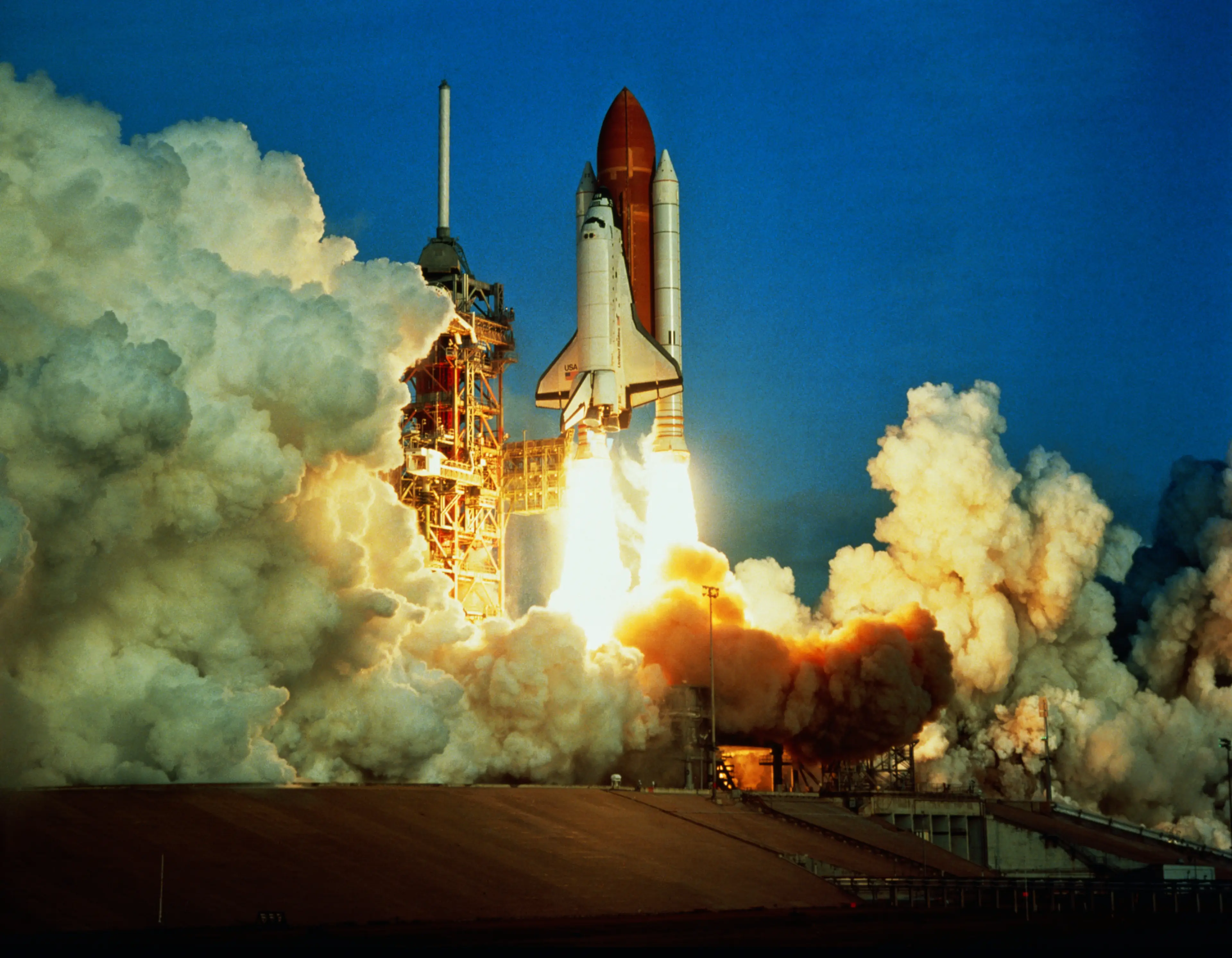
Ever wondered about what astronauts can and can't eat while in space? (Getty Images)

Advert

This is because farts are flammable and could ignite a fire... or an even larger blast off.

It also means Brussels sprouts are on the naughty list for the seven astronauts who will spend this Christmas orbiting the Earth at five miles per second.

Also 'banned' from the NASA festive menu are baked beans, cabbage, and broccoli, all for the same reason.

The farting issue has long troubled space experts at the US space agency, NASA, to the point where the US Department of Agriculture once employed a 'flatus researcher' to investigate.

A 1960s study of rectal gasses revealed gases, including hydrogen, methane, nitrogen and carbon dioxide, can build up from the food ingested some hours earlier.

These gases are produced by bacteria in the large intestine which break down food into amino acids, glucose and fatty acids.
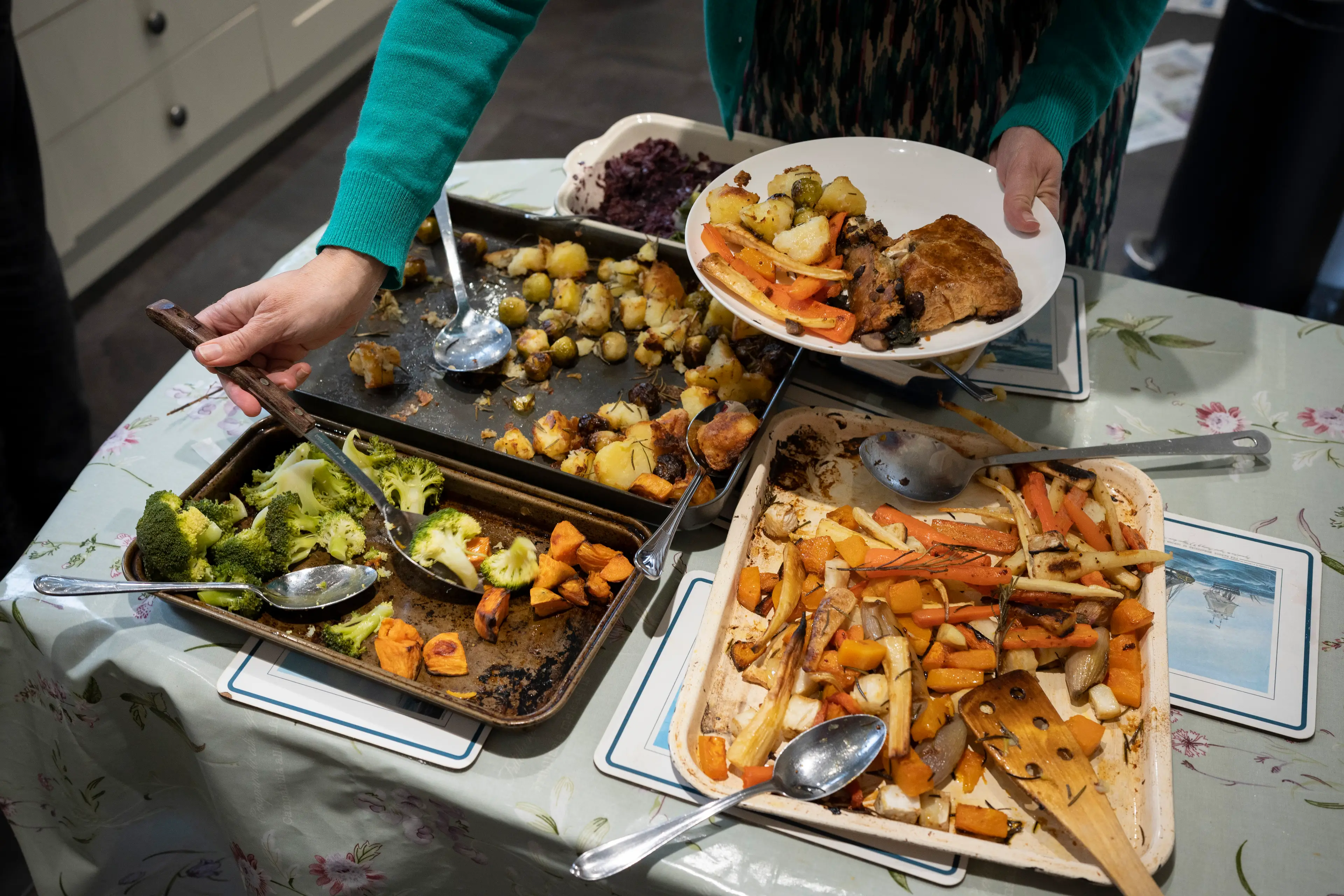
You won't see a plate like this in space (Richard Baker / In Pictures via Getty Images)

A rectal catheter was used in the experiment to measure the findings with experts claiming the ideal astronaut would be totally fart-free to completely eliminate the risk of 'sudden fires', or rather at least completely methane-free.

Interestingly, due to our differences in intestinal bacteria, some parts of the population produce no methane at all, which makes them 'attractive' candidates for astronauts.

At the other end of the spectrum, vegetarians are considered a risk when in space, as the cellulose in vegetables cannot be digested, meaning they often produce more gas than people with mixed diets.

The discovery meant astronauts were put on a strict and bland 'space diet', specifically designed to reduce flatulence, with a team of no-emission astronauts being preferred.
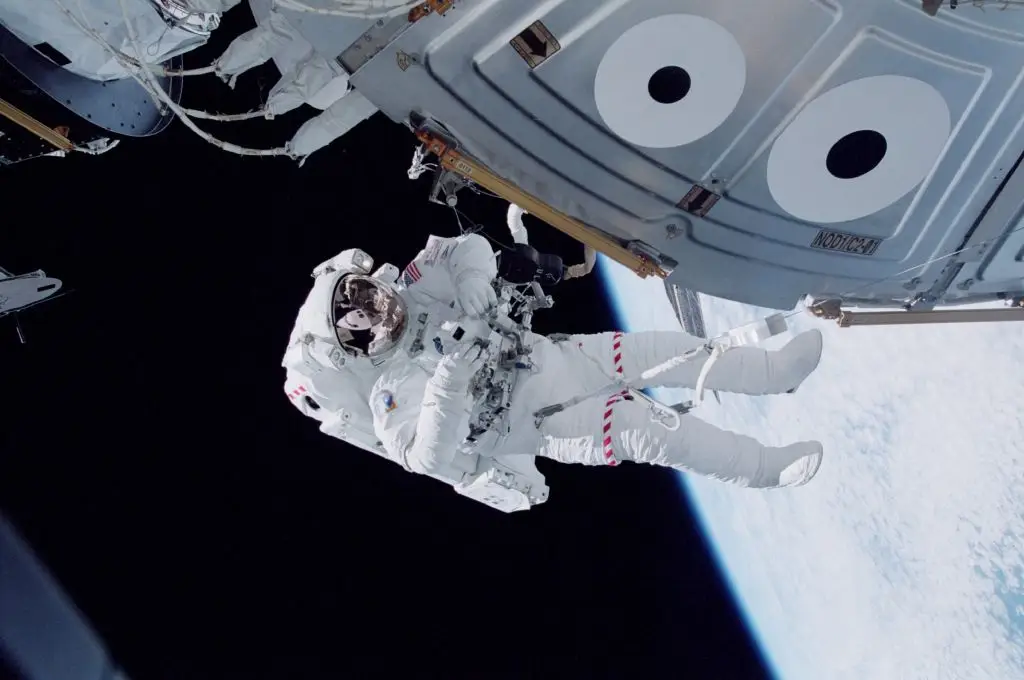
Astronauts must follow quite a specific diet (Getty Images)

Speaking to The Daily Star, technology expert and TV presenter Maddie Moate said: "Sprouts have a tendency to make us quite gassy. And you wouldn't want a crew of astronauts sealed inside the space station feeling uncomfortable because farts are flammable. So the astronauts are forbidden from eating sprouts.’’

In her book, Packing for Mars, author Mary Roach also touched on the subject.

She said at a space nutrition conference that the average person will 'during the peak flatulence period' pass 'anywhere from one to almost three cups of flatus per hour', some six hours after eating vegetables.

She said: "At the high end of the range, that's about two Coke cans full of fart. In a small space where you can't open the window.’’

Choose your content:

a day ago
4 days ago
  • Joanna Stern via YouTube
    a day ago

    Woman who used AI for almost everything for a year shares her key takeaways from it

    Tech journalist Joanna Stern used AI as her therapist, her boyfriend and her doctor and says the results were deeply mixed

    Technology
  • Getty Stock Images
    4 days ago

    Security experts share key advice as Instagram DMs are no longer 'private' after huge change

    It's recommended you move 'sensitive conversations' to other platforms

    Technology
  • Justin Sullivan/Getty Images
    4 days ago

    AI responds to ChatGPT CEO's warning that the tech will surpass humans by 2030

    Sam Altman said AI could become 'superintelligent' within a matter of years

    Technology
  • Brendan Smialowski - Pool/Getty Images
    4 days ago

    Trump forced to ditch his trusty cellphone as he barreled into high-stakes China summit with Xi

    Donald Trump left China today (May 15) following a two-day state trip

    Technology
  • Doctor warns eating too much protein could cause painful condition suffered by 1 in 10 Americans
  • Shocking new study explains how one milkshake could cause serious harm to your health
  • Experts reveals terrifying reason why astronauts should be banned from making 'space babies'
  • Neurologists reveal three popular foods that are 'worst for brain health' and could cause dementia in the future