
unilad homepage
unilad homepage
    • News
      • UK News
      • US News
      • World News
      • Crime
      • Health
      • Money
      • Sport
      • Travel
    • Music
    • Technology
    • Film and TV
      • News
      • DC Comics
      • Disney
      • Marvel
      • Netflix
    • Celebrity
    • Politics
    • Advertise
    • Terms
    • Privacy & Cookies
    • LADbible Group
    • LADbible
    • SPORTbible
    • GAMINGbible
    • Tyla
    • UNILAD Tech
    • FOODbible
    • License Our Content
    • About Us & Contact
    • Jobs
    • Latest
    • Archive
    • Topics A-Z
    • Authors
    Facebook
    Instagram
    X
    Threads
    TikTok
    YouTube
    Submit Your Content
    Scientist discovered how much the internet actually weighs and people are shocked calling it 'ridiculous'
    Home>Technology>News
    Updated 20:54 27 Sep 2024 GMT+1Published 20:55 27 Sep 2024 GMT+1

    Scientist discovered how much the internet actually weighs and people are shocked calling it 'ridiculous'

    There are lots of ways to define what exactly constitutes 'the internet', but this is what one measurement of it weighs

    Kit Roberts

    Kit Roberts

    google discoverFollow us on Google Discover
    Featured Image Credit: Getty Stock Images

    Topics: News, World News, Technology

    Kit Roberts
    Kit Roberts

    Kit joined UNILAD in 2023 as a community journalist. They have previously worked for StokeonTrentLive, the Daily Mirror, and the Daily Star.

    Advert

    Advert

    Advert

    When we think of the internet, we might think of something ephemeral existing in some alternate place.

    But despite this rather abstract idea of where and what the internet even is, one scientist managed to figure out how much it weighs.

    Of course, there are lots of ways that we could think about the internet when we're trying to calculate that figure.

    Advert

    One obvious thing to take account of is the amount of infrastructure which is required to actually keep the internet running.

    For example, the Cloud might sound like your holiday snaps are floating about in the atmosphere somewhere- but in fact, they are stored on a vast physical server, probably locked away in a warehouse somewhere.

    So first of all, this definition of the internet does not include the apparatus which are required to keep it running.

    Needless to say that would be significantly heavier than the weight that Russell Seitz ended up calculating.
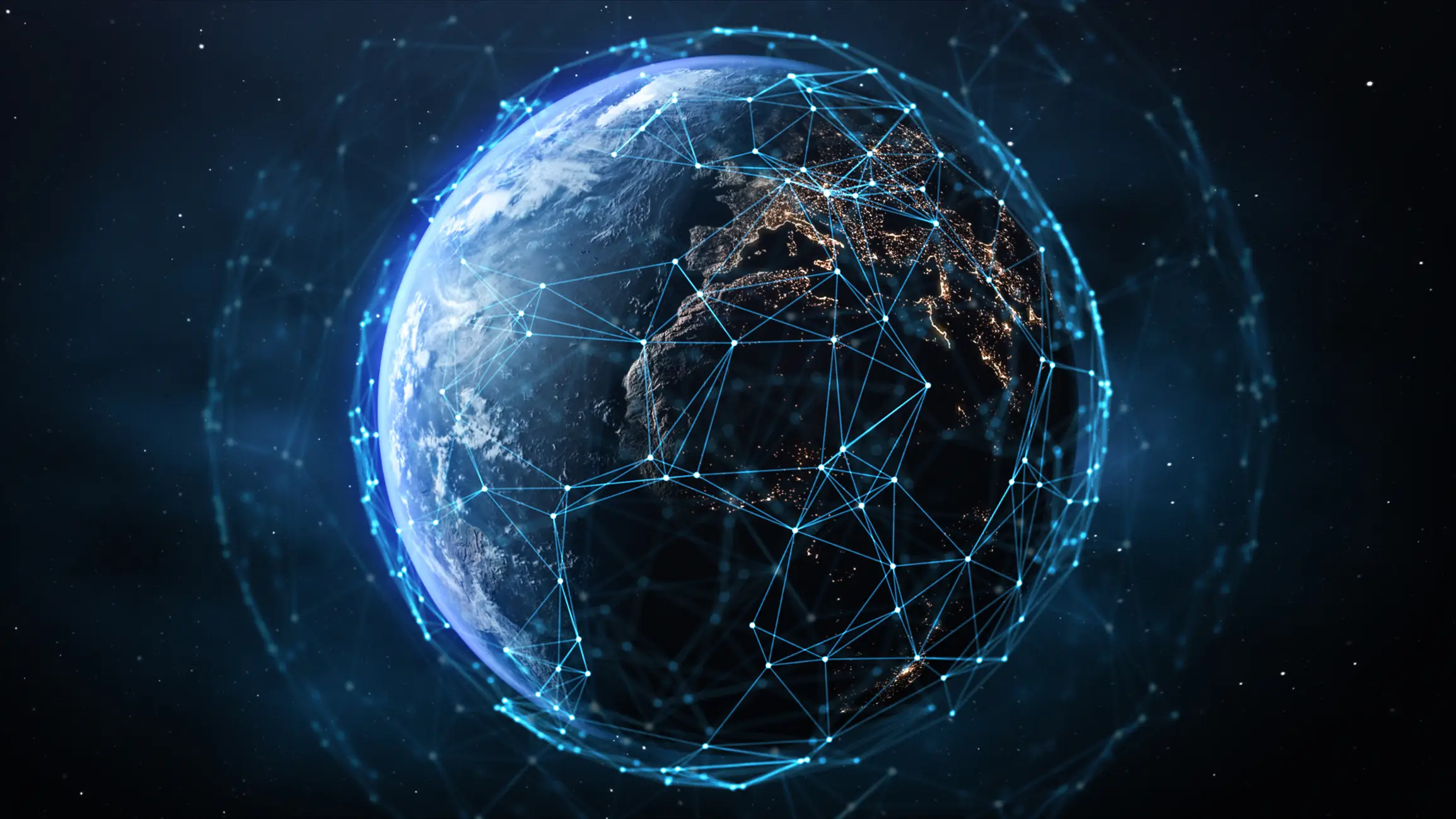
    This is how much the network weighs (DrPixel / Getty)
    This is how much the network weighs (DrPixel / Getty)

    This was around the weight of a strawberry, which is an insane thought really - that the entirety of the information on the internet weighs that much.

    But what exactly is it that physically weighs this much?

    Well, even though we might imagine the internet in an ephemeral way, it does have some physical mass - albeit a very tiny amount.

    This is the electrons which are required to circulate in order for the network to stay up and running so we can stream ourselves playing video games, eating food, or sell our used bread maker.

    The calculation done by Seitz calculated roughly how many electrons would need to pass through the internet to maintain the network.

    In 2007, he wrote as per The Guardian: "An ampere is some 1018 electrons a second.

    "Straightforward calculation reveals that some 50 grams of electrons in motion make up the internet."

    That's obviously not including the hardware (seksan Mongkhonkhamsao / Getty)
    That's obviously not including the hardware (seksan Mongkhonkhamsao / Getty)

    Whether 50 grams is a lot depends on what it is you're weighing. You wouldn't need many almonds to make up 50 grams, but you would need a lot more grains of rice.

    And with electrons, you need a lot of them to make up 50 grams, and we mean a LOT.

    That's because an electron has a mass of 9.1x10⁻³¹ kilograms, or 9.1 divided by 10 31 times.

    In 2011, professor of computer science at the University of California, John D. Kubiatowicz, explained that information does, indeed, have mass.

    Using the example of an e-book, he said they often use a transistor to trap electrons and although the number of electrons don't change, he said, as per AZO Quantum: "The trapped electrons have a higher energy."

    However, one person called the weight 'ridiculous', writing on social media: "Please elaborate. That is a ridiculous statement."

    While others pointed out that this obviously doesn't include all the things we need to use the internet.

    One wrote: "Not counting all the machines and cables that's needed to keep it running," while another commented: "I guess there is no hardware required to make up the Internet."

    • NASA scientist claims they've discovered the Star of Bethlehem
    • Expert predicts how much free time humans will have as he reveals how many jobs AI will actually replace
    • Man shocked after learning how much Tesla he purchased for $62,990 in 2022 is now worth
    • Scientists discovered bizarre radio signal from 13,000,000,000 years ago and it could answer how the universe started

    Choose your content:

    a day ago
    3 days ago
    4 days ago
    • Pier Marco Tacca/Getty Images
      a day ago

      AI expert issues chilling warnings about deepfakes after Italian Prime Minister shares AI lingerie photo

      Even laws around deepfakes won't fix the problem, the expert claims

      Technology
    • NBC Bay Area
      a day ago

      Doctor had college students take 9-week digital detox and revealed 'scary' impact on the brain

      'After I removed this negative presence, I realized all the positive aspects of my life,' one student said

      Technology
    • (Photo by Emanuele Cremaschi/Getty Images)
      3 days ago

      Playstation users who bought games within four-year period eligible for Sony $7.85 million settlement

      Sony has been accused of monopolizing the market through its PlayStation Store

      Technology
    • Dhiraj Singh/Bloomberg via Getty Images
      4 days ago

      iPhone users can check if they’re eligible for Apple's $250m payout over AI accusations

      The payout applies to people who bought certain iPhones between June 2024 and March 2025

      Technology