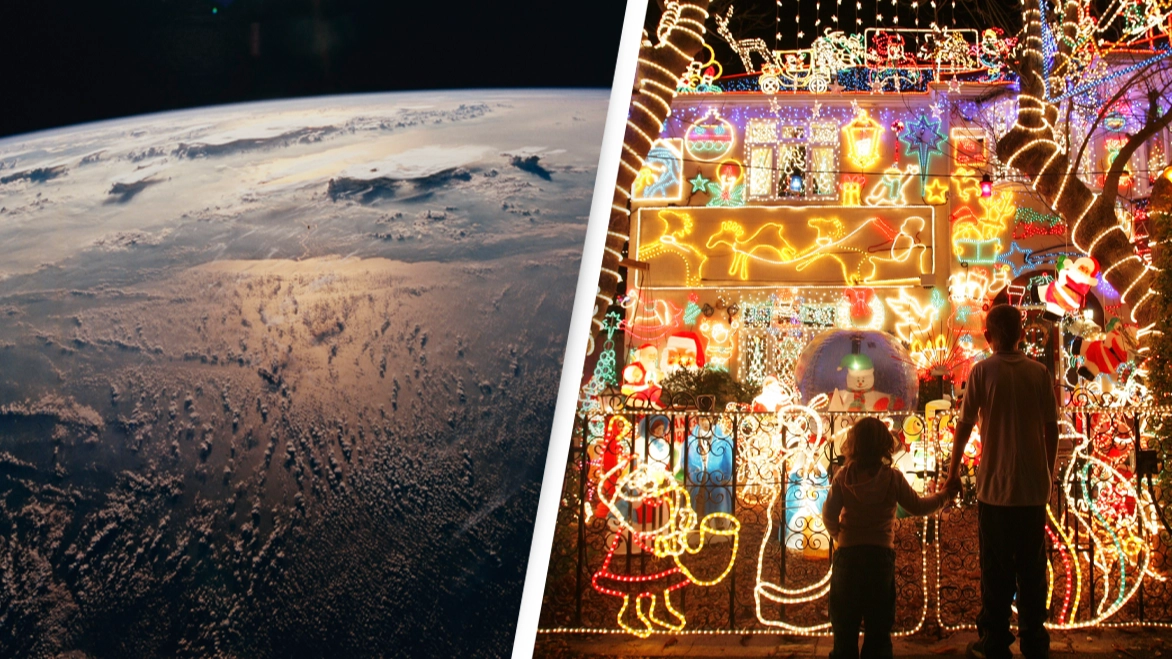
unilad homepage
unilad homepage
    • News
      • UK News
      • US News
      • World News
      • Crime
      • Health
      • Money
      • Sport
      • Travel
    • Music
    • Technology
    • Film and TV
      • News
      • DC Comics
      • Disney
      • Marvel
      • Netflix
    • Celebrity
    • Politics
    • Advertise
    • Terms
    • Privacy & Cookies
    • LADbible Group
    • LADbible
    • SPORTbible
    • GAMINGbible
    • Tyla
    • UNILAD Tech
    • FOODbible
    • License Our Content
    • About Us & Contact
    • Jobs
    • Latest
    • Archive
    • Topics A-Z
    • Authors
    Facebook
    Instagram
    X
    Threads
    TikTok
    YouTube
    Submit Your Content
    Scientists reveal how many Christmas lights you'd need to see it from space
    Home>Technology>News
    Published 12:17 24 Dec 2023 GMT

    Scientists reveal how many Christmas lights you'd need to see it from space

    Have you ever wondered just how many Christmas lights you'd need to be visible from space?

    Kit Roberts

    Kit Roberts

    google discoverFollow us on Google Discover
    Featured Image Credit: Space Frontiers/Archive Photos/Hulton Archive/Getty Images/Matt Cardy / Stringer

    Topics: News, UK News, Science

    Kit Roberts
    Kit Roberts

    Kit joined UNILAD in 2023 as a community journalist. They have previously worked for StokeonTrentLive, the Daily Mirror, and the Daily Star.

    Advert

    Advert

    Advert

    A group of physics students have calculated how many Christmas lights you would need to be visible from space.

    It's something we've all probably wondered at some point.

    And it's also something Ryan Bradley-Evans, Razzia Gafur, Ryan Heath, and Matthew Hough thought about when they were inspired by the 2006 movie Deck the Halls.

    Advert

    The movie sees Danny DeVito's character Buddy Hall using Christmas lights to make his house visible from space.

    He does this when he discovers that he can't see his house on 'MyEarth', a fictionalised version of Google Earth.

    Student Razzia said: “As scientists, we’re always looking for new ways to engage people in STEM and this paper is a prime example of how we can make science relevant outside of the lab/office."

    It might seem like a daft question, but it actually requires a lot of thinking and consideration to come up with a proper answer.

    There are a surprising number of factors. Firstly, where are you defining as 'space' starting?
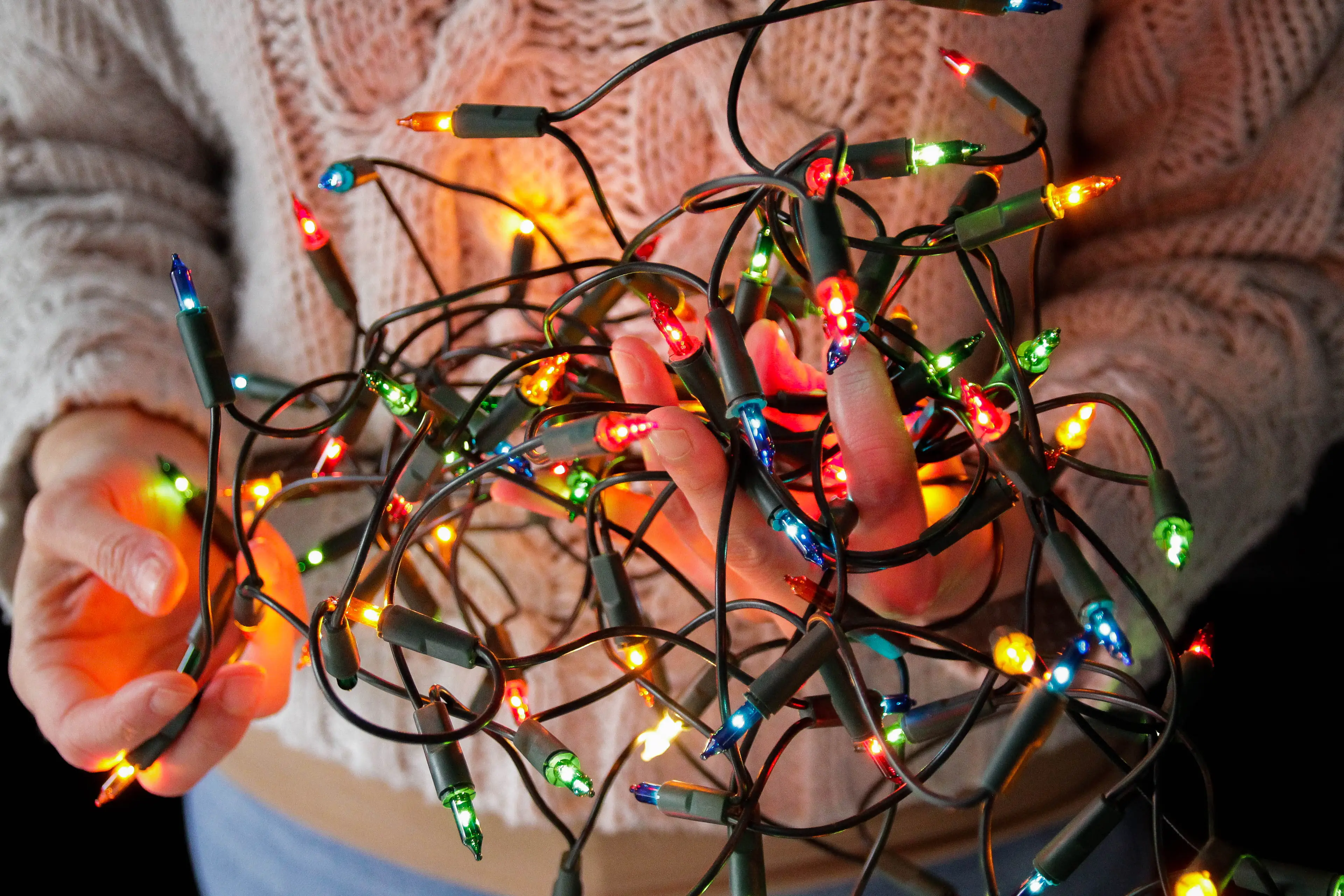
    How many of these would you need?
    Kinga Krzeminska / Getty

    For this occasion, the students from the University of Leicester decided that their starting point would be the orbit of the International Space Station, as a house is visible from this altitude.

    There's also the factor of light pollution. Of course in the real world this would have an impact on the how may lights you would need.

    However, this is obviously very dependant on where you live, so for the sake of simplicity the group decided to take it as though you are in an area with no light pollution.

    Ryan said: “These values calculated are a rough approximation as we considered an ideal case based around the assumption of zero light pollution.”

    So that's two considerations accounted for. But what about how bright one LED is?

    Brightness is measured in 'apparent magnitude', and the faintest that we can see a star is an apparent magnitude of +6.5, or around 10,600 luminosity.
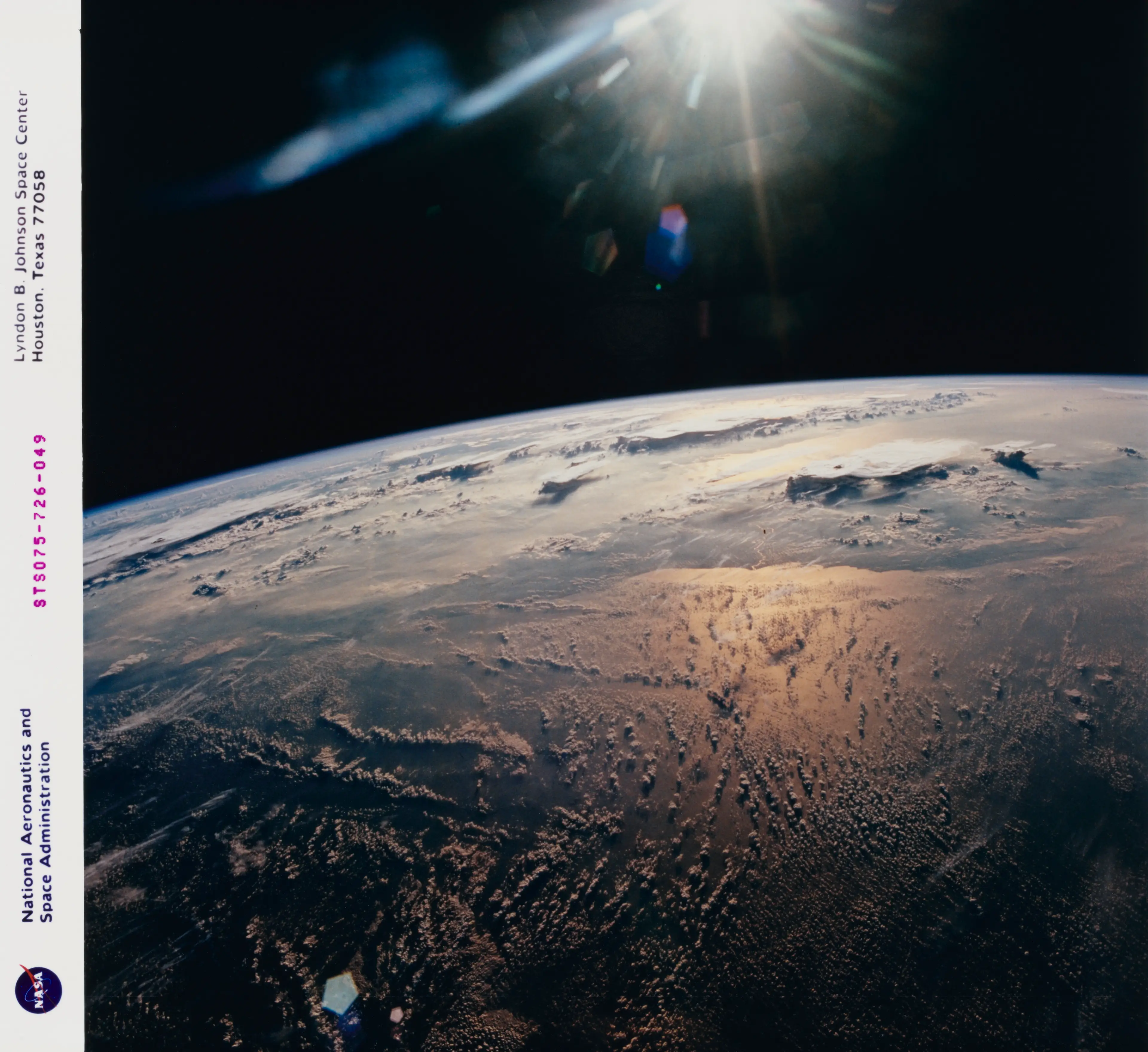
    It seems crazy, but it is possible.
    Space Frontiers/Archive Photos/Hulton Archive/Getty Images

    Still with us? Okay, so that's how much we need to be visible, now what's the apparent magnitude of a single LED light? It's about 4 luminosity. So, to get how many bulbs, we just divide 10,600 by four, to get approximately 2,650 Christmas lights.

    Matthew concluded: “It would be possible to make your house bright enough to be seen from space.”

    Ryan added: “Although we oversimplified the factors involved, it was great to see this beloved Christmas film hold up to the physics involved, as often this is not the case.”

    That's 'oversimplified'?!

    Now for a calculation of our very own. Online, you can buy a string of 100 lights for just under $20. To get enough lights according to our four scientists you'd need to buy 27 packs.

    This means it would cost you around $540 to buy enough lights.

    It might be less than you thought, but don't forget the electricity bills!

    Choose your content:

    17 hours ago
    2 days ago
    4 days ago
    • Dhiraj Singh/Bloomberg via Getty Images
      17 hours ago

      iPhone users can check if they’re eligible for Apple's $250m payout over AI accusations

      The payout applies to people who bought certain iPhones between June 2024 and March 2025

      Technology
    • Christopher Willard/Disney via Getty Images
      2 days ago

      Shark Tank star Lori Greiner issues warning over hidden Gmail setting and reveals how to disable it

      Lori Greiner has warned 1.8 billion Gmail users about a setting that allows access to their private emails

      Technology
    • Getty Stock
      2 days ago

      Every country where ChatGPT is banned and why

      One in eight people on the planet can't access ChatGPT - and their governments want to keep it that way

      Technology
    • Getty Stock Images
      4 days ago

      Man who used AI to apply to 1,000 jobs while he was sleeping woke up to mind blowing results

      Work smart, not harder has taken on a whole new meaning

      Technology
    • Scientists reveal how many cups of coffee to drink per day that could slow the aging process
    • NASA scientists reveal mind-blowing glowing life form in ocean that's visible from space
    • French president responds after King Charles tells Trump 'if it wasn't for us, you'd be speaking French'
    • Scientists discovered bizarre radio signal from 13,000,000,000 years ago and it could answer how the universe started