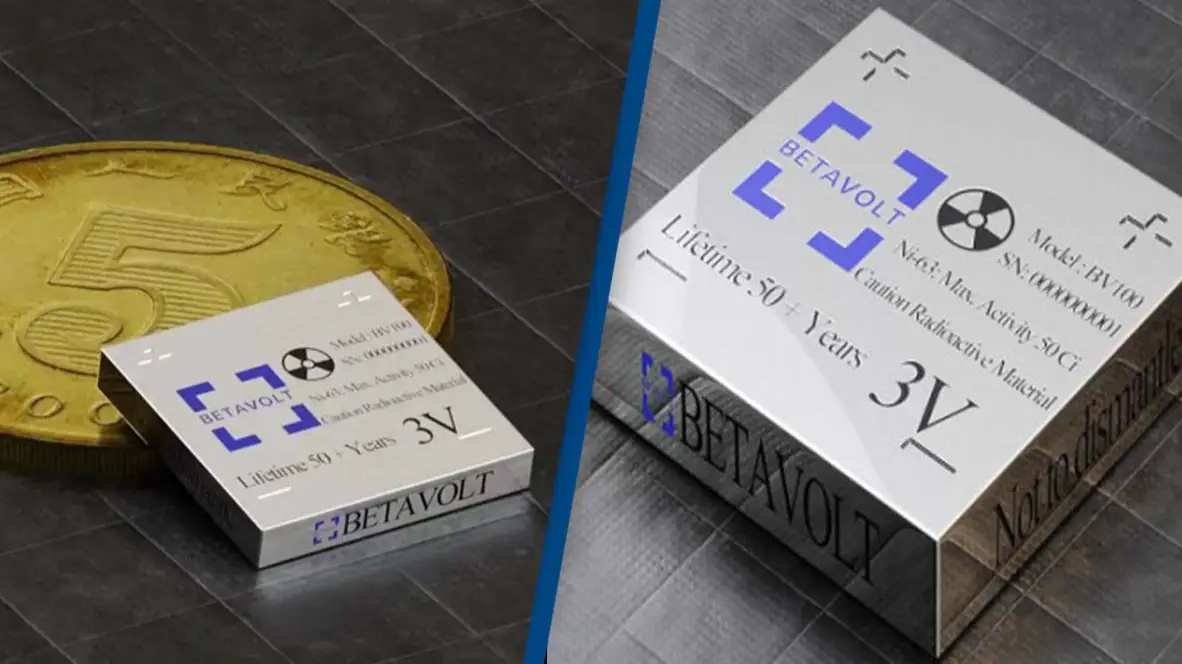
Tiny nuclear battery that lasts for 50 years unveiled

A startup company in China has developed a teeny tiny battery that it claims can provide power for 50 years.
The coin-sized battery can generate power for five decades without needing to be charged, according to the startup.
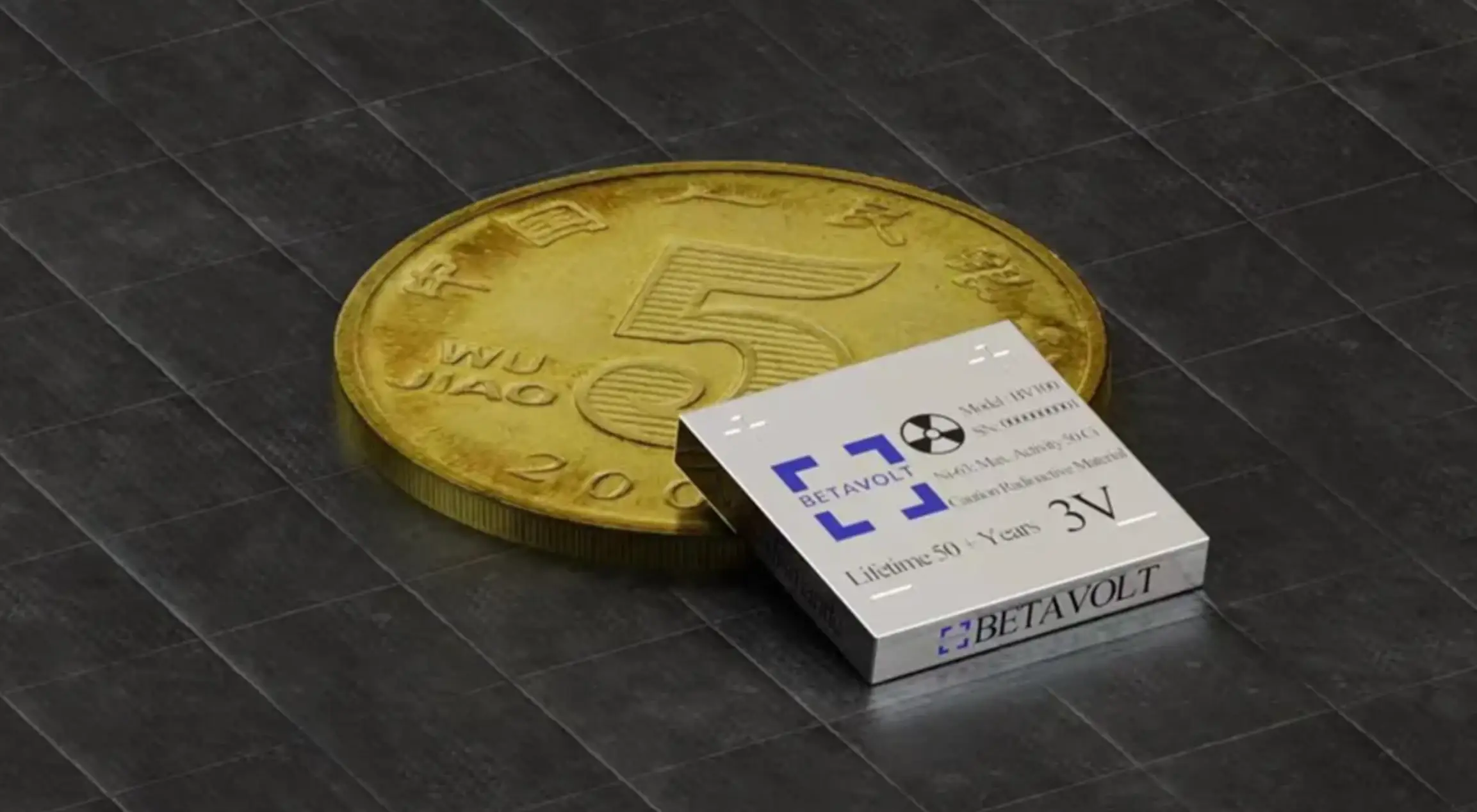
The groundbreaking battery was unveiled earlier this month by Beijing-based business, Betavolt.
Advert
Named BV100, the tiny battery generates power by using energy emitted from a decaying radioactive isotope of nickel.
Ultimately, the battery is created from technology which converts energy from decaying isotopes (in this case nickel-63) into electricity.
It can store 3,300 megawatt hours and according to Betavolt is 'way ahead of European and American scientific research institutions and enterprises'.
Impressive.
While the battery measures 15x15x15 cubic millimeters, it's not very powerful. Or at least not yet.
Its current power is currently only 100 microwatts and three volts, which isn't much at all.
While this isn't strong enough to power a smartphone, the company hopes it has the potential to do so in the future.
It also hopes to see a time when drones can fly independently and we don't have to charge our phones at all - which would be very nice indeed.

In fact, Betavolt - which insists the 'decaying' isotope is safe - hopes that it could one day even power medical devices such as pacemakers.
While the battery - which can operate in temperatures between -60°C to 120°C - is in its very early stages, the company is looking to create more powerful batteries with the use of radioactive isotopes.
“The company plans to launch a battery with a power of 1 watt in 2025. If policies permit, atomic energy batteries can allow a mobile phone to never be charged, and drones that can only fly for 15 minutes can fly continuously,” Betavolt said.
Recently, there's been some pretty impressive developments with car batteries, too.
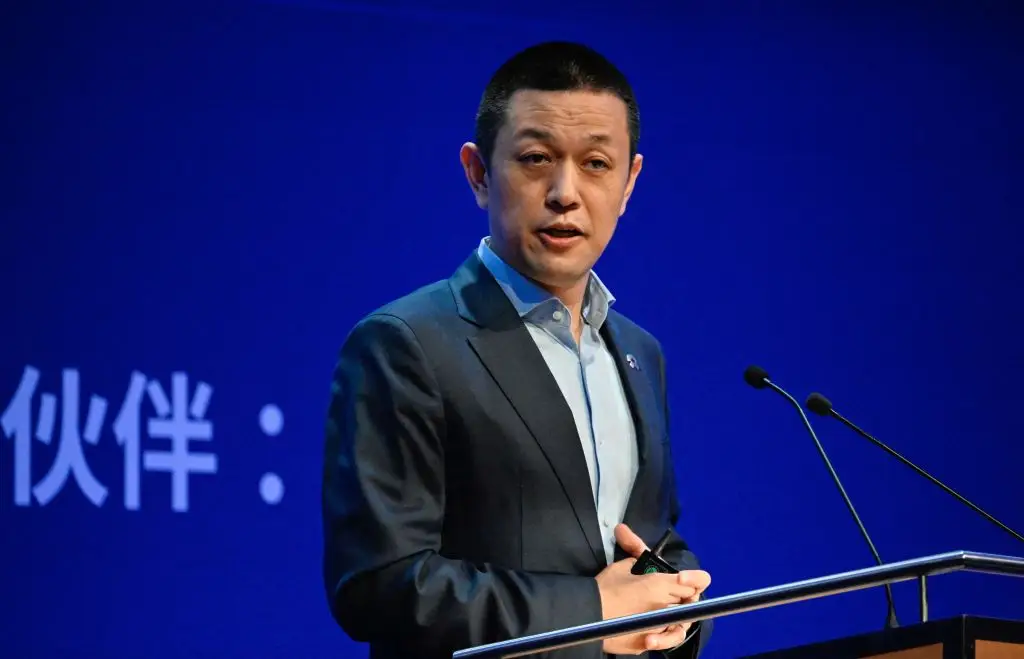
Car manufacturer Nio has just had a breakthrough in its battery life following a stunt by the CEO, William Li, who has developed a battery with a range of 1,000km.
The CEO decided to put it to the test by driving for 14 hours on a single charge between two Chinese cities while live-streaming the event.
After his successful journey, he took to Chinese social media platform Weibo to express his gratitude at being able to make the long journey.
“The 150kWh battery life challenge was completed, with a final score of 1044 kilometers!" he said.
Topics: Technology, China
 Lucy Devine