unilad homepage
  • News
    • UK News
    • US News
    • World News
    • Crime
    • Health
    • Money
    • Sport
    • Travel
  • Film and TV
    • Netflix
  • Music
  • Tech
  • Features
  • Celebrity
  • Politics
  • Advertise
  • Terms
  • Privacy & Cookies
  • LADbible Group
  • LADbible
  • SPORTbible
  • GAMINGbible
  • Tyla
  • UNILAD Tech
  • FOODbible
  • License Our Content
  • About Us & Contact
  • Jobs
  • Latest
  • Archive
  • Topics A-Z
  • Authors
Facebook
Instagram
X
Threads
TikTok
YouTube
Submit Your Content
NASA is now able to produce oxygen on Mars giving hope to human exploration of the planet

Home> Technology> NASA

Published 20:15 8 Sep 2023 GMT+1

NASA is now able to produce oxygen on Mars giving hope to human exploration of the planet

Enough oxygen was created to sustain an astronaut for a few hours

Claire Reid

Claire Reid

google discoverFollow us on Google Discover
Featured Image Credit: NASA/JPL-Caltech/MSSS / NASA/JPL-Caltech

Topics: NASA, Science, Space

Claire Reid
Claire Reid

Claire is a journalist at UNILAD who, after dossing around for a few years, went to Liverpool John Moores University. She graduated with a degree in Journalism and a whole load of debt. When not writing words in exchange for money she is usually at home watching serial killer documentaries surrounded by cats.

Advert

Advert

Advert

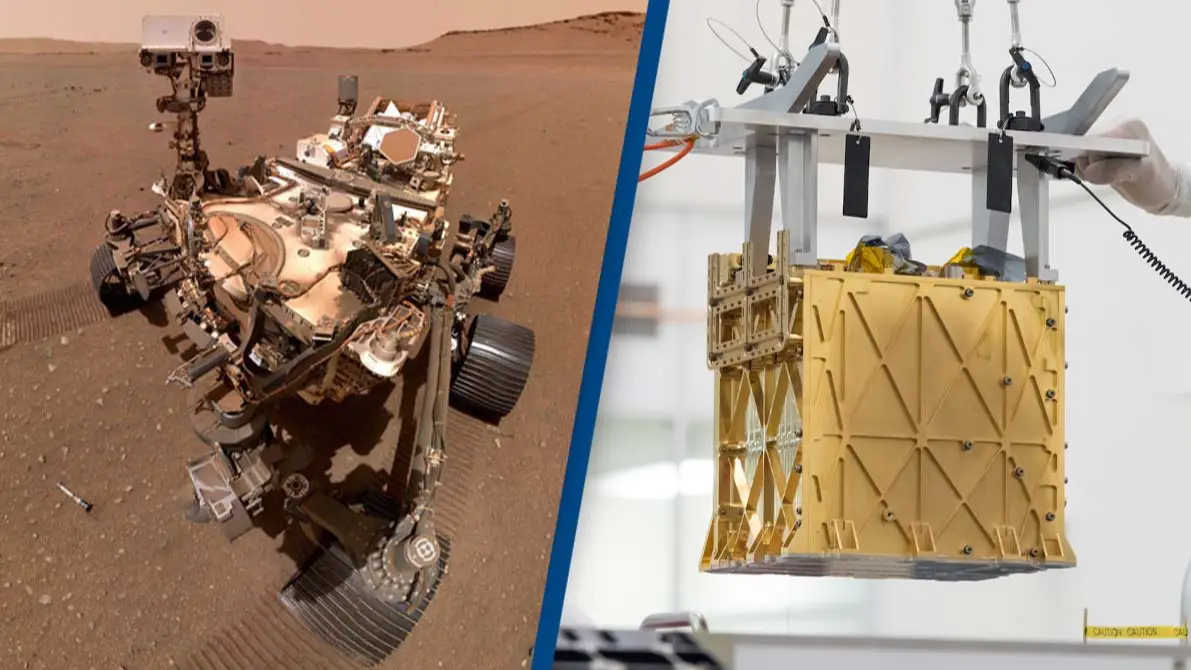
NASA has produced enough oxygen on Mars to sustain an astronaut for a few hours, bringing the chance of human exploration of the planet a step closer.

The US space agency sent up its Perseverance rover back in May 2021 and since then it has periodically generated small amounts of oxygen with its Mars Oxygen In-Situ Resource Utilization Experiment or ‘MOXIE’ instrument on board.

The MOXIE, which is smaller than your average microwave, is able to make molecular oxygen by separating one oxygen atom from each molecule of carbon dioxide it has collected from Mars’ atmosphere.

Advert

The instrument has made 122 grams of oxygen in total, which is enough to sustain an astronaut for three hours and 40 minutes.

At its peak, MOXIE was able to create 12g of oxygen in an hour, which was around double what NASA had aimed for; the oxygen created was also at least 98 percent purity.

Scientists are hopeful that future versions of MOXIE could stockpile oxygen, offering a steady supply to astronauts or to help make fuel to return to Earth. Exciting, right?
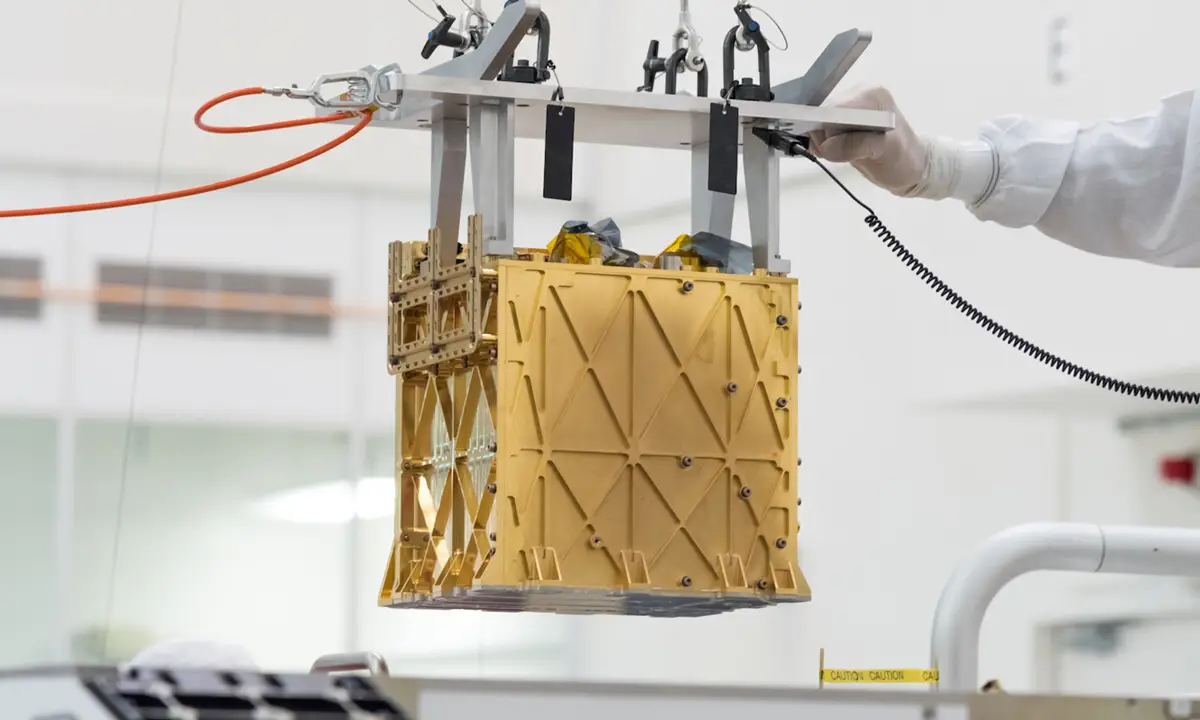
MOXIE has exceeded its creators' estimations.
NASA/JPL-Caltech

Jeff Hoffman, MOXIE Deputy Principal Investigator, stressed the importance of a supply of oxygen for future exploration plans.

He said: "To support a human mission to Mars, we have to bring a lot of stuff from Earth, like computers, spacesuits, and habitats. But oxygen? If you can make it there, go for it — you're way ahead of the game."

The gold-coloured cube has exceeded the expectations of its creators at Massachusetts Institute of Technology (MIT).

NASA deputy administrator Pam Melroy said: “MOXIE's impressive performance shows that it is feasible to extract oxygen from Mars' atmosphere – oxygen that could help supply breathable air or rocket propellant to future astronauts.
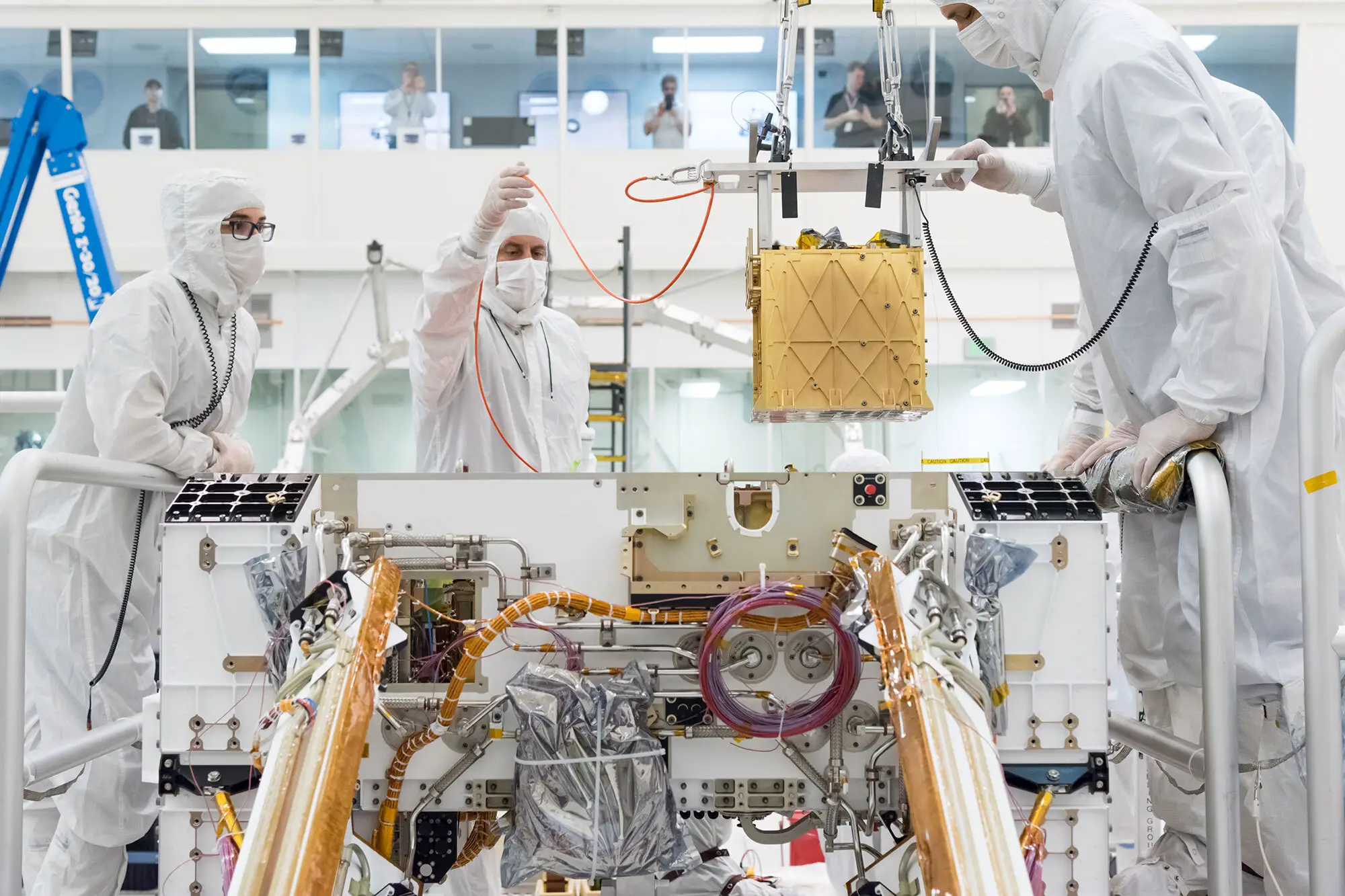
The device is located on the Perseverance rover.
NASA/JPL-Caltech

“Developing technologies that let us use resources on the moon and Mars is critical to build a long-term lunar presence, create a robust lunar economy, and allow us to support an initial human exploration campaign to Mars.”

Trudy Kortes, director of technology demonstrations, Space Technology Mission Directorate (STMD) at NASA Headquarters in Washington, said: “By proving this technology in real-world conditions, we’ve come one step closer to a future in which astronauts ‘live off the land’ on the Red Planet.”

However, now that the experiment has been carried out MOXIE is set for retirement with its operations on the Red Planet drawing to a close.

While MOXIE may be out of action, for now Perseverance will continue as it was.

  • NASA scientist claims to have found evidence of ‘Non-Human Intelligence’ in our skies
  • Artemis II astronauts prepare for most dangerous phase of mission yet as NASA warns there is 'no plan B'
  • NASA discovers potentially habitable planet 'remarkably similar to Earth'
  • NASA scientists baffled after discovering rock structure on Mars that isn't from there

Choose your content:

20 hours ago
a day ago
  • Photo by NASA via Getty Images
    20 hours ago

    Scientists are tracking astronaut health on Artemis II which could unlock insights

    Reid Wiseman, Victor Glover, Christina Koch, and Jeremy Hansen departed for space on April 1 on board the Orion craft

    Technology
  • Getty Stock
    a day ago

    Neurosurgeon issues warning for wireless earbuds with huge risk most people don't realize

    He says using Bluetooth headphones is the 'stupidest thing you'll ever do'

    Technology
  • Brent Lewin/Bloomberg via Getty Images
    a day ago

    Experts issue warning to all iPhone users over Apple Pay scam that is draining bank accounts

    Reportedly one woman was nearly scammed out of $15,000

    Technology
  • (Photo by Miguel J. Rodriguez CARRILLO / AFP via Getty Images)
    a day ago

    Artemis II astronauts prepare for most dangerous phase of mission yet as NASA warns there is 'no plan B'

    It's the first astronaut mission to the Moon since 1972.

    Technology