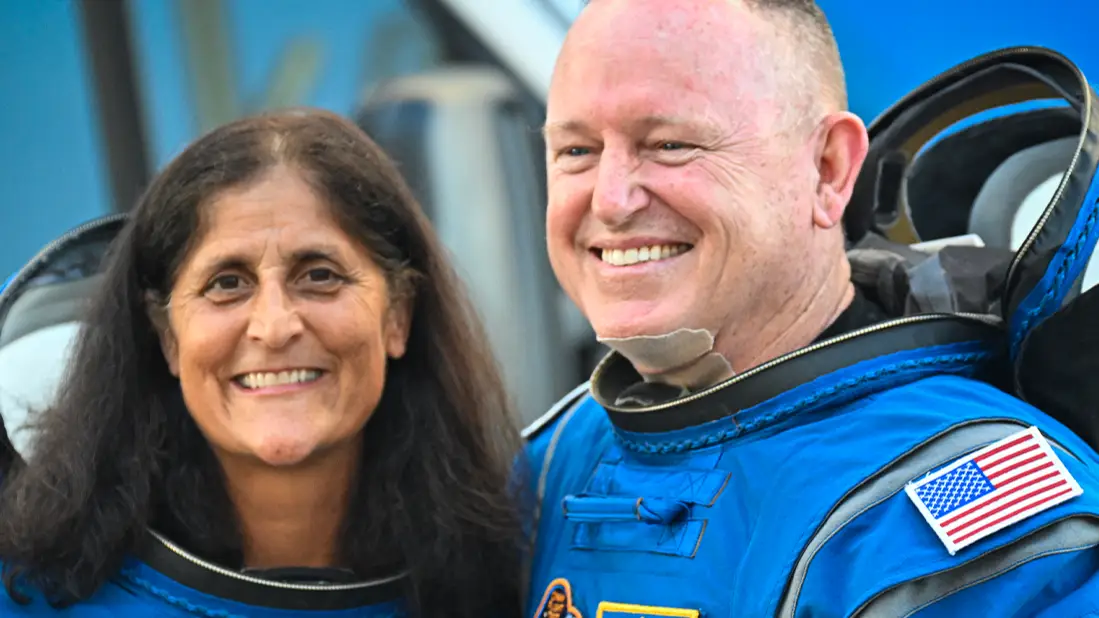
Startling body effects NASA astronauts may suffer from once they return to Earth after 9 months in space

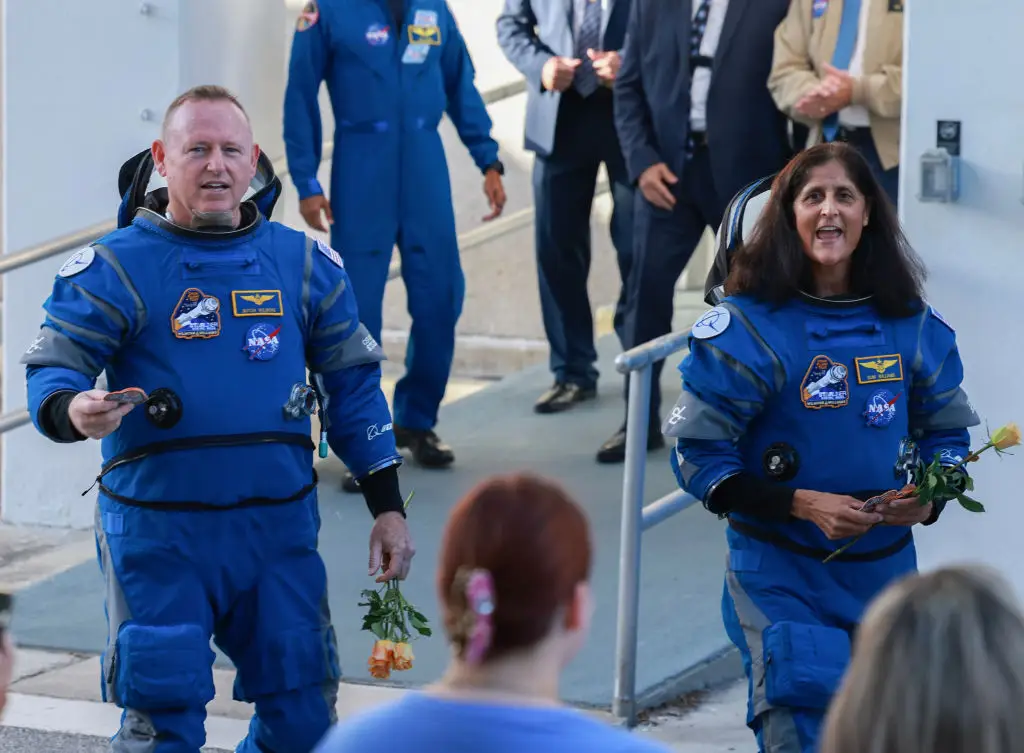
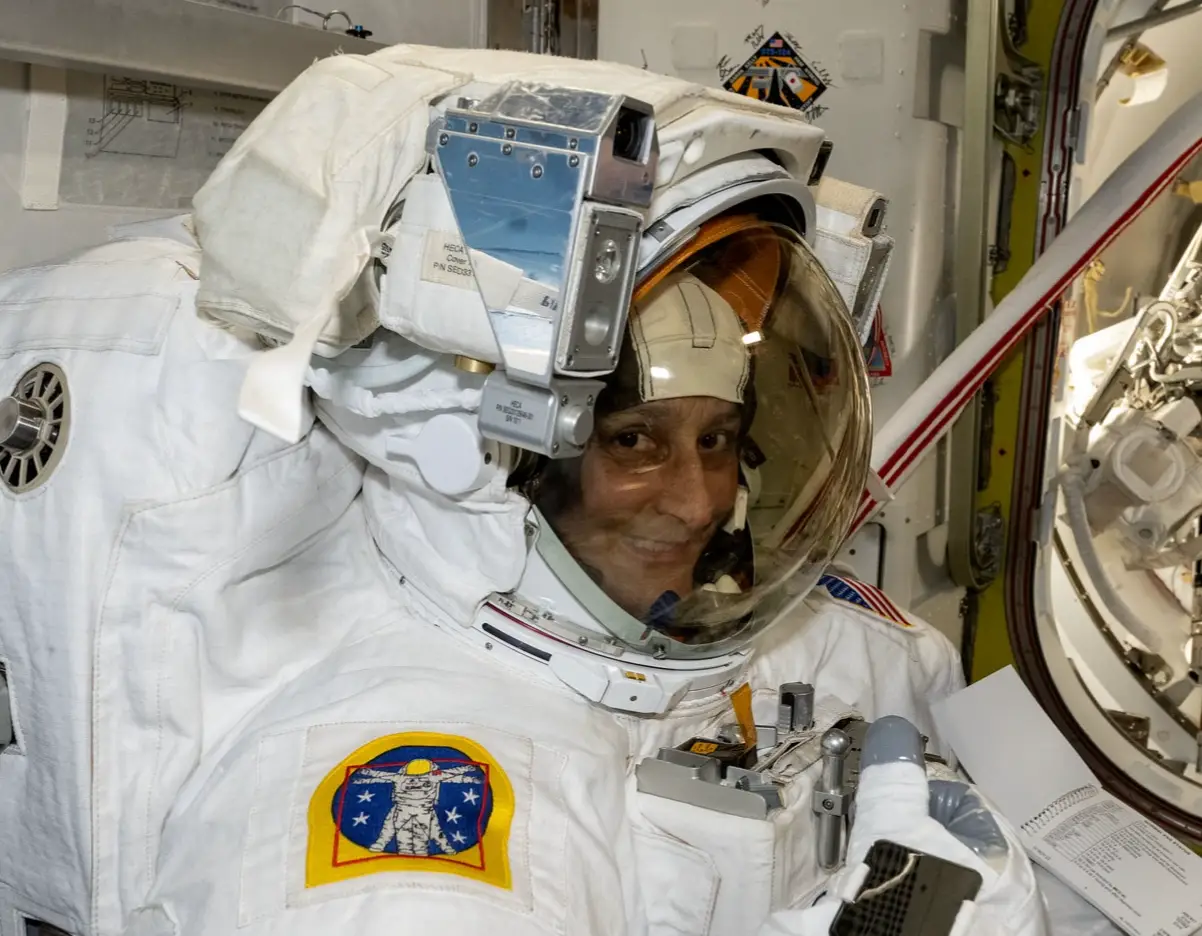
NASA astronauts Sunita Williams and Barry Wilmore are finally set to return to Earth and there are various health effects they may experience once back.
After being stranded at the International Space Station for a whopping nine months, off the back of what was intended to be a mere eight-day trip due to technical issues, Sunita 'Suni' Williams and Barry 'Butch' Wilmore are finally set to return to Earth in the forthcoming days - the SpaceX crew having arrived at the station earlier today.
Advert
However, Baylor College of Medicine's Center for Space Medicine details certain ways 'the human body changes in space' and some of the potential health challenges the NASA astronauts may face upon their return.
Bones
Gravity eases off the pressure on the legs, hips and spine and as a result of them being used less, this can lead to a loss of bone density.
The center notes this mineral content can then increase elsewhere in the body and lead to a heightened risk of kidney stones or urinary calcium.
Muscles
If astronauts don't keep up their fitness while in space, their muscle mass can decrease as a result of the gravity taking away the effort needed to move about and use their legs and back.
If muscle mass has decreased in space, this could increase the risk of astronauts having a fall back on Earth and sustaining fall-related injuries.
The eyes are also specific body parts which can find themselves impacted after a long stint in pace.
A common effect on the eyes after being in space for a bit is 'swelling in the back of the eye'.
Skin
"Not standing on your feet causes them to lose callouses and become soft from disuse and less sensitive to pressure variations. Instead, astronauts on the International Space Station (ISS), have developed callouses on top of their feet from using footholds on the station," the center notes.
Astronauts skin elsewhere on their body may also get more easily irritated as a result of their immune system being 'lowered' while away in space alongside 'microbial growth'.
Brain
The center explains the lack of gravity experienced when in space can alter the way the brain feeds certain signals.
While astronauts may feel space motion sickness and a 'loss of sense of direction' when they first go into space, Williams and Wilmore will have adjusted during their long stay.
However, Baylor College's Medicine Center warns: "Once the astronaut returns to Earth, they are immediately forced to readjust again, back to Earth’s gravity, and can experience issues standing, stabilizing their gaze, walking, and turning.
"For their safety, returning astronauts are often placed in a chair immediately upon return to Earth."
Mental health
Astronauts may also feel the impact of 'The Overview Effect'.
The 'Overview Effect' often takes place when astronauts go into space and look down and see Earth from that perspective for the first time. The experience 'shift[s] [...] the way astronauts view and think about our planet and life itself,' NASA explains.
Ex-NASA astronaut and author Ron Garan spent a whopping 178 days in space and when he looked down at Earth he was hit with a 'sobering realization' of how fragile Earth is.
Garan was hit by the realization that our planet - and every living thing on it - is being kept alive by a 'paper thin layer'.
"I saw an iridescent biosphere teaming with life, I didn't see an economy, but since our human-made systems treat everything including the very life-support systems of our planet as the [...] subsidiary of the global economy, it's obvious from the vanish point of space that we're living a lie," he said.
Radiation
In space, astronauts are exposed to 'about 100 times' the amount of radiation the rest of us are here on Earth.
Baylor College of Medicine warns: "They can experience radiation sickness, central nervous system effects, degenerative diseases, and most notably, an increased lifetime risk of cancer."
 Poppy Bilderbeck