unilad homepage
  • News
    • UK News
    • US News
    • World News
    • Crime
    • Health
    • Money
    • Sport
    • Travel
  • Film and TV
    • Netflix
  • Music
  • Tech
  • Features
  • Celebrity
  • Politics
  • Advertise
  • Terms
  • Privacy & Cookies
  • LADbible Group
  • LADbible
  • SPORTbible
  • GAMINGbible
  • Tyla
  • UNILAD Tech
  • FOODbible
  • License Our Content
  • About Us & Contact
  • Jobs
  • Latest
  • Archive
  • Topics A-Z
  • Authors
Facebook
Instagram
X
Threads
TikTok
YouTube
Submit Your Content
Scientists reveal new super continent forming that humans won't be able to live on

Home> News> World News

Updated 19:45 20 Nov 2023 GMTPublished 19:46 20 Nov 2023 GMT

Scientists reveal new super continent forming that humans won't be able to live on

A new super continent that is currently forming is set to be so hot that it will be inhabitable for mammals.

Gerrard Kaonga

Gerrard Kaonga

google discoverFollow us on Google Discover
Featured Image Credit: Getty Stock Images / Kike Calvo/Universal Images Group via Getty Images

Topics: News, Science, World News, Education

Gerrard Kaonga
Gerrard Kaonga

Gerrard is a Journalist at UNILAD and has dived headfirst into covering everything from breaking global stories to trending entertainment news. He has a bachelors in English Literature from Brunel University and has written across a number of different national and international publications. Most notably the Financial Times, Daily Express, Evening Standard and Newsweek.

Advert

Advert

Advert

If you planned to live for a couple hundred million years, scientists have revealed a new super continent is forming, and it will be inhabitable for mammals.

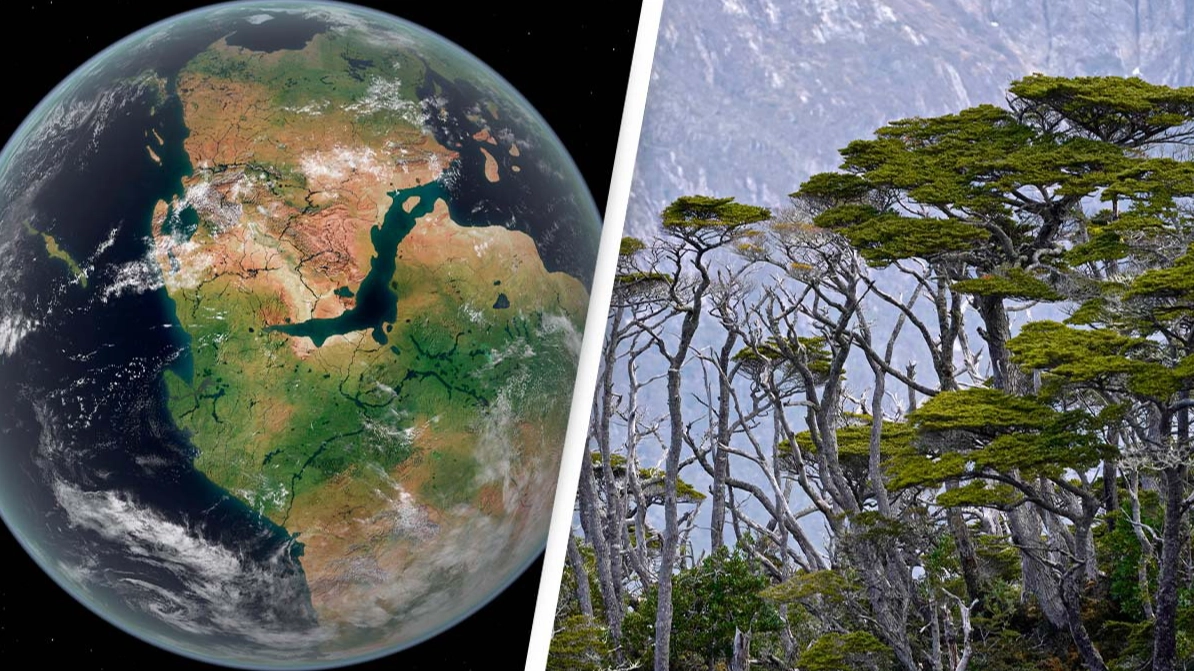
A new study published by scientists in Nature Geoscience has indicated that a new super continent is forming, similar to that of Pangea almost 300 million years ago.

A new study has indicated that a new super continent is forming
Getty Stock Images

But there is a slew of bad news that comes with this revelation of Earth’s next super continent, Pangea Ultima.

Advert

The new supercontinent will mean that most land mass won’t have access to a nearby ocean. A hotter sun and increased volcanic carbon dioxide emissions means that temperatures will skyrocket.

Temperatures are predicted to be around 50 Celsius and 65 Celsius during an average summer.

And even if you think you could handle the heat, it is suspected to get so hot that most plant life won’t be able to survive, meaning little to no food which doesn’t bode well either.

While there is expected to be some areas more habitable, the surviving species will be put in fierce competition for remaining resources.

One of the authors behind the study, Alexander Farnsworth, a paleoclimatologist at the University of Bristol and his co-authors have likened this to a mass extinction event for most mammals across the world.

“When you see a supercontinent forming, it predisposes the environment or the climate to become more fragile for species, more towards these tipping points that can push big extinction events to occur,” he said.

Temperatures are predicted to be around 50C and 65C during an average summer.
Getty Stock Images

The study has even suggested that the continent will be so hot and humid mammals - humans included - would not be able to sweat, meaning no body temperature regulation.

“When it's too humid, it's too difficult for humans to sweat," Farnsworth added.

"If we can't sweat, we can't remove that internal body heat, and we keep getting hotter and hotter, cooking our own organs, essentially."

The study itself highlights how mammals have proven to be very resilient in multiple climates for millions of years, but could not survive on Pangea Ultima.

“Mammals’ success has seen habitation of nearly every terrestrial biome, encompassing periods of large climatic fluctuations and mass extinctions, showing resilience to climate change,” the study stated.

“Although mammals are resilient to temperature fluctuations, thermal tolerances are invariant across latitudes, elevation and phylogeny, showing that physiological constraints exist where survivability is limited.”

Tough luck all around for anyone that survives the 200-300 million years needed to see Pangea Ultima.

Choose your content:

13 hours ago
14 hours ago
15 hours ago
  • YouTube/Coachella
    13 hours ago

    Crazy theory emerges about Justin Bieber's headline show at Coachella weekend two

    Coachella is well underway, and now a theory about Justin Bieber has emerged...

    Celebrity
  • Getty Stock Image
    14 hours ago

    Nutritionist reveals 'smelly' IBS symptom that has nothing to do with the bathroom

    The symptoms of IBS can be hard to live with, including one that can leave the people around you gagging

    News
  • Dave Benett/amfAR/Getty Images for amfAR
    14 hours ago

    Jeff Bezos and Lauren Sanchez have described their 'pretty normal' typical day

    How do you think the super rich spend their days?

    News
  • John Lamparski/Bloomberg via Getty Images
    15 hours ago

    Zohran Mamdani and wife's tax filings reveal salaries and surprising income stream

    The mayor of New York City's tax filings showed that Zohran Mamdani has a strange source of income

    News
  • Scientists discover protein in whales that could help humans live up to 200 years
  • Scientists discover mysterious inscription on ancient tomb that could reveal Count Dracula's final resting place
  • Scientists reveal surprising reason women live longer than men and it's not what you think
  • Scientists reveal new eye test that could predict dementia decades early