Mystery surrounding skull thought to be Queen Cleopatra’s murdered sister finally solved

A mystery surrounding a skull believed to be Queen Cleopatra's murdered sister which has dragged on for almost 100 years has finally been answered.
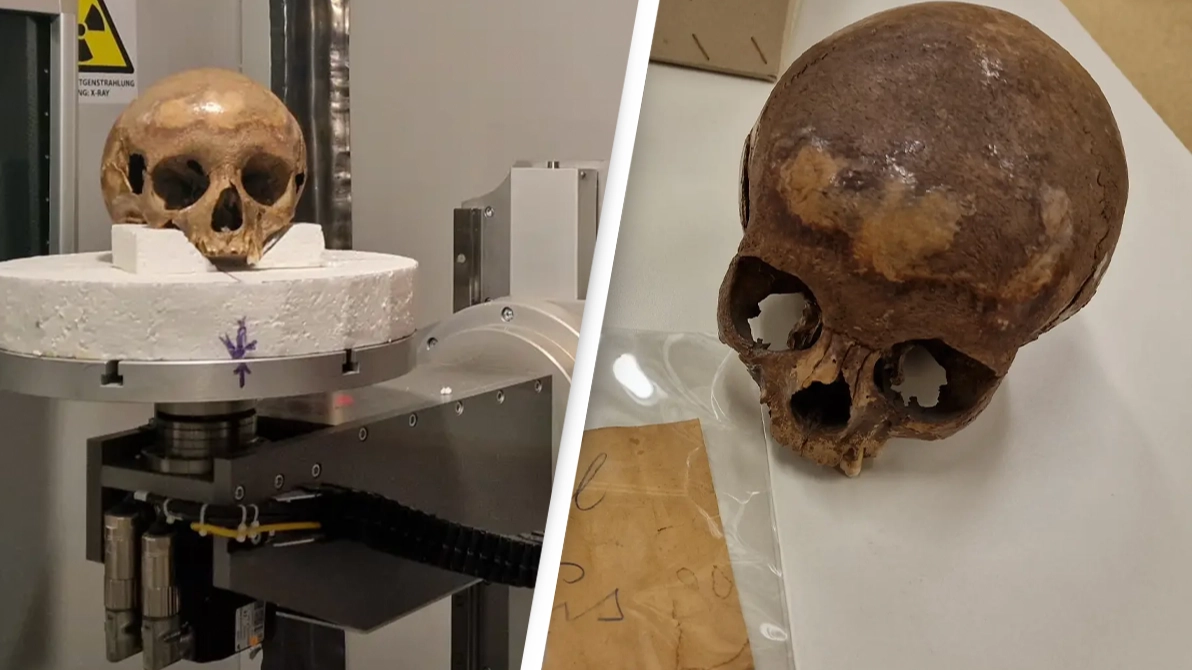
In 1929, an Austrian archaeologist and his team exhumed a skull and bones from a water-filled sarcophagus while exploring a historic tomb in Turkey.
The archaeologist, Josef Keil, only took the skull from the once magnificent 'Octagon' site with him to present before historians who deemed the artefact to belong to a 20-year-old woman.
Advert
The burial site itself was also of importance, indicating it belonged to a 'very distinguished person' of a 'higher aristocracy', the Austrian Academy of Sciences explained.
Thus, the hypothesis that the remains belonged to Cleopatra's half sister, Arsinoë IV, were born.
Princess Arsinoe was murdered in Ephesos, the ancient Greek city which now resides in modern Turkey, around 41 BC by assassins at the 'instigation of Mark Anthony', the Egyptian queen's lover.
Now, however, modern science and technology has helped put the mystery to bed.
A team of specialists from the University of Vienna, led by anthropologist Gerhard Weber, turned to geneticists, orthodontists, a lab scanner and DNA analysis to examine the skull.
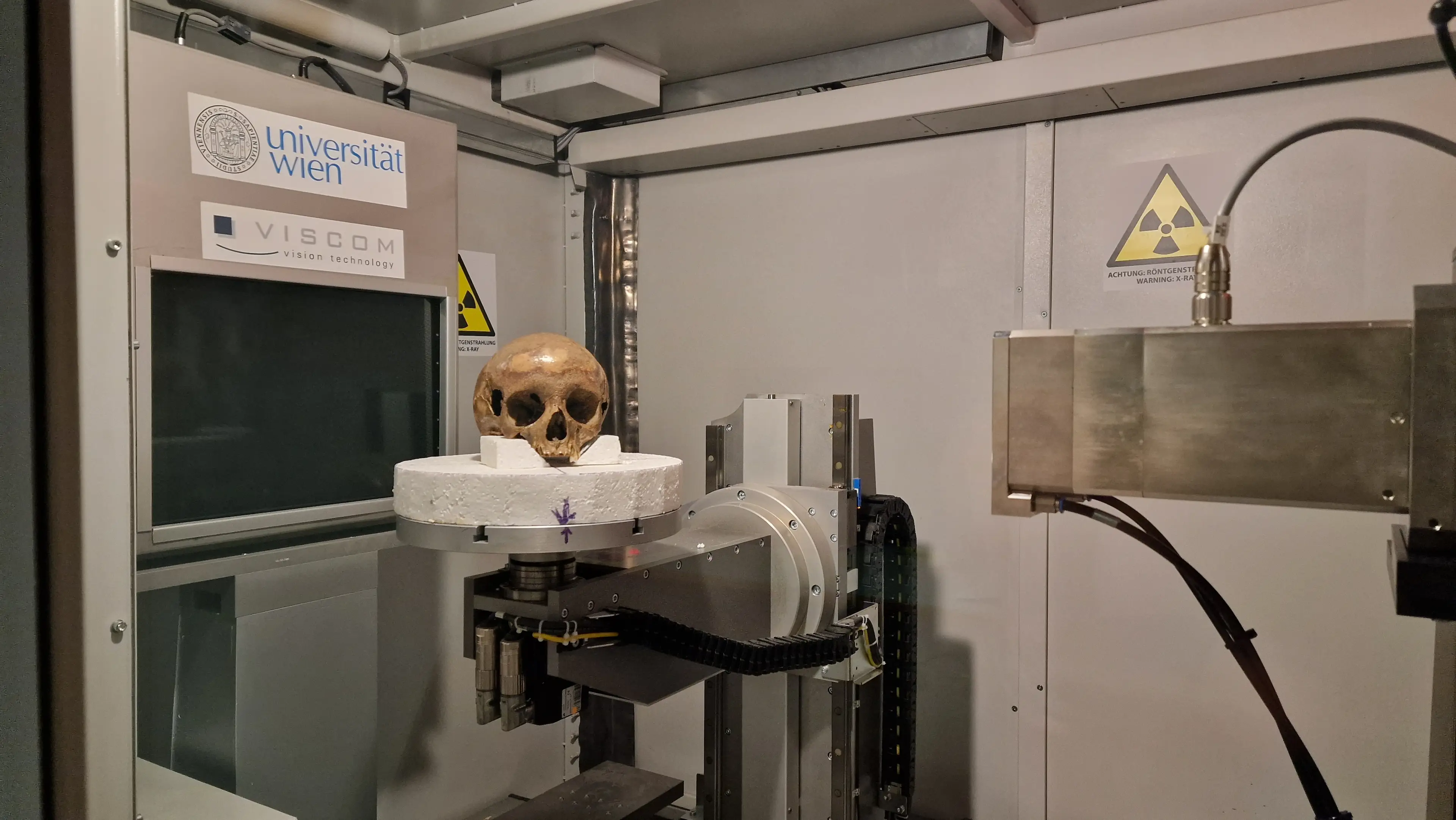
The results dated the skull to between 36 and 205 BCE, which corresponds with the traditional estimated date of death for Arsinoe.
However, another skeleton that was later found in the Octagon in 1985 proved to be a DNA match with Josef Keil's skull, which ruled out the bones were that of the murdered Princess.
Weber explained: "Then came the big surprise: in repeated tests, the skull and femur both clearly showed the presence of a Y chromosome - in other words, a male", Science News reported just days ago on January 10.
The anthropological analyses show that the remains belonged to a boy between 11 to 14 years old who 'obviously suffered from pathological development' due to his underdeveloped jaw and cranial structure.
Scientists say the boy's growth disorders remain unclear, but speculate it could've been due to a vitamin-D deficiency.
They also pinpoint the boy was 'presumably Roman', from Italy or Sardinia.

Nevertheless, while the results close the chapter on one theory, another search has now been born as researchers attempt to build a picture of who the boy was while the search for Cleopatra's murdered sister continues.
Science News added: "What is clear is that the tomb was intended for a person of very high social status.
"In any case, the results of this study open up a wide field for exciting new research."
Arsinoe had been exiled to Ephesus by her sister, who reportedly considered her a threat to her power before ordering her execution.
As for the skull, Keil first transported it to Germany and then to Austria, where it currently remains.
Topics: History, Science, Technology, World News, Egypt
 Liv Bridge