• News
  • Film and TV
  • Music
  • Tech
  • Features
  • Celebrity
  • Politics
  • Weird
  • Community
  • Advertise
  • Terms
  • Privacy & Cookies
  • LADbible Group
  • LADbible
  • SPORTbible
  • GAMINGbible
  • Tyla
  • UNILAD Tech
  • FOODbible
  • License Our Content
  • About Us & Contact
  • Jobs
  • Latest
  • Topics A-Z
  • Authors
Facebook
Instagram
X
Threads
TikTok
YouTube
Submit Your Content
Length of days on Earth are increasing and 'unprecedented' climate change is to blame

Home> News> World News

Updated 21:12 16 Jul 2024 GMT+1Published 21:02 16 Jul 2024 GMT+1

Length of days on Earth are increasing and 'unprecedented' climate change is to blame

Pollution is having a major impact on our lives and our planet, but did you know Earth's days are getting longer?

Joe Yates

Joe Yates

Featured Image Credit: Getty/Wirestock/Getty/Bjorn Holland

Topics: Climate Change, Environment, Science, Earth

Joe Yates
Joe Yates

Joe is a journalist for UNILAD, who particularly enjoys writing about crime. He has worked in journalism for five years, and has covered everything from murder trials to celeb news.

X

@JMYjourno

Advert

Advert

Advert

The length of a day on our planet is increasing, but not in a good way.

Due to the rise in water levels a day on planet Earth is now longer than it used to be.

Let's get into it.
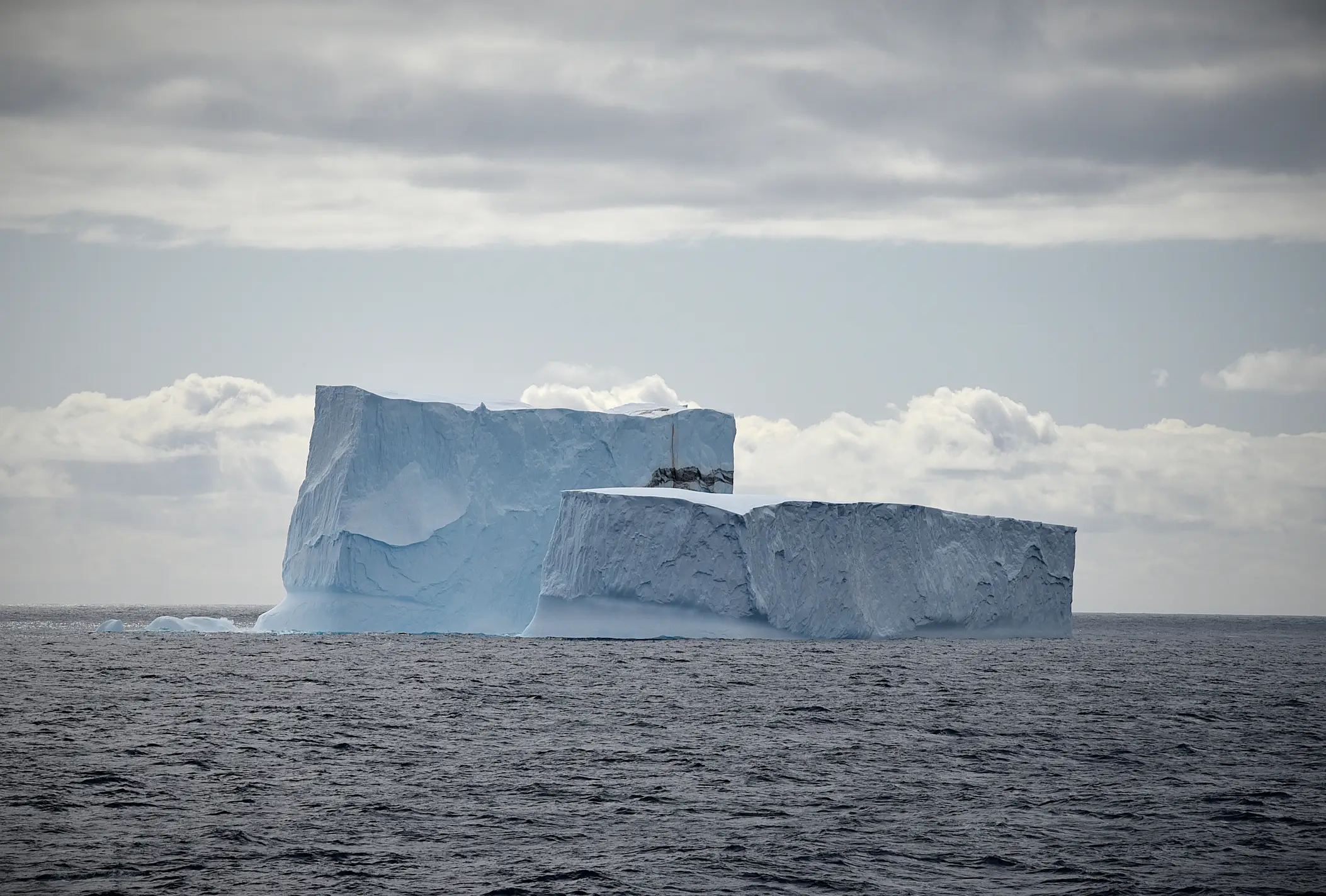
Days are getting longer due to melting ice caps. (Getty Stock Image)

Advert

Climate change has impacted the world massively - we're seeing hotter temperatures resulting in unbearable heatwaves and wildfires, more severe storms including powerful hurricanes, and intense droughts.

And according to a paper in Proceedings of the National Academy of Sciences (PNAS), the length of day is getting longer too.

Researchers have studied the rising sea levels, caused due to a significant rise in temperatures across the globe which has subsequently meant polar ice caps have melted.

Rising temperatures are now not only resulting in wildfires and heatwaves but also longer days. (Getty Stock Image)

Well, we all know that a day consists of 24 hours which in essence is 86,400 seconds long, but it is getting very slightly longer.

A new study titled The increasingly dominant role of climate change on length of day variations has explained why this is happening.

Benedikt Soja, with the help of researchers Mostafa Kiani Shahvandi, Surendra Adhikari, Mathieu Dumberry, Siddhartha Mishra, concluded that the melting ice caps are changing the Earth's axis of rotation by redistributing mass around the planet, and ultimately slowing it down.

Soja wrote: "Modern climate change is unprecedented. In recent decades, it has accelerated the melting of glaciers and polar ice sheets, leading to a rise in sea level.

"This pole-to-equator mass transport has significantly increased the Earth’s oblateness and length of day (LOD) since 1900. We show that the present rate of increase is higher than at any point in the 20th century.
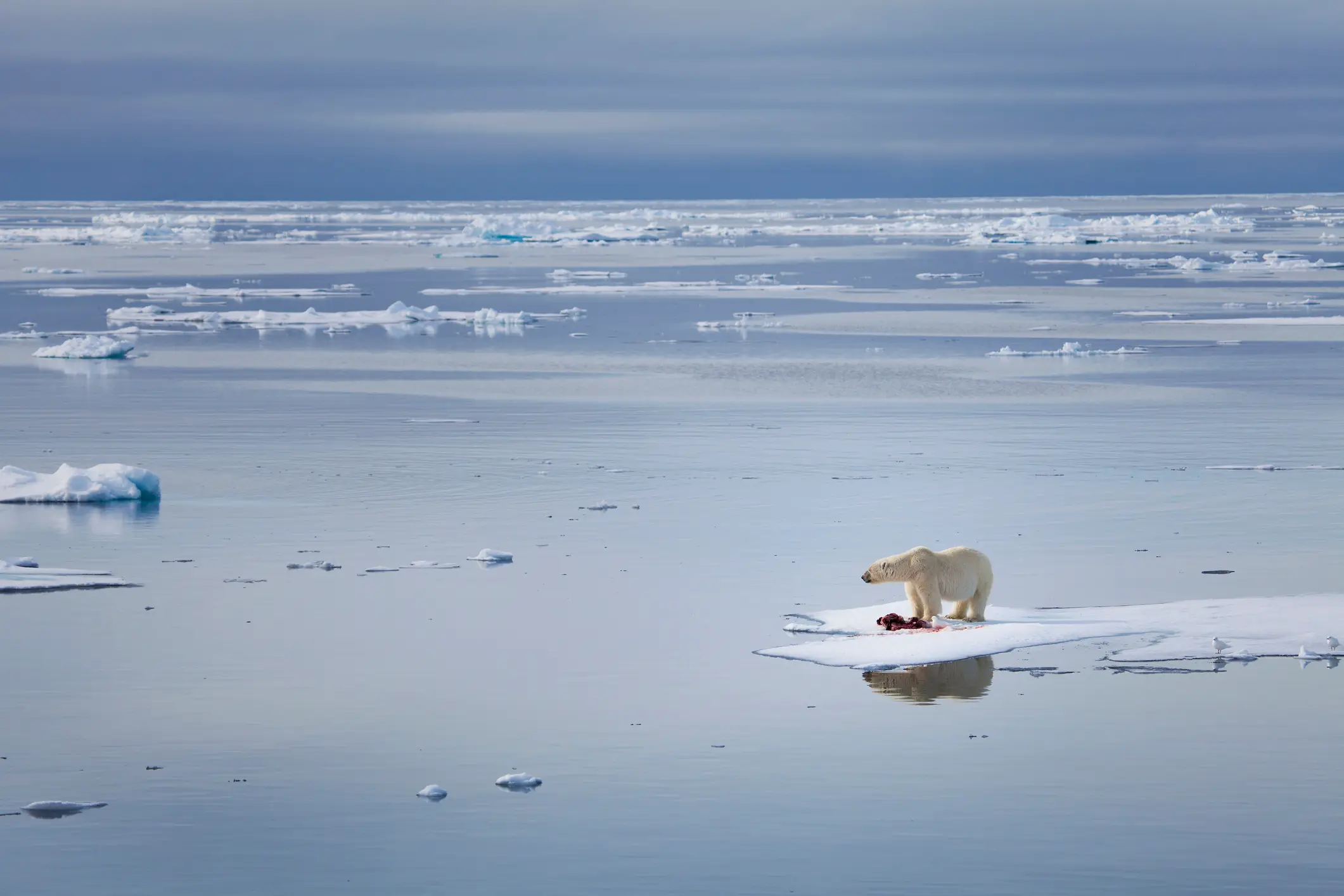
A polar bear finds refuge on ice - something that is becoming far more scarce than it used to be in Antartica. (Getty Stock Image)

"Under high emission scenarios, the climate-induced LOD rate will continue to increase and may reach a rate that is twice as large as at present, surpassing the impact of lunar tidal friction.

"These findings signify the unprecedented effect of climate change on planet Earth and have implications for precise timekeeping and space navigation, among others."

The study used observations and computer reconstructions to analyze and assess how melting ice is impacting how long a day is.

And they found that the rate of slowing hovered between 0.3 and 1.0 millisecond per century (ms/cy) between 1900 and 2000, but since the turn of the century the rate has accelerated to 1.3 ms/cy.

Soja added: "Projections of future climate warming under high emission scenarios suggest that the climate-induced LOD rate may reach 2.62 ± 0.79 ms/cy by 2100, overtaking lunar tidal friction as the single most important contributor to the long-term LOD variations."

Choose your content:

3 hours ago
4 hours ago
5 hours ago
  • This Morning
    3 hours ago

    Girl, 15, reveals how she miraculously survived shark attack after losing both her hand and leg

    Lulu Gribbins was on holiday in Florida when a shark attacked her in shallow waters

    News
  • Instagram/Todd Burkhalter
    4 hours ago

    CEO admits to running $380,000,000 Ponzi scheme to fund lifestyle

    Authorities in Georgia called the CEO's financial scam the 'largest Ponzi scheme' in the state's history

    News
  • John Normile/Getty Images
    4 hours ago

    Shocking update on winter storm that could impact 200 million Americans and dump over a foot of snow on NYC

    The storm is set to hit the US over the weekend

    News
  • Getty Images/Andrew Harnik
    5 hours ago

    Woman scammed out of hundreds of thousands of dollars after believing she was 'talking daily' to Elon Musk

    They revealed just how strong of a grip the scammers had on their loved one

    News
  • Oceans are getting darker and it could have a huge impact on life on Earth
  • Scientists reveal exactly how long before Earth will run out of oxygen in terrifying prediction
  • Scientists issue disturbing warning with exactly how much time we have left to limit climate change
  • World's first 4k stream from space is now live and already captured a solar eclipse and devastating hurricane during its journey around Earth