unilad homepage
unilad homepage
  • News
    • UK News
    • US News
    • World News
    • Crime
    • Health
    • Money
    • Sport
    • Travel
  • Music
  • Technology
  • Film and TV
    • News
    • DC Comics
    • Disney
    • Marvel
    • Netflix
  • Celebrity
  • Politics
  • Advertise
  • Terms
  • Privacy & Cookies
  • LADbible Group
  • LADbible
  • SPORTbible
  • GAMINGbible
  • Tyla
  • UNILAD Tech
  • FOODbible
  • License Our Content
  • About Us & Contact
  • Jobs
  • Latest
  • Archive
  • Topics A-Z
  • Authors
Facebook
Instagram
X
Threads
TikTok
YouTube
Submit Your Content
First ever 'alien' objects confirmed to have been found at bottom of Pacific Ocean
Home>News>World News
Updated 17:41 29 Aug 2023 GMT+1Published 17:06 29 Aug 2023 GMT+1

First ever 'alien' objects confirmed to have been found at bottom of Pacific Ocean

The unique discovery was made by US Space Command and astrophysicist Avi Loeb.

Katherine Sidnell

Katherine Sidnell

google discoverFollow us on Google Discover
Featured Image Credit: Avi Loeb

Topics: Aliens

Katherine Sidnell
Katherine Sidnell

Katherine is an entertainment journalist with a love of all things nerdy. Starting out writing Doctor Who fan fiction as a kid, she has gone on to interview the likes of Matt Damon, James May and Dua Lipa to name a few. Published in The Sun, The Daily Mail and Evening Standard - she now joins Ladbible as resident nerd in chief.

X

@ksidnell

Advert

Advert

Advert

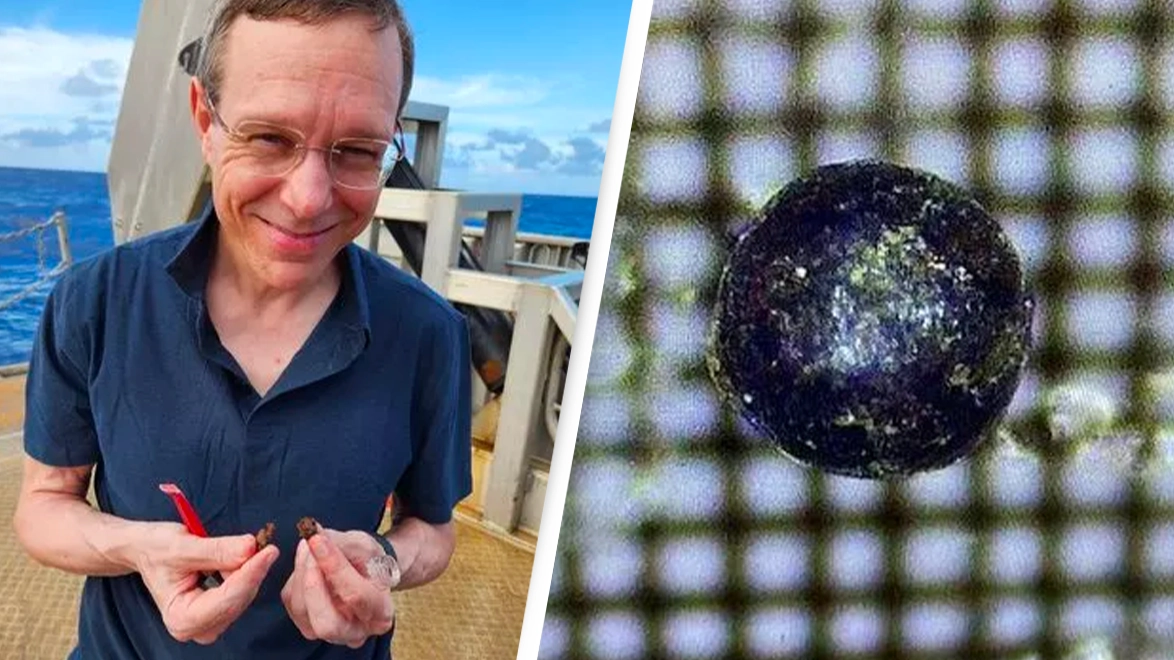
The first-ever ‘alien’ objects have been found at the bottom of the Pacific Ocean.

Now, it may sound like a whole bunch of science fiction, but one astrophysicist claims to have found over 700 ‘interstellar’ items off the coast of Papua New Guinea.

But before you go getting excited, the objects are not incredible pieces of tech or space parts.

Instead, the 750 items are fragments of iron droplets that entered Earth’s atmosphere from the meteor, IM1, before plunging to the bottom of the sea back in 2014.

Advert

Ranging in size from around 0.1mm to 0.7mm, they were first picked up on a US spy satellite as they crash-landed, with documents having been written about the strange phenomenon.
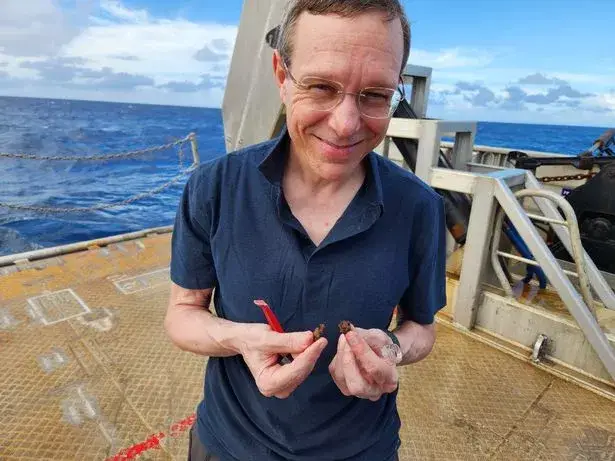
Astrophysicist Avi Loeb made the amazing discovery.
Avi Loeb

It was only when astrophysicist Avi Loeb and undergraduate students discovered the record in 2019 that they decided to research what had occurred off the coast of Manus Island.

The marble-like items were dredged from the sea using a magnetic sledge in an ambitious project with the US Space Command.

And after careful analysis, Professor Loeb later confirmed his theory about the ‘spherules’, stating that there were four key indicators of their interstellar origin.

Among these were an abundance of rare elements like lanthanum and uranium, suggesting that they were formed beyond our solar system.

There were also significantly fewer volatile elements and iron, which also indicate an unusual origin - as they burnt off by the intense heat as they speed through the atmosphere.

Finally, the expert said that there was an 'abundance' of beryllium - an element which indicated it's long travel through space.
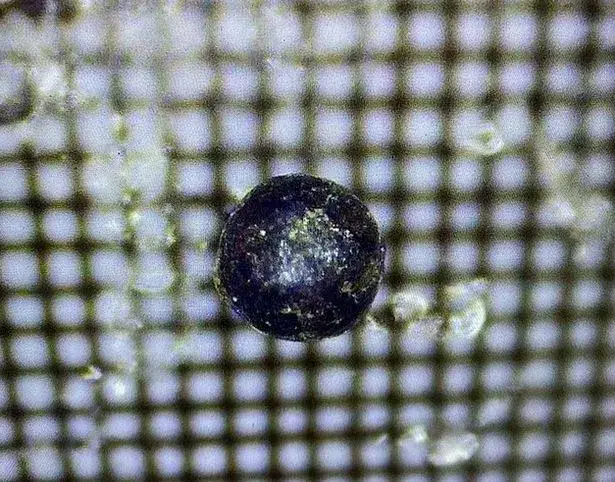
The objects look like small metal marbles.
Avi Loeb

Professor Loeb later told The Irish Star: "This is the first time ever that humans have held materials from a large interstellar object in their hands"

"Never before have we had the opportunity to examine materials from an object like this that came from outside the solar system. It's a historic discovery."

The Harvard scientist added: "I call it space trash, like plastic in the ocean that accumulates over billions of years and isn't functioning anymore, but every now and again collides with Earth.

“The possibility of it coming from alien hardware is more exotic but it is a possibility. What we can say for sure is it's not from the solar system.

“We have four independent reasons to back that up. Whether it's technological or natural remains to be seen."

It seems the professor's discovery is simply out of this world!

Choose your content:

15 hours ago
16 hours ago
17 hours ago
  • Severe Weather Europe
    15 hours ago

    El Niño has officially begun, here's how it could affect the weather

    El Niño has a huge range of impacts on weather patterns

    News
  • Getty Stock Images
    16 hours ago

    When and how often you nap could increase your chances of dying, according to researchers

    The ideal nap lasts between 15 and 20 minutes, according to science

    News
  • Getty Stock
    16 hours ago

    Doctor issues warning against 'dirty soda' trend that could be a 'disaster' for the body

    The trend started off in Utah, gaining mainstream popularity with the help of social media

    News
  • Getty Stock Image
    17 hours ago

    Doctor explains what really happens to your body when you're in a coma

    The difference occurs after just 24 hours in a coma

    News
  • Harvard scientist claims remnants of 'alien spacecraft found at the bottom of the Pacific Ocean'
  • NASA scientist claims to have found evidence of ‘Non-Human Intelligence’ in our skies
  • Ex-CIA researcher makes bombshell claim 4 types of aliens have been pulled from UFO crashes
  • American fans slammed for doing 'weirdest thing ever seen' at soccer match ahead of World Cup