unilad homepage
unilad homepage
  • News
    • UK News
    • US News
    • World News
    • Crime
    • Health
    • Money
    • Sport
    • Travel
  • Music
  • Technology
  • Film and TV
    • News
    • DC Comics
    • Disney
    • Marvel
    • Netflix
  • Celebrity
  • Politics
  • Advertise
  • Terms
  • Privacy & Cookies
  • LADbible Group
  • LADbible
  • SPORTbible
  • GAMINGbible
  • Tyla
  • UNILAD Tech
  • FOODbible
  • License Our Content
  • About Us & Contact
  • Jobs
  • Latest
  • Archive
  • Topics A-Z
  • Authors
Facebook
Instagram
X
Threads
TikTok
YouTube
Submit Your Content
Scientist who drank water that is billions of years old and has unusual taste explained why she did it
Home>News>World News>Canada
Published 15:55 9 Sep 2024 GMT+1

Scientist who drank water that is billions of years old and has unusual taste explained why she did it

The professor found the ancient water back in 2013

Britt Jones

Britt Jones

google discoverFollow us on Google Discover

A geologist did the unthinkable when she took a sip of water that was billions of years old to see how it tasted.

That’s right, forget your filtered water, double filtered and whatever other trendy water there is out there... there’s ancient water right beneath us all.

Obviously, us normies don’t have access to it and if we did, there’s not much of a chance we’d even consider drinking it.

Think about it, there’s bacteria, microbes, and it could even be stagnant.

Advert
Tap water will do for the majority of us regular folk (Getty Stock Image)

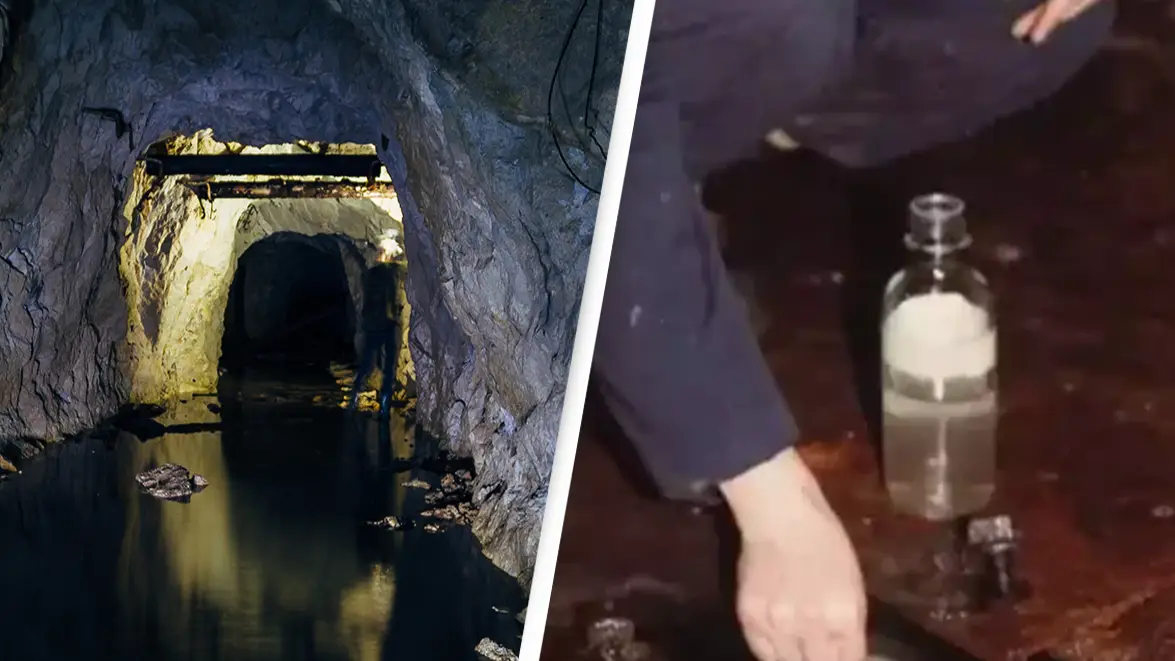
But in 2013, when scientists from the University of Toronto found water just over 1.5 miles beneath Earth’s surface, they were quick to test it.

This isolated water had been untouched by the outside world for millennia in Timmins, Ontario, Canada.

After taking a peek at how old it could be, their data concluded that it was somewhere between 1.5 billion and 2.6 billion years old, making it the world’s oldest water known to man.

However, Professor Barbara Sherwood Lollar took it one step further - as lead researcher, she decided that she would be the one to bite the bullet and take a sip.

According to Lollar, it tasted 'terrible'.

Speaking to the LA Times, the geologist remembered it for its saltiness.
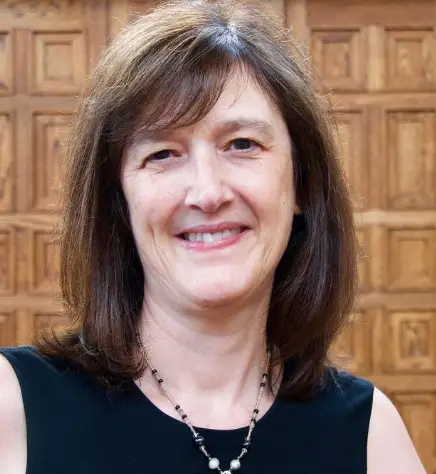
Barbara Sherwood Lollar tried the water for herself. (University of Toronto)

She said: "Because of the reactions between the water and the rock, it is extremely salty. It is more viscous than tap water. It has the consistency of a very light maple syrup.

"It doesn’t have color when it comes out, but as soon as it comes into contact with oxygen it turns an orangy color because the minerals in it begin to form — especially the iron."

Even stranger, she went on to admit that she has ‘tasted it from time to time’, which means she willingly drank it more than once. Yuck.

And her reasoning?

"We are interested in the saltiest waters because they are the oldest, and tasting is the quick-and-dirty way to find which are the most salty."

Little did she know that just three years later in the same mine, her team would find even older water.
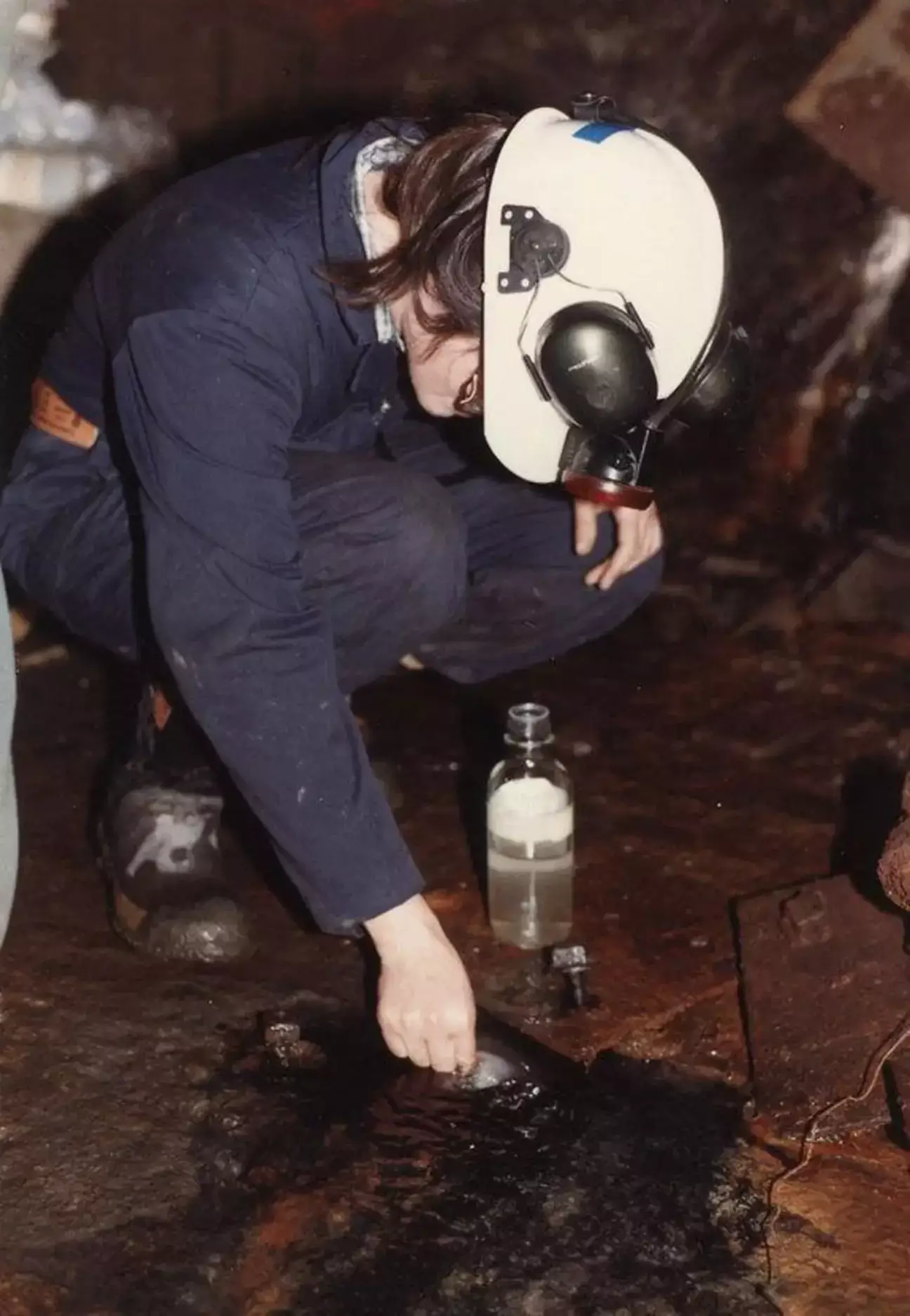
The ancient water found was estimated to be around 1.6 billion years old (University of Toronto)

In 2016, Lollar and co found flowing water in the same place that was over 2.6 billion years old. This took the top spot from her previous water (the one she drank), though she didn’t say whether she tasted this one either.

Explaining to BBC News that year, she revealed how they knew it was older: “By looking at the sulphate in the water, we were able to see a fingerprint that’s indicative of the presence of life.

“And we were able to indicate that the signal we are seeing in the fluids has to have been produced by microbiology - and most importantly has to have been produced over a very long time scale.”

“The microbes that produced this signature couldn’t have done it overnight. This has to be an indication that organisms have been present in these fluids on a geological timescale.”

So, the sulphate was like a timestamp which revealed its age.

Featured Image Credit: Getty/Vladimir Zapletin/University of Toronto

Topics: Food and Drink, Science, Weird, Canada

Britt Jones
Britt Jones

Advert

Advert

Advert

Choose your content:

an hour ago
2 hours ago
6 hours ago
  • Steph Chambers - FIFA/FIFA via Getty Images
    an hour ago

    World Cup referee hands out five yellow cards in span of eight minutes during frantic 'pure chaos' meltdown

    The Argentina vs Egypt match completely boiled over as furious players swarmed the official following a controversial 92nd-minute winner

    News
  •  Santiago Felipe/Getty Images
    2 hours ago

    Big Brother 28 cast officially revealed as Drag Race All-Star, UFC fighter, and pop star's daughter head into 'Time Trip' house

    From pro UFC fighters to hidden celebrity legacies, meet the full cast of houseguests heading into the 'Time Trip' house this summer.

    Film & TV
  • Getty Stock Images
    6 hours ago

    Doctors explain why missing just one hour of sleep can impact your body

    A new study has found a link between losing just over an hour's sleep and how active you are in the day - impacting your body in one key way

    News
  • Karwai Tang/WireImage
    6 hours ago

    Tom Holland admits he thought Christopher Nolan hated his acting as he cut every 3 minutes for surprising reason

    Tom Holland admitted his first day on Christopher Nolan's new epic was incredibly stressful because he thought Nolan didn't like his work

    Film & TV
  • Scientist explains long-running theory on why Coke from McDonald's taste better
  • Scientist drank water that is billions of years old and explained what it tastes like
  • Scientist drank water that is billions of years old and explained what it tastes like
  • Expert reveals exactly what happens to your body when you don't drink enough water