unilad homepage
unilad homepage
    • News
      • UK News
      • US News
      • World News
      • Crime
      • Health
      • Money
      • Sport
      • Travel
    • Music
    • Technology
    • Film and TV
      • News
      • DC Comics
      • Disney
      • Marvel
      • Netflix
    • Celebrity
    • Politics
    • Advertise
    • Terms
    • Privacy & Cookies
    • LADbible Group
    • LADbible
    • SPORTbible
    • GAMINGbible
    • Tyla
    • UNILAD Tech
    • FOODbible
    • License Our Content
    • About Us & Contact
    • Jobs
    • Latest
    • Archive
    • Topics A-Z
    • Authors
    Facebook
    Instagram
    X
    Threads
    TikTok
    YouTube
    Submit Your Content
    Everything we know about Africa 'splitting in two' as large crack in Earth continues to grow

    Home> News> World News

    Published 09:52 23 Dec 2024 GMT

    Everything we know about Africa 'splitting in two' as large crack in Earth continues to grow

    Many theories surround the crack that could transform Africa's landscape

    Ellie Kemp

    Ellie Kemp

    google discoverFollow us on Google Discover
    Featured Image Credit: CBS

    Topics: Africa, Science, Earth, Nature

    Ellie Kemp
    Ellie Kemp

    Ellie joined UNILAD in 2024, specialising in SEO and trending content. She moved from Reach PLC where she worked as a senior journalist at the UK’s largest regional news title, the Manchester Evening News. She also covered TV and entertainment for national brands including the Mirror, Star and Express. In her spare time, Ellie enjoys watching true crime documentaries and curating the perfect Spotify playlist.

    X

    @EllieKempOnline

    Advert

    Advert

    Advert

    Africa could one day be 'split into two' after a huge crack that continues to grow appeared in the continent.

    Go back 200 million years, and our seven continents were all concentrated together in one supergroup named Pangea.

    But over time, these broke up and drifted apart, transforming into the configuration we're familiar with today.

    Within our own lifetimes though, there have been some huge changes on Earth, with environmental factors causing rising sea levels and melting ice caps, which are already altering how our countries looks.

    Advert

    Then, there are tectonic plates, which are believed to be happening over a much longer period of time.

    For those who didn't pay attention in geography, this is the movement of the Earth's crust as the plates grind into each other on the surface of the mantle - an event which was initially referred to as the continental drift.

    And it appears that Africa is currently bearing the brunt of this shift, with several huge cracks appearing down the world's second-largest continent.
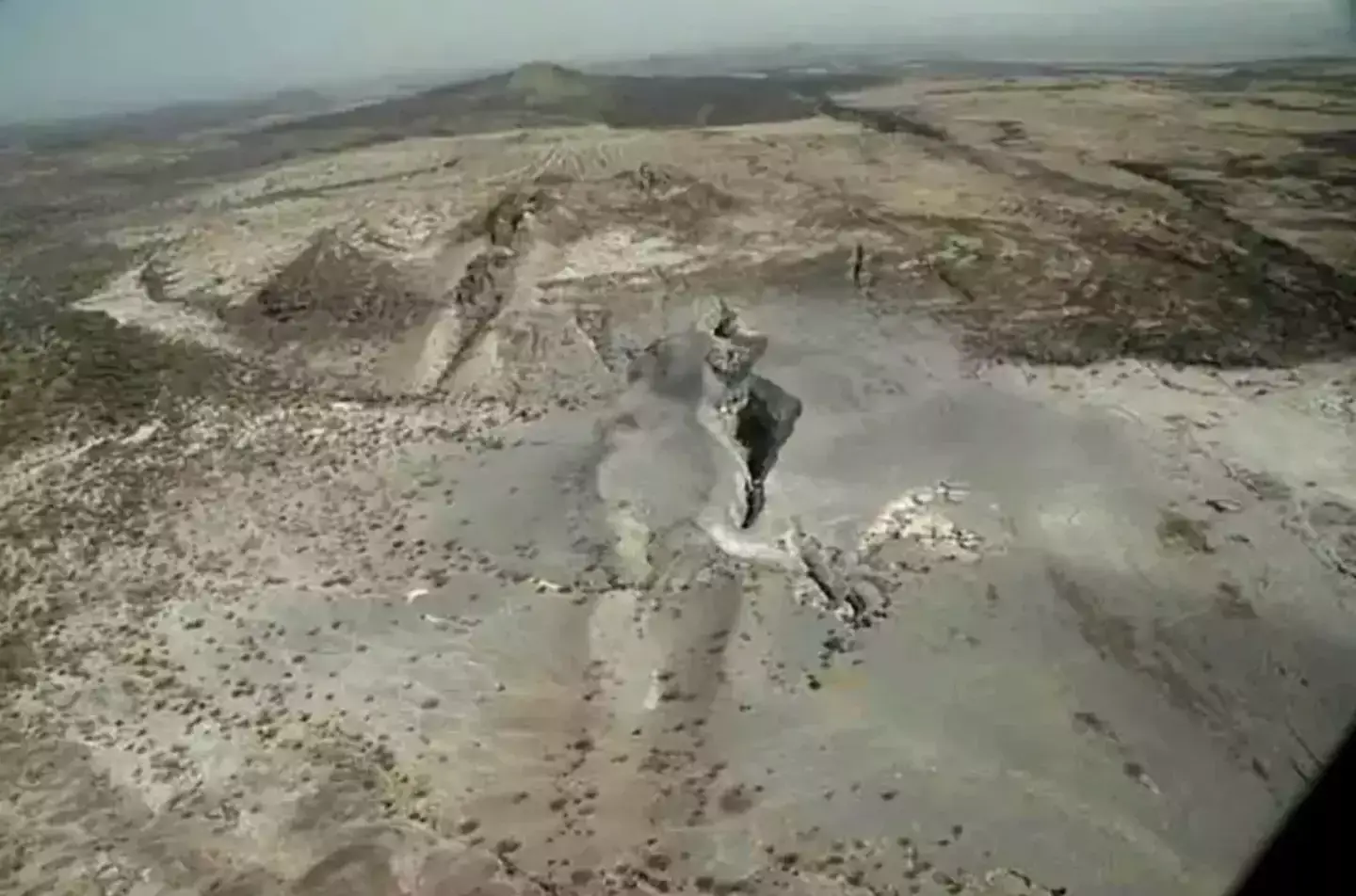
    Africa's landscape could be forever changed (Rochester University)
    Africa's landscape could be forever changed (Rochester University)

    What is happening in Africa?

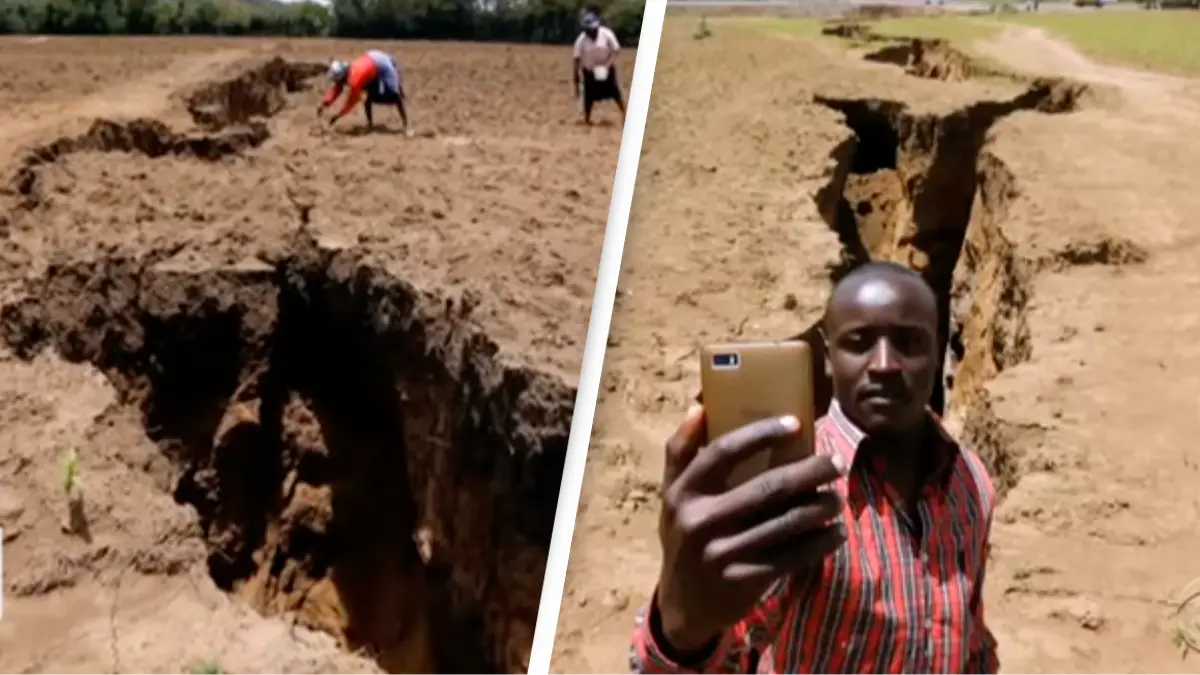
    Back in 2018, a massive crack some 50 feet deep and 65 feet wide suddenly appeared in Kenya's Great Rift Valley. The Valley is around 4,000 miles (6,400 kilometers) long and stretches from the Afar region down to Mozambique.

    While the rift is currently above sea level, over time, it will widen and the crust will thin and sink.

    It's thought to be slowly moving further apart each year, but it could take a while for the land to completely split.

    What is causing the crack?

    Some scientists have suggested that this is due to the African tectonic plate breaking in two, which could result in landlocked countries like Zambia and Uganda having their own coastlines in the distant future.

    But this is not the only theory that geologists have about the how the crack has formed, as others have suggested that the cause could be soil erosion.

    Meanwhile, some, including Lucía Pérez Díaz - a postdoctoral researcher at Royal Holloway University of London - think it's a combination of both.
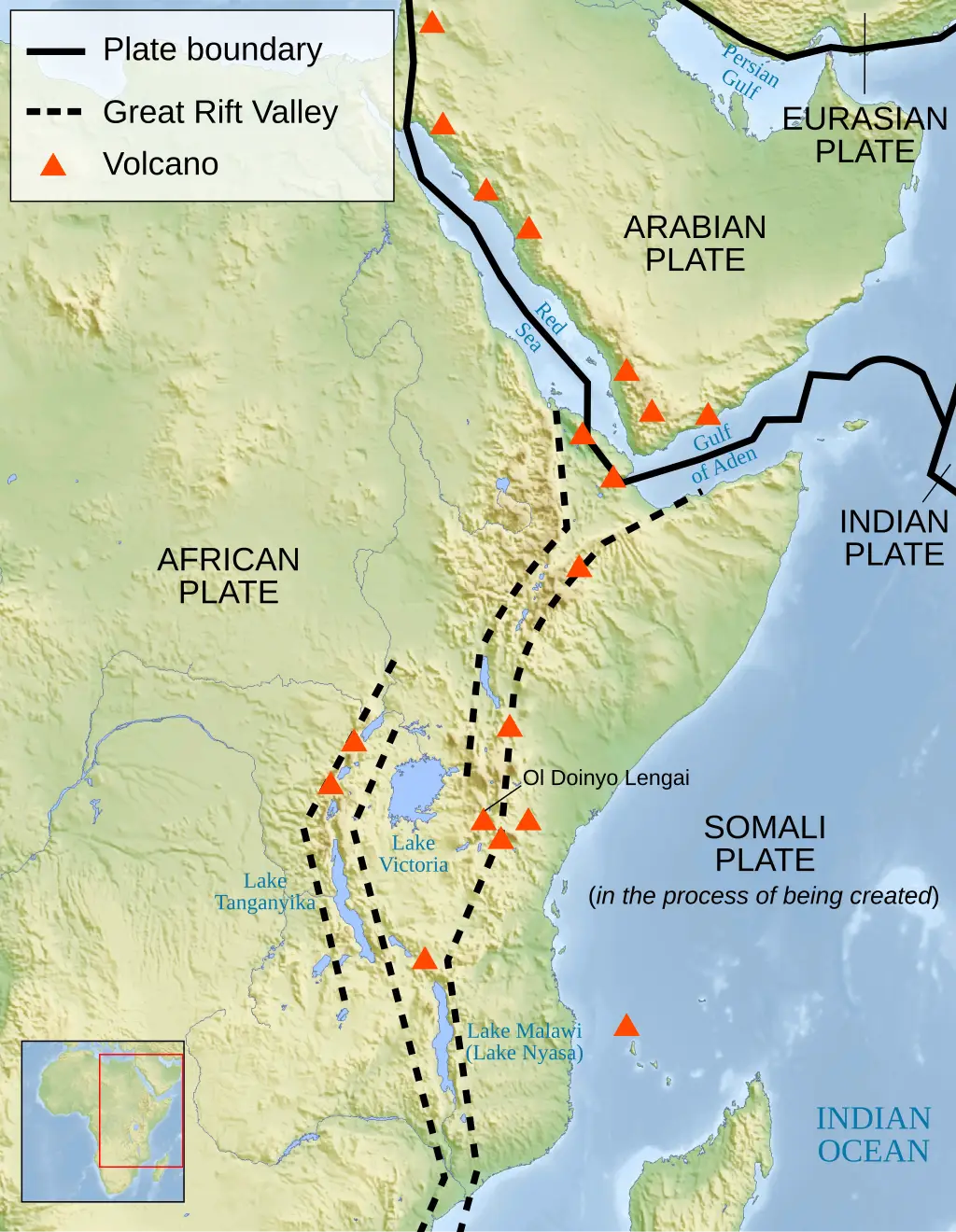
    A map of the Great Rift Valley (Sémhur/Wikicommons)
    A map of the Great Rift Valley (Sémhur/Wikicommons)

    Díaz suggested it could be softer soils filling in a rift-related fault and leading to the cracks we are seeing on the surface.

    Her research suggested that over the course of tens of millions of years, the ocean will begin to fill in the gap as the rift reaches the coast.

    Once the ocean floods in, it ultimately makes the African continent smaller, with a large island made of parts of Ethiopia and Somalia sitting in the Indian Ocean.

    A similar event, albeit with different causes, happened when the British Isles were cut off from mainland Europe.

    Until around 450,000 years ago the British Isles were connected to Europe, but the erosion of a valley in what is now the English Channel caused a catastrophic flood as the sea rushed in.

    This left what would have been the westernmost extremity of Europe as a brand new set of islands.

    Choose your content:

    5 hours ago
    6 hours ago
    • Gina Ferazzi / Los Angeles Times via Getty Images
      5 hours ago

      Scientists make new prediction 'Super El Niño’ could cause hottest summer ever with scorching temperatures

      The phenomenon could cause a scorching summer this year

      News
    • Charles A Fazio/Bloomberg via Getty Images
      5 hours ago

      Scientists discover impact of data centers creating 'heat islands' warming the Earth by 16 degrees

      Centers powering AI could well be contributing towards AI

      News
    • TikTok/@millennialdad
      5 hours ago

      Man diagnosed with autism at 42 explains how he was misdiagnosed by doctors for years

      Tyler Barnett opened up about how he had been mislabelled for years before being diagnosed with autism as an adult

      News
    • Getty Stock Images
      6 hours ago

      Health experts issues 'AI addiction' warning after discovering serious health impact

      Some addicts report feeling 'chest pains, anxiety, and grief' when separated from their AI chatbot

      News
    • Mystery surrounding Jupiter's supervolcano moon has been solved after almost 50 years
    • Viewers in tears as cosmonaut who spent full year in space explains what he missed most about Earth
    • Earth is getting another moon at the end of this month
    • Final supermoon of 2024 will be visible from Earth this week