unilad homepage
  • News
    • UK News
    • US News
    • World News
    • Crime
    • Health
    • Money
    • Sport
    • Travel
  • Film and TV
    • Netflix
  • Music
  • Tech
  • Features
  • Celebrity
  • Politics
  • Advertise
  • Terms
  • Privacy & Cookies
  • LADbible Group
  • LADbible
  • SPORTbible
  • GAMINGbible
  • Tyla
  • UNILAD Tech
  • FOODbible
  • License Our Content
  • About Us & Contact
  • Jobs
  • Latest
  • Archive
  • Topics A-Z
  • Authors
Facebook
Instagram
X
Threads
TikTok
YouTube
Submit Your Content
Everywhere in the USA that could see the Northern Lights this week as solar event is confirmed

Home> News> US News

Published 11:13 13 Feb 2025 GMT

Everywhere in the USA that could see the Northern Lights this week as solar event is confirmed

The Aurora Borealis could light up the night sky ahead of Valentine's Day

Ellie Kemp

Ellie Kemp

google discoverFollow us on Google Discover
Featured Image Credit: Hasan Akbas/Anadolu via Getty Images

Topics: Valentine's Day, US News, Space, Weather

Ellie Kemp
Ellie Kemp

Ellie joined UNILAD in 2024, specialising in SEO and trending content. She moved from Reach PLC where she worked as a senior journalist at the UK’s largest regional news title, the Manchester Evening News. She also covered TV and entertainment for national brands including the Mirror, Star and Express. In her spare time, Ellie enjoys watching true crime documentaries and curating the perfect Spotify playlist.

X

@EllieKempOnline

Advert

Advert

Advert

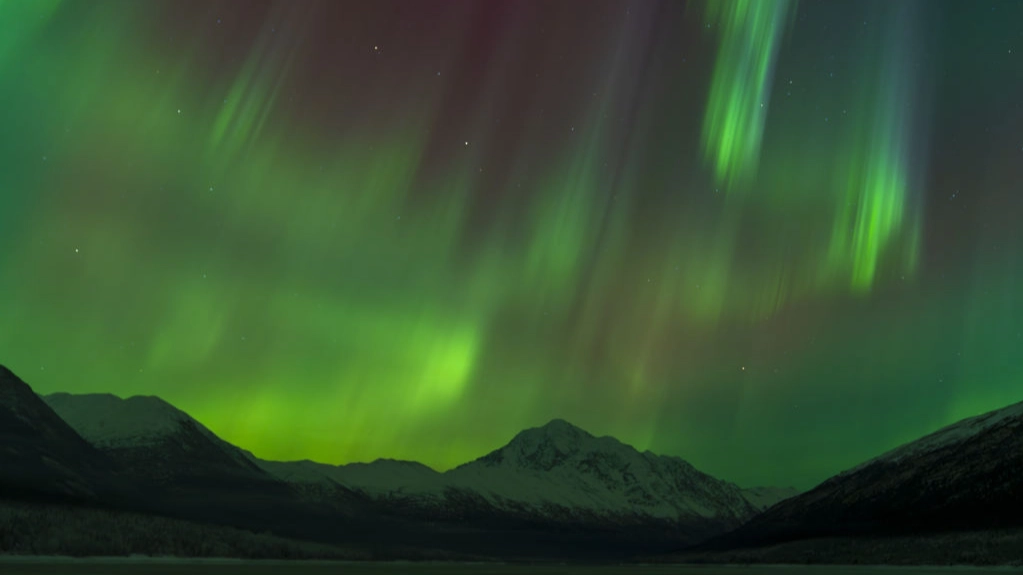
A dazzling display of Northern Lights could illuminate the night sky this week - just in time for Valentine's Day.

The phenomenon sees ribbons of green, pink, and sometimes purple light swirling through the skies.

Caused by charged sun particle hitting the Earth's atmosphere, the lights - also called Aurora Borealis - have been captivating humanity for thousands of years.

Advert

And this week, Americans in some US states might be lucky enough to catch a glimpse of them.

As SpaceWeather.com reports, another solar wind stream is heading for our planet, flowing from 'a canyon-like hole' in the sun's atmosphere.

The National Oceanic and Atmospheric Administration (NOAA) claimed this could cause a 'G1 (minor) geomagnetic storm' which could be visible from tonight (Thursday February 13) and into the evening on Valentine's Day, with 'high activity' expected.

Where to see the Northern Lights
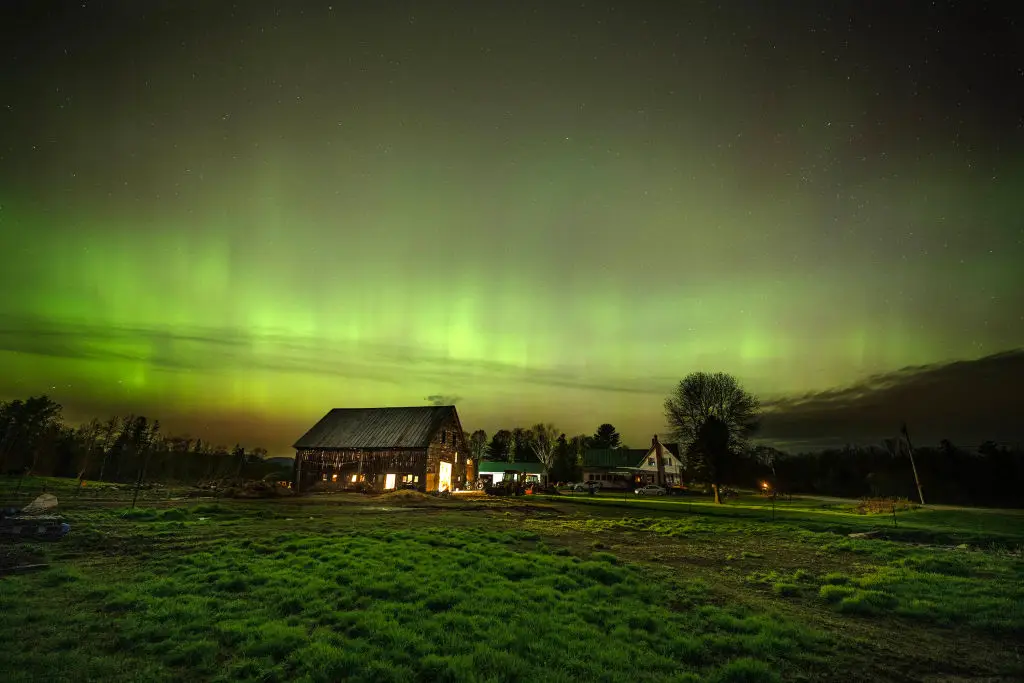
The Northern Lights captured in Maine last May (Michael Seamans/Getty Images)

Parts of northern USA might be able to see the light show, as well as areas in Canada.

One state which will perhaps unsurprisingly see a display is Alaska, due to its northerly position.

And, if conditions are right, the Northern Lights could be visible as far south as northern Michigan and Maine tonight and tomorrow.

How best to see the Northern Lights

The NOAA recommends going out at night and 'getting away from city lights' for optimal Aurora Borealis viewing. However, visibility also depends on how clear the night sky is.

"The best aurora is usually within an hour or two of midnight - between 10pm and 2am local time," the agency explained.

"These hours of active aurora expand towards evening and morning as the level of geomagnetic activity increases.

"There may be aurora in the evening and morning but it is usually not as active and therefore, not as visually appealing."

Capturing the solar storm
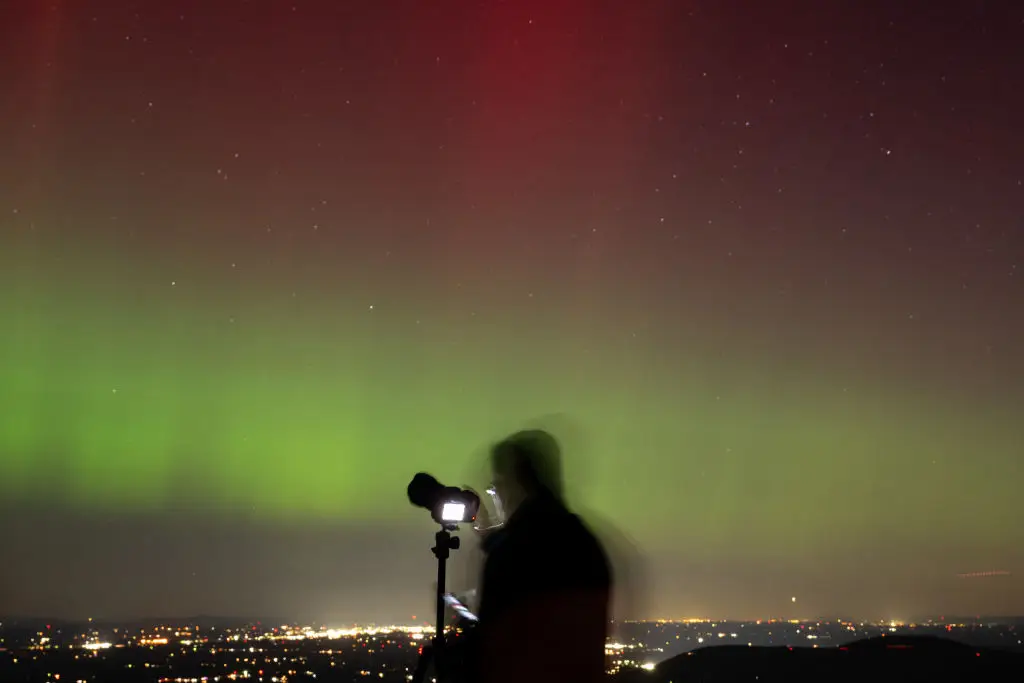
You don't necessarily need a DSLR - but a tripod might help (SAUL LOEB/AFP via Getty Images)

Speaking of 'visually appealing,' if you're looking to photograph the lights, then fortunately you don't need a fancy DSLR camera to do so.

Instead, you can optimize your iPhone to capture the light display in all its glory.

To do this, make sure you select Night Mode - which should automatically come on if you're taking photos in a low-light environment.

If it doesn't, you can access it via the options menu on your camera app.

Then, adjust the exposure time to its maximum limit. This will allow your iPhone to capture more light and movement of the Northern Lights.

It's worth noting that, while you also need at least an iPhone 11 or a newer model to do this, a tripod would also massively help you out here.

Any shaky hands, with your exposure settings at their maximum, can affect the quality of your photos.

If you want those perfectly lit images you've seen clogging up your Instagram feed, you want to ensure you're as still as possible.

Choose your content:

12 mins ago
2 hours ago
3 hours ago
  • Albert L. Ortega/Getty Images
    12 mins ago

    Storage Wars star Darrell Sheets has died aged 67

    The reality TV star's death was announced by Arizona police officers after being called to his home address

    Celebrity
  • Matt McNulty/Getty Images
    2 hours ago

    Healthy woman reveals early symptoms she experienced at 23 before ‘life changing diagnosis’

    The celebrity sportswoman also explained how other people perceive her disability

    Celebrity
  • Ted Soqui - Pool/Getty Images
    2 hours ago

    Family of Celeste Rivas Hernandez break silence after singer D4vd is arrested for her murder

    The case has drawn widespread attention as prosecutors outline serious charges, including first-degree murder

    News
  • Pablo PORCIUNCULA / AFP via Getty Images
    3 hours ago

    Shootout between police and gang members forces around 200 tourists to be trapped on top of mountain

    Local media revealed how long the Brazilian travelers were stuck for

    News
  • Experts reveal when last chance to see the Northern Lights this decade will be
  • Northern Lights set to be visible across these 22 US states tonight after major geomagnetic storm
  • Perfect time of day to see the rare lunar eclipse across the US this week
  • Where ‘bomb cyclone’ winter storm could strike this week as Americans urged to 'prepare'