unilad homepage
unilad homepage
    • News
      • UK News
      • US News
      • World News
      • Crime
      • Health
      • Money
      • Sport
      • Travel
    • Music
    • Technology
    • Film and TV
      • News
      • DC Comics
      • Disney
      • Marvel
      • Netflix
    • Celebrity
    • Politics
    • Advertise
    • Terms
    • Privacy & Cookies
    • LADbible Group
    • LADbible
    • SPORTbible
    • GAMINGbible
    • Tyla
    • UNILAD Tech
    • FOODbible
    • License Our Content
    • About Us & Contact
    • Jobs
    • Latest
    • Archive
    • Topics A-Z
    • Authors
    Facebook
    Instagram
    X
    Threads
    TikTok
    YouTube
    Submit Your Content
    Discovery of $540 billion worth of 'white gold' sitting beneath giant lake could change the future
    Home>News>US News
    Published 17:55 9 Dec 2023 GMT

    Discovery of $540 billion worth of 'white gold' sitting beneath giant lake could change the future

    "This is one of the largest lithium brine deposits in the world."

    Poppy Bilderbeck

    Poppy Bilderbeck

    google discoverFollow us on Google Discover
    Featured Image Credit: MARTIN BERNETTI/AFP via Getty Images / Robert Alexander/Getty Images

    Topics: Money, US News, World News, Science, China, Technology

    Poppy Bilderbeck
    Poppy Bilderbeck

    Poppy Bilderbeck is a freelance journalist with words in Daily Express, Cosmopolitan UK, LADbible, UNILAD and Tyla. She is a former Senior Journalist at LADbible Group. She graduated from The University of Manchester in 2021 with a First in English Literature and Drama, where alongside her studies she was Editor-in-Chief of The Tab Manchester. Poppy is most comfortable when chatting about all things mental health, is proving a drama degree is far from useless by watching and reviewing as many TV shows and films as possible.

    Advert

    Advert

    Advert

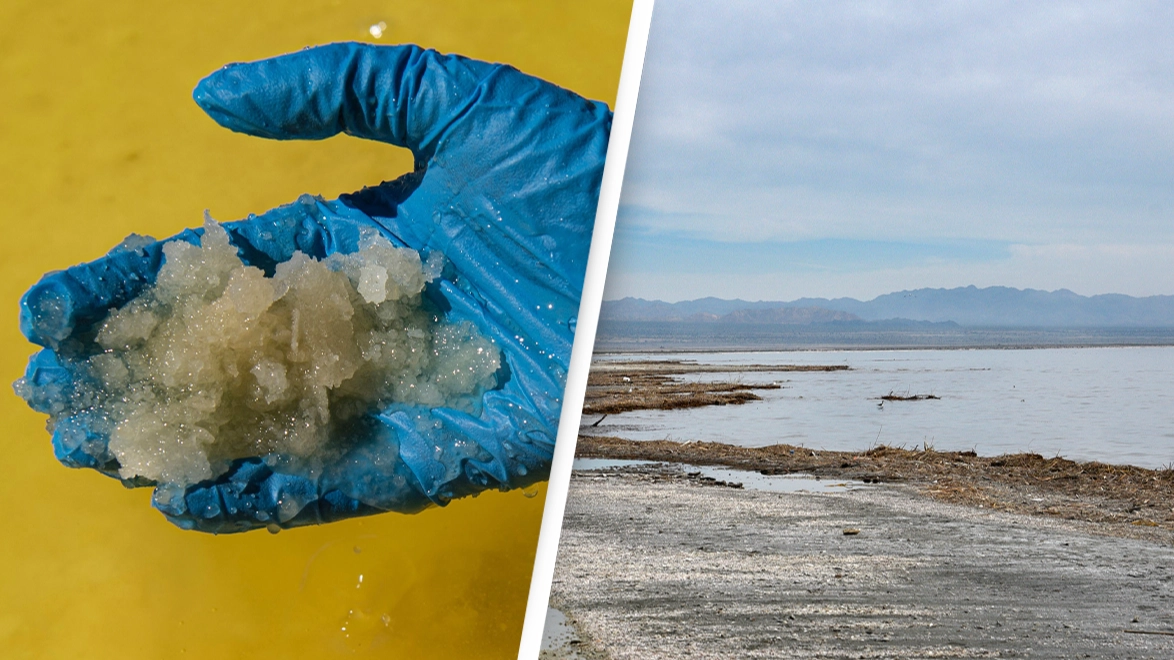
    This is what the discovery of $540 billion 'white gold' under a lake could mean for the US and the rest of the world.

    I detested science lessons and dropped them as swiftly as I could aged 16; alas, if I'd known it could've led to me stumbling across a whopping $540 billion 'white gold' mine, perhaps I'd have clawed on a little longer - hindsight is a wonderful thing.

    Instead, a team of researchers taking part in a study funded by the Department of Energy (DOE) investigated the lithium reservoir lying underneath the Salton Sea in southern California.

    And here's what the staggering amount of lithium they discovered could mean for the future of the US and the rest of the globe too.

    Advert

    It was already known there was a lithium reservoir underneath the Salton Sea, however, the study was launched in a bid to figure out just how much 'white gold' lay beneath - lithium known as white gold due to it's 'soft, silvery-white look,' according to Carbon Credits.

    Lithium is 'the key metal used in manufacturing rechargeable batteries,' Carbon Credits continues. "Not just for EVs but for many other devices like laptops and mobile phones. EV carmakers prefer lithium-ion batteries as they're lightweight and can be quickly recharged," it's website states.

    But just how much lithium did the team find? And what does it mean for California, the US and the rest of the world?
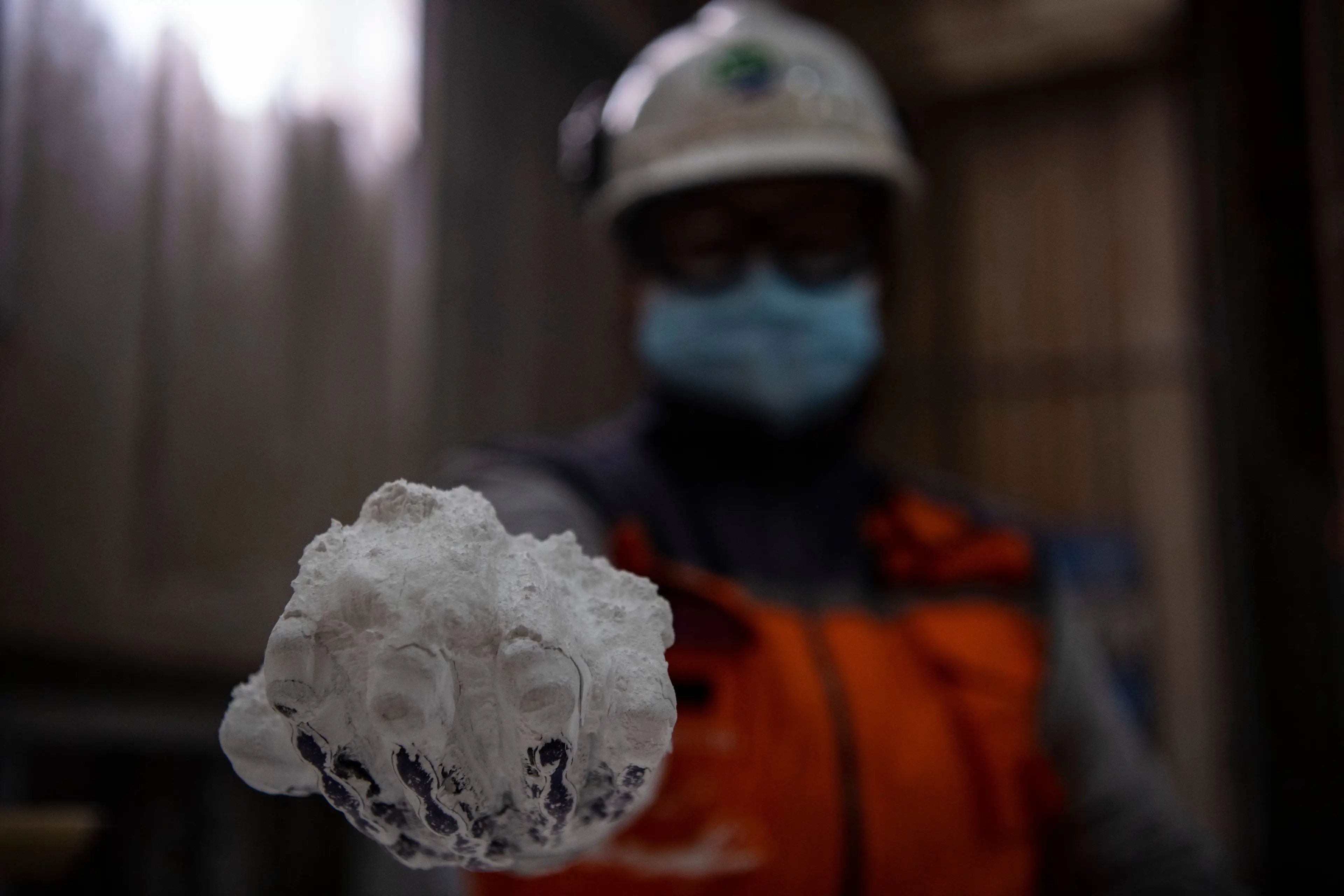
    Lithium is used in rechargeable batteries.
    Getty Images/ MARTIN BERNETTI/AFP

    Well, through drilling down beneath the lake, the team of scientists has confirmed a staggering four million tons of lithium is present. And they believe this could rise to a whopping 18 million tons.

    LA Times climate journalist Sammy Roth told KJZZ Radio, as quoted by Indy 100: "They found that there's potentially enough lithium down there to supply batteries for 382 million electric vehicles, which is more, more vehicles than there are on the road in the United States today. So, if we could get all that lithium, that'd be huge."

    Geochemistry professor at the University of California, Riverside, Michael MKibben, also revealed: "This is one of the largest lithium brine deposits in the world. This could make the United States completely self-sufficient in lithium and stop importing it through China."

    However, as always, it's not all quite as simple as that.
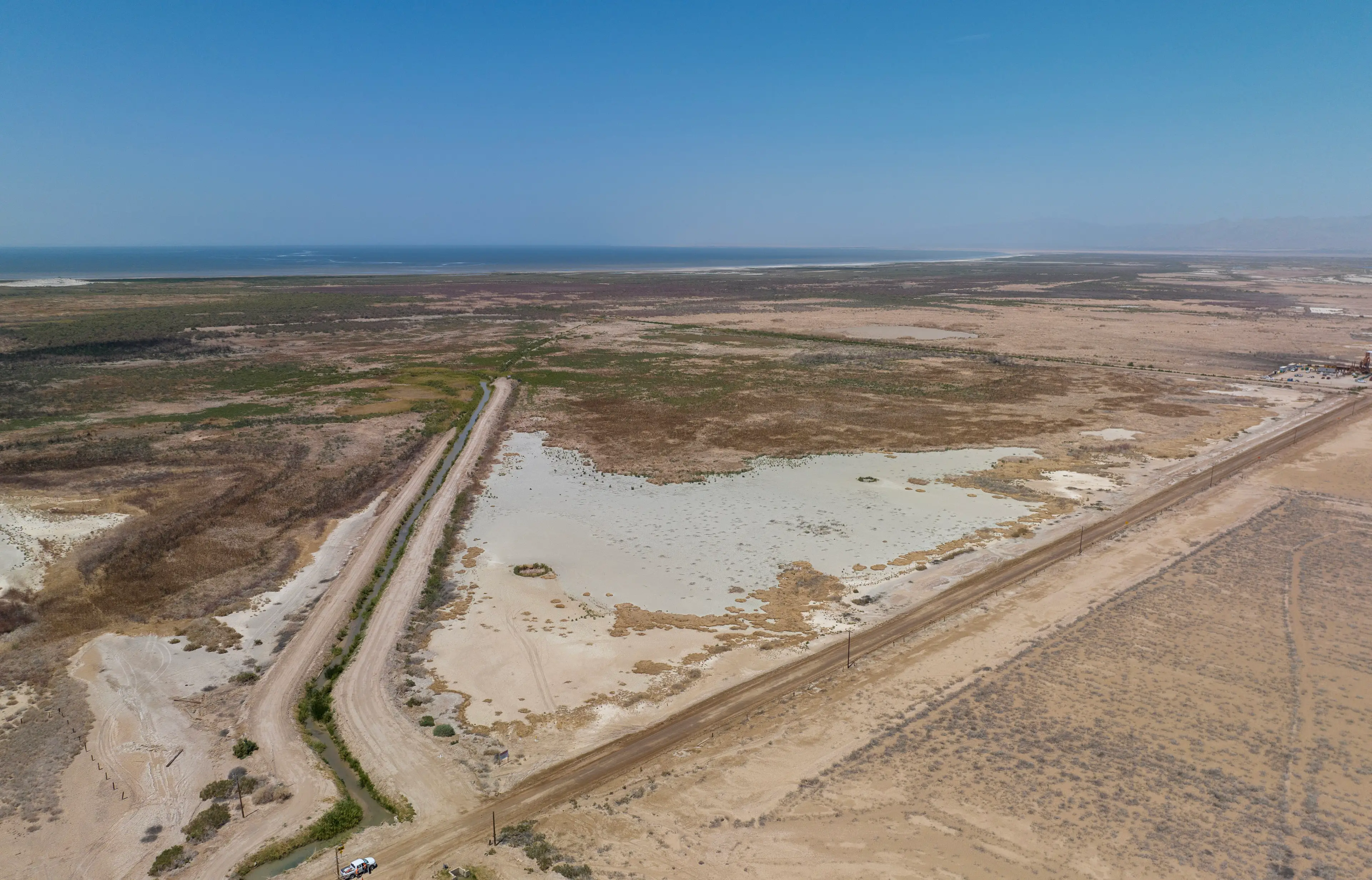
    Scientists knew there was a lithium reservoir there, just not quite how much of the chemical element is actually present.
    Getty Images/ Jeff Gritchen/MediaNews Group/Orange County Register

    Extracting the lithium from underneath the lake is no easy feat.

    The lithium reservoir lies around 1,500 feet below the earth's surface, and the drilling to retrieve it would require a hefty water supply from the Colorado River - which is also heavily relied on by the residents in the surrounding area.

    Choose your content:

    10 mins ago
    6 hours ago
    7 hours ago
    • AFP via Getty Images
      10 mins ago

      Global search underway for 30 cruise passengers who left ship following hantavirus outbreak

      Six Americans were among them, with four U.S. states now on high alert amid the deadly outbreak

      News
    • Getty Stock Images
      6 hours ago

      Man who traveled to 105 countries reveals 4 places he won't go back to

      Oliver Browne isn't a fan of some of the places he's visited during his two-decades of travel

      News
    • Getty Stock Images
      7 hours ago

      Scientists reveal impact of one night without sleep that can cause serious health issues

      Pulling an all-nighter may be a lot worse than we once thought

      News
    • Mandel NGAN - Pool/Getty Images
      7 hours ago

      President Trump slams World Cup ticket prices saying he 'wouldn't pay'

      Ticket prices for the World Cup final are now over eight times the cost of the 2022 championship

      News
    • Mysterious golden orb likened to 'horror movie' finally explained after years of questions
    • Scientists make ground breaking discovery on new organism that gives a new perspective of life
    • White House responds to bombshell report claiming Donald Trump has pocketed $1.4 billion in the past 12 months
    • 7 chilling risks of AI which could change the world forever