CDC issues travel advisory for 32 countries ahead of Spring Break due to spread of paralyzing disease

With Spring Break just around the corner, the CDC has issued fresh travel advice for anyone hoping to head abroad, with 32 countries - including some in Europe - posing an increased threat of polio to Americans.
The US Centers for Disease Control and Prevention issued a level 2 alert, urging travellers to ‘practice enhanced precautions’ before visiting 32 destinations, which included locations such as Spain, Finland, Germany, and Poland — as well as the U.K.
As part of these precautions it was advising travellers to ensure their vaccinations for polio were up to date, while also reminding people that they were eligible for a single-dose booster of the vaccine.
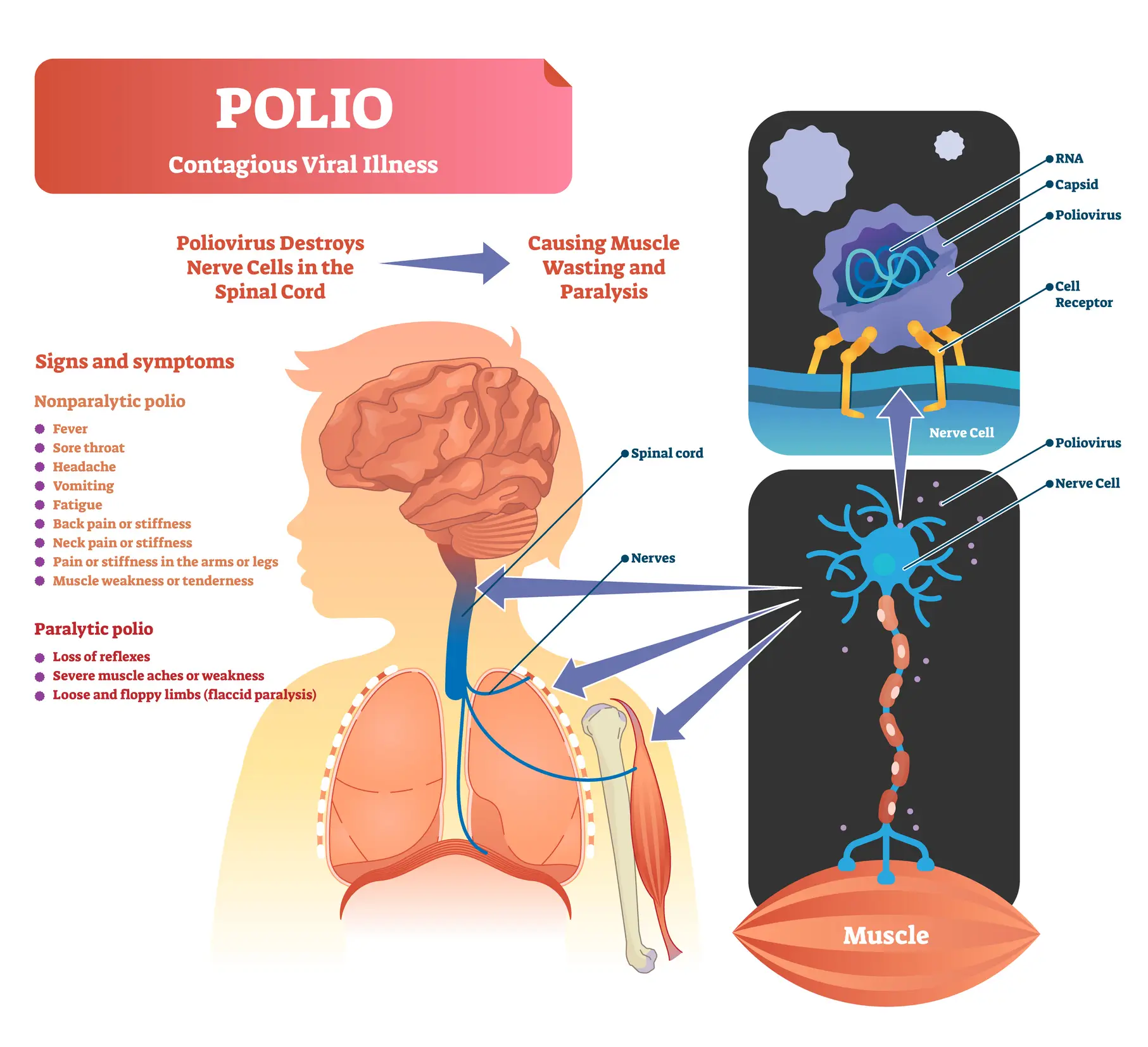
Once a disease that had been virtually eradicated due to a robust global vaccination program launched in 1988, cases of the disease are now once again on the rise, partially due to the extremely contagious spread of the poliovirus, ‘a crippling and potentially deadly disease that affects the nervous system.’
Advert
After record lows in 2023, cases of Wild Poliovirus Type 1 (WPV1) surged in 2024, particularly in Pakistan and Afghanistan, with the Global wild polio cases jumping from just 12 in 2023 to 99 in 2024.
This was largely due to insecurity in border regions (like Khyber Pakhtunkhwa), high population movement, and "missed children" during vaccination campaigns.
However, the bigger threat comes from Circulating Vaccine-Derived Poliovirus (cVDPV). This occurs in areas with very low immunization rates.
According to a paper published in the Italian society of infectious and tropical diseases, the oral polio vaccine (OPV) uses a weakened live virus. In under-vaccinated communities with poor sanitation, this weakened virus can spread and, over many months, mutate back into a form that causes paralysis.
This variant polio causes more paralysis cases annually than the wild strain, with significant outbreaks across Africa (notably Nigeria and DR Congo) and recently in Gaza and Yemen due to conflict-related health system collapses.
Unvaccinated people in developed countries, are also at risk, with poliovirus having been detected in waste-sewer water in locations such as New York, London and Hamburg showing increased circulation in local populations too.
In this locations, declining vaccination rates in certain local communities have allowed the virus (often imported by travelers) to circulate silently in the sewage system.
Most people living in or visiting these areas are protected by the Inactivated Polio Vaccine (IPV), due to robust childhood vaccination programs, however those who are unvaccinated are at high risk.

Even more critically, many people infected with the virus will show little to no symptoms, or if they do, they experience flu-like symptoms such as fevers, tiredness, nausea, headache, nasal congestion, and a sore throat.
For some, including former US President Franklin D.Roosevelt, the condition can lead to a far more serious side effect of irreversible paralysis, which left the politician needing a wheelchair after he contracted the disease.
Typically given in four doses throughout childhood, the United States polio vaccination program up until now has kept a tight handle on numbers of wild poliovirus. Yet with vaccine hesitancy now on the rise, and Health and Human Services head Robert F.Kennedy having actively tried to revoke approval of the polio vaccine in 2022, that effectiveness is starting to wane.
This is why the CDC has issued new guidance to urge travellers heading to places with documented cases to check their vaccinations are up to date.
The full list of countries is as follows:
Afghanistan, Algeria Angola, Benin, Burkina Faso, Cameroon, Central African Republic, Chad, Côte d'Ivoire, Democratic Republic of the Congo, Djibouti, Ethiopia, Finland, Gaza, Germany, Ghana, Guinea, Israel, Niger, Nigeria, Pakistan, Papua New Guinea, Poland, Senegal, Somalia, South Sudan, Spain, Sudan, Tanzania, United Kingdom, Yemen, and Zimbabwe.
 Phoebe Tonks