unilad homepage
unilad homepage
  • News
    • UK News
    • US News
    • World News
    • Crime
    • Health
    • Money
    • Sport
    • Travel
  • Music
  • Technology
  • Film and TV
    • News
    • DC Comics
    • Disney
    • Marvel
    • Netflix
  • Celebrity
  • Politics
  • Advertise
  • Terms
  • Privacy & Cookies
  • LADbible Group
  • LADbible
  • SPORTbible
  • GAMINGbible
  • Tyla
  • UNILAD Tech
  • FOODbible
  • License Our Content
  • About Us & Contact
  • Jobs
  • Latest
  • Archive
  • Topics A-Z
  • Authors
Facebook
Instagram
X
Threads
TikTok
YouTube
Submit Your Content
Scientists discover 'alien' new species with 20 arms lurking in the deep antarctic ocean
Home>News
Published 17:38 7 Jul 2024 GMT+1

Scientists discover 'alien' new species with 20 arms lurking in the deep antarctic ocean

New horrors beyond human comprehension have just been discovered

Gerrard Kaonga

Gerrard Kaonga

google discoverFollow us on Google Discover
Featured Image Credit: Greg W. Rouse
Gerrard Kaonga
Gerrard Kaonga

Gerrard is a Journalist at UNILAD and has dived headfirst into covering everything from breaking global stories to trending entertainment news. He has a bachelors in English Literature from Brunel University and has written across a number of different national and international publications. Most notably the Financial Times, Daily Express, Evening Standard and Newsweek.

Advert

Advert

Advert

Oh wonderful... new terrifying nightmare fuel has been discovered deep in the Antarctic Ocean.

It's amazing how many different creatures roam the Earth, with mankind continuing to discover new species to this very day.

However, the latest new thing to be discovered is likely to send shivers down your spine.

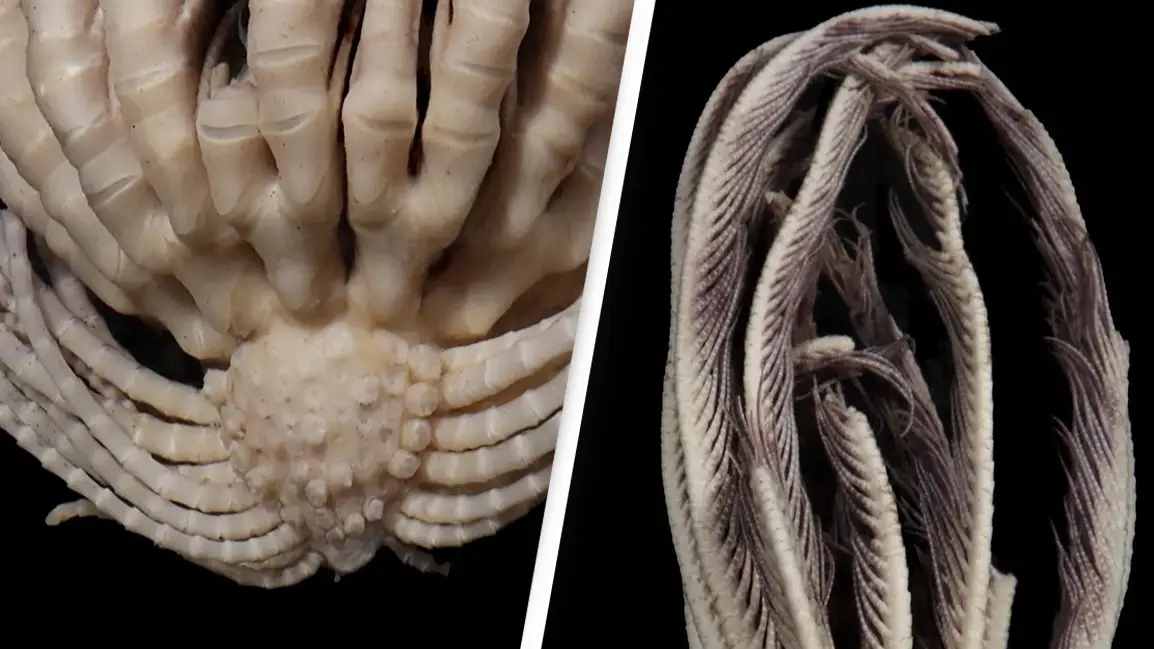
Scientists have called the new creature an Antarctic strawberry feather star, but you really shouldn’t let the cute name fool you.

Advert

It very much looks like something out of the Alien film franchise, looking sort of like deep ocean face-huggers.
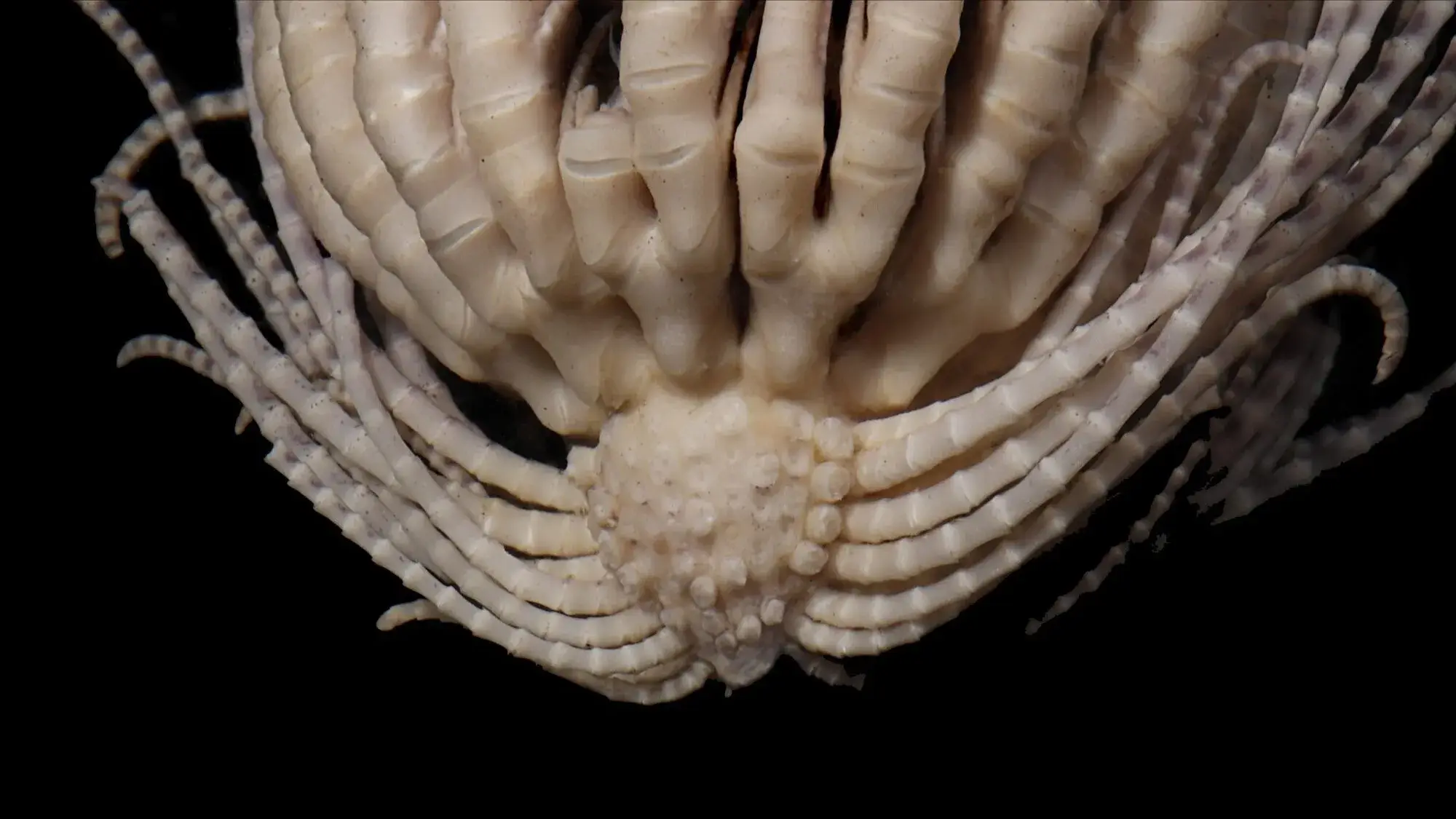
Scientists have called the new creature an Antarctic strawberry feather star. (Greg W. Rouse)

Some of the 'arms' are up to 8 inches long and studded with bumps or feathery tendrils. So, it is a big nope from me as I would hate to come across this seemingly eldritch horror creature.

Nerida Wilson, an invertebrate marine biologist at the Western Australian Museum, spoke about the importance of this discovery.

Wilson and her colleagues reported the Antarctic strawberry feather star and three other feather star species in a study published in July in the journal Invertebrate Systematics.

She said: “As we continue to understand how diverse ecosystems like the Antarctic are, or other difficult-to-sample habitats like the deep sea, we should continue to appreciate how precious and important these areas are in sustaining a diverse marine ecosystem."

This new study adds seven species of these creatures - four were the newly discovered ones, and three were critters that had been originally misclassified as other kinds of animals before DNA sequencing was invented.

Wilson added: “The application of molecular tools to understanding biodiversity is widely applicable and has become a necessary part of understanding all living things.
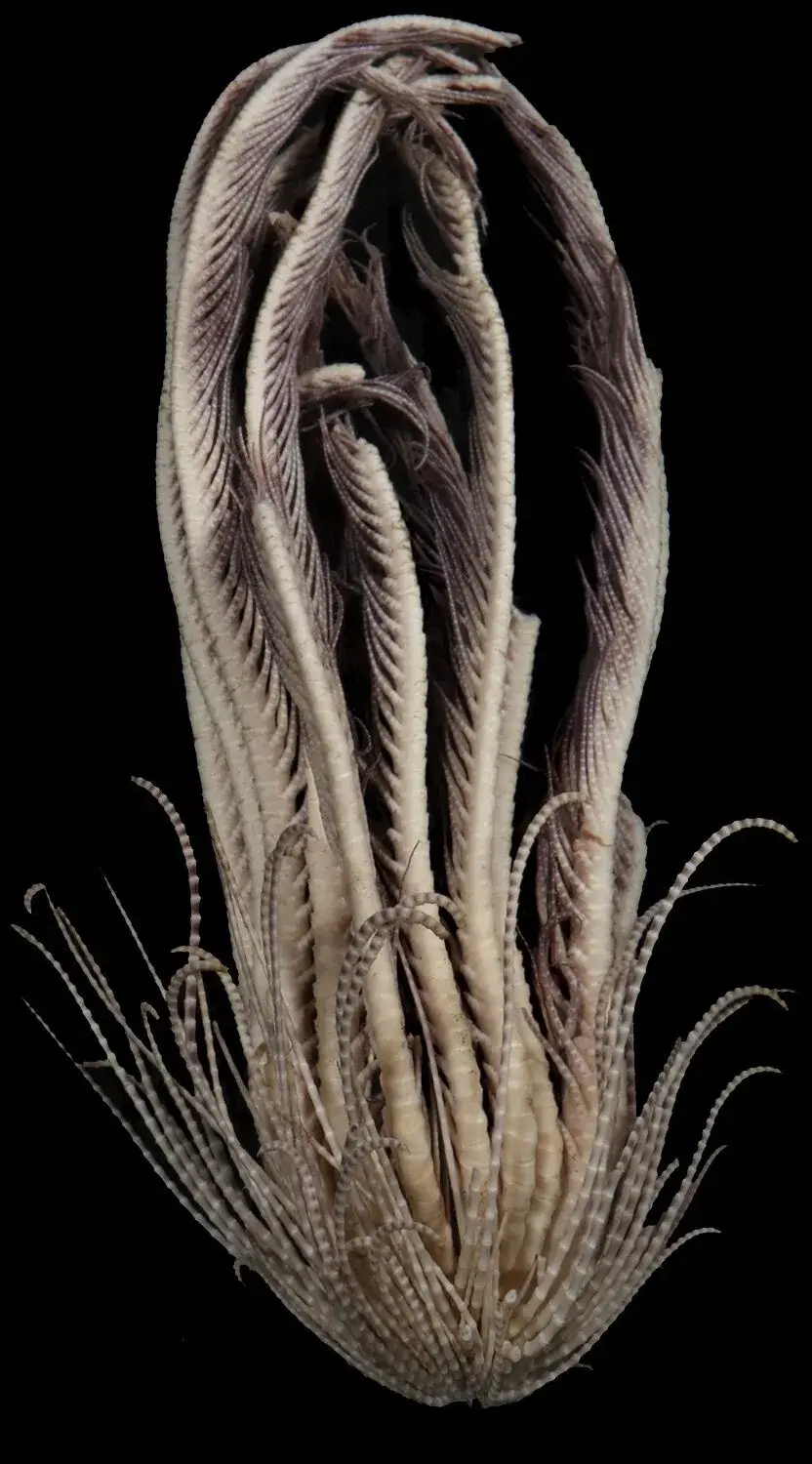
Some of the 'arms' are up to 8 inches long and studded with bumps or feathery tendrils. (Greg W. Rouse)

“As we continue to understand how diverse ecosystems like the Antarctic are, or other difficult-to-sample habitats like the deep sea, we should continue to appreciate how precious and important these areas are in sustaining a diverse marine ecosystem.”

Angela Stevenson, a postdoctoral researcher at the GEOMAR Helmholtz Center for Ocean Research Kiel in Germany who was not involved in the study has also spoken out about how important these discoveries are.

Discoveries like these, regardless of how terrifying the creatures may appear, they better allow us to understand the ecosystem in the area.

Stevenson said: “It is fantastic that the authors have done this taxonomic work. It is what ecologists like me depend on to do our work because the first step of understanding species interactions is knowing who’s there in the first place,”

Choose your content:

4 mins ago
an hour ago
4 hours ago
5 hours ago
  • Kevin Sabitus/Getty Images
    4 mins ago

    NFL star turns himself in after being charged as 'primary conspirator' in disturbing kidnapping case

    Terrion Arnold faces life imprisonment if found guilty of the crimes

    News
  • Instagram/gaspipd
    an hour ago

    Dad of YouTuber who died with Oliver Tree makes serious claim about helicopter crash

    YouTuber Gaspi was one of six people to die in the devastating crash alongside Oliver Tree

    News
  • Christophe ARCHAMBAULT / AFP via Getty Images
    4 hours ago

    ‘Omega’ heatwave explained as Europe battles record temperatures and rising death toll

    At least 48 people have died in France from drowning as they attempt to seek escape ​the crippling heat

    News
  • Bill Kimberlin
    5 hours ago

    Death Row psychologist for infamous serial killers answers biggest question about last meal request

    Death Row inmates are granted one final meal before execution, apart from those in Texas, but should it be banned everywhere?

    News
  • Scientists discover breakthrough 'cure' for hair loss which takes just 20 days
  • Scientists discover how dog contact improves survival in cancer patients in shocking new study
  • People have ‘chills’ after scientists filming in deep-sea make ‘unsettling’ discovery
  • Scientists discover two miracles by Jesus 'actually happened' in breakthrough revelation