unilad homepage
unilad homepage
    • News
      • UK News
      • US News
      • World News
      • Crime
      • Health
      • Money
      • Sport
      • Travel
    • Music
    • Technology
    • Film and TV
      • News
      • DC Comics
      • Disney
      • Marvel
      • Netflix
    • Celebrity
    • Politics
    • Advertise
    • Terms
    • Privacy & Cookies
    • LADbible Group
    • LADbible
    • SPORTbible
    • GAMINGbible
    • Tyla
    • UNILAD Tech
    • FOODbible
    • License Our Content
    • About Us & Contact
    • Jobs
    • Latest
    • Archive
    • Topics A-Z
    • Authors
    Facebook
    Instagram
    X
    Threads
    TikTok
    YouTube
    Submit Your Content
    Scientists discover mysterious asteroid-comet hybrid is 'like nothing seen before' in our solar system

    Home> News

    Published 21:00 6 Jan 2025 GMT

    Scientists discover mysterious asteroid-comet hybrid is 'like nothing seen before' in our solar system

    Scientists have made progress on a discovery they first made in 1977

    Callum Jones

    Callum Jones

    google discoverFollow us on Google Discover
    Featured Image Credit: Getty Stock Images

    Topics: Space, Science

    Callum Jones
    Callum Jones

    Advert

    Advert

    Advert

    Scientists have made the remarkable discovery that a mysterious asteroid-comet hybrid is 'like nothing seen before' in our solar system.

    Dubbed 2060 Chiron, the 125-mile-wide hybrid is of particular interest to scientists after learning more about it through the James Webb Space Telescope (JWST).
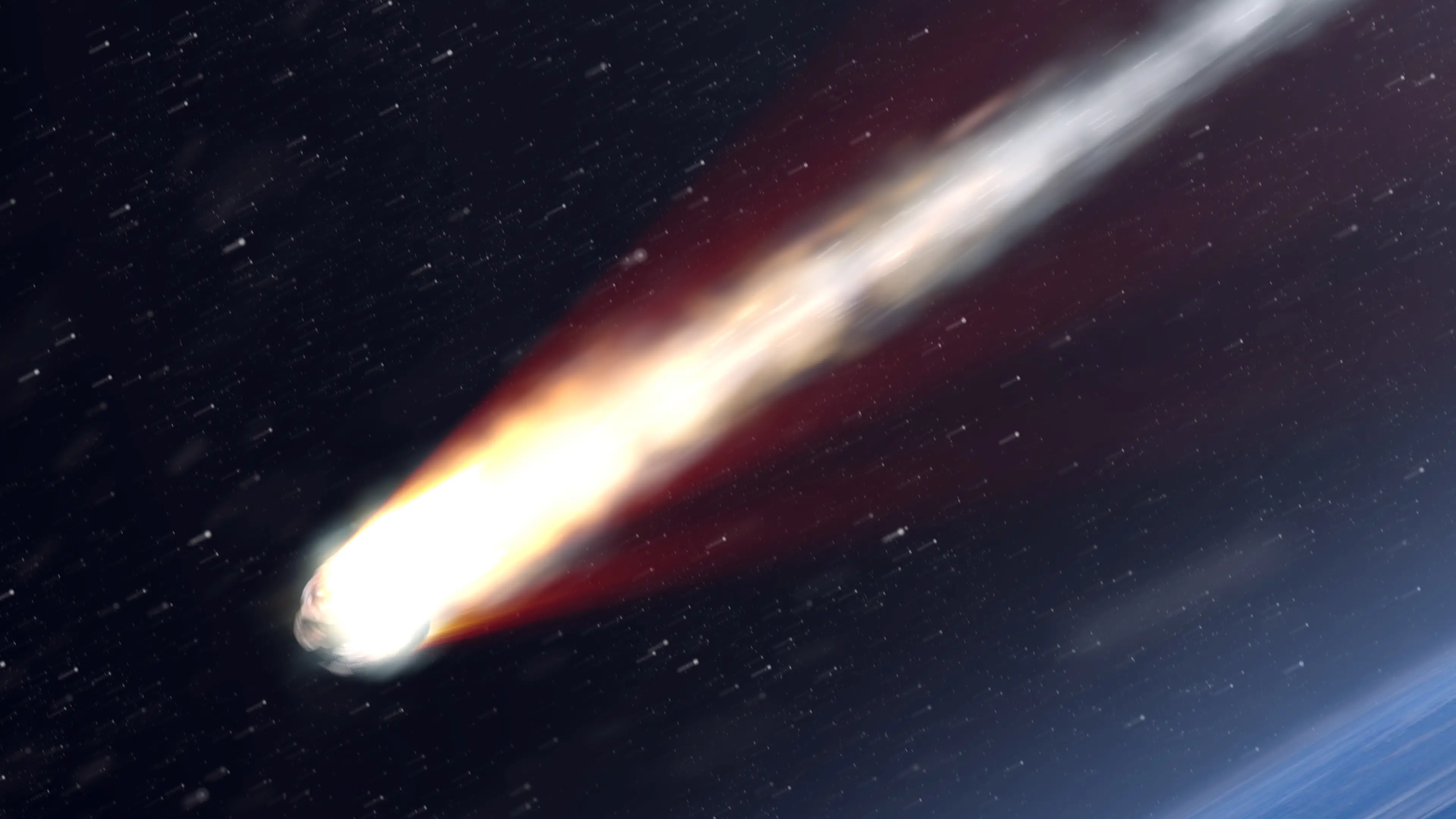
    Scientists have made an incredible discovery about the asteroid-comet hybrid (Getty Stock Image)
    Scientists have made an incredible discovery about the asteroid-comet hybrid (Getty Stock Image)

    By reviewing near-infrared images, the experts at UCF Florida Space Institute (FSI) have discovered that Chiron's surface contains chemicals that predate the likes of CO2 and methane.

    Advert

    Dr Charles Schambeau, who has worked with astronomers from the University of Central Florida, said: "These results are like nothing we've seen before.

    "These detections enhance our understanding of Chiron's interior composition and how that material produces the unique behaviours as we observe Chiron."

    The asteroid-comet hybrid is a type of body known as a Centaur (a space object that orbits the sun between Jupiter and Neptune), which was first discovered by scientists back in 1977.

    However, Chiron has stood out due to its unique nature compared to its counterparts.

    "It's an oddball when compared to the majority of other Centaurs," Dr Schambeau added. "It has periods where it behaves like a comet, it has rings of material around it, and potentially a debris field of small dust or rocky material orbiting around it."
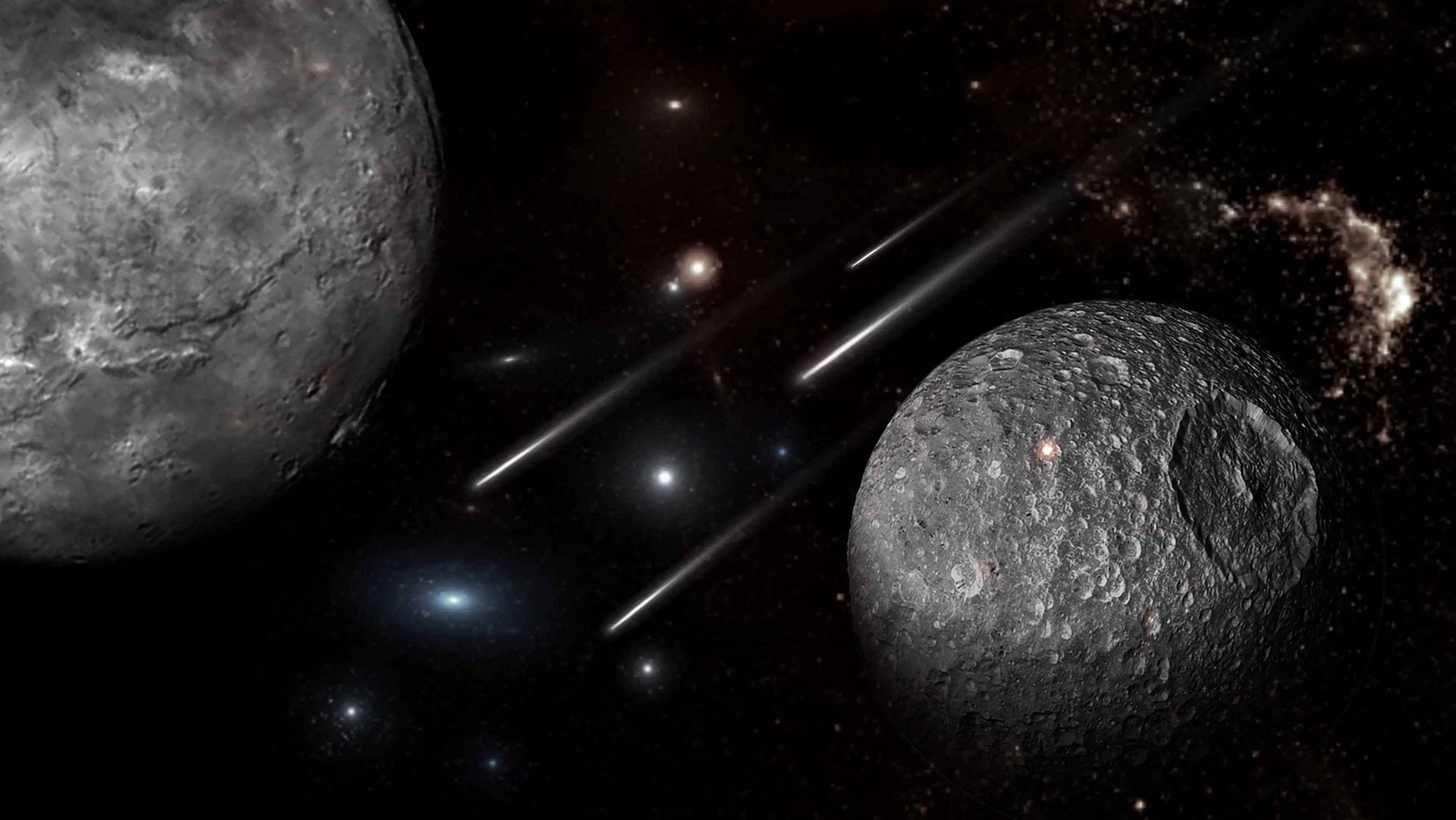
    The asteroid-comet hybrid was first discovered in 1977 (Getty Stock Image)
    The asteroid-comet hybrid was first discovered in 1977 (Getty Stock Image)

    UCF FSI Associate Scientist Dr Noemi Pinilla-Alonso, who acts as a lead researcher on the project, said: "What is unique about Chiron is that we can observe both the surface, where most of the ices can be found, and the coma, where we see gases that are originating from the surface or just below it.

    "Asteroids don't have this kind of activity because they don't have ice on them. Comets, on the other hand, show activity like centaurs, but they are typically observed closer to the sun, and their comas are so thick that they complicate the interpretations of observations of the ices on the surface.

    "Discovering which gases are part of the coma and their different relationships with the ices on the surface helps us learn the physical and chemical properties, such as the thickness and the porosity of the ice layer, its composition, and how irradiation is affecting it."

    While the initial discovery was made nearly 40 years ago, this latest breakthrough is an exciting one for scientists.

    Talking about new opportunities for further research, Dr Pinilla-Alonso added: "We're going to follow up with Chiron.

    "It will come closer to us, and if we can study it at nearer distances and get better reads on the quantities and nature of the ices, silicates, and organics, we will be able to better understand how seasonal insolation variations and different illumination patterns can affect its behavior and its ice reservoir."

    The results have been published in the journal Astronomy & Astrophysics.

    Choose your content:

    an hour ago
    2 hours ago
    • Getty Stock Images
      an hour ago

      Doctor issues warning to people who sleep with a fan on over serious side effects

      It may be tempting to stick the fan on while sleeping during the summer months, but a doctor has warned against it

      News
    • Walmart
      an hour ago

      Walmart cuts self-checkouts and confirms plans to overhaul 650 stores

      New laws are coming in while Target and Costco follow Walmart's lead shutting down self-checkouts

      News
    • NBC
      2 hours ago

      Olivia Rodrigo trolls Jake Paul with savage dig during SNL opening monologue

      Rodrigo poked fun at her former cast mate during her appearance on Saturday Night Live

      Film & TV
    • MSC Cruises/ChatGPT
      2 hours ago

      MSC cruises' new ship is an outdoor theme park in the middle of the ocean with Europe’s first over-water swing

      MSC says there will also be the longest dry slide at sea

      News
    • Scientists discover mysterious 'heartbeat' coming from interstellar object as it nears Earth
    • NASA takes major steps to protect Earth from mysterious 'Manhattan-size' comet
    • Scientists discover interstellar object the size of Manhattan producing never-before-seen material
    • Scientists reveal exact date mysterious object that Harvard scientist claims is 'not natural' will be closest to Earth