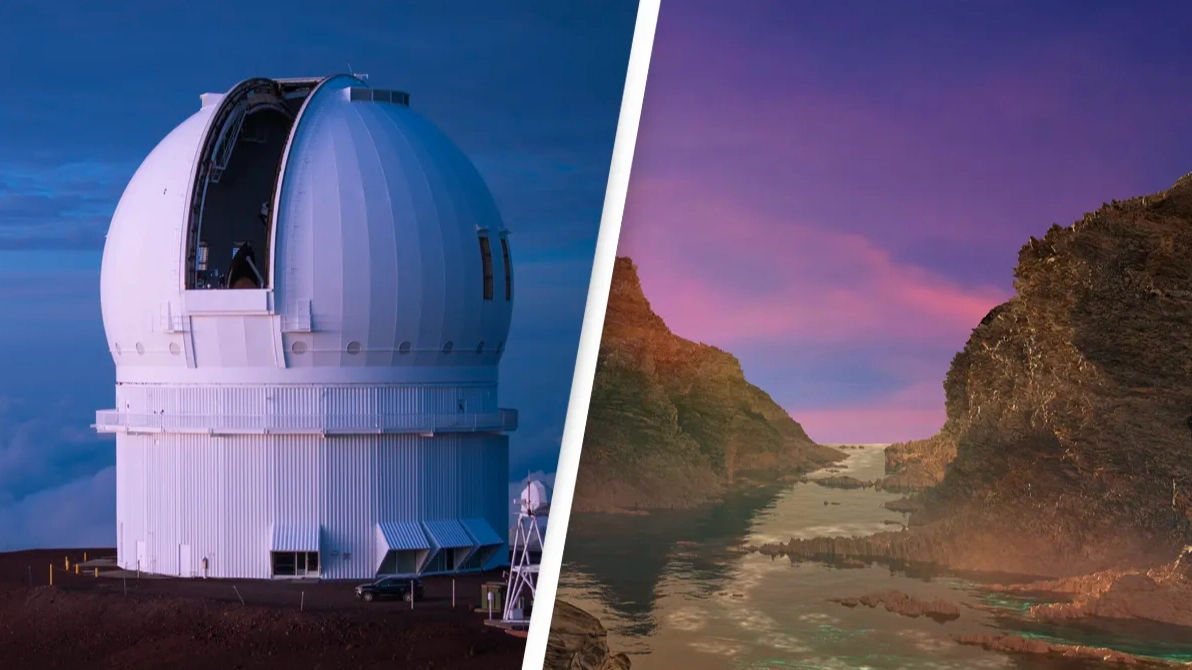
Astronomer claims it's 'increasingly likely' alien life will be detected in 20 years

For decades, humans have wondered whether we're alone in the cosmos. And according to one expert, we could be within a few years of discovering alien life and finally having our answer.
Professor Sasha Hinkley is an associate professor at the University of Exeter, and leads a team of 120 international astronomers working on the James Webb Telescope.
Since it was launched, he and his team have been tasked with gathering images of exoplanets, which he says there seem to be more and more of every year.
In an article with The Spectator, Prof Hinkley said that there are over 3,000 of these exoplanets that we know of, but it's likely there are hundreds of billions out there.
Advert
"For perspective: there are around 100 billion stars in our Milky Way," he writes.
"Since we now know from various space missions that most stars host planets, this begins to give you an indication of just how many exoplanets could exist in our galaxy.
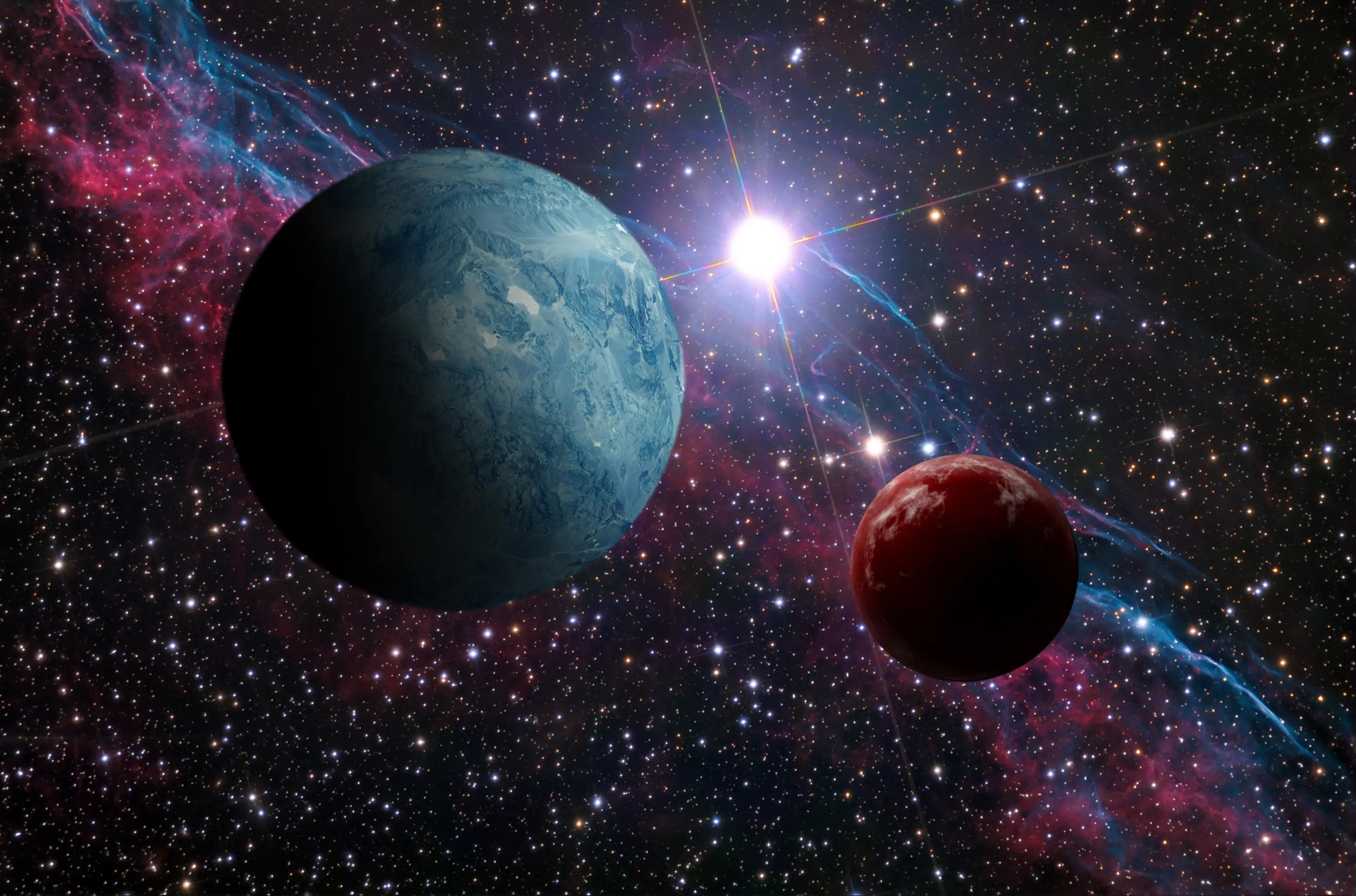
"And then, beyond our galaxy, there are estimated to be 200 billion galaxies in the universe, each containing potentially hundreds of billions of stars with their own exoplanets."
And Prof Hinkley believes that it is 'increasingly likely', with the advances in technology, that we'll detect alien life in his lifetime, and potentially in the next 20 years.
Now, when he says alien life, he's not talking about little green men with big black eyes bobbing about in a spaceship.
While that might a bit more exciting, what he's talking about are 'biosignatures'.
Prof Hinkley explains: "The evidence of the discovery of life will probably be found by observing imbalances in ratios of chemical species (ozone and carbon dioxide, for example), which would not otherwise naturally exist without possibly some form of biological activity driving this disequilibrium."
He adds: "And make no mistake, Nasa and numerous academic colleagues are taking the study of life on other planets very seriously.
"Astrobiology, in particular, is a major focus today for Nasa. It has even recently become a well-respected academic subdiscipline in astronomy, with dedicated academic journals and conferences hosting contributions from biologists and chemists as well as astronomers."
And the astronomer thinks that the James Webb telescope has a huge part to play to improving the likelihood of us finally coming across alien life.
As well as bringing us closer to other forms of life, Prof Hinkley says that it will give us a better understanding of our own existence too.
"Even if we need to wait a couple of decades for a future space telescope to detect biosignatures on an exoplanet, the James Webb telescope will bring us closer than ever before to achieving this goal," he concludes.
"It might also be able to tell us something about the birth story of exoplanets, and thus help to place our own origins in context."
Topics: Technology, Science, Aliens, NASA
 Dominic Smithers