unilad homepage
unilad homepage
    • News
      • UK News
      • US News
      • World News
      • Crime
      • Health
      • Money
      • Sport
      • Travel
    • Music
    • Technology
    • Film and TV
      • News
      • DC Comics
      • Disney
      • Marvel
      • Netflix
    • Celebrity
    • Politics
    • Advertise
    • Terms
    • Privacy & Cookies
    • LADbible Group
    • LADbible
    • SPORTbible
    • GAMINGbible
    • Tyla
    • UNILAD Tech
    • FOODbible
    • License Our Content
    • About Us & Contact
    • Jobs
    • Latest
    • Archive
    • Topics A-Z
    • Authors
    Facebook
    Instagram
    X
    Threads
    TikTok
    YouTube
    Submit Your Content
    Scientists say proof of party drug in space suggests aliens do exist

    Home> News

    Updated 10:34 11 Oct 2022 GMT+1Published 10:14 11 Oct 2022 GMT+1

    Scientists say proof of party drug in space suggests aliens do exist

    A party drug found in space could well be proof that we're not alone

    Shola Lee

    Shola Lee

    google discoverFollow us on Google Discover
    Featured Image Credit: Pictorial Press Ltd / theodore liasi / Alamy Stock Photo

    Topics: Science, Aliens, Weird

    Shola Lee
    Shola Lee

    Shola Lee began her journalism career while studying for her undergraduate degree at Queen Mary, University of London and Columbia University in New York. She has written for the Columbia Spectator, QM Global Bloggers, CUB Magazine, UniDays, and Warner Brothers' Wizarding World Digital. Recently, Shola took part in the 2021 BAFTA Crew and BBC New Creatives programme before becoming a journalist at UNILAD, where she works on breaking news, trending stories, and features.

    Advert

    Advert

    Advert

    A party drug found in space could well be proof that we're not alone.

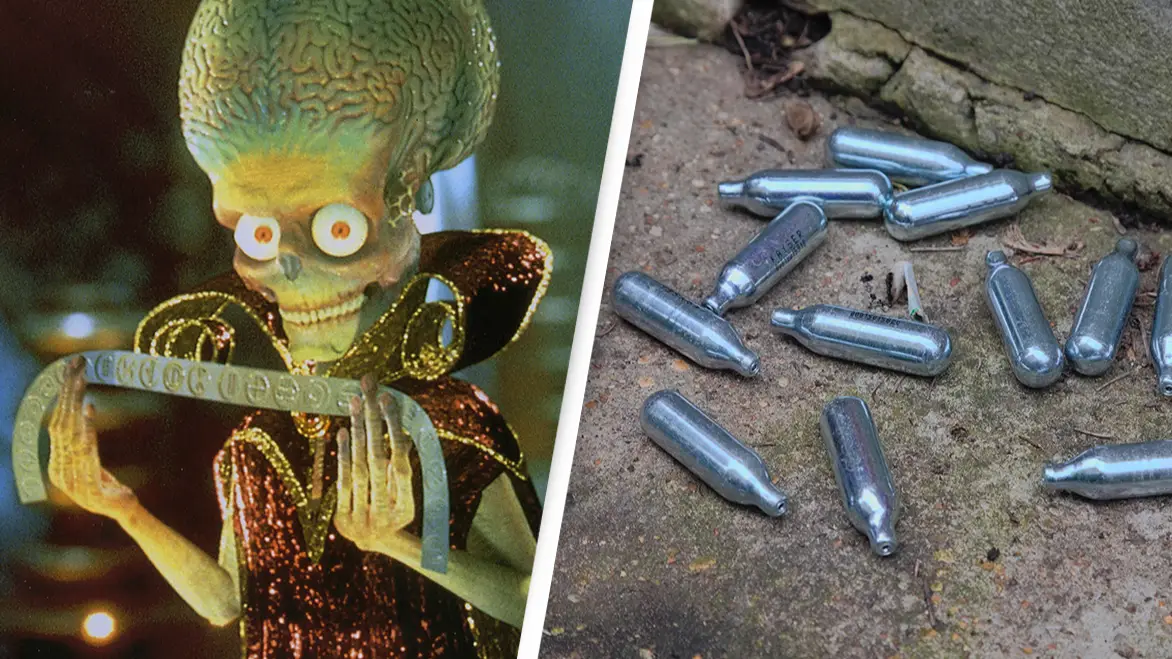
    Yep, not what you expected on this fine Tuesday morning, but aliens could well exist and the proof is in the whippet.

    Well, what is a whippet? A whippet, better known as 'laughing gas', is made up largely of nitrous oxide, which could help us tell whether there's life on other planets.
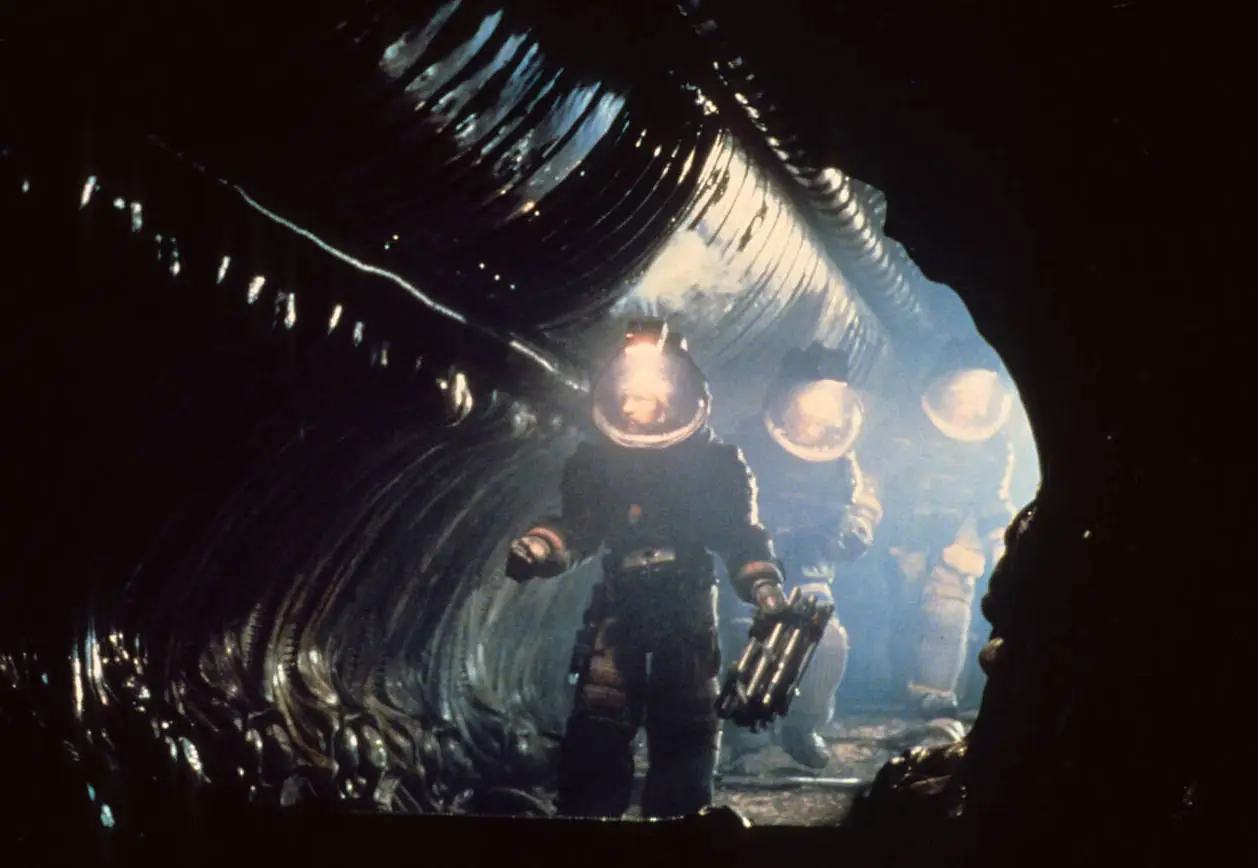
    Could this be how we find aliens?
    MARKA / Alamy Stock Photo

    Advert

    The research was conducted by scientists at the University of California Riverside and was published in the Astrophysics Journal.

    According to the researchers, the presence of nitrous oxide could be a way to chemically indicate the presence of life on other planets.

    As Eddie Schwieterman, an astrobiologist at the university, explained: "There’s been a lot of thought put into oxygen and methane as biosignatures. Fewer researchers have seriously considered nitrous oxide, but we think that may be a mistake."

    So, what exactly led Schwieterman and his team to this conclusion?

    This fella looks like he's been caught doing laughing gas.
    PictureLux / The Hollywood Archive / Alamy Stock Photo

    Well, nitrous oxide is made by living things, so it'd make a lot of sense for a planet that could sustain life to have traces of the gas, as he explains: "Life generates nitrogen waste products that are converted by some microorganisms into nitrates. In a fish tank, these nitrates build up, which is why you have to change the water.

    "However, under the right conditions in the ocean, certain bacteria can convert those nitrates into N2O.

    "The gas then leaks into the atmosphere."

    This then led the team to research exactly how much nitrous oxide living things produced on earth which they applied to other planets in a planetary model.

    This helped determine what trace amount of the gas could be detected in the atmosphere around these 'exoplanets', which helps suggest whether they could sustain life.
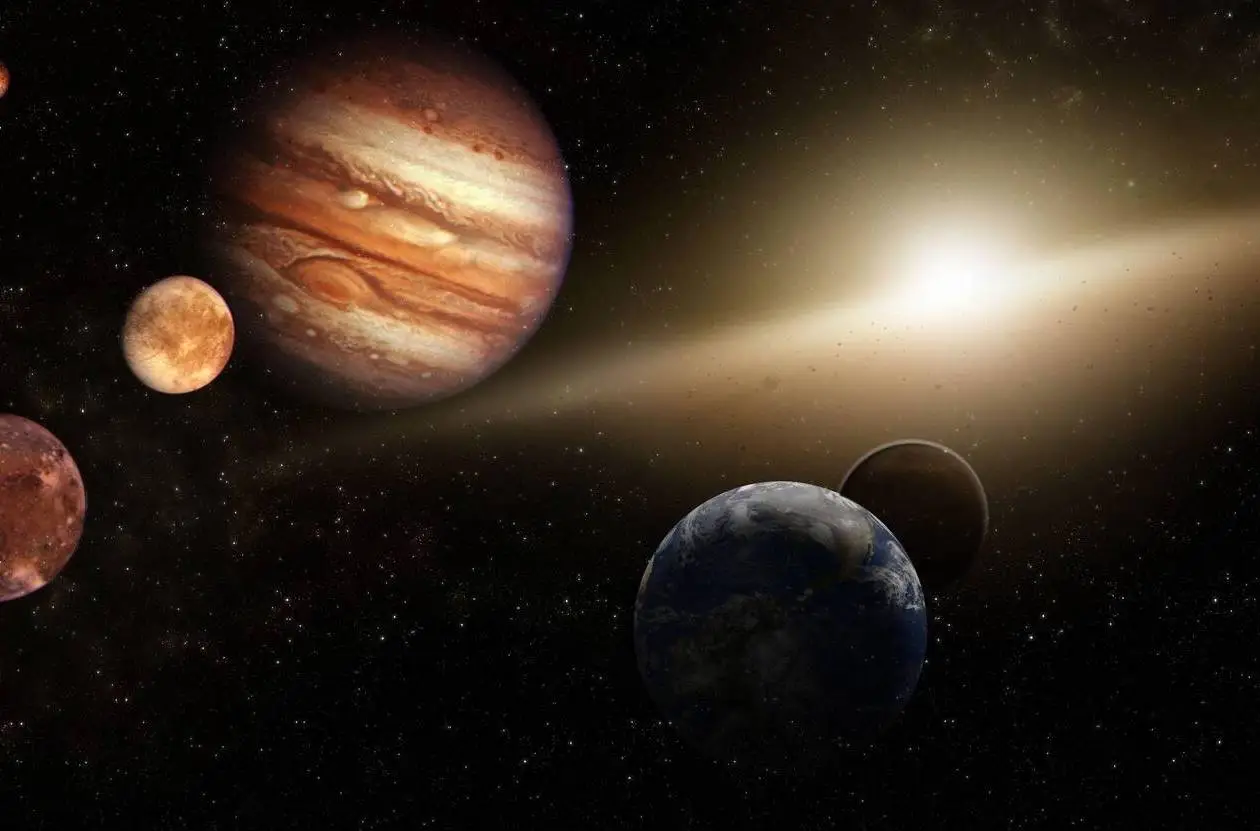
    Trace amounts could help detect life in the solar system.
    Bernadett Pogácsás-Simon / Alamy Stock Photo

    Schwieterman also explained how this method could be applied to stars: "In a star system like TRAPPIST-1, the nearest and best system to observe the atmospheres of rocky planets, you could potentially detect nitrous oxide at levels comparable to CO2 or methane."

    However, as with any study, there are some drawbacks as some have said that due to nitrous oxide being a less prevalent biosignature, basically evidence of living things, it would be hard to detect in galaxies far, far away.

    Also, the studies doesn't account for massive releases of the gas caused by other phenomena, as Schwieterman explained: "This conclusion doesn’t account for periods in Earth’s history where ocean conditions would have allowed for much greater biological release of N2O. Conditions in those periods might mirror where an exoplanet is today."

    Still, we kind of love the idea that a party drug might be the key to finding alien life.

    If you have a story you want to tell, send it to UNILAD via [email protected] 

    Choose your content:

    9 hours ago
    10 hours ago
    • Gina Ferazzi / Los Angeles Times via Getty Images
      9 hours ago

      Scientists make new prediction 'Super El Niño’ could cause hottest summer ever with scorching temperatures

      The phenomenon could cause a scorching summer this year

      News
    • Charles A Fazio/Bloomberg via Getty Images
      10 hours ago

      Scientists discover impact of data centers creating 'heat islands' warming the Earth by 16 degrees

      Centers powering AI could well be contributing towards AI

      News
    • TikTok/@millennialdad
      10 hours ago

      Man diagnosed with autism at 42 explains how he was misdiagnosed by doctors for years

      Tyler Barnett opened up about how he had been mislabelled for years before being diagnosed with autism as an adult

      News
    • Getty Stock Images
      10 hours ago

      Health experts issues 'AI addiction' warning after discovering serious health impact

      Some addicts report feeling 'chest pains, anxiety, and grief' when separated from their AI chatbot

      News
    • Scientists test 'mermaid mummy' to figure out what people have been worshipping for hundreds of years
    • Scientists create monkey chimera using two sets of DNA in groundbreaking experiment
    • Expert breaks down the possibility of astronauts having sex in space although it could be like 'skydiving'