
NASA unveils newly designed spacesuits astronauts will wear to the moon

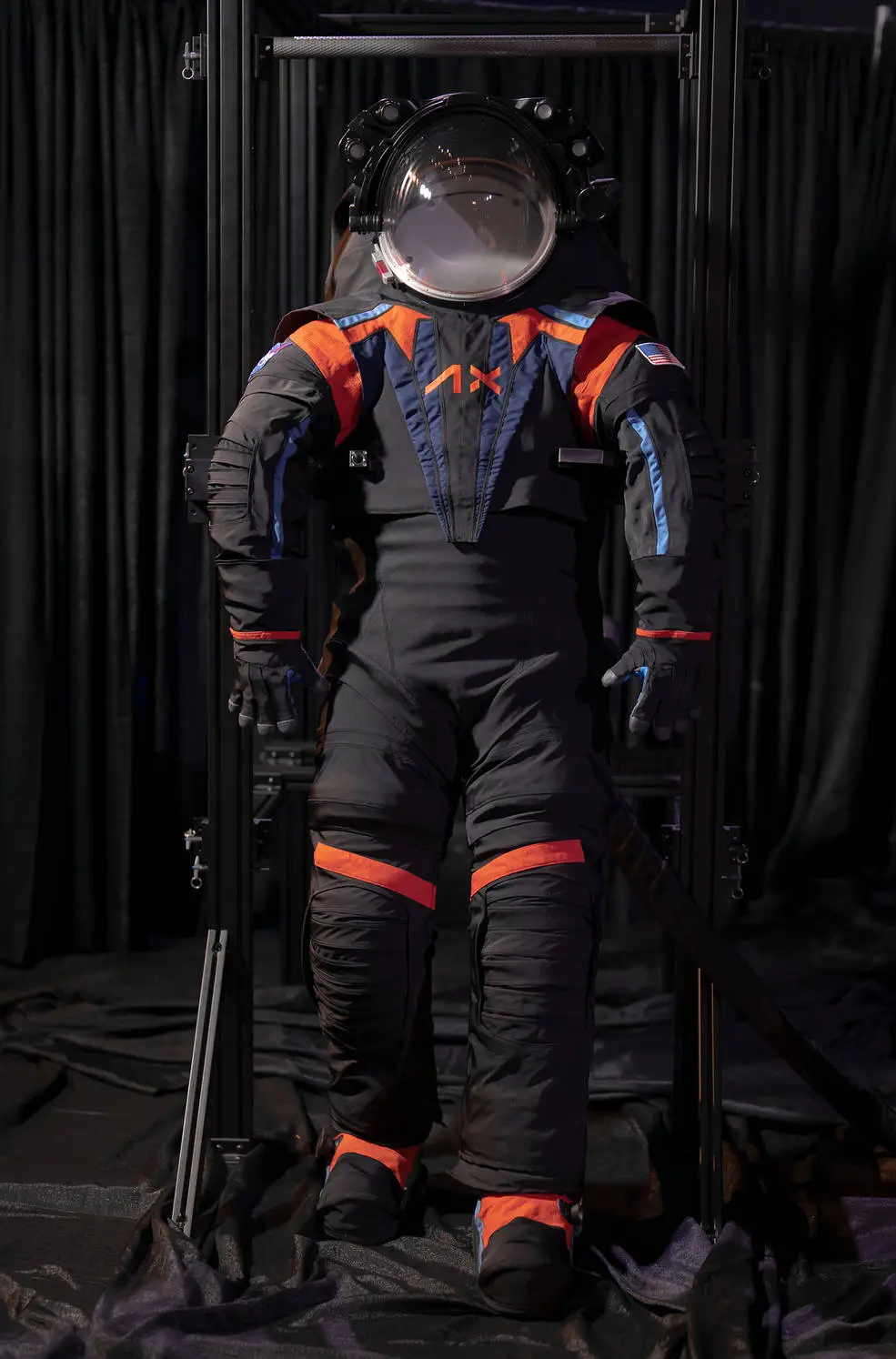
The worlds of fashion and space science have collided as NASA just unveiled the newly designed spacesuits astronauts will wear to the moon.
NASA selected Axiom Space – which operates missions to the International Space Station (ISS) for customers – to create the modern moonwalker suits.
They will be worn by the first astronauts to explore the lunar South Pole in 2025 as part of a mission called Artemis III.
Advert
It's a big upgrade from the old, much bulkier suits and will ensure astronauts are looking good as they jet off to the moon.
The first prototype of the advanced Axiom Extravehicular Mobility Unit (AxEMU) suit was unveiled during an event at the Space Center Houston, Texas, on Wednesday (March 15).
As explained by the space agency, though the early model is a dark grey material, the final version will be all-white in order to protect the wearers from the harsh environment of space.
Axiom Space is set to deliver the full fleet of finished spacesuits to NASA by the end of this summer.
They are said to provide astronauts with the capabilities required for exploring the moon's surface, including increased flexibility and greater protection.
It's also worth noting that they have been designed to fit a broad range of crew members, accommodating at least 90 percent of the US male and female population.
As such, the partnership is mutually beneficial, as it further promotes the private company's ventures in commercial space travel.
Michael T. Suffredini, Axiom Space president and CEO, said: "We’re carrying on NASA’s legacy by designing an advanced spacesuit that will allow astronauts to operate safely and effectively on the moon.
"Axiom Space’s Artemis III spacesuit will be ready to meet the complex challenges of the lunar south pole and help grow our understanding of the moon in order to enable a long-term presence there."
Adding to this, NASA Administrator Bill Nelson explained: "NASA’s partnership with Axiom is critical to landing astronauts on the moon and continuing American leadership in space.
"Building on NASA’s years of research and expertise, Axiom’s next generation spacesuits will not only enable the first woman to walk on the moon, but they will also open opportunities for more people to explore and conduct science on the moon than ever before.
"Our partnership is investing in America, supporting America’s workers, and demonstrating another example of America’s technical ingenuity that will position NASA and the commercial space sector to compete - and win - in the 21st century."
Artemis III will include a number of astronauts including the first woman on the moon as they accelerate long-term exploration and scientific discovery on the astronomical body.

Once this is completed, NASA will continue with further Artemis mission services under the Exploration Extravehicular Activity Services (xEVAS) contract, which enables selected enterprises to complete tasks for its spacewalking needs.
Lara Kearney, manager of NASA’s Extravehicular Activity and Human Surface Mobility program, said: "NASA is leading the way in enabling a growing space economy by leveraging industry capabilities and NASA’s expertise to provide moonwalking services as safely, effectively, and efficiently as possible."
Topics: Space, Science, NASA, International Space Station, News
 Daisy Phillipson