unilad homepage
  • News
  • Film and TV
  • Music
  • Tech
  • Features
  • Celebrity
  • Politics
  • Weird
  • Community
  • Advertise
  • Terms
  • Privacy & Cookies
  • LADbible Group
  • LADbible
  • SPORTbible
  • GAMINGbible
  • Tyla
  • UNILAD Tech
  • FOODbible
  • License Our Content
  • About Us & Contact
  • Jobs
  • Latest
  • Topics A-Z
  • Authors
Facebook
Instagram
X
Threads
TikTok
YouTube
Submit Your Content
Woman experiencing burning pain in legs discovers she has ancient 'holy fire' disease

Home> News> Health

Published 20:59 14 Feb 2025 GMT

Woman experiencing burning pain in legs discovers she has ancient 'holy fire' disease

She contracted a disease that caused multiple plagues in medieval times - and it wasn't the black plague

Joe Yates

Joe Yates

google discoverFollow us on Google Discover

A woman lost a body part after contracting a disease that caused a medieval plague.

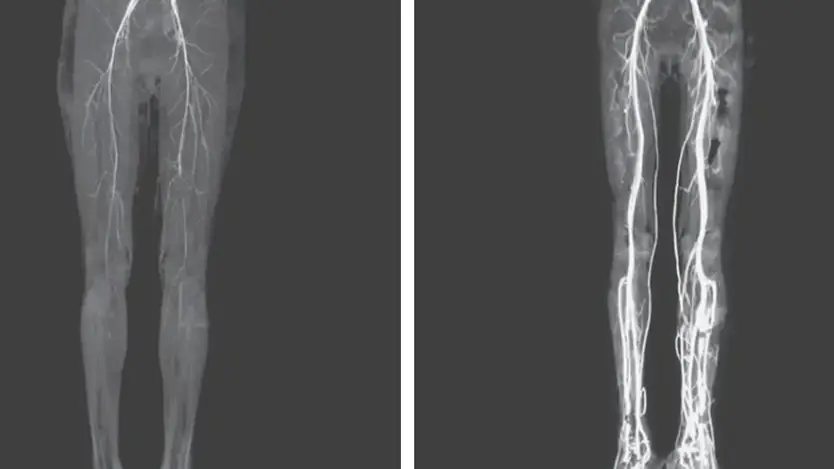
The 24-year-old began experiencing strong burning sensations coming from both of her legs, running from the middle of her thighs all the way down to her toes, and two days after the pain began she checked herself into an outpatient clinic.
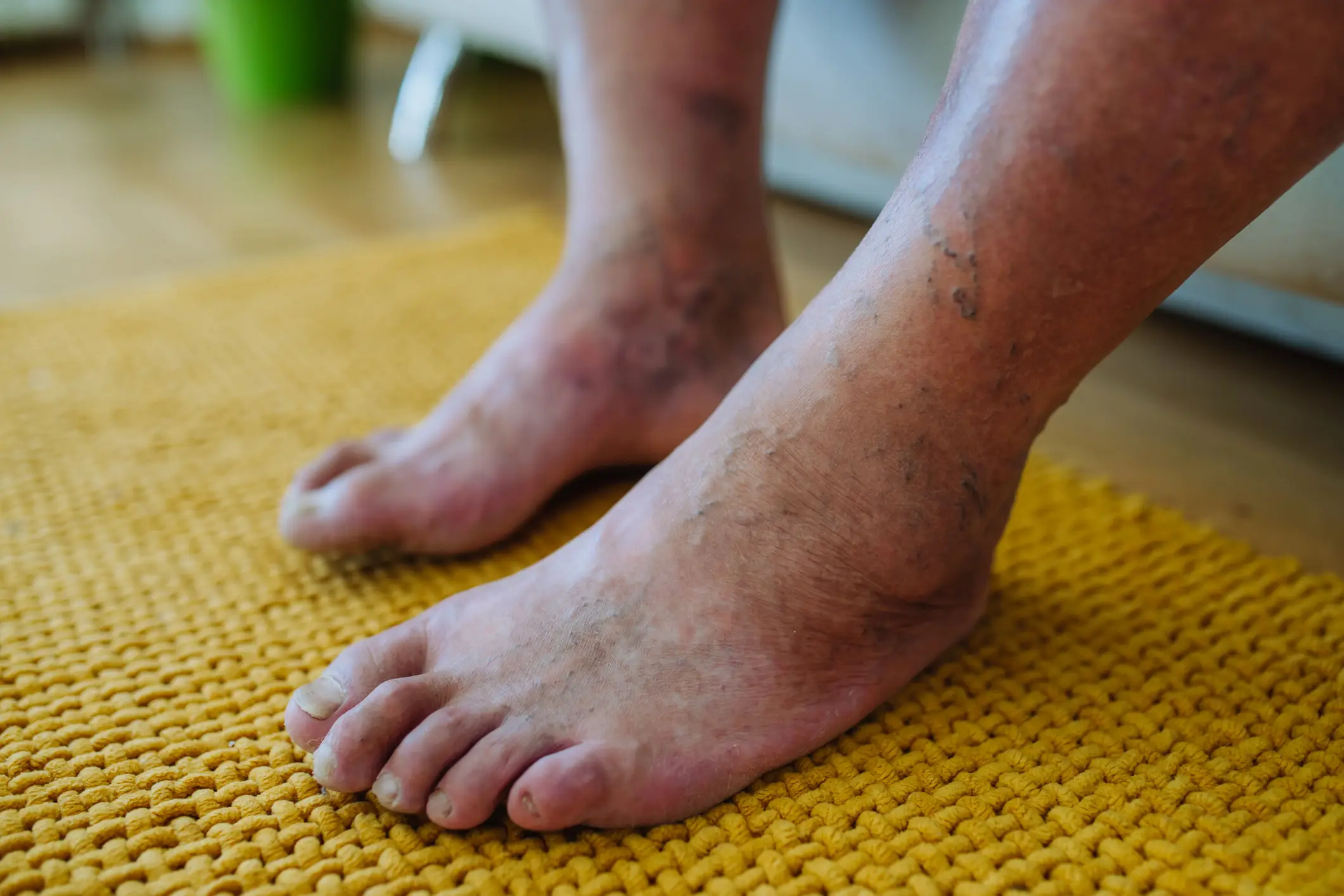
The woman's feet became discolored and cold to touch (Getty stock)

When doctors looked her over, they noticed how her feet had become discolored, while she was noticeably finding it difficult to walk. Upon further examination they realized her legs were cold - despite complaints that they were burning - and they couldn't find a pulse coming from the popliteal and dorsalis pedis arteries.

Advert

A CT (computed tomography) scan uncovered that her arteries had narrowed, and after a simple blood thinner drug was administered the pain was alleviated greatly, and her legs began to get warmer as the blood flowed through her legs.

However, gangrene took over one of her toes which meant it required amputating.

So what was the ancient 'holy fire' disease she was diagnosed with?

It's called ergotism and it is caused by the consumption of egot, which is a natural fungus that lives on wheat.
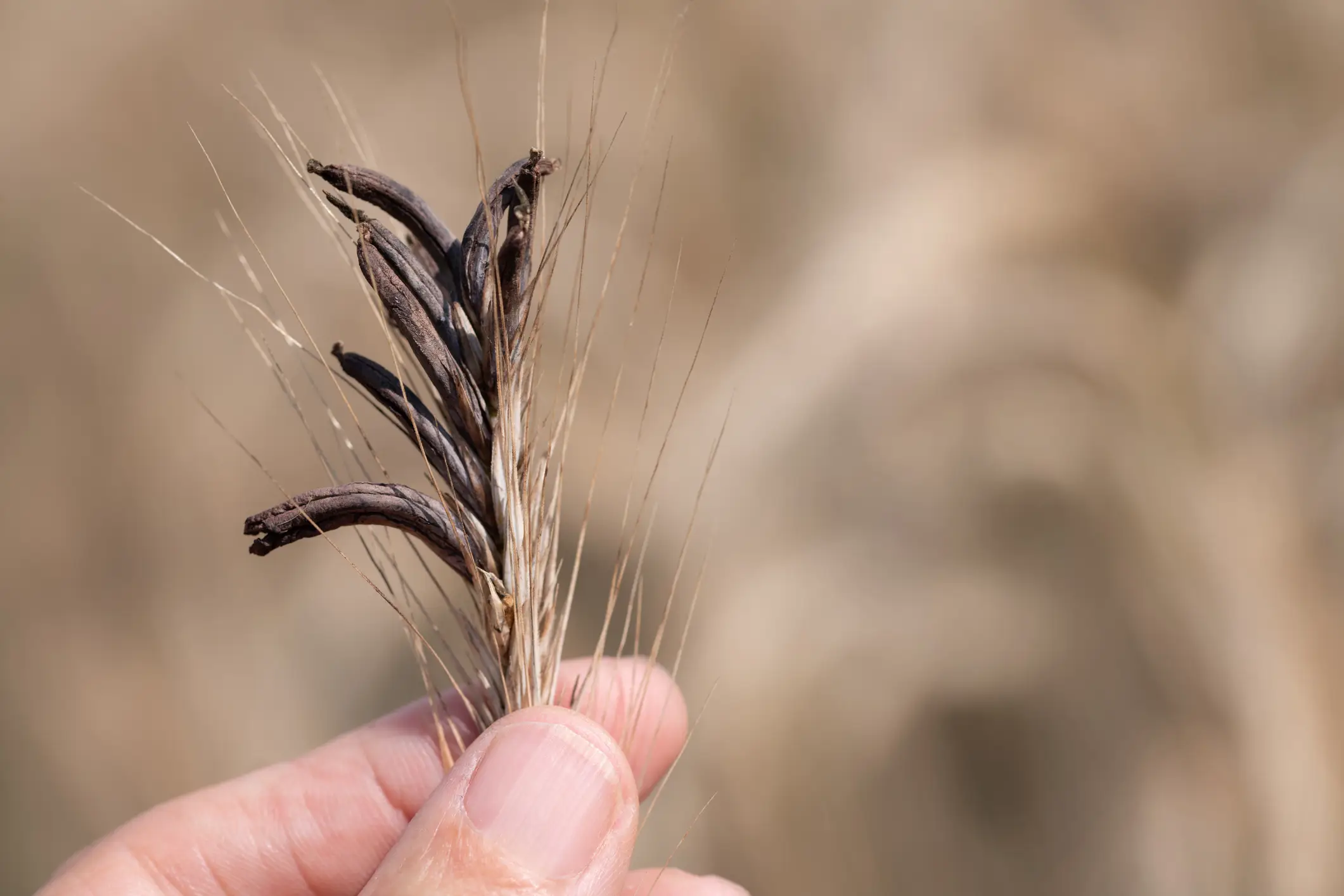
A ripe ear of grain containing the dark, and poisonous, ergot growing on it (Getty stock)

Ergot poisoining causes convulsions, hallucinations and gangrene, and in medieval times people even thought it was associated with demons or demonic possession of humans.

A study that was published in the National Library of Medicine, and titled 'One holy man, one eponym, three distinct diseases. St. Anthony’s fire revisited', talks through its history.

"The first mention to a gangrenous ergotism plague in Europe appeared in the year 857, in Germany. Several other records of epidemics then emerged in France, Germany and Scandinavia," it explains.

"Overall, as many as 83 ergotism epidemics have been reported in various parts of Europe from 945 AD onwards, and this list is certainly incomplete.
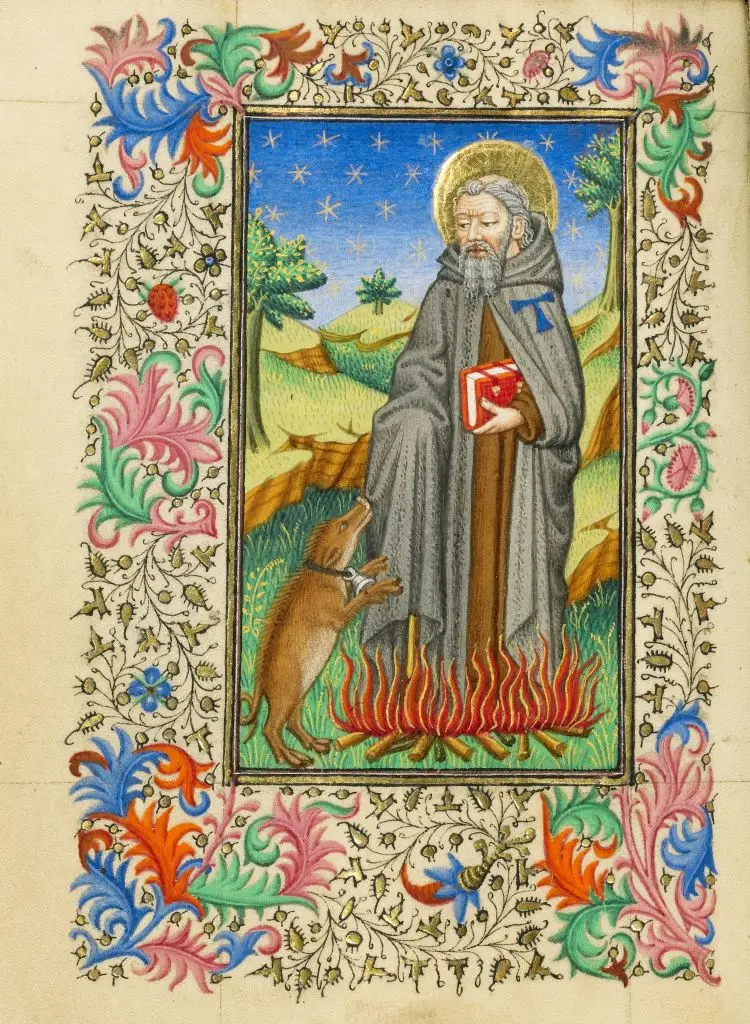
St Anthony Abbot is credited with assisting in a number of miraculous healings, primarily from ergotism, which became known as 'St. Anthony's Fire' (Heritage Art/Heritage Images via Getty Images)

"The German physician Wendelin Thelius, who described an epidemic developed in the year 1596 in the Kingdom of Hesse, was the very first to identify ergotism as the underlying cause."

It wasn't until 1676 that the cause was discovered to be that of infected rye by Claviceps Purpurea, which is an ergot fungus, although it wasn't until 1778 that measures were first introduced to combat the plague.

The study added: "French physician Tessier observed a huge epidemic in the year 1778 in Sologne (France), during which more than 8000 people died, and was hence persuaded to recommend drainage of fields, compulsory cleaning of grain and replacement of infected grain with potatoes."

Featured Image Credit: The New England Journal of Medicine
Joe Yates
Joe Yates

Joe is a journalist for UNILAD, who particularly enjoys writing about crime. He has worked in journalism for five years, and has covered everything from murder trials to celeb news.

X

@JMYjourno

Advert

Advert

Advert

Choose your content:

an hour ago
2 hours ago
  • Getty Stock Photo
    an hour ago

    Hospice nurse reveals exactly what dying patients see seconds before they die

    The nurse was asked a range of questions about end of life care

    News
  • Stephanie Augello/Variety via Getty Images
    2 hours ago

    Whoopi Goldberg, 70, explains why she can't afford to retire yet

    The View host has been in the spotlight for decades

    Celebrity
  • Getty Stock Photo
    2 hours ago

    Name for generation of babies born in 2026 revealed

    Those born in 2026 will reportedly have a new name

    News
  • Amy Sussman/Getty Images for Vanity Fair
    2 hours ago

    Saltburn star Barry Keoghan heartbreakingly opens up on 'online abuse' about his appearance

    Barry Keoghan is taking a step back from acting

    Celebrity
  • Woman diagnosed with 1 in 1,000,000,000 cancer after experiencing 'UTI symptom'
  • Woman, 26, diagnosed with rare cancer after infrequent pain that she ‘didn’t think much about’
  • Woman claims she 'contracted incurable disease at karaoke bar after holding mic too close to her face'
  • Woman who has visited more than 30 countries reveals place she felt most unsafe