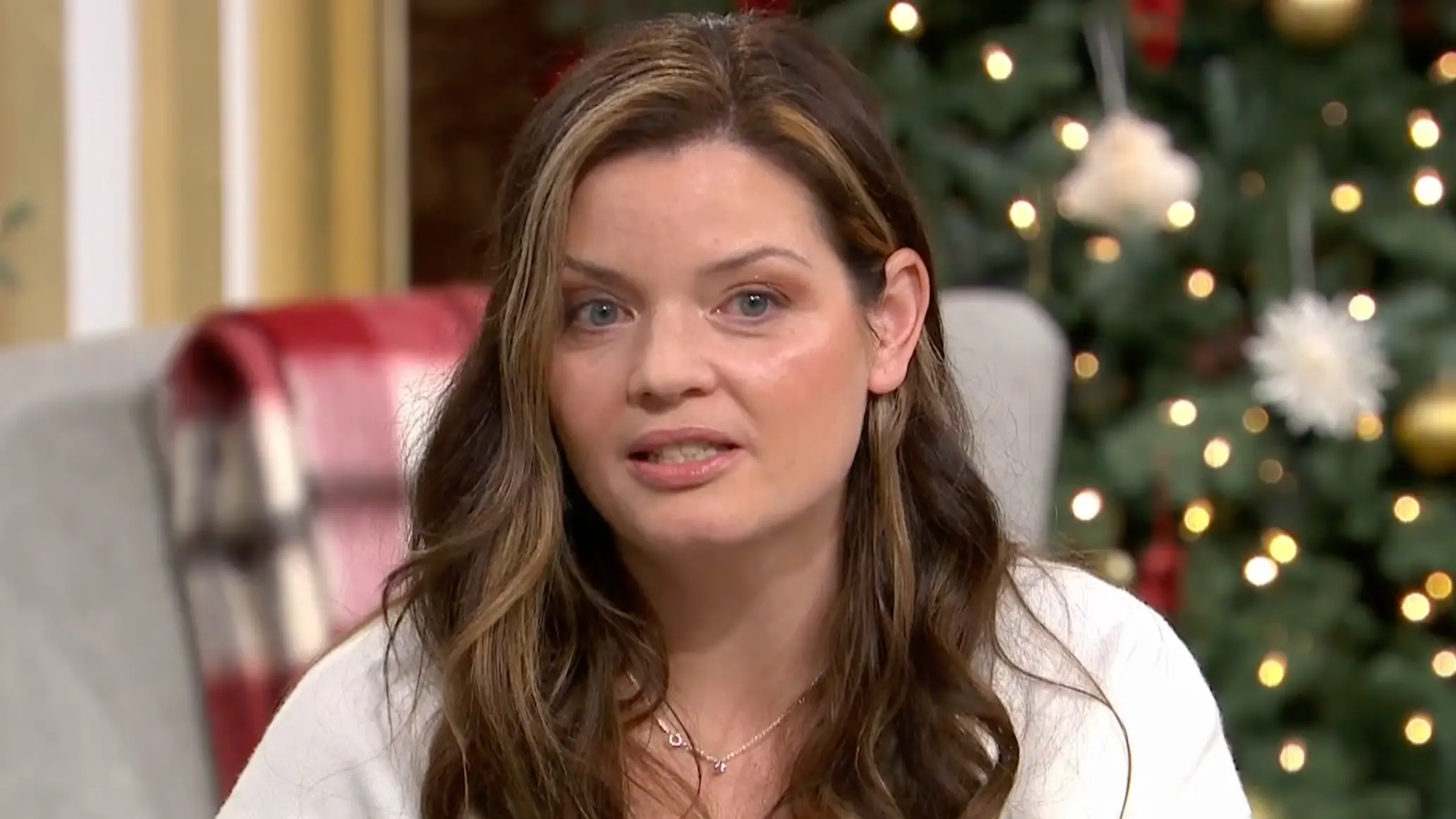
Woman who's 'allergic to winter' reveals painful symptoms of rare condition

A British woman who has been dealing with a rare chronic skin condition that essentially renders her ‘allergic to winter’ for the last ten months has revealed her symptoms.
In February, 41-year-old Kirsten Evans experienced a massive amount of ‘pain’ after dropping her kids off at school.
Soon, she noticed hives appearing across her body, which she initially put down to stress and anxiety about returning to work following her nine-month maternity leave.
After six weeks of her face, neck, and stomach constantly flaring up, and feeling like she was ‘on fire’, Evans spoke to her doctor, who quickly sent her to see an allergist.
Advert
Soon, her strange skin experience was given a name: cold-induced urticaria (CU).
The Cleveland Clinic describes CU as an allergic reaction to cold temperatures.

The reaction occurs when cold stimuli cause mast cells in the skin to release histamine and other inflammatory mediators, as per Anaphylaxis UK.
It can be triggered by eating or drinking something cold, swimming in tepid waters, or just walking around outdoors.
Even though the skin disorder is sometimes inherited, CU can affect anyone, even if there is no family history of the disease.
It’s often linked to other health conditions, such as blood cancer, syphilis, autoimmune disorders and viral infections, such as mononucleosis or chickenpox.
According to the American Academy of Allergy, Asthma, and Immunology (AAAAI), CU is present in approximately six out of 10,000 people.
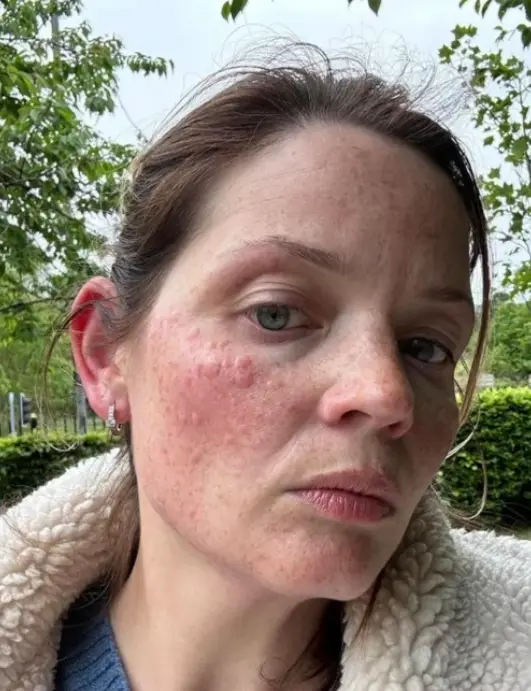
As Evans explained during her appearance on ITV’s This Morning, CU’s main symptom is a skin rash.
This can manifest as hives, bumps, or welts, and can be extremely itchy, red, and swollen.
Other symptoms that go hand-and-hand with the disorder include fatigue, fever, joint pain, and headaches.
People who suffer from a severe case of CU may experience heart palpitations, shortness of breath and fainting.
To combat her skin disorder, Evans admitted she has to have four anti-histamine tablets per day.
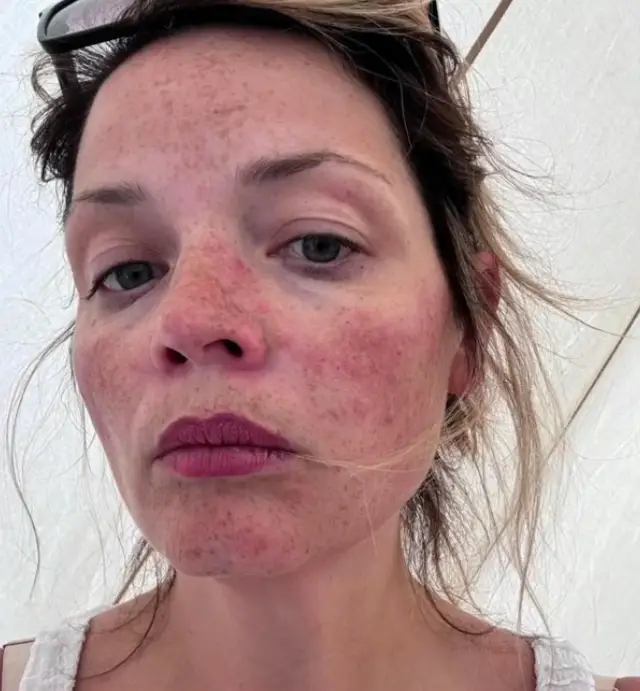
However, the mom-of-three admitted to TV hosts Dermot O’Leary and Olivia Attwood-Dack that the medication only keeps her symptoms ‘at bay to a degree’.
“Last week I had my four anti-histamines and I still flared up toward the end of the afternoon,” she confessed.
“So it’s long exposure for me. Short exposure [the tablets] seem to work but long exposure I don’t think it’s really effective.”
The Cleveland Clinic stated that there are other forms of CU treatments, including epinephrine injections, which may slow severe allergic reactions, the omalizumab injection, and antibiotics.
Desentization may also work. This would see the sufferer exposing their body to increasingly cold temperatures over a certain amount of time.
“Desensitization may help your body adjust and control its reactions to cold,” experts claimed. “But don’t try it without talking to a healthcare provider first.”
 Ella Scott