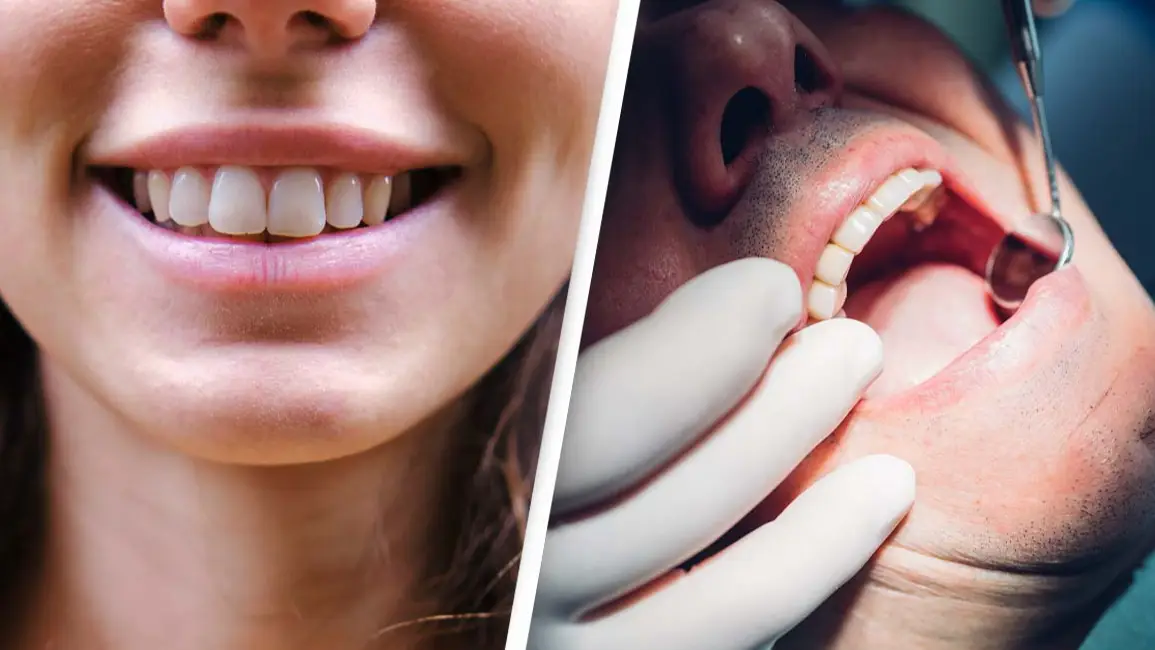
Scientists reveal the 'real reason' why people have crooked teeth and why that wasn't always the case

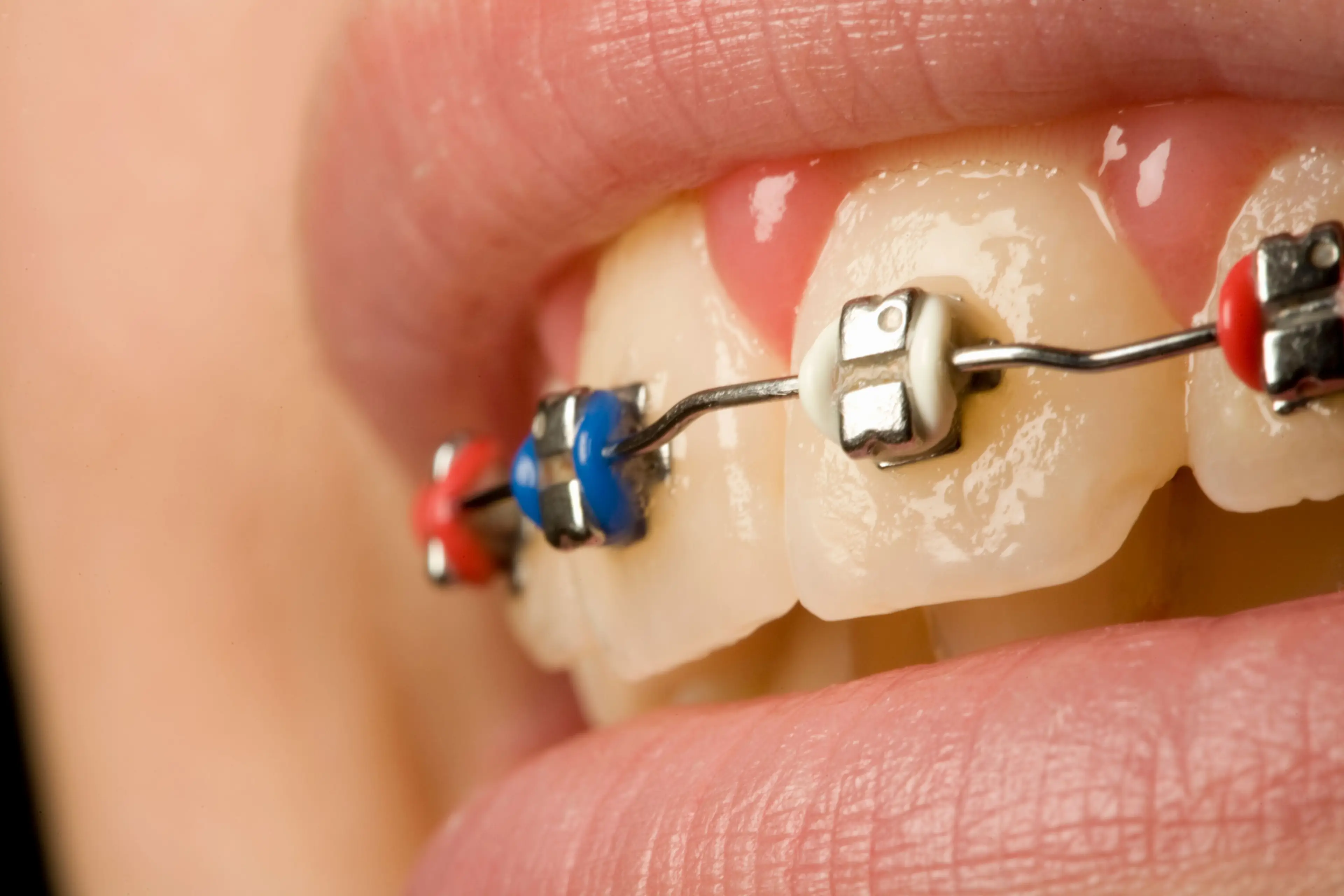
Wearing braces to realign your teeth is pretty common in the modern age, but scientists claim our ancestors once boasted perfectly straight pearly whites.
According to the American Association of Orthodontics (AAO), around 3.5 million Americans will wear braces at some point in their lives.
But did you know that before modern braces were invented in 1819, our ancestors simply had no need for them?
Advert
In fact, according to the fossil record and Ted Educator G. Richard Scott, ancient humans usually had perfectly straight teeth, complete with a set of third molars.
So what changed? Well, agricultural developments such as cooking, farming and milling took the stress off our mouths and relieved them of their pulverising duties.
Therefore, the more humans began to rely on technological innovations and agriculture, the weaker our jaws would become.
Scott claims that as technology advanced, tooth crookedness and smaller jaws became more common in humans and our ancestors.
“Over a relatively short period, some human populations saw a decrease in jaw bone size while teeth stayed roughly the same size,” he explained to TED-Ed. “Meaning they’re left vying for limited space.”
Scientists from the University College Dublin put this same theory to the test in 2015.
At the time of the study, published in PLOS One, the experts analyzed the lower jaws of 292 archaeological skeletons from the Levant, Anatolia and Europe.
From these skulls, aged between 28,000-6,000 years old, researchers discovered a positive correlation between jaw size decrease and the emergence of agriculture.
Speaking about the findings at the time, Professor Ron Pinhasi from the School of Archaeology and Earth Institute, University College Dublin said: “Our analysis shows that the lower jaws of the world's earliest farmers in the Levant, are not simply smaller versions of those of the predecessor hunter-gatherers, but that the lower jaw underwent a complex series of shape changes commensurate with the transition to agriculture,.
"Our findings show that the hunter gatherer populations have an almost ‘perfect harmony’ between their lower jaws and teeth," he continued. "But this harmony begins to fade when you examine the lower jaws and teeth of the earliest farmers".

This hypothesis was proved further in 2014 when a study, published in Proceedings of the National Academy of Sciences, suggested that human bones became weaker when humans began readily adopting agriculture.
“Modern human skeletons have shifted quite recently towards lighter—more fragile, if you like—bodies. It started when we adopted agriculture. Our diets changed. Our levels of activity changed,” said Habiba Chirchir, an anthropologist in the Smithsonian’s Human Origins Program.
Topics: History, Science, Technology, Food and Drink
 Ella Scott