
Identical twins who went on fasting vs non-fasting diets reveal how it impacted their biological age

A set of identical twins who went on separate diets, one fasting and one not, have revealed how it impacted their biological age after 12 weeks.
Ross and Hugo Turner are know for carrying out tests that show how separate diets impact their bodies.
Arguably, one thing they're best known for is when they carried out a study where Hugo ate a vegan diet while Ross stuck to a diet that included meat, dairy and fish.
One key finding from the study was that Hugo's cholesterol levels dropped ‘off the scale' and he lost weight, meanwhile Ross put on both weight and muscle.
Advert
Ross and Hugo have also been on separate carb and fat diets where one twin mainly ate carbs for 12 weeks, while the other twin had a high fat diet.

Last year, the Turner twins tasked UNILAD readers with choosing their next diet focused challenge, and it was decided that Hugo and Ross would try fasting vs eating a normal diet.
The brothers, who document their experiments and challenges on their Instagram page 'The Turner Twins', have now carried out the test over a 12-week period and the results are in.
As part of the experiment, Ross (who followed a normal diet plan) and Hugo (who fasted) wanted to see how their respective diets would affect the biological age — something which the likes of Bryan Johnson is obsessed with.
As part of Ross' diet, he ate for 16 hours a day and fasted for eight while sleeping. Hugo did the opposite and fasted for 16 hours a day and only ate for eight.
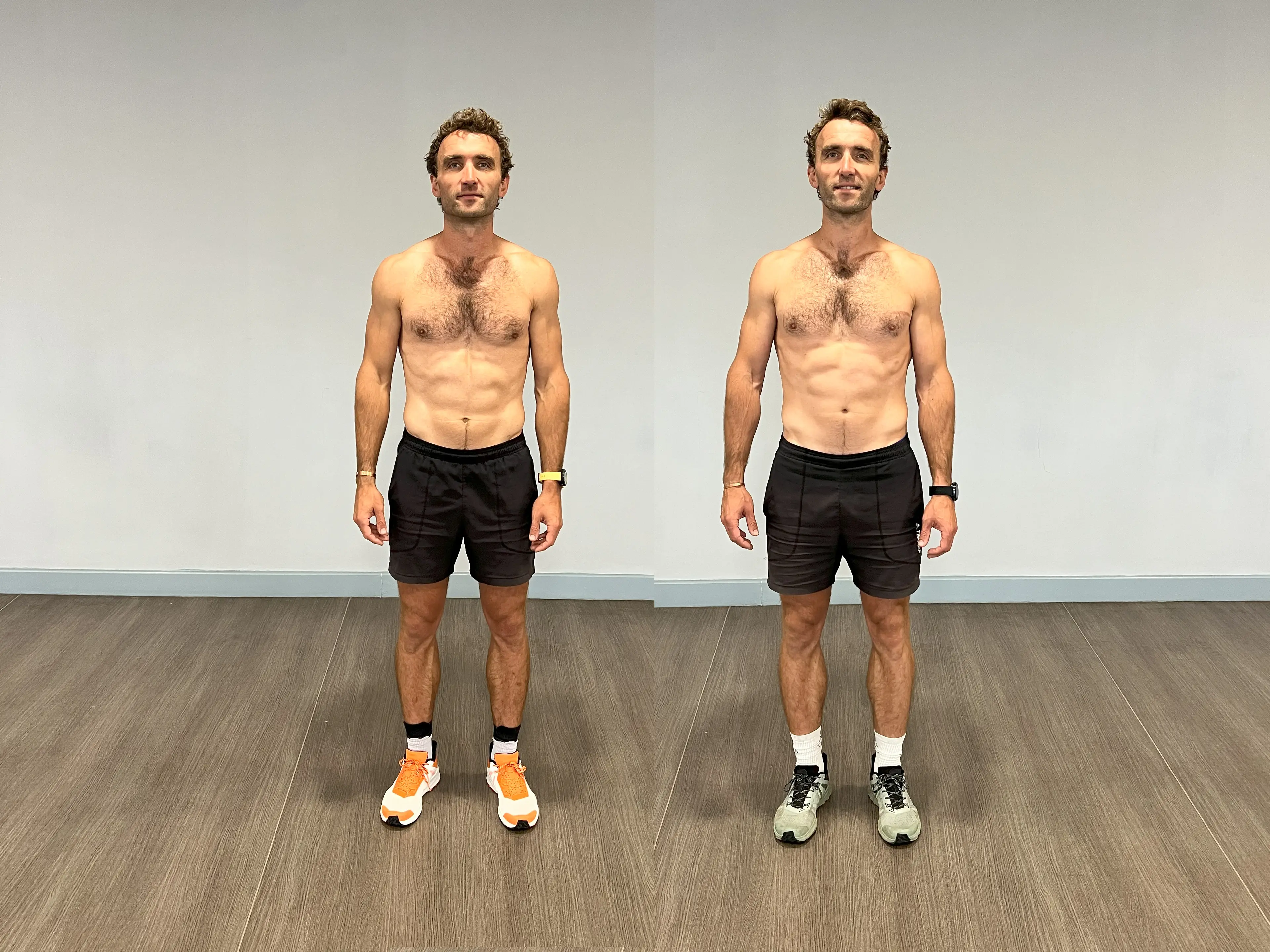
Both Ross and Hugo were 36 years old at the time of the age tests. While they're identical twins, their initial test results found that their biological ages differed: Ross' was 33 while Hugo was 27.
But how did their biological ages change after their 12 week diet challenge?
After 12 weeks of eating for 16 hours a day and fasting for only eight, Ross' biological age dropped to 30. Meanwhile, three months of fasting caused Hugo's to drop to 25. Impressive!
They used GlycanAge to work their biological ages out. This test measures inflammaging (chronic, low-grade, systemic inflammation that increases with age).
"A lower biological age compared to chronological age may indicate a reduced risk of age-related diseases and a healthier aging trajectory," the twins' test results explained.
"Conversely, a higher biological age may suggest accelerated aging and increased susceptibility to chronic conditions."
According to GlycanAge, people who have a biological age that's lower than their real age are likely to have an optimized lifestyle (better quality sleep, a suitable exercise routine etc), a genetic advantage, and may be experiencing the effects of mediations such as HRT.
In contrast, people who find that their biological ages are higher may have poor health, poor diet, poor stress management, and have a family history of chronic diseases.
Topics: Health, Food and Drink, Science, News, Life
 Niamh Shackleton