
unilad homepage
  • News
    • UK News
    • US News
    • World News
    • Crime
    • Health
    • Money
    • Sport
    • Travel
  • Film and TV
    • Netflix
  • Music
  • Tech
  • Features
  • Celebrity
  • Politics
  • Advertise
  • Terms
  • Privacy & Cookies
  • LADbible Group
  • LADbible
  • SPORTbible
  • GAMINGbible
  • Tyla
  • UNILAD Tech
  • FOODbible
  • License Our Content
  • About Us & Contact
  • Jobs
  • Latest
  • Archive
  • Topics A-Z
  • Authors
Facebook
Instagram
X
Threads
TikTok
YouTube
Submit Your Content
Scientists reveal worrying link if you have regular nightmares

Home> News> Health

Published 17:46 12 Nov 2024 GMT

Scientists reveal worrying link if you have regular nightmares

Add this to the list of worries that will be keeping me awake at night...

Ellie Kemp

Ellie Kemp

google discoverFollow us on Google Discover
Featured Image Credit: Marina Tertletska/Getty Images/LaylaBird/Getty Images

Topics: Health, Science, Sleep

Ellie Kemp
Ellie Kemp

Ellie joined UNILAD in 2024, specialising in SEO and trending content. She moved from Reach PLC where she worked as a senior journalist at the UK’s largest regional news title, the Manchester Evening News. She also covered TV and entertainment for national brands including the Mirror, Star and Express. In her spare time, Ellie enjoys watching true crime documentaries and curating the perfect Spotify playlist.

X

@EllieKempOnline

Advert

Advert

Advert

Whether you can nod off anywhere or you toss and turn all night, sleep plays a major part in our health.

It's common knowledge that we need around seven to nine hours a night, and not getting enough can be bad for us.

The average person spends a third of their lives asleep - yet, some of us still bolt awake at 3am for seemingly no reason.

Six years of that precious sleep time is spent dreaming.

Advert

While exactly how and why we dream is unclear, one study has suggested that having nightmares could be linked to a common brain syndrome.
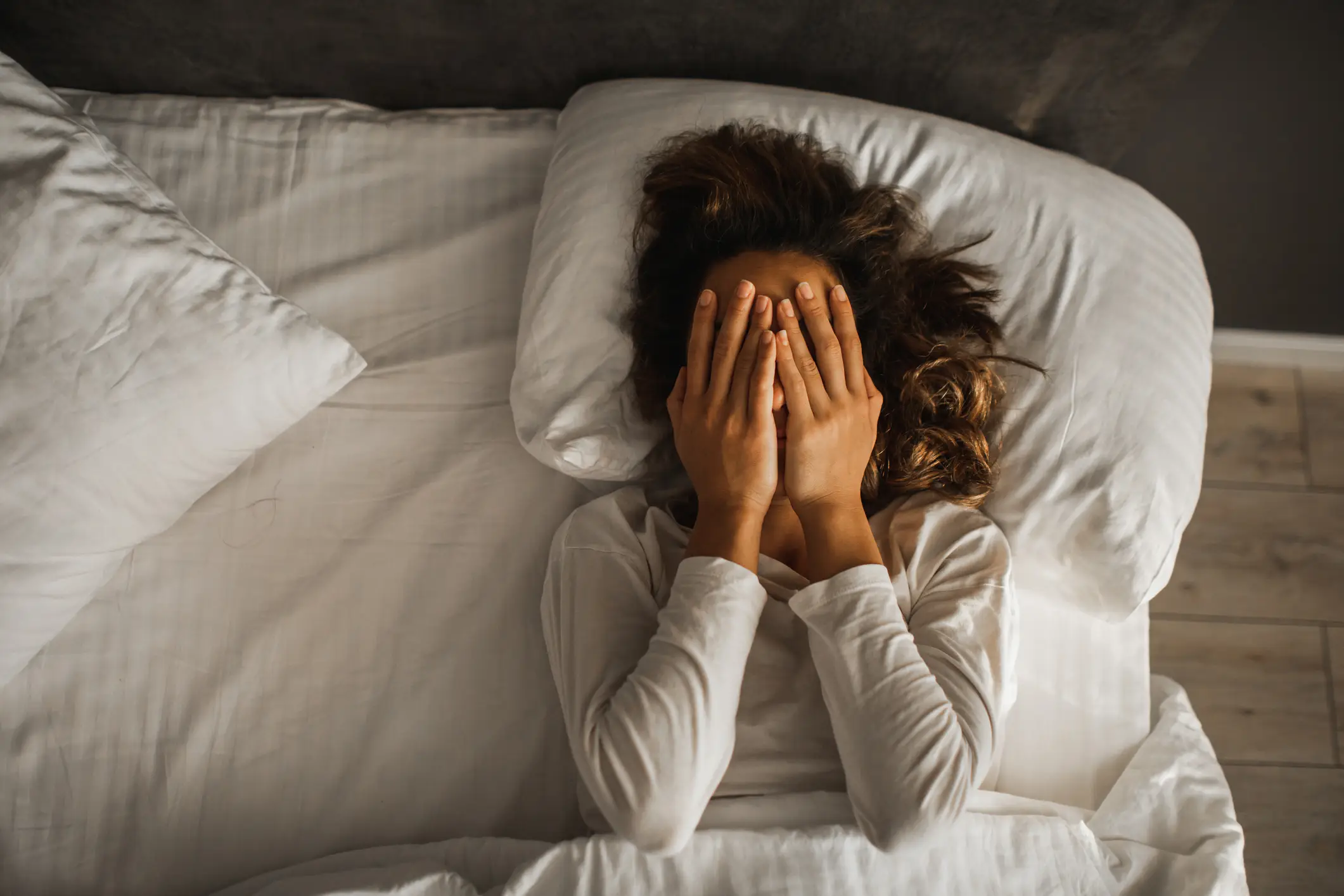
Bad dreams could be more problematic than we imagined (Oleg Breslavtev/Getty Images)

Abidemi Otaiku, an NIHR Academic Clinical Fellow in Neurology at the University of Birmingham, shared the surprising findings from his 2022 study.

Published in The Lancet's eClinicalMedicine journal, the study showed having 'frequent bad dreams and nightmares' that wake you up during middle age or older may be linked with an increased risk of developing dementia.

Dementia is a term for several diseases that affect memory, thinking, and the ability to perform daily activities.

Three large US studies of health and aging, made up of thousands of people, were analyzed. They were followed for between five and nine years depending on their age.

Otaiku analyzed the data to find out whether 'participants with a higher frequency of nightmares at the beginning of the study were more likely to go on to experience cognitive decline and be diagnosed with dementia'.

The study suggested nightmares could be a cause of dementia (Tech Images/Science Photo Library)

The study found that middle-aged participants who experienced nightmares every week were four times more likely to experience cognitive decline, which can lead to dementia.

Older participants were twice as likely to be diagnosed with dementia.

The connection between nightmares and future dementia was also a lot stronger for men than for women. Older men who had nightmares every week were five times more likely to develop dementia, compared with older men reporting no bad dreams.

But in women, the increase in risk was only 41 percent.

Otaiku wrote: "Overall, these results suggest frequent nightmares may be one of the earliest signs of dementia, which can precede the development of memory and thinking problems by several years or even decades – especially in men.

"Alternatively, it is also possible that having regular bad dreams and nightmares might even be a cause of dementia.

"Given the nature of this study, it is not possible to be certain which of these theories is correct (though I suspect it is the former)."

I guess that's one more worry that might keep you up at night...

Choose your content:

3 hours ago
5 hours ago
6 hours ago
  • Aeon/GC Images
    3 hours ago

    Meryl Streep makes rare comment as she jokes about her relationship with her six grandchildren

    The BAFTA Award-winning actress is 'incredibly involved' in her grandchildren's lives

    Celebrity
  • Photo by Jamie McCarthy/Getty Images for Elton John AIDS Foundation
    3 hours ago

    Caitlyn Jenner alleges late friend Sophia Hutchins owed her almost half a million dollars

    Hutchins was only 29 when she died last year in an ATV crash

    Celebrity
  • David M. Benett/Dave Benett/WireImage/Getty Images
    5 hours ago

    Sienna Miller recalls filming 'nine-hour' sex scene with Ben Affleck which left her 'shaking with tears running down her face'

    Sienna Miller starred in the 2017 movie Live By Night alongside Ben Affleck

    Film & TV
  • Denise Truscello/WireImage/Getty Images
    6 hours ago

    Former Playboy Bunny Kendra Wilkinson reveals Hugh Hefner's 'gross' dog poo habit

    Wilkinson opened up about one habit that Hefner had when it came to dog mess in the Playboy Mansion

    Celebrity
  • Microbiologist reveals how often you should really wash you sheets and what happens if you don't
  • Scientists reveal what happens to your body if you get less than 6 hours of sleep at night
  • Scientists reveal the reason why you have better sleep after having sex after conducting new study
  • Scientists discover worrying link between Ozempic-like drugs and mental health