Experts issue warning about drinking on a plane and the unwanted side effects you'll experience

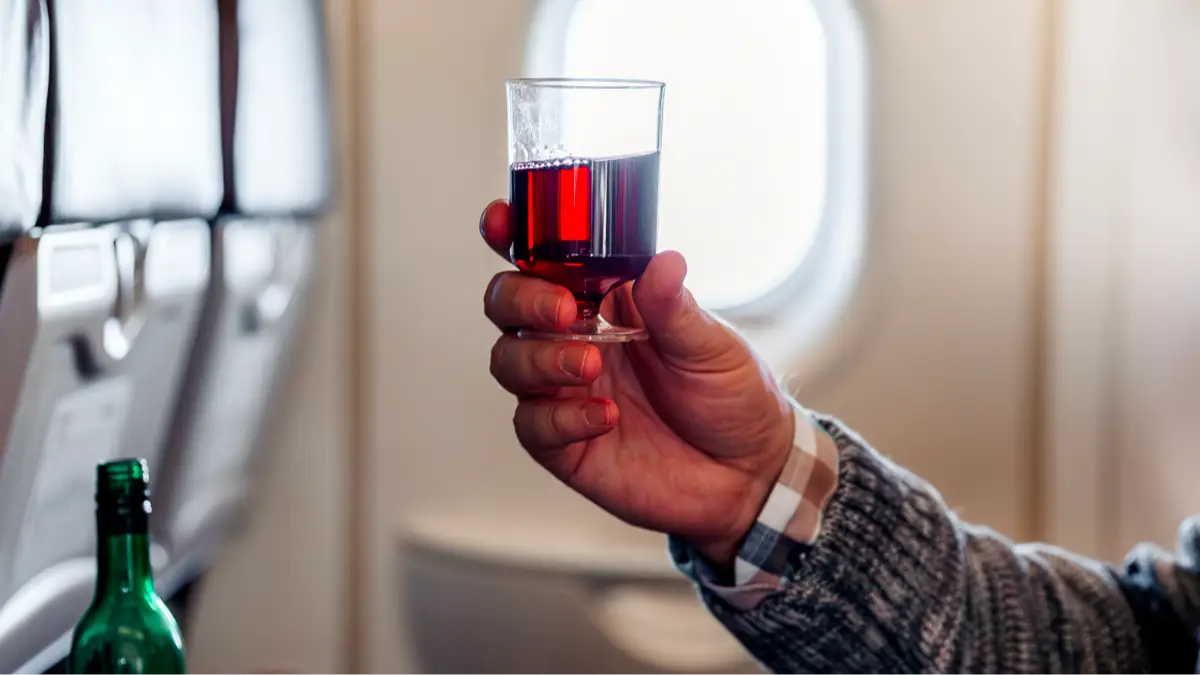
It's not unusual for plane passengers to enjoy an alcoholic beverage while passing the time on a flight, but experts have explained why drinks might hit you harder up in the air and leave you feeling even worse when you land.
Whether you're drinking to celebrate your vacation or to help ease a fear of flying, lots of adults eagerly await the arrival of the drinks cart to their row while on a plane journey.
Many people are even willing to spend their hard-earned cash to enjoy a wine or beer in the sky, but varying factors of plane travel can mean that drinking alcohol on board isn't so fun in the long run.
Various experts have shared their insights on the subject, explaining how everything from humidity to flight time might worsen the effects of alcohol.
Advert
Dehydration
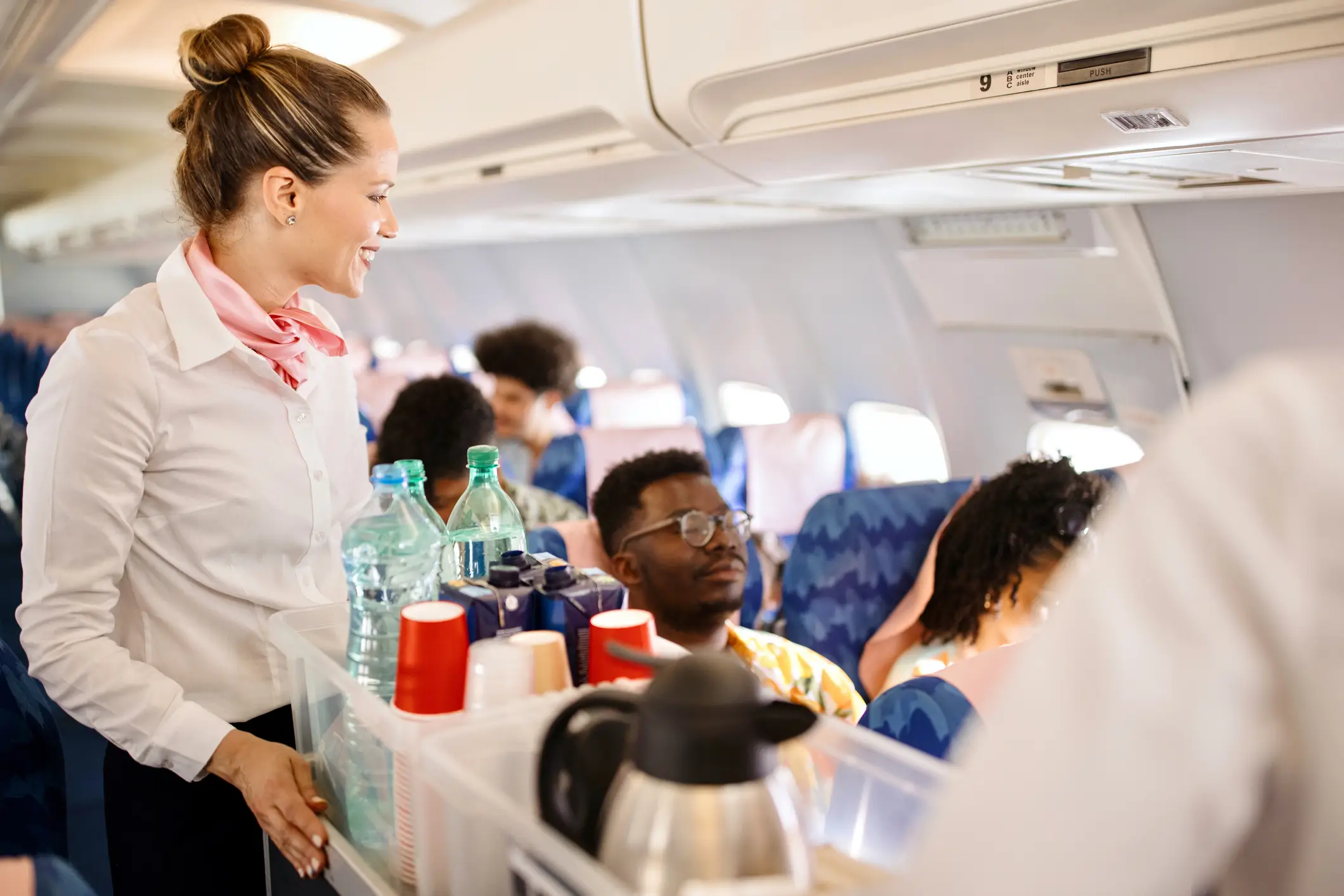
While you might be guzzling down drinks, alcohol does ultimately act as a diuretic, meaning your kidneys flush out more fluids than usual, and you have to pee more often.
I don't need to tell you how inconvenient it can be to try to get to the plane bathroom when you're in the window seat, but that's not the only reason you might want to avoid drinking on planes.
Speaking to SELF, Sanjay Kurani, MD, medical director of inpatient medicine at Santa Clara Valley Medical Center, explained that increased urination can lead to dehydration, which in turn can result in fatigue and headaches.
These are symptoms you might also experience while drinking on the ground, but New York dermatologist Joshua Zeichner, MD, noted that lower humidity levels on board planes mean that your body is already more dried out than usual, so drinking only adds to the problem.
As a result, you might experience symptoms like a dry mouth, chapped lips and dry eyes.
Lightheadedness
With plane cabins typically having a relatively low air pressure, passengers won't get as much oxygen into their blood and into their brains. This can result in lightheadedness, which, combined with dehydration, can result in you feeling the effects of alcohol more quickly and more intensely.
So, while it might not cost you quite as much to get drunk, you might find yourself feeling worse after just a couple of drinks, when you might have otherwise expected to just be a bit tipsy.
Grogginess
Plane travel can often leave passengers feeling a bit gross, especially if it's an overnight flight. However, alcohol can mess with your ability to get restorative REM sleep, meaning that even if you manage to get some shut-eye on a late-night journey, you still won't feel focused when you wake up.
How to reduce the impacts of alcohol on planes
You won't be surprised to hear that the best way to prevent feeling rubbish after a drink is to avoid having one altogether. I know, I know, it's a harsh truth.
However, if you're still keen to enjoy an alcoholic beverage, there are a few ways you can mitigate the impacts, Omid Mehdizadeh, MD, an otolaryngology and head and neck surgeon at Pacific Neuroscience Institute in Santa Monica, California, told SELF.
First off, bear in mind that you don't need to drink as much on planes to feel the effects of alcohol, so limit yourself to just one or two drinks.
Try to offset the impacts of dehydration by drinking water, ideally one cup for each alcoholic drink, and try using eye drops and nasal saline spray to offset the lack of humidity.
Topics: Travel, Alcohol, Health, Food and Drink
 Emily Brown