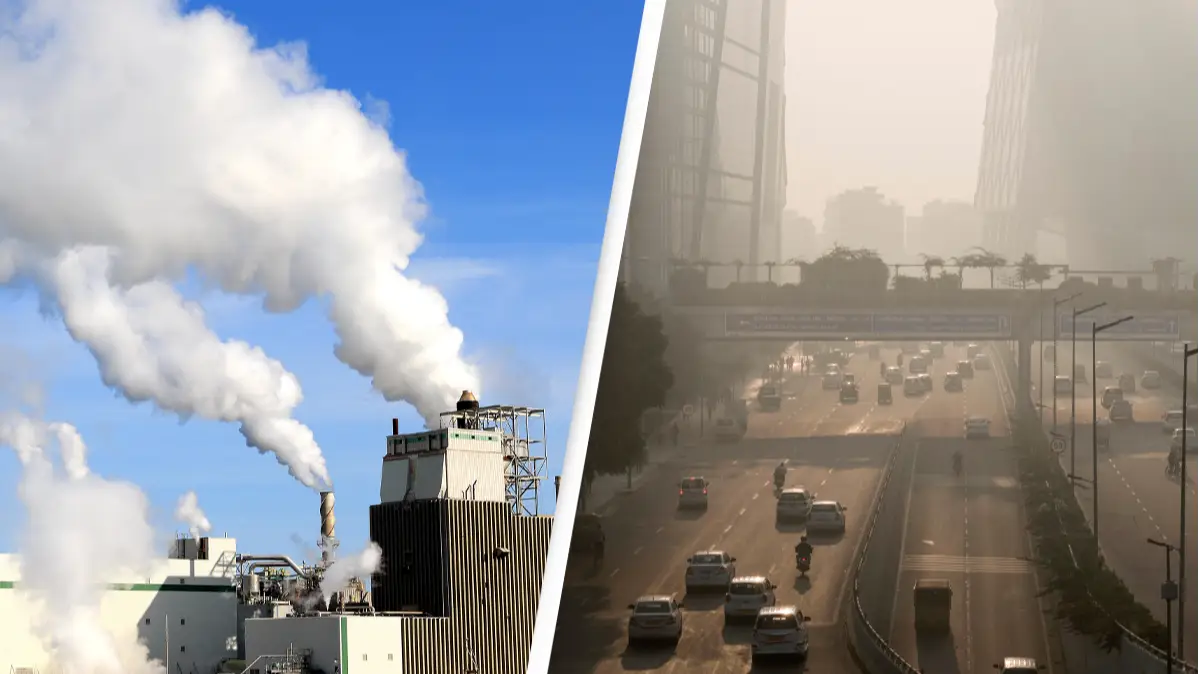
Every Single Country Failed WHO Air Quality Standards Last Year

Last year, no single country managed to pass the World Health Organization's (WHO) air quality standards.
Today, 22 March, a survey of pollution data created by Swiss pollution technology company IQAir revealed the state of each country's air quality in 2021.
Out of the 117 countries included in the survey, not one met the WHO's standard for levels of a fine particulate matter air pollutant known as PM2.5.
The current WHO guidelines state that fine particulate matter (PM2.5) should have an annual mean of 5 μg/m3 and coarse particulate matter an annual mean of 15 μg/m3, in a bid to reduce 'risks for acute and chronic health effects'.
According to IQAir, PM2.5 is 'is one of six routinely measured criteria air pollutants and is commonly accepted as the most harmful to human health due to its prevalence in the environment and broad range of health effects'. WHO lists 'acute lower respiratory infections, cardiovascular disease, chronic obstructive pulmonary disease and lung cancer' as 'air pollution-related diseases' that people could be at risk of if levels are more than the guideline values.
Advert
The guideline level of PM2.5 originally stood at 10 µg/m³ however, WHO cut this in half in September 2021 to try and prevent millions of deaths.
Out of the 6,475 cities tested only 3% met the latest guidelines and no single country managed to pass them.
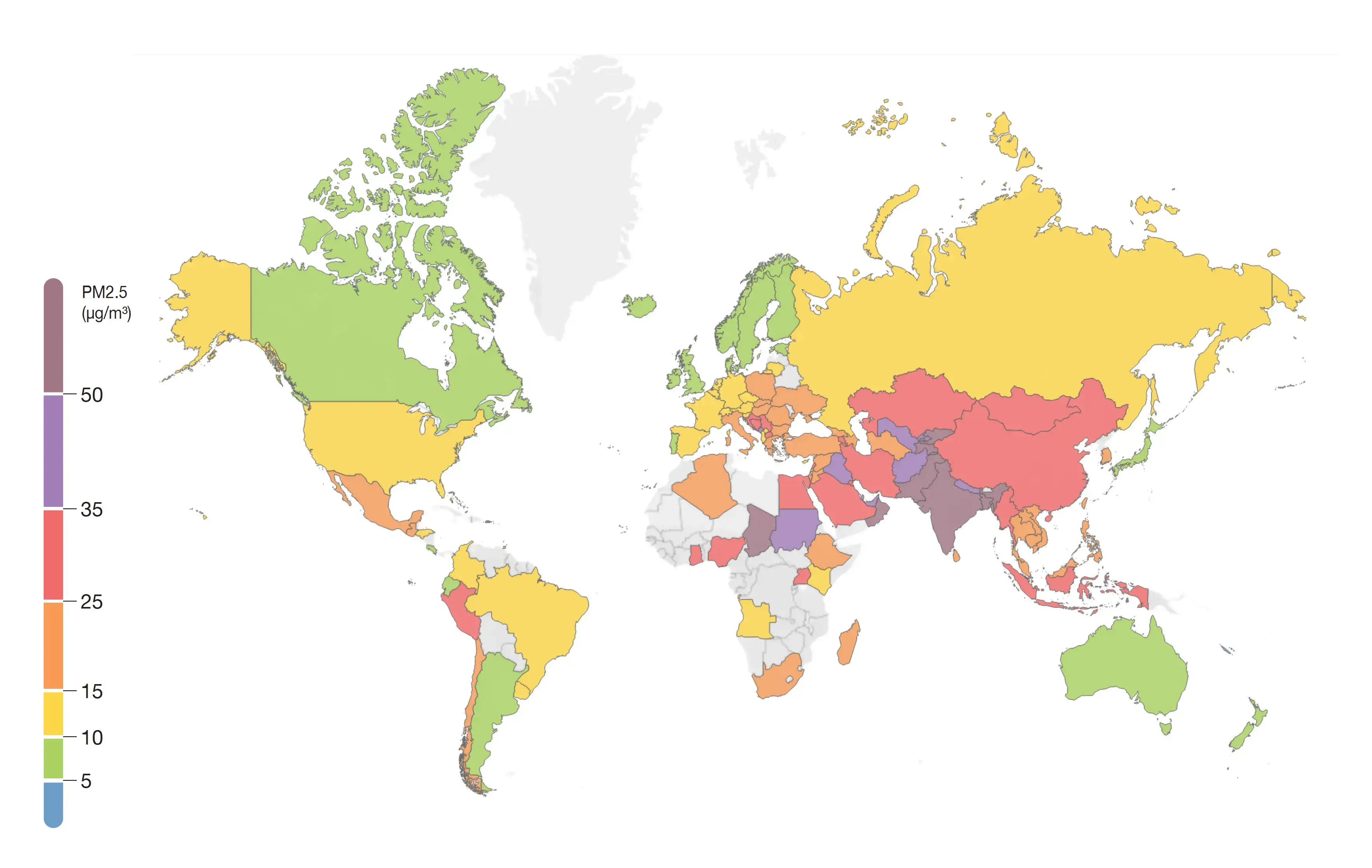
The data was collected using 'tens of thousands of regulatory and low-cost air quality monitoring stations operated by governments, non-profit organisations, research institutions, educational facilities, companies and citizen scientists' across the globe, IQAir reports.
Bangladesh came out on top for the worst levels of PM2.5, with Chad following in a close second, followed by Pakistan, Tajikistan and India.
The countries with the lowest average levels were New Caledonia, US Virgin Islands, Puerto Rico, Cape Verde, Saba and Finland.
IQAir air quality science manager Christi Schroeder reflected: "There are a lot of countries that are making big strides in reduction.
"China started with some very big numbers and they are continuing to decrease over time. But there are also places in the world where it is getting significantly worse."
IQAir reflected that air pollution is 'now considered to be the world's largest environmental health threat'.
Across the globe, air pollution accounts for seven million deaths every year and costs $8 billion (USD) daily.
Exposure to PM2.5 specifically has also been reported by researchers as increasing the risk of not only contracting but experiencing more severe symptoms and even dying from coronavirus.
Avinash Chanchal, campaign manager of Greenpeace India, concluded: "Solutions to air pollution are also solutions to the climate crisis. Breathing clean air should be a basic human right, not a privilege."
If you have a story you want to tell, send it to UNILAD via [email protected]
Topics: Environment, World News, Health
 Poppy Bilderbeck