unilad homepage
unilad homepage
    • News
      • UK News
      • US News
      • World News
      • Crime
      • Health
      • Money
      • Sport
      • Travel
    • Music
    • Technology
    • Film and TV
      • News
      • DC Comics
      • Disney
      • Marvel
      • Netflix
    • Celebrity
    • Politics
    • Advertise
    • Terms
    • Privacy & Cookies
    • LADbible Group
    • LADbible
    • SPORTbible
    • GAMINGbible
    • Tyla
    • UNILAD Tech
    • FOODbible
    • License Our Content
    • About Us & Contact
    • Jobs
    • Latest
    • Archive
    • Topics A-Z
    • Authors
    Facebook
    Instagram
    X
    Threads
    TikTok
    YouTube
    Submit Your Content
    End Of Life Expert Explains How We Feel When We Die
    Home>News
    Published 16:43 10 Jun 2022 GMT+1

    End Of Life Expert Explains How We Feel When We Die

    Dr. Kathryn Mannix worked in palliative care for 30 years

    Emily Brown

    Emily Brown

    google discoverFollow us on Google Discover
    Featured Image Credit: BBC/Alamy

    Topics: UK News, Life, BBC, Health

    Emily Brown
    Emily Brown

    Emily Brown is UNILAD Editorial Lead at LADbible Group. She first began delivering news when she was just 11 years old - with a paper route - before graduating with a BA Hons in English Language in the Media from Lancaster University. Emily joined UNILAD in 2018 to cover breaking news, trending stories and longer form features. She went on to become Community Desk Lead, commissioning and writing human interest stories from across the globe, before moving to the role of Editorial Lead. Emily now works alongside the UNILAD Editor to ensure the page delivers accurate, interesting and high quality content.

    Advert

    Advert

    Advert

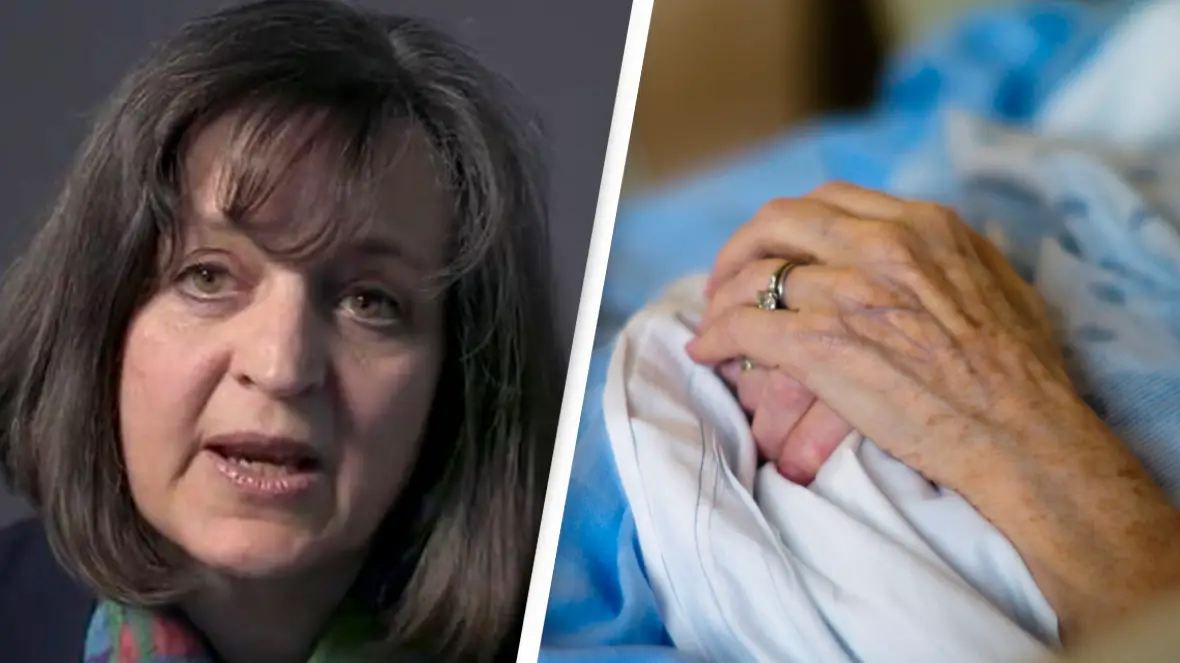
    A former palliative care doctor has assured death is 'probably not as bad as you're expecting' as she explained how we feel when we die.

    Dr. Kathryn Mannix became well versed in end-of-life care thanks to 30 years in the profession, and used her expertise to write books titled With the End in Mind and Listen.

    The doctor is an advocate for increasing conversations about dying, describing the process as the 'best kept secret in medicine' because some people consider it 'impolite' to discuss.

    Advert

    The prospect of dying is made easier for the person reaching the end of their life if everything is more upfront, Dr. Mannix believes, so in a video made for BBC Ideas she stressed it was time to 'reclaim the wisdom' of human dying.

    "In my humble opinion, dying is probably not as bad as you're expecting," Dr. Mannix said.

    The doctor likened dying to giving birth in the sense that it 'really is just a process', before explaining how people reaching the end of their life gradually 'become more tired, more weary'.

    "As time goes by people sleep more and they’re awake less," the author explained, with patients slipping in and out of consciousness and describing having a 'good sleep' in their final days.

    Though the prospect of slipping out of consciousness may sound scary, Dr. Mannix has assured it generally 'doesn't feel frightening' and can actually be quite relaxing.

    Dr. Mannix believes we should talk about dying more often.
    Shutterstock

    "We'll be so relaxed that we won't bother to clear our throats, so maybe we'll be breathing in and out through little bits of mucus or saliva at the back of our throat. It can make a rattly, funny noise," she explained.

    Some may fear the idea of so-called 'death rattle' breathing, but the doctor said this is actually a sign someone is 'deeply relaxed' and 'so deeply unconscious they are not feeling that tickle of saliva as their air bubbles in and out'.

    When it comes to the last breath, Dr. Mannix explained: "At the very end of somebody’s life there will be a period of shallow breathing and then one out breath that just isn’t followed by another in breath.

    "Sometimes it’s so gentle that families don’t even notice that it’s happened."

    'Normal human dying', for example through old age, is what Dr. Mannix described as a 'really gentle process' and something that carers can 'recognise', 'prepare for' and 'manage'.

    With that in mind, she expressed a belief it should also be something we can 'celebrate', and used to garner information we can 'console each other with'.

    If you have a story you want to tell, send it to UNILAD via [email protected]  

    Choose your content:

    an hour ago
    12 hours ago
    13 hours ago
    • Rick Friedman Photography/Corbis via Getty Images
      an hour ago

      Jeffrey Epstein's alleged suicide note released by federal judge

      Reportedly the disgraced financier tried to take his own life two weeks before he died

      News
    • Getty Stock Image
      12 hours ago

      Expert issues warning to people who sit with legs crossed and reveals what to do instead

      Hip pain isn't the only health issue the common seating position can cause

      News
    • Photo by Roberto Schmidt/Getty Images)
      13 hours ago

      Trump set to rake in millions by renaming Florida airport after himself

      The President's son Eric said there was 'no person more deserving of this incredible honor'

      News
    • The Late Show with Stephen Colbert
      13 hours ago

      Obama surprises Stephen Colbert when asked if he should run for president

      With the Democratic nomination for president lying wide open, Stephen Colbert is being told to throw his hat in the ring

      News
    • Healthy woman explained why she chose to end her life by euthanasia
    • Man diagnosed with autism at 42 explains how he was misdiagnosed by doctors for years
    • Man who ate the same meals every day for 22 years reveals the benefits it's had on his life
    • Man who died for 10 minutes reveals what it felt like when he came back to life