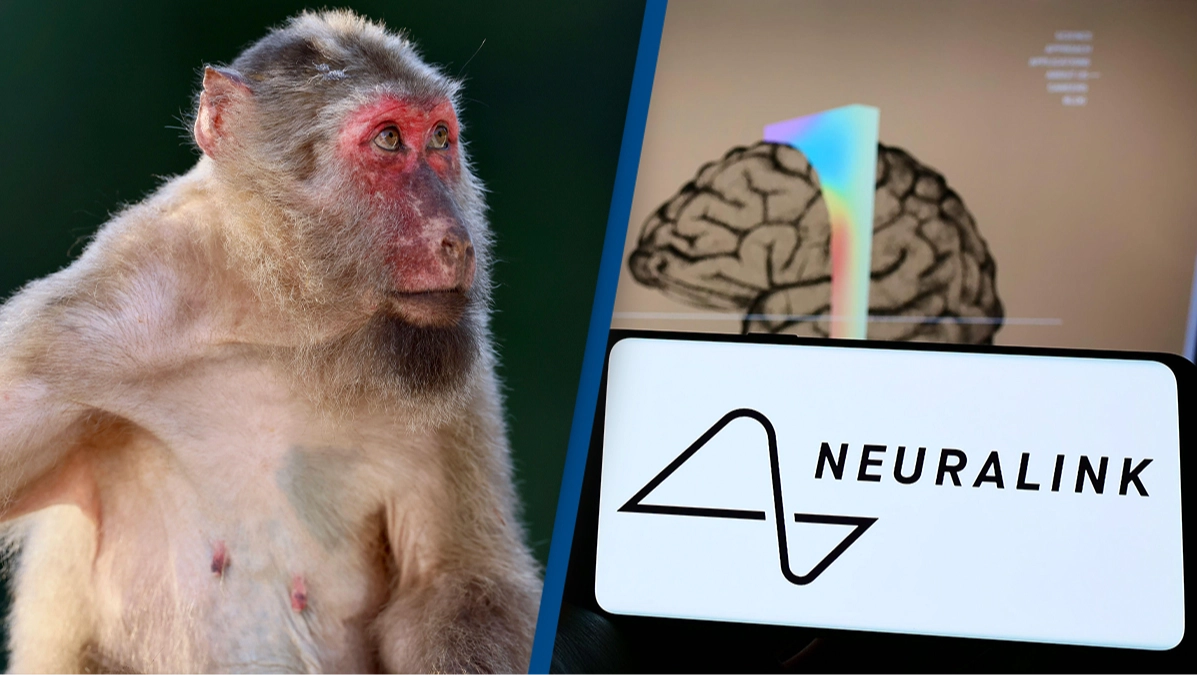
Legal battle erupts over the release of brain-hacked Neuralink monkey pics

A university in California is at the centre of a legal battle over alleged photographs showing the treatment of monkeys being used to test Elon Musk’s Neuralink brain implants.
So, first thing to mention here is that we’ve only got the word of one side of this to suggest that the photos exist.
The second thing to mention is that we neither have, nor would be likely to show these pictures to you anyway, as they sound absolutely f***ing horrid.
Anyway, according to the Physicians Committee for Responsible Medicine (PCRM), the University of California is in possession of 371 photos showing monkeys that have been experimented on in order to make Musk’s Neuralink chips, which the plan is to implant into people’s brains.
Advert
The tests have reportedly taken place at the university’s veterinary labs – which adds up – and comes after Neuralink actually admitted that five of the 23 rhesus macaque monkeys they’ve been using for experiments had died.
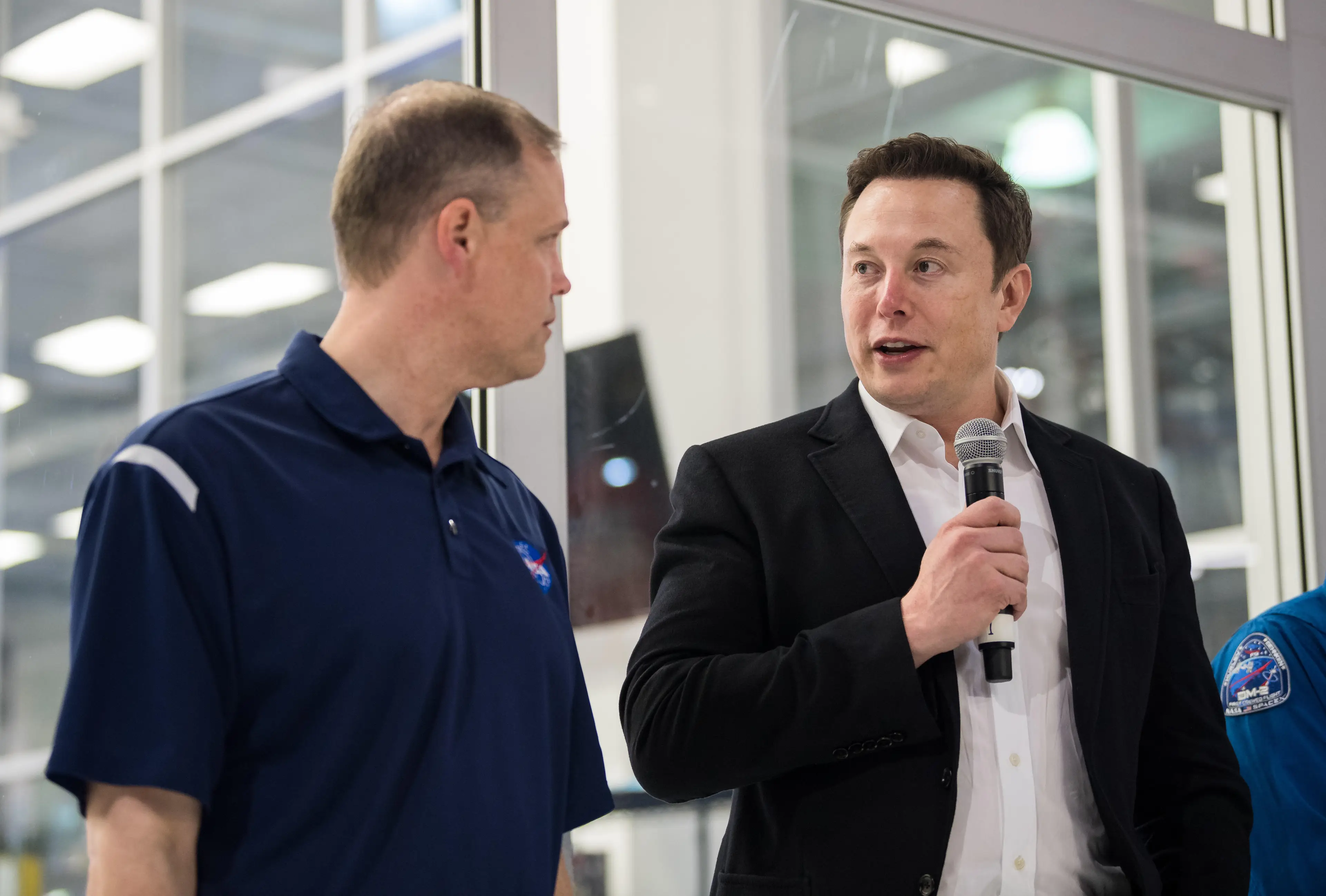
That’s because they had to be euthanised after developing infections or malfunctions of whatever they are being tested with.
PCRM has actually filed a complaint against Neuralink recently, calling what they’re doing ‘invasive and deadly brain experiments’ and suggesting some of the things they’re doing to the creatures involves screwing things into the monkey’s skulls, failures of care, and destroying the animals’ brains with substances that aren’t approved.
There’s no evidence to suggest whether this is demonstrably true, but both UC Davis – the university – and Neuralink have since issued statements claiming they’ve complied with every regulation and protocol necessary.
The alleged photos in question – according to the PCRM – show things such as ‘necropsies of animals killed’.
PCRM research director Ryan Merkley said in a press release: "UC Davis thinks the public is too stupid to know what they’re looking at.
"But it’s clear the university is simply trying to hide from taxpayers the fact that it partnered with Elon Musk to conduct experiments in which animals suffered and died."
By the way, if you’ve come this far without knowing what Neuralink is – well done, firstly – but Musk himself has described it in the past as a ‘Fitbit in your skull’.
Unhelpful as that is, it is supposed to be an invention to create ‘symbiosis’ between AI and the human brain.
Can’t see any problems with that, can you?
Furthermore, they noted that the university has already released loads of documents that ‘showed monkeys suffering from chronic infections, seizures, paralysis, and painful side effects following [the] experiments.’
In February, UC Davis issued a statement that said that they have ‘fully complied with the state law in responding to PCRM’s public records request.’
We’ll have to see what emerges, and it would be pure speculation to suggest anything at this point, but we’ve contacted Neuralink and UC Davis for updated information and statements.
If you have a story you want to tell, send it to UNILAD via [email protected]
Topics: Science, Technology, Elon Musk, Animals
 Tom Wood