unilad homepage
unilad homepage
  • News
    • UK News
    • US News
    • World News
    • Crime
    • Health
    • Money
    • Sport
    • Travel
  • Music
  • Technology
  • Film and TV
    • News
    • DC Comics
    • Disney
    • Marvel
    • Netflix
  • Celebrity
  • Politics
  • Advertise
  • Terms
  • Privacy & Cookies
  • LADbible Group
  • LADbible
  • SPORTbible
  • GAMINGbible
  • Tyla
  • UNILAD Tech
  • FOODbible
  • License Our Content
  • About Us & Contact
  • Jobs
  • Latest
  • Archive
  • Topics A-Z
  • Authors
Facebook
Instagram
X
Threads
TikTok
YouTube
Submit Your Content
Covid-19 Can Cause The Brain To Shrink, New Study Finds
Home>News
Published 16:17 8 Mar 2022 GMT

Covid-19 Can Cause The Brain To Shrink, New Study Finds

A study from researchers at the University of Oxford has revealed greater shrinkage in those who tested positive for the virus.

Emily Brown

Emily Brown

google discoverFollow us on Google Discover
Featured Image Credit: Alamy

Topics: Coronavirus, Health, UK News, Life

Emily Brown
Emily Brown

Emily Brown is UNILAD Editorial Lead at LADbible Group. She first began delivering news when she was just 11 years old - with a paper route - before graduating with a BA Hons in English Language in the Media from Lancaster University. Emily joined UNILAD in 2018 to cover breaking news, trending stories and longer form features. She went on to become Community Desk Lead, commissioning and writing human interest stories from across the globe, before moving to the role of Editorial Lead. Emily now works alongside the UNILAD Editor to ensure the page delivers accurate, interesting and high quality content.

Advert

Advert

Advert

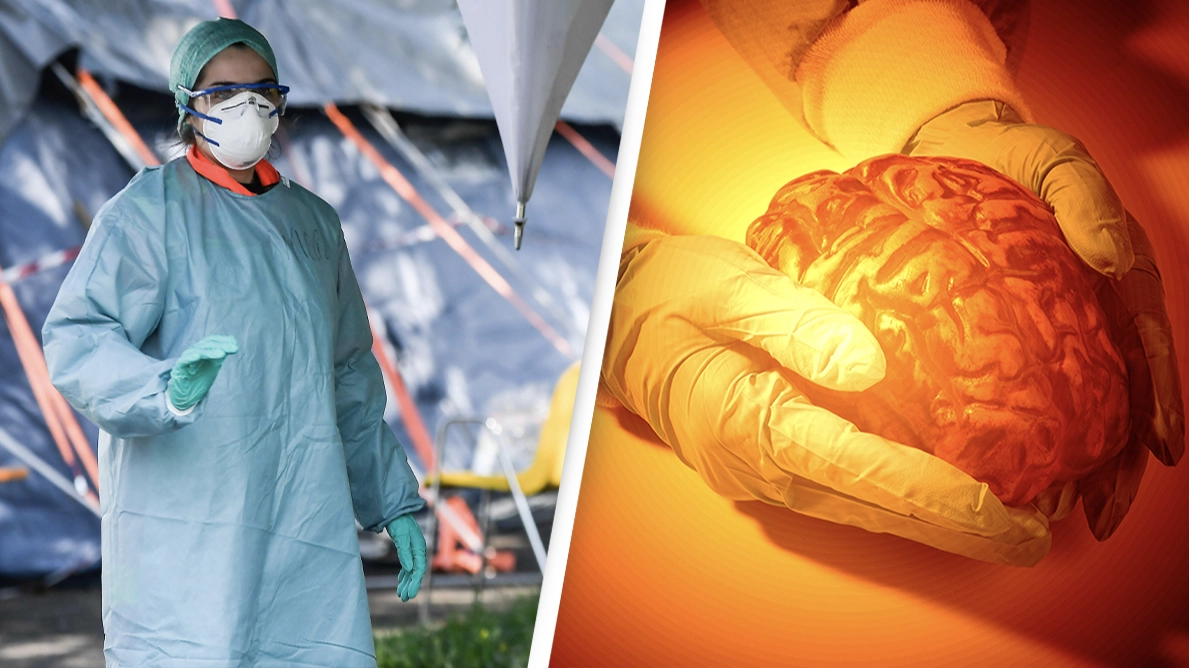
The first major study to compare brain scans taken before and after people tested positive for coronavirus has indicated the virus can cause the brain to shrink.

Conducted by researchers from the University of Oxford, the study involved 785 people aged between 51 and 81 who received brain scans both before and during the pandemic as part of the UK Biobank study.

Of the participants, 401 tested positive for coronavirus between the two scans, allowing Professor Gwenaëlle Douaud and colleagues to study the effects the virus can have on the brain.

COVID-19 can cause the brain to shrink and damage areas linked to memory and smell, says a new study by Oxford University that was published in the Nature journal https://t.co/NUfZDlXksM pic.twitter.com/B7hk1VAc4X

— Reuters (@Reuters) March 8, 2022

Researchers used the scans of those who had tested positive for coronavirus and compared them with 384 control subjects who had not been infected, and who were similar to the other group in age, sex, and a number of risk factors including blood pressure, obesity, smoking, socio-economic status and diabetes.

Following the comparison, the scientists found there was greater overall brain shrinkage and more grey matter shrinkage, particularly in areas linked to smell, in those who had tested positive.

Advert

More specifically, those who had coronavirus lost, for example, an additional 1.8% of the parahippocampal gyrus, an area of the brain key for smell, and an additional 0.8% of the cerebellum when compared with control subjects. A loss of smell is a known symptom of coronavirus, and this may be due to disrupted signal processing in these areas of the brain.

As well as brain shrinkage, researchers found those who were infected also typically scored lower on a mental skills test. These lower scores have been associated with a loss of brain tissue in the parts of the cerebellum involved in mental ability.
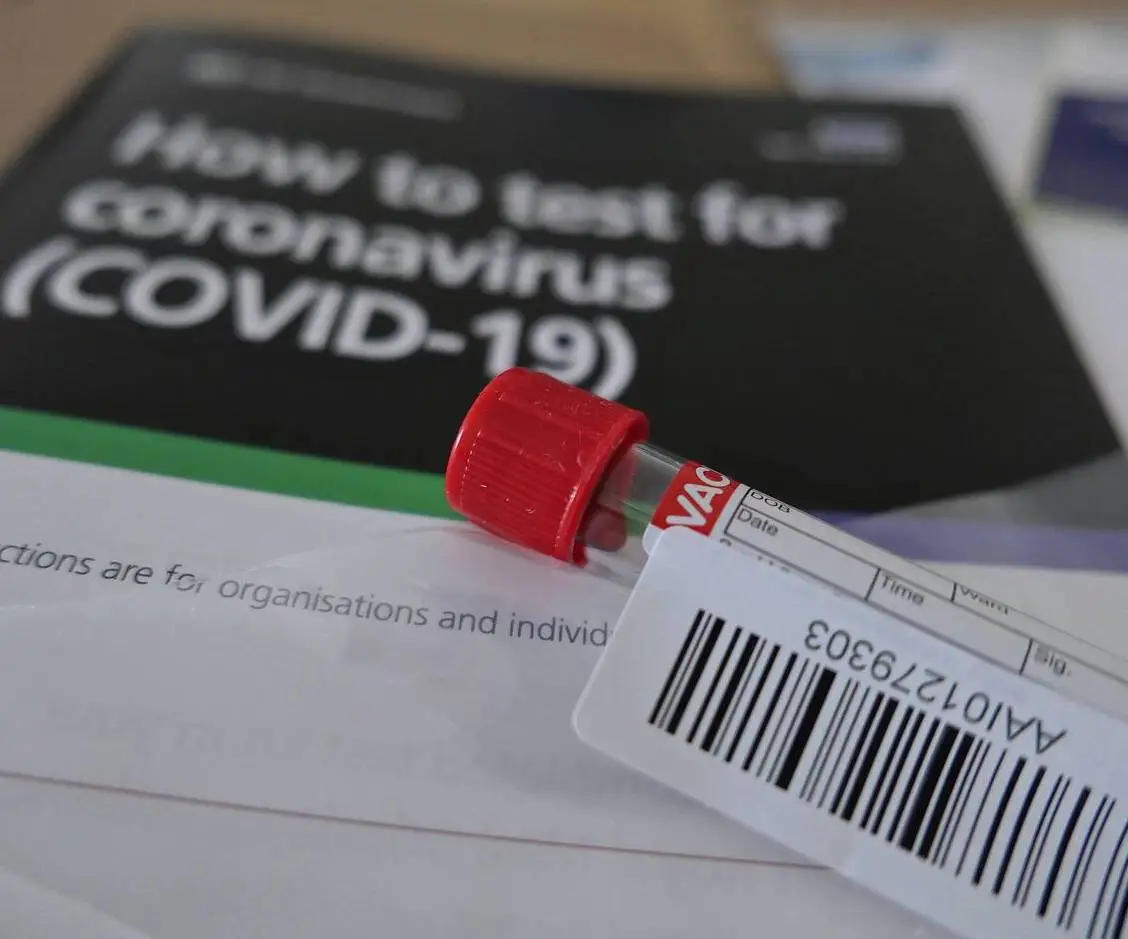
Covid tests (Alamy)
Covid tests (Alamy)

In the research, which has been published in the journal Nature, the scientists note the effects on the brain were more pronounced in older people and those hospitalised by the disease than with other cases. However, the effects were still evident in patients with mild or asymptomatic infections.

The effects were identified, on average, 4.5 months following infection, though further scans will be necessary to determine whether the changes caused by coronavirus are permanent, or whether they are partially reversible.

Prof Gwenaëlle Douaud, at the University of Oxford, described the brain as 'plastic', meaning it can 're-organise and heal itself to some extent, even in older people,' The Guardian reports.

The University of Oxford has explained the insight into the effects of coronavirus will 'contribute to our overall understanding of how the disease spreads through the central nervous system.'

If you’ve been affected by coronavirus and want up to date advice, visit the Gov.uk help page here. If you need medical help call NHS 111 or visit online

Choose your content:

2 hours ago
20 hours ago
21 hours ago
  • Andrew Leyden/Getty Images
    2 hours ago

    Gunman killed by Secret Service outside White House identified as Nasire Best

    The 21-year-old was already known to the Secret Service

    News
  • James Gilbert/Getty Images
    20 hours ago

    Kyle Busch's cause of death confirmed as sepsis after NASCAR driver died aged 41

    The family confirmed that Busch died after complications of sepsis progressing from severe pneumonia

    News

    breaking

  • Allen J. Schaben/Los Angeles Times via Getty Images
    20 hours ago

    California toxic chemical leak sparks explosion fears as 40,000 evacuated in 'crisis situation'

    Officials have warned that the tank leak in Orange County may 'spill or explode'

    News
  • Maldives President Press Office
    21 hours ago

    Expert says Maldives diving accident victims were just minutes away from reaching surface

    Finnish rescue diver Sami Paakkarinen has said the group lacked 'basic cave diving equipment'

    News
  • Major new study finally reveals the outcome for people who took the Covid vaccine
  • New study confirms one thing about Covid vaccines as Trump administration ramps up rollback
  • Study finally reveals if catching Covid is worse than taking the vaccine as outcome is announced
  • People with long Covid are turning to opera singing for a surprising reason