unilad homepage
unilad homepage
  • News
    • UK News
    • US News
    • World News
    • Crime
    • Health
    • Money
    • Sport
    • Travel
  • Music
  • Technology
  • Film and TV
    • News
    • DC Comics
    • Disney
    • Marvel
    • Netflix
  • Celebrity
  • Politics
  • Advertise
  • Terms
  • Privacy & Cookies
  • LADbible Group
  • LADbible
  • SPORTbible
  • GAMINGbible
  • Tyla
  • UNILAD Tech
  • FOODbible
  • License Our Content
  • About Us & Contact
  • Jobs
  • Latest
  • Archive
  • Topics A-Z
  • Authors
Facebook
Instagram
X
Threads
TikTok
YouTube
Submit Your Content
California is being invaded by world's deadliest mushroom, study finds
Home>News
Published 17:17 16 Feb 2023 GMT

California is being invaded by world's deadliest mushroom, study finds

The lethal fungus is spreading throughout the American state

Rhiannon Ingle

Rhiannon Ingle

google discoverFollow us on Google Discover
Featured Image Credit: blickwinkel/Ionescu Bogdan Cristian/Alamy Stock Photo/

Topics: News, US News, Science

Rhiannon Ingle
Rhiannon Ingle

Rhiannon Ingle is a Senior Journalist at Tyla, specialising in TV, film, travel, and culture. A graduate of the University of Manchester with a degree in English Literature, she honed her editorial skills as the Lifestyle Editor of The Mancunian, the UK’s largest student newspaper. With a keen eye for storytelling, Rhiannon brings fresh perspectives to her writing, blending critical insight with an engaging style. Her work captures the intersection of entertainment and real-world experiences.

Advert

Advert

Advert

Once home to gnarly surfers, sandy beaches and celebrities-galore - an unlikely guest is now also spreading across the coastal state of California.

A study has found that the western American state is being invaded by the world's most deadly mushroom.

Stretching across some 900-miles, researchers have discovered ground-breaking information to explain the spread.
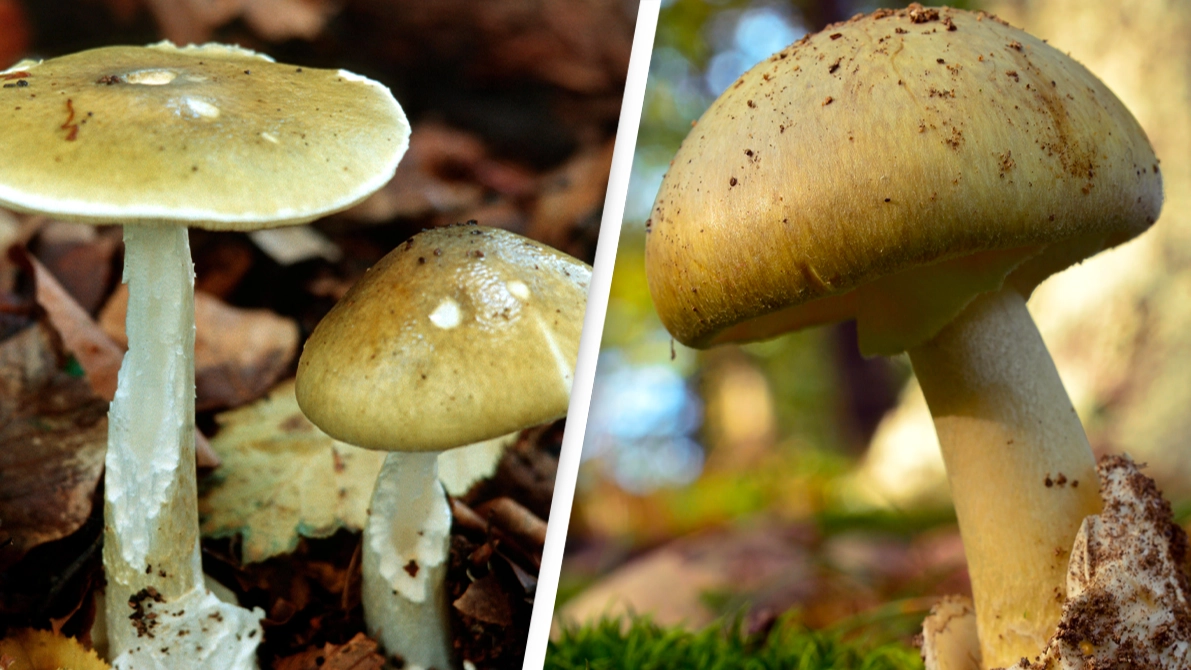
California is being invaded by the world's deadliest mushroom.
Vladyslav Siaber / Alamy Stock Photo

Advert

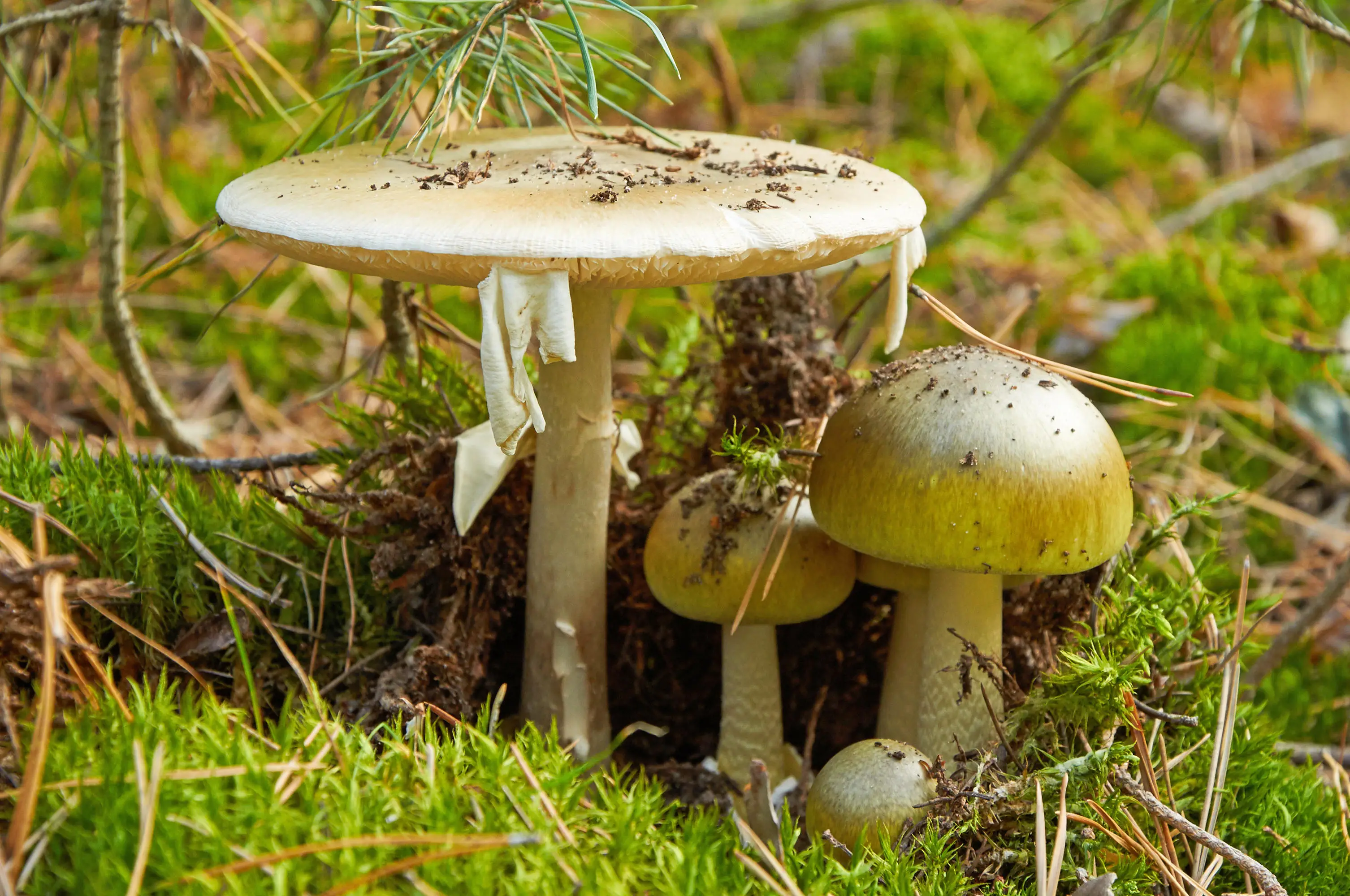
The killer fungus in question is aptly named the 'death cap' mushroom or Amanita phalloides - if you're feeling fancy.

Deadly poisonous, the death cap makes up for a staggering 90 per cent of global deaths from mushrooms worldwide, estimates suggest.

While the dodgy shroom is said to only kill a handful of humans a year, many people and animals alike fall sick after accidentally ingesting it due to its similarities in appearance to the non-poisonous white Caesar.

People who have eaten the mushroom have reported severe issues with their liver and kidneys which, in some extreme cases, can lead to liver failure and death.

Other symptoms include nausea, seizures, stomach cramps, vomiting and diarrhoea.

Measuring at just seven-inches tall - it's pretty scary just how big an effect a tiny little vegetable can have on a person.

The death cap accounts for 90 per cent of global deaths from mushrooms worldwide.
robertharding / Alamy Stock Photo

A recent study conducted by the University of Wisconsin-Madison attempted to find out why the deadly mushroom is able to spread so viciously across California.

One reason was explained by a newly-discovered phenomenon.

In the study titled: "Invasive Californian death caps develop mushrooms unisexually and bisexually", scientists reported that the mushroom has been able to reproduce so quickly because it is effectively cloning itself.

Yep - you heard that right.

Like something right out of the The Last of Us with a totally different, but all-the-while still deadly fungus.
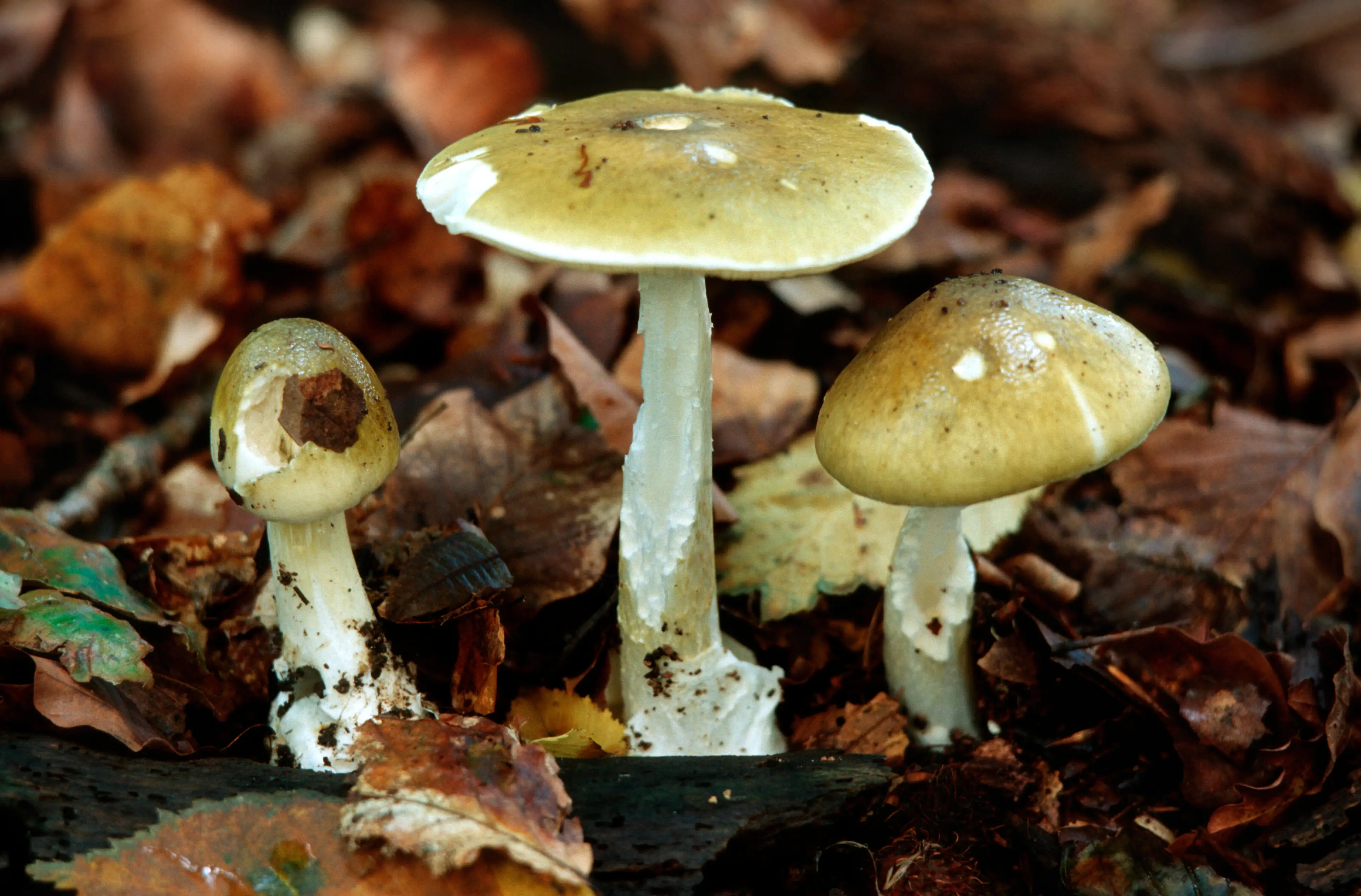
The study found that the mushroom was cloning itself.
blickwinkel / Alamy Stock Photo

While most wild mushrooms tend to reproduce bisexually, scientists found that the Californian species of the death cap mushroom functions in an entirely different way.

Instead of patiently waiting for a mate, the death cap fertilises itself, or 'sporulates' - reproducing completely independently.

Scientists reported that the process was incredibly rare to be observed in the wild and is rarely seen outside of the laboratory.

The study, which is yet to be peer-reviewed, wrote: "The diverse reproductive strategies of invasive death caps are likely facilitating its rapid spread, revealing a profound similarity between plant, animal and fungal invasions."

Unlike other mushrooms, the study also explains that the death cap is 'both unisexual and bisexual'.

Due to this, the death cap has now revealed 'a previously unsuspected reproductive flexibility' in the mushrooms' natural production.

Researchers also suggested that the increase in reproduction is so the plant can gain a foothold in a new environment.

While the study accounts for the speed of the death cap invasion of California, researchers are yet to know what exactly caused this to happen in the first place.

Choose your content:

5 hours ago
  • Getty Stock
    5 hours ago

    Expert warns there's a GLP-1 side effect that flies under the radar

    Many may be experiencing the 'problem' without even noticing

    News
  • Getty Stock Image
    5 hours ago

    Doctor reveals causes of Dead Butt Syndrome and how to get rid of 'amnesia-like' symptoms

    If you start today, then the issue should be improved 'within a few weeks'

    News
  • Ohio Department of Rehabilitation & Correction
    5 hours ago

    Mackenzie Shirilla's prison records allegedly detail 23 violations behind bars

    Mackenzie Shirilla is behind bars after being convicted of double murder

    News
  • Kevin Dietsch/Getty Images
    5 hours ago

    Truth behind 'no fatties' rule for troops at Trump's UFC Freedom 250 event

    Not having the 'right' body composition measurements may stop you from nabbing a seat

    News
  • Scientists develop vaccine that could wipe out world's deadliest cancer
  • Groundbreaking study finds these two simple supplements could fight brain cancer
  • New study finds millions of people could have aggressive deadly disease without even knowing
  • New study finds just one of these extremely popular drinks per day may increase type 2 diabetes risk by 38%