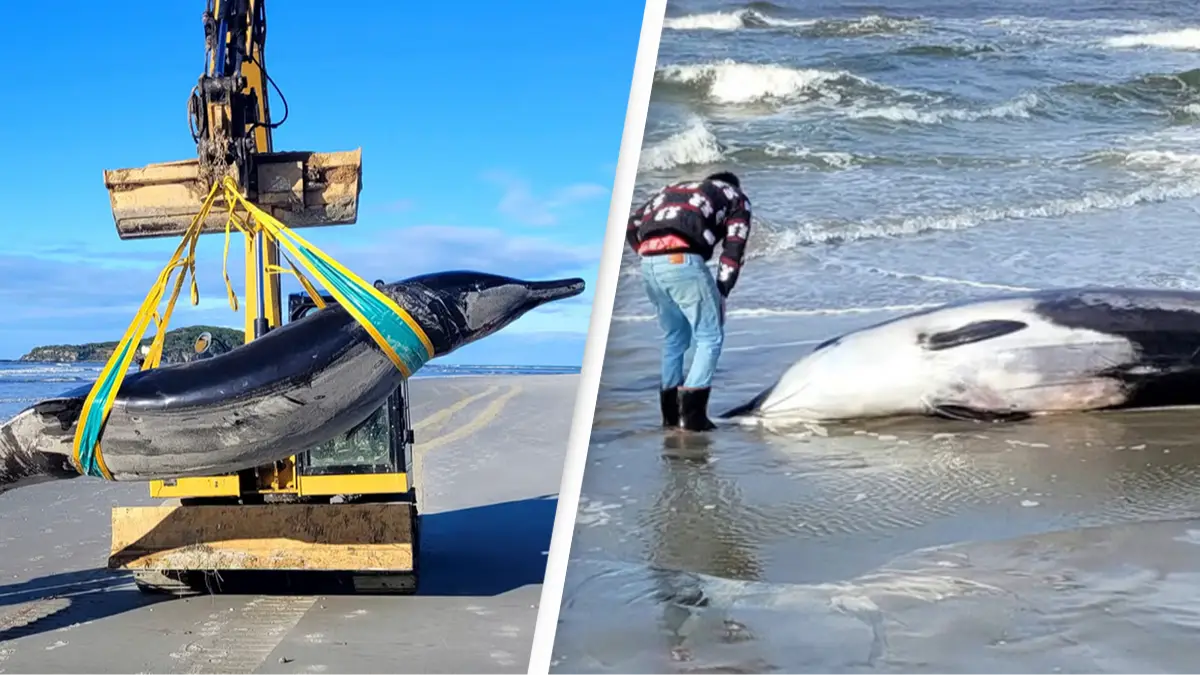
unilad homepage
unilad homepage
    • News
      • UK News
      • US News
      • World News
      • Crime
      • Health
      • Money
      • Sport
      • Travel
    • Music
    • Technology
    • Film and TV
      • News
      • DC Comics
      • Disney
      • Marvel
      • Netflix
    • Celebrity
    • Politics
    • Advertise
    • Terms
    • Privacy & Cookies
    • LADbible Group
    • LADbible
    • SPORTbible
    • GAMINGbible
    • Tyla
    • UNILAD Tech
    • FOODbible
    • License Our Content
    • About Us & Contact
    • Jobs
    • Latest
    • Archive
    • Topics A-Z
    • Authors
    Facebook
    Instagram
    X
    Threads
    TikTok
    YouTube
    Submit Your Content
    'World's rarest whale' washes up on beach and it's only the sixth sighting in history

    Home> News> Animals

    Published 16:00 16 Jul 2024 GMT+1

    'World's rarest whale' washes up on beach and it's only the sixth sighting in history

    An Otago beach in New Zealand has seen a whale suspected of being the 'world's rarest' species wash ashore

    Poppy Bilderbeck

    Poppy Bilderbeck

    google discoverFollow us on Google Discover
    Featured Image Credit: Department of Conservation New Zealand

    Topics: Animals, New Zealand, World News, Science

    Poppy Bilderbeck
    Poppy Bilderbeck

    Poppy Bilderbeck is a freelance journalist with words in Daily Express, Cosmopolitan UK, LADbible, UNILAD and Tyla. She is a former Senior Journalist at LADbible Group. She graduated from The University of Manchester in 2021 with a First in English Literature and Drama, where alongside her studies she was Editor-in-Chief of The Tab Manchester. Poppy is most comfortable when chatting about all things mental health, is proving a drama degree is far from useless by watching and reviewing as many TV shows and films as possible.

    Advert

    Advert

    Advert

    A whale suspected of being the 'world's rarest' species has washed ashore on a New Zealand beach.

    On 4 July, New Zealand's Department of Conservation (DOC) were called to a beach in Otago located near Taiari Mouth after it received reports of a whale having been washed up onto the shore.

    And when members of the department arrived at the scene, they quickly realised this might not just be any sort of a whale, but a 'whale so rare only six specimens have ever been known to science'.

    Advert

    Marine-mammal experts from the DOC and Te Papa attended the beach, a media release from the department of Conservation Te Papa Atawhai reports.

    The whale measures five-meters long and was quickly identified as being male, with its color patterns and the shape of its teeth, skull and beak leading experts to believe it could belong to the spade-toothed whale species (Mesoplodon traversii) - the rarest species of beaked whale.

    "A species so rare next to nothing is known about them," the report emphasises.

    The species was first discovered and named after a partial jaw was located on Pitt Island, New Zealand in the early 1870s.
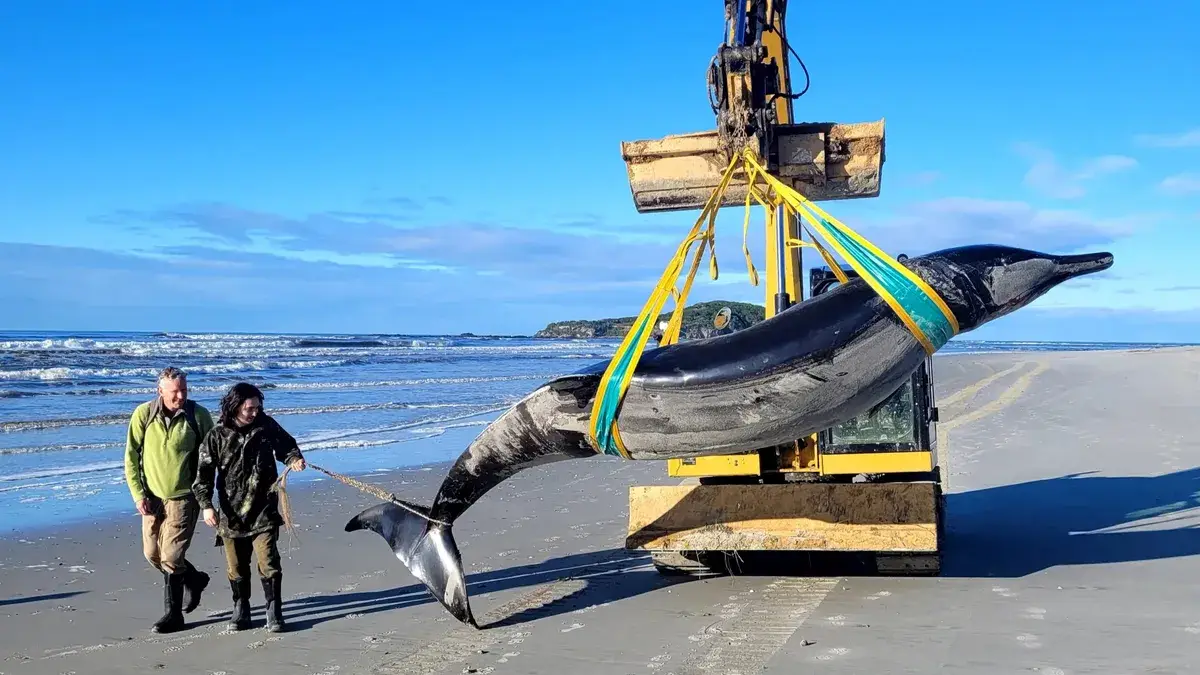
    The whale was found ashore a beach in Otago, New Zealand (DOC)
    The whale was found ashore a beach in Otago, New Zealand (DOC)

    A part of a skull believed to belong to another spade-toothed whale was found in the 1950s on White Island, New Zealand and another in 1993 on Robinson Crusoe Island, Chile.

    The first complete specimens of the species were discovered in 2010 when a mom and calf were found stranded on Opape Beach in Bay of Plenty, New Zealand.

    And according to DOC Coastal Otago Operations Manager Gabe Davies there have only been 'six samples' ever 'documented worldwide' since the 1800s.

    "Two more recent findings, in Bay of Plenty and north of Gisborne, helped describe the colour pattern of the species for the first time," DOC added.
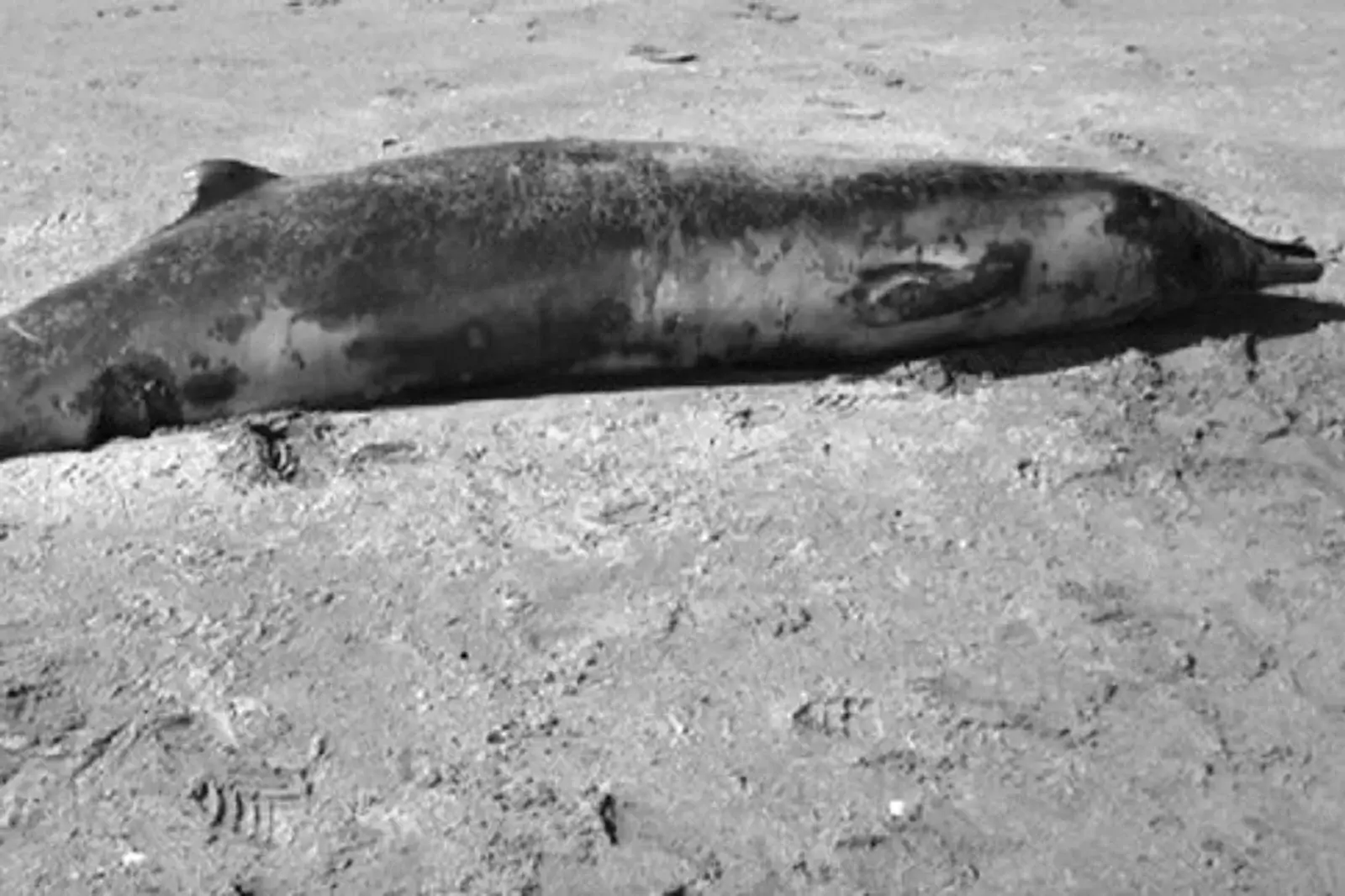
    A female spade-toothed whale was found washed ashore in 2010 (Kirsten Thompson et al / Current Biology)
    A female spade-toothed whale was found washed ashore in 2010 (Kirsten Thompson et al / Current Biology)

    Davies said: "Spade-toothed whales are one of the most poorly known large mammalian species of modern times. [...] From a scientific and conservation point of view, this is huge."

    Genetic samples from the whale have been taken by the DOC and Te Rūnanga ō Ōtākou and sent to the University of Auckland for DNA analysis to confirm the whale is indeed a spade-toothed whale.

    The whale was removed from the beach and has been placed in cold storage for preservation purposes.

    Te Rūnanga ō Ōtakou chair Nadia Wesley-Smith stated: "It is important to ensure appropriate respect for this taoka is shown through the shared journey of learning, applying mātauraka Māori as we discover more about this rare species."

    • People are only just discovering what really happened to first dog sent to space and it's heartbreaking
    • At Least 31 Whales Die After Mass Stranding At Notoriously Fatal Beach
    • Beachgoers horrified after half-eaten great white shark washes up on beach
    • 477 whales die in 'heartbreaking' stranding on remote beaches

    Choose your content:

    6 mins ago
    an hour ago
    2 hours ago
    • Getty Stock Image
      6 mins ago

      Scientists uncover the age people feel 'peak happiness' and reveal why

      Forget your mid-life crisis - those might just be your golden years

      News
    • James Broadnax's legal team
      an hour ago

      Death row inmate's final words before being executed despite his cousin's confession

      Though James Broadnax maintained his innocence to the very end, Texas didn't believe him

      News
    • Getty Stock Image
      an hour ago

      Scientists discover unexpected link between eating chips and dementia increasing your risk

      Just one extra bag of potato chips a day could have a negative impact

      News
    • SWNS
      2 hours ago

      Dad who 'died for 10 minutes' and came back explains how it changed his life

      Matthew Allick's life fell apart after a serious health issue left him clinically dead, but the experience changed his life

      News