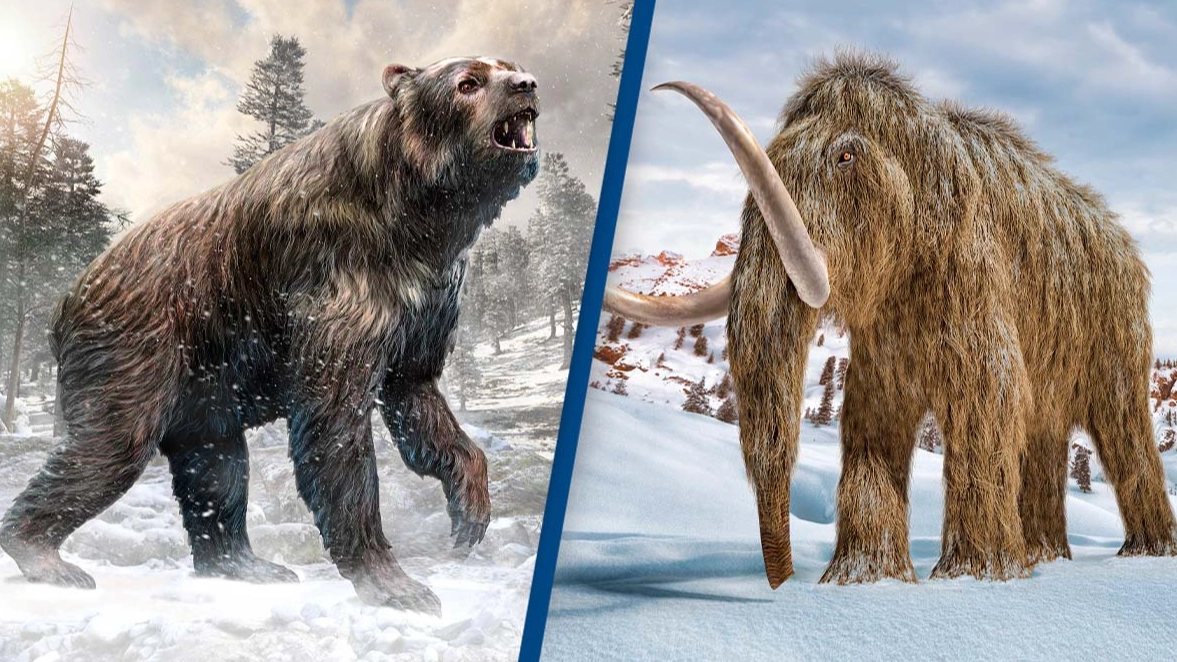
Scientists have breakthrough that could bring back five extinct animals including 11,000-year-old bear

Scientists have made a major breakthrough that could see five extinct animals come back to life.
There's something quite fascinating about animals that lived way before our time and how they became extinct.
Scientists have long been working in this field, with a major breakthrough coming recently.
Earlier this year, it was confirmed experts were working to 'de-extinct' the mammoth by 2028 - something that seemed rather ambitious.
Advert
Ben Lamm, chief executive of Colossal Biosciences, the firm behind the project, told Sky News: "We've got all the technology we need. It is just a focus of time and funding. But we are 100 percent confident [we can bring back] the Tasmanian tiger, the dodo, and the mammoth."

So, how exactly will scientists go about making history?"
A recent update was provided to UNILAD from Lamm, with it looking increasingly likely the mammoth will be back by 2028.
The expert is hoping to repopulate Earth with a brand new herd.
"You need enough engineered and genetic diversity so you can create interbreedable, sustainable herds so you're not just making a bunch of clones. You have to be very thoughtful in that process," he told UNILAD.
"Rewilding of the species back into their respective environments with enough population genetics and diversity so that they can create sustainability without human managed care.”
While efforts continue to bring the mammoth back to life, researchers at Colossal Biosciences are also looking at bringing four other species into the fold.
These are an Ice Age bear, a giant beaver, a Tasmanian tiger and the dodo.
Beth Shapiro, chief science officer at Colossal, told the Telegraph: "I would like to work on all of them because I’d like to learn more about the biology of these animals. Carnivores would be cool.
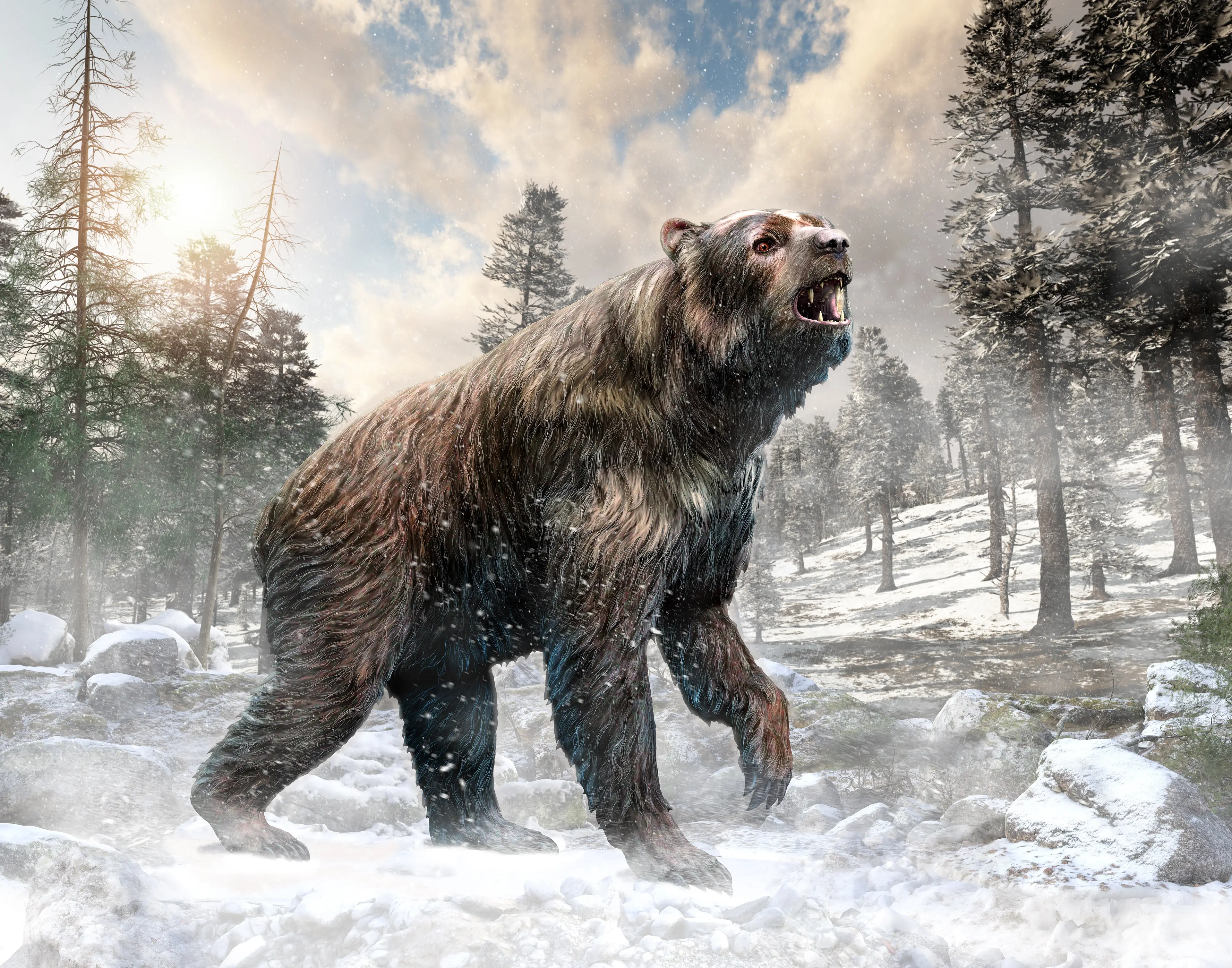
"One of my favourite extinct species is a thing called Arctodus, the giant short-faced bear, which stood 14ft tall, and a giant beaver that lived in North America, which would have stood up to be about 5ft tall. That would be funny."
Earlier this year, during their pursuit the team also announced it had created pluripotent stem cells from Asian elephant skin cells which could lead the development of elephant sperm and egg cells.
As far as mammoths are concerned, many have argued the planet is too hot for them to live on.
However, Lamm told UNILAD this is a misconception.
He added: "Everyone thinks of the movie Ice Age, right? In those times, there were those locations, but there were also these massive interglacial periods that were actually warmer than today.
“And if you look at mammoths, and also the distribution of different types of mammoths, like Columbian mammoths, the distribution and migratory patterns were vast and wild and huge populations, and they went down to very warm locations outside of these kind of global warmed periods.”
 Callum Jones