unilad homepage
unilad homepage
    • News
      • UK News
      • US News
      • World News
      • Crime
      • Health
      • Money
      • Sport
      • Travel
    • Music
    • Technology
    • Film and TV
      • News
      • DC Comics
      • Disney
      • Marvel
      • Netflix
    • Celebrity
    • Politics
    • Advertise
    • Terms
    • Privacy & Cookies
    • LADbible Group
    • LADbible
    • SPORTbible
    • GAMINGbible
    • Tyla
    • UNILAD Tech
    • FOODbible
    • License Our Content
    • About Us & Contact
    • Jobs
    • Latest
    • Archive
    • Topics A-Z
    • Authors
    Facebook
    Instagram
    X
    Threads
    TikTok
    YouTube
    Submit Your Content
    Amazon Rainforest Is Reaching 'Tipping Point' And Will Begin Transforming Into Savannah

    Home> News

    Published 09:00 8 Mar 2022 GMT

    Amazon Rainforest Is Reaching 'Tipping Point' And Will Begin Transforming Into Savannah

    The world's largest rainforest may be less able to recover from damage caused by droughts, fires and deforestation, a study suggests.

    Shola Lee

    Shola Lee

    google discoverFollow us on Google Discover
    Featured Image Credit: Alamy

    Topics: Climate Change, Amazon, World News, Life, Health

    Shola Lee
    Shola Lee

    Shola Lee began her journalism career while studying for her undergraduate degree at Queen Mary, University of London and Columbia University in New York. She has written for the Columbia Spectator, QM Global Bloggers, CUB Magazine, UniDays, and Warner Brothers' Wizarding World Digital. Recently, Shola took part in the 2021 BAFTA Crew and BBC New Creatives programme before becoming a journalist at UNILAD, where she works on breaking news, trending stories, and features.

    Advert

    Advert

    Advert

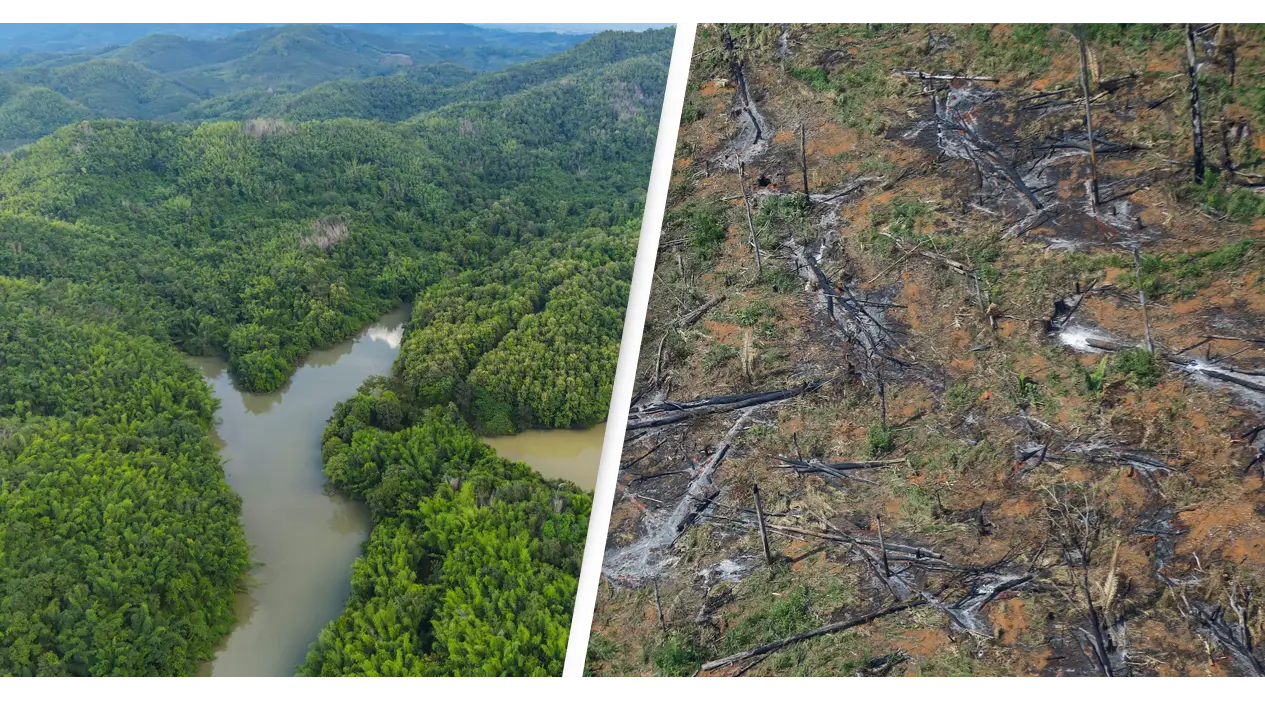
    The Amazon rainforest is getting closer to its 'tipping point', researchers have warned.

    The world's largest rainforest may be less able to recover from damage caused by droughts, fires and deforestation, a study has suggested.

    This means that large parts of the Amazon could become a sparsely forested savannah, which is far less effective at removing carbon dioxide from the air.

    The study was carried out at the University of Exeter, the Potsdam Institute for Climate Impact Research and Technical University of Munich.

    Advert
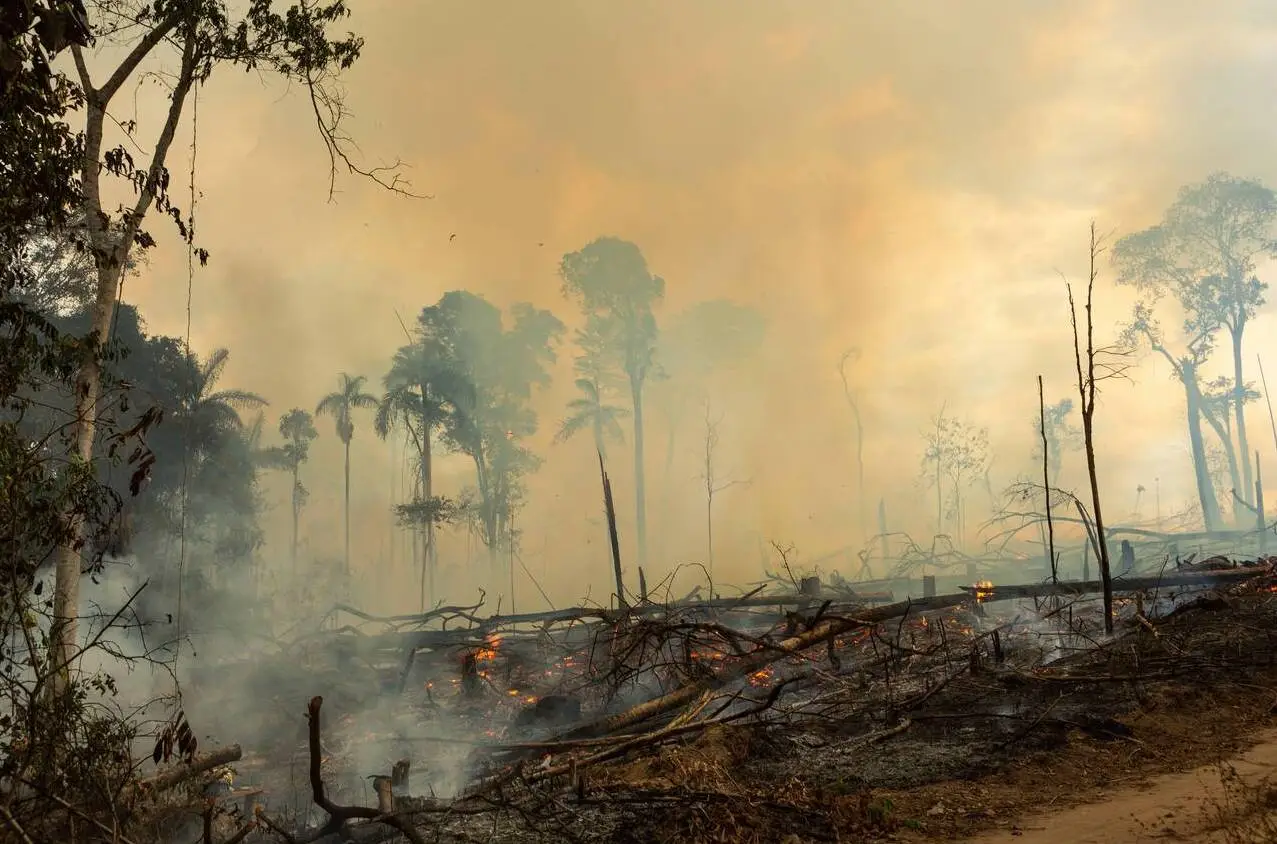
    Amazon rainforest on fire (Alamy)
    Amazon rainforest on fire (Alamy)

    Previous studies have shown that the Amazon is now emitting more carbon dioxide than it can absorb.

    The University of Exeter's Dr Chris Boulton explained, 'The trees are losing health and could be approaching a tipping point – basically, a mass loss of trees.'

    Findings from the study show the Amazon rainforest's health in general is declining.

    Signs of a loss of resilience in more than 75% of the forest mean that trees take longer to recover from draughts.

    Dr Boulton added, 'And what we also find is that areas which are closer to human land use, such as urban areas or crop lands, they tend to be losing resilience faster, as do areas which receive less rainfall.'

    These draughts are caused by climate change and human impact, like deforestation and fires.
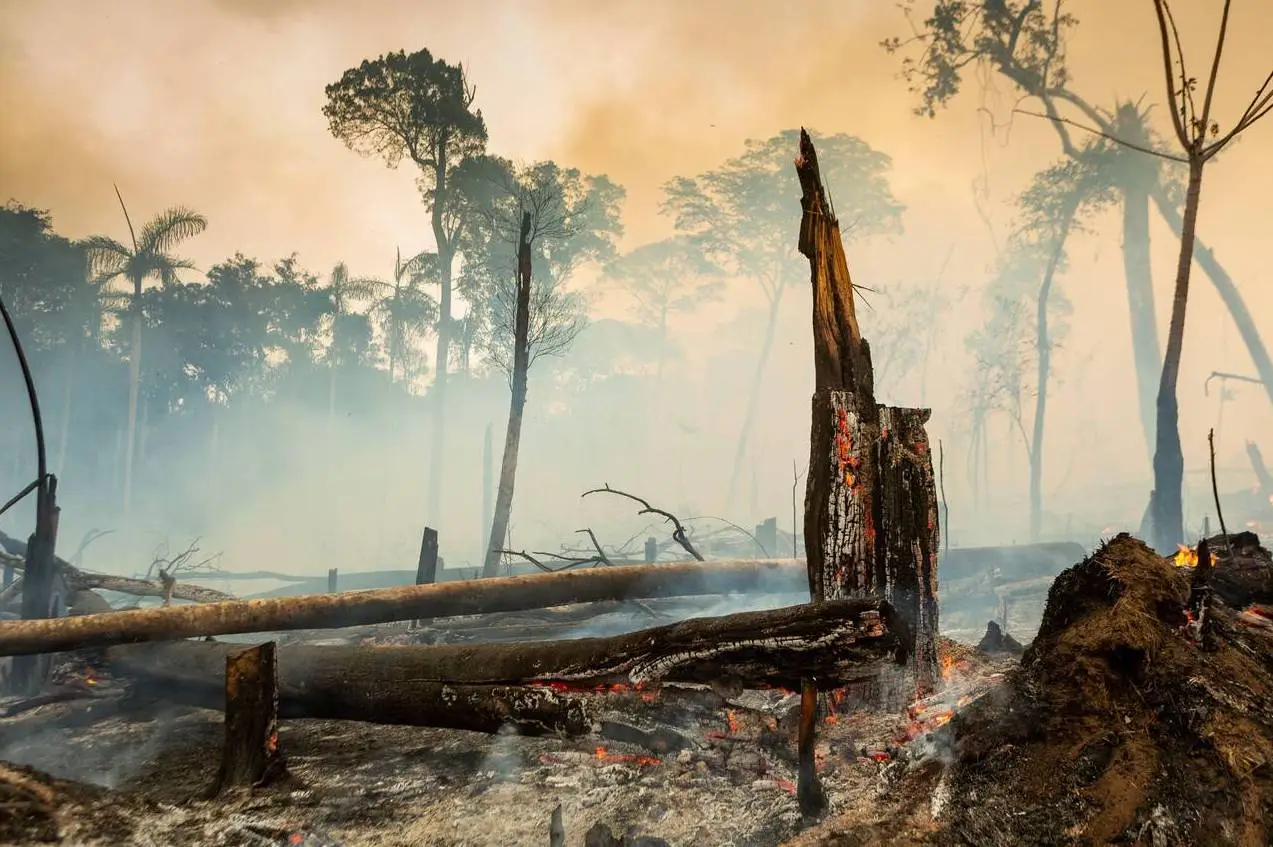
    Amazon rainforest on fire (Alamy)
    Amazon rainforest on fire (Alamy)

    The loss of resilience could trigger a 'dieback', according to scientists, and the implications could be 'devastating'.

    It may only be decades before a 'significant chunk' of the rainforest becomes a savannah, as per the BBC.

    If this were to happen, Dr Boulton said, 'The Amazon stores lots of carbon and all of that would be released into the atmosphere, which would then further contribute to increasing temperatures and have future effects on global mean temperatures.'

    Dr Boulton went on to add that halting deforestation could help the problem, as more than a fifth of the forest has been lost when compared to pre-industrial levels.
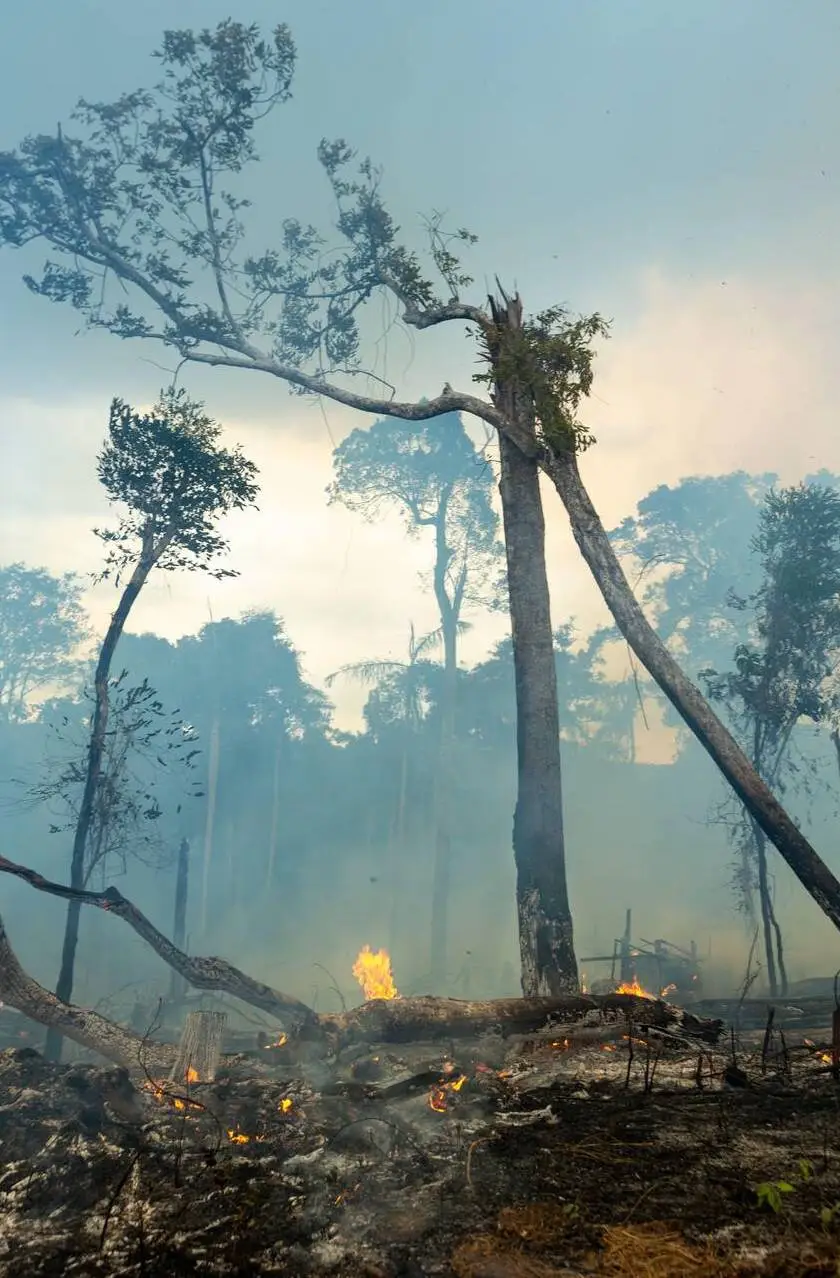
    Amazon rainforest on fire (Alamy)
    Amazon rainforest on fire (Alamy)

    Also weighing in on the findings, Dr Bonnie Waring from Imperial College London said, 'These latest findings are consistent with the accumulating evidence that the twin pressures of climate change and human exploitation of tropical forests are endangering the world's largest rainforest, which is home to one out of every 10 species known to science.'

    The Amazon rainforest is the largest in the world, and if large parts were to turn into sparsely-forested savannah, it would significantly impact the planet's ability to recycle greenhouse gases, which would in turn accelerate climate change.

    If you have a story you want to tell, send it to UNILAD via [email protected]  

    Choose your content:

    11 mins ago
    an hour ago
    2 hours ago
    • Getty Stock Image
      11 mins ago

      Spirit Airlines collapses as flights grounded and operations shut down

      The airline has been running for over three decades

      News
    • Courtesy of Lavinia Osbourne
      11 mins ago

      Twins born within minutes of each other discover that they're only half-sisters

      The twins discovered the truth after taking a DNA test to find out who their father was

      News
    • (Photo by Joe Raedle/Getty Images)
      an hour ago

      Artemis II astronauts share what they ate minutes after landing back on Earth

      The Artemis II crew experienced the deepest space communication blackout

      News
    • Cover Images
      2 hours ago

      Man who ate the same meals every day for 22 years reveals the benefits it's had on his life

      He says it has helped him avoid one problem that many of us have probably encountered

      News
    • Amazon's UAE data centre forced to cut power after being struck by 'objects creating sparks and fire'
    • Heartbreaking story of woman who died in her apartment and wasn't discovered for decades
    • Man who was looking to 'hot pot' fell into Yellowstone hot spring and was completely dissolved within a day
    • Expert reveals what 'penis anxiety' is and issues warning for who is most likely to have it